





Large Bronze Candelabra
These large bronze candelabra bring undeniable weight and presence to a room, carrying the sculptural ambition of nineteenth-century French and English metalwork.
Large Bronze Candelabra
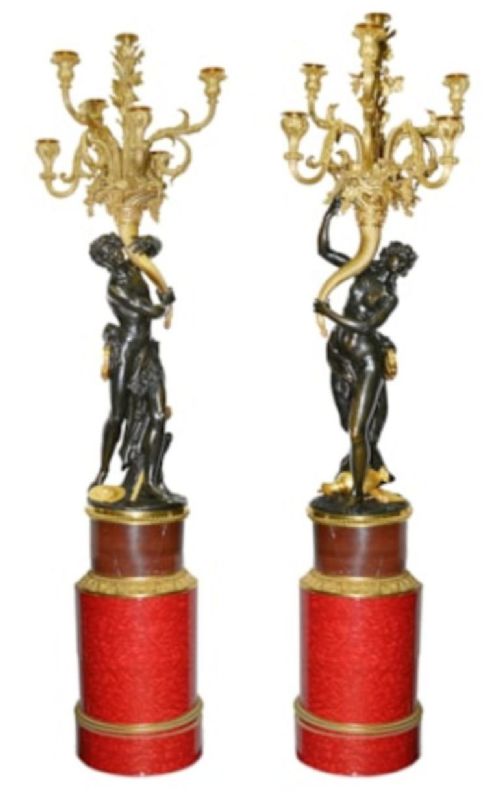
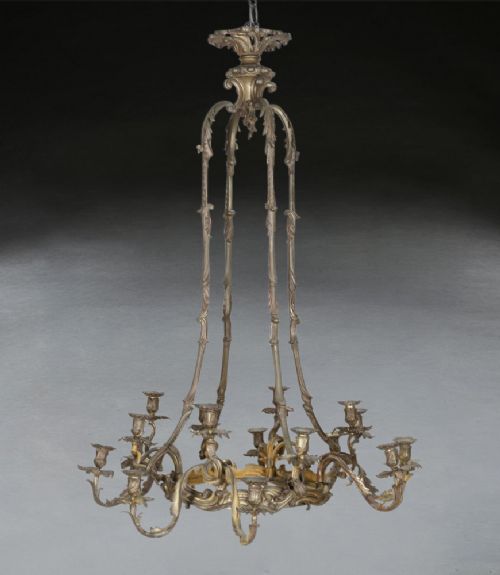
Large bronze candelabra are substantial multi-light fittings designed to hold candles, appearing frequently in nineteenth-century French styles such as Louis XVI, Empire, and Rococo Revival. You will most commonly encounter matched pairs finished in gilt or patinated bronze, often incorporating marble, enamel, or crystal details.
The evidence shows these pieces functioning as grand table centrepieces or part of monumental mantel clock garniture sets alongside matching clocks. Makers and designers utilised classical motifs, cherubs, and figural torchères to elevate functional lighting into decorative sculpture.
How they were made
The construction relies on cast bronze, combining patinated dark surfaces with fire-gilded ormolu highlights to create tonal contrast. Artisans chased the metal after casting to sharpen the botanical and figural details before assembling the multi-arm branches.
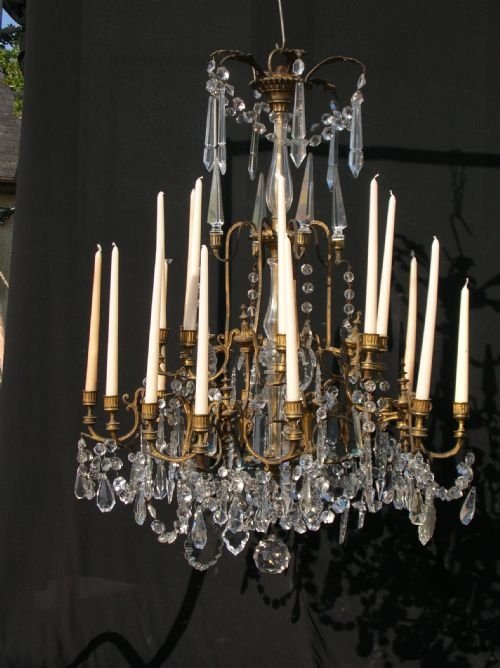
Secondary materials like white marble bases, cloisonné enamel panels, and cut crystal drops were integrated to catch the candlelight and add colour variation to the metallic composition.
Large Bronze Candelabra Retail Price Guide 2026
Typical asking prices for large bronze candelabra among the pieces listed under this phrase on Sellingantiques today, from the lower quarter to the upper quarter. They describe what is for sale here now, not the wider market.
Several heavy nineteenth-century pairs feature cheeky cherubs and putti seemingly struggling under the weight of multiple heavy lighting branches.
What varies in quality
The architectural balance of the branching arms and the structural integrity of the heavy cast components dictate the overall success of the piece.
François-Christophe-Armand Toussaint·Raingo Fres Paris·Deniere Paris·Christophé Fratin·Japy Freres
The Large Bronze Candelabra Glossary
- Ormolu
- High-grade cast bronze treated with a mercury-gilding technique to produce a rich golden finish. This surface treatment defines much of nineteenth-century French decorative metalwork.
- Patinated bronze
- Bronze treated with chemical solutions to darken the surface into shades of brown or black. This creates a striking visual contrast against gilded elements.
- Garniture set
- A matching decorative grouping consisting of a central mantel clock flanked by matching candelabra or urns. These sets anchor grand nineteenth-century interiors.
- Cloisonné
- An ancient technique where enamel paste is packed within wire partitions soldered to a metal ground. It appears on select decorative bases and stems.
- Torchère
- A standing or bracketed figural support holding lights. In this context, sculptural figures bear the branches aloft.
Large Bronze Candelabra: Frequently Asked Questions
How were large bronze candelabra used?
These pieces served as grand table lighting and prominent mantelpiece ornaments in nineteenth-century drawing rooms and formal reception spaces. They were designed to reflect candlelight off gilt surfaces and mirrors to illuminate large rooms.
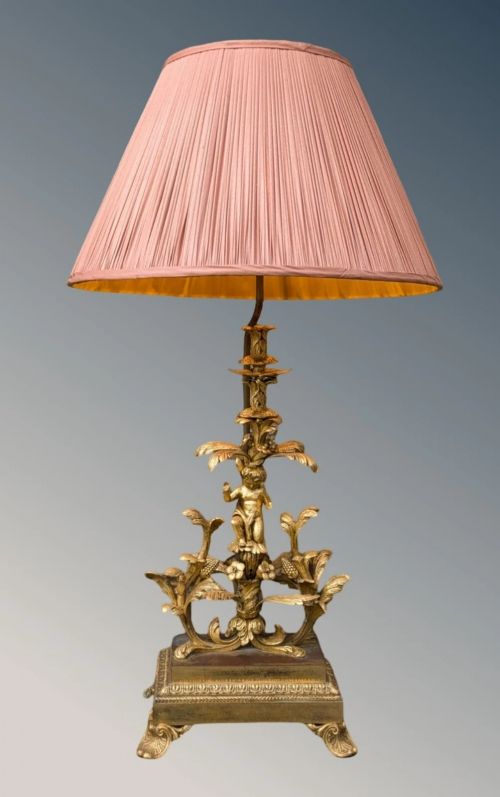
Over time, many of these multi-arm fittings were wired for electricity, though surviving examples retain their original configurations for candle use.
How do I tell Louis XVI style from Empire style?
Louis XVI style pieces draw on classical restraint, featuring neat floral garlands, ribbons, and symmetrical neoclassical geometry. They feel lighter and more architectural in their detailing.
Empire style favours heavier martial and imperial symbols, drawing heavily on ancient Roman and Egyptian motifs with bolder, more austere lines.
How do I live with large bronze candelabra?
Position them on sturdy sideboards, mantels, or console tables where their physical weight and height can anchor the room. Ensure they are kept away from high-traffic pathways where arms might be accidentally bumped.
Dust them gently with a dry, soft cloth, avoiding abrasive cleaning agents that can strip delicate gilt and patinated surfaces.
Are these candelabra usually found as pairs?
The majority of nineteenth-century examples survive as matched pairs, originally intended to balance either side of a clock or fireplace. Single pieces do appear but matched pairs remain the standard format for formal decorative schemes.
Clock garniture sets expand on this by pairing two candelabra with a matching central timepiece.