
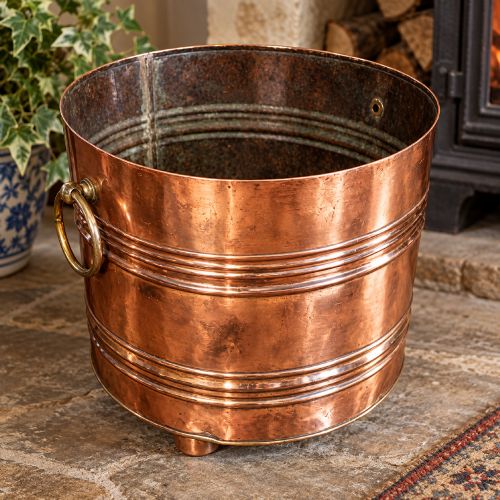
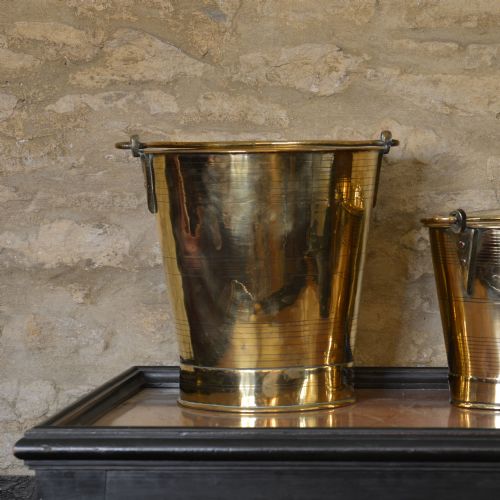
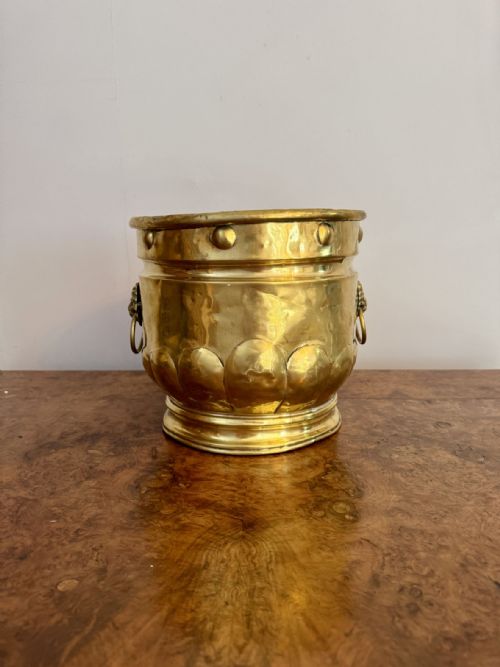
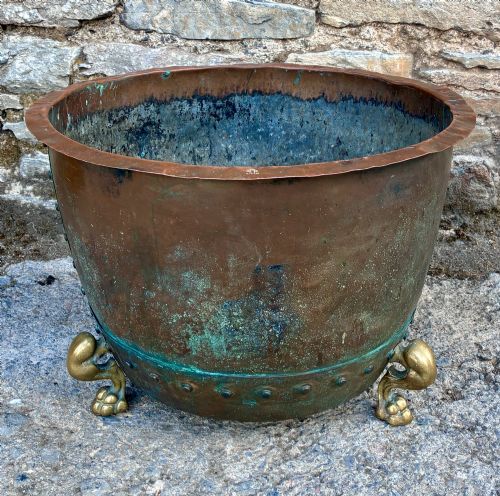
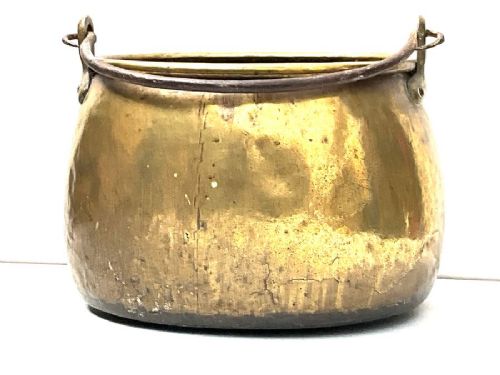


Large Brass Buckets
Large brass buckets are substantial vessels built to hold coal, logs, or plants, bringing warmth and metallic weight to a fireside or room.
Large Brass Buckets
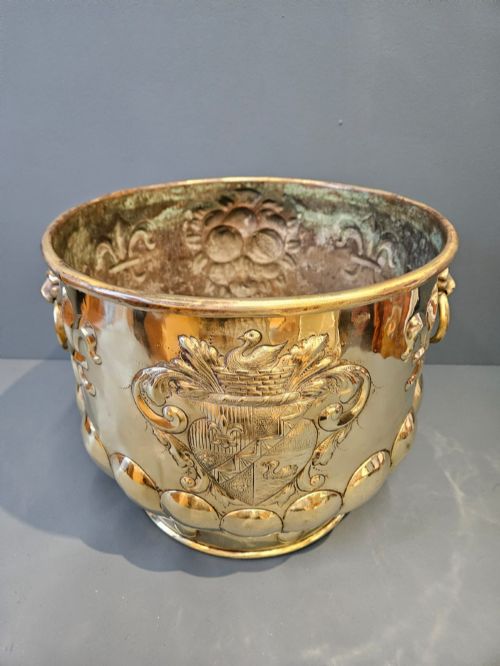
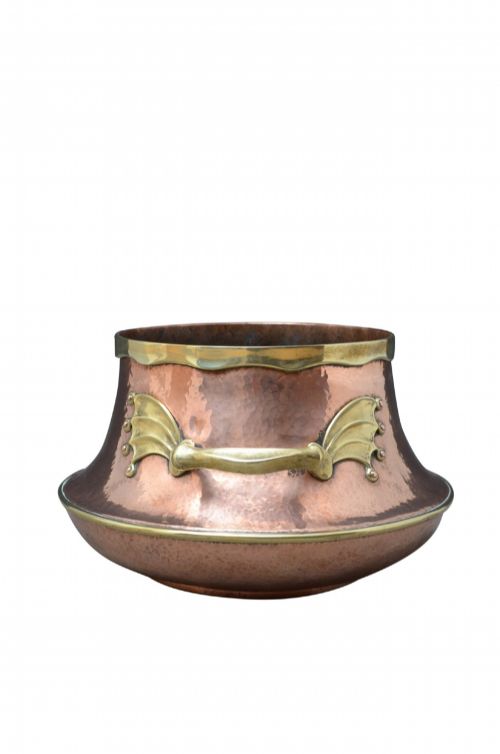
When you search for large brass buckets, you encounter sturdy vessels designed primarily for utilitarian hearth and garden tasks, ranging from nineteenth-century coal bins to grand planters. The pieces on this page span several centuries, with Victorian and Georgian examples appearing frequently alongside Arts and Crafts, Anglo-Indian, and rustic farmhouse interpretations.
Makers fashioned these forms for practical domestic service, such as holding logs by the fireplace, carrying water, or housing large indoor plants and jardinieres. Alongside solid brass, the selections include copper, mahogany with brass banding, and iron components, reflecting the diverse materials utilised in traditional utility ware.
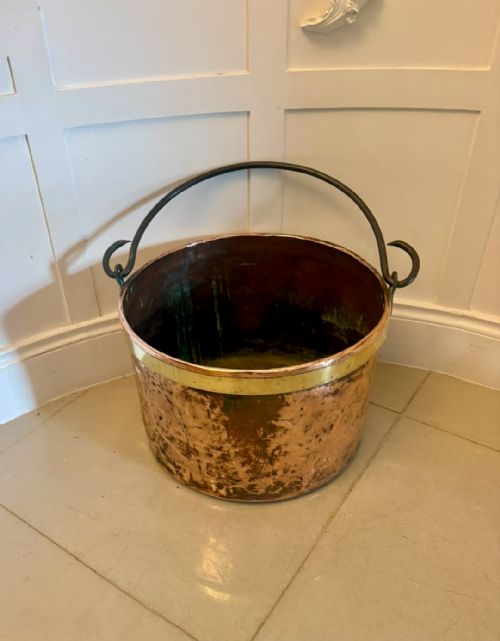
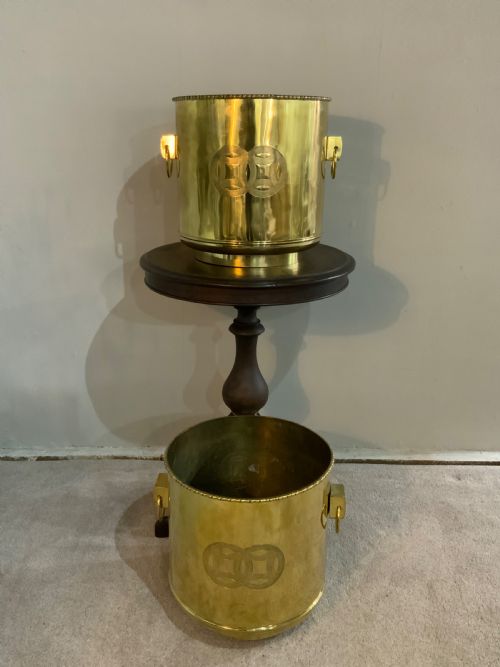
The objects take various shapes, including riveted cauldrons, pails, scuttles, and coopered vessels with turned teak or oak. Many show dual purposes in historical listings, serving interchangeably as wine coolers, peat buckets, and display pans.
How they were made
Artisans built these heavy vessels using traditional metalworking techniques, hammering sheets of brass and copper, and joining edges with structural rivets. Workshops often incorporated swing handles in iron or brass, secured by sturdy handle mounts fixed to the body.
Coopered examples combined timber staves in mahogany, oak, or teak with tensioned brass bands and bindings to hold the structure firm. Surface finishes varied from polished brass to hammered dinanderie work and applied crests for decorative impact.
Listings feature eighteenth-century Georgian pans alongside nineteenth-century Victorian coal bins and early twentieth-century Arts and Crafts planters.
What varies in quality
Quality rests upon the thickness of the metal sheet, the integrity of the riveted joints, and the crispness of any hand-hammered detailing. Heavier gauge brass and robust copper maintain their structural rigidity better over centuries of domestic lifting and filling.
Distinction also lies in the joinery of coopered timber versions and the originality of handles, mounts, and feet. Pieces retaining their unaltered patinas and original heavy mountings command stronger presence than later adaptations.
William Soutter & Sons
The Large Brass Buckets Glossary
- Dinanderie
- The medieval and later art of working brass and copper into decorative vessels, common in domestic utensils. It refers to objects formed from beaten or cast alloy.
- Cellarette
- A lockable container or freestanding bin used for chilling wine bottles or holding peat and coal near the dining table. They frequently appear in mahogany with brass bands.
- Coopered
- Constructed from wooden staves fitted together side by side and bound by metal hoops, much like a barrel. This technique applies to traditional log buckets and wine coolers.
- Jardiniere
- An ornamental pot or stand designed to hold a large indoor plant or floral display. They appear in brass, copper, and ceramics across Victorian and Edwardian interiors.
Large Brass Buckets: Frequently Asked Questions
What were large brass buckets originally used for?
These vessels served heavy domestic duties by the hearth, primarily storing coal, peat, or firewood to feed open fires. Households also utilised them as water carriers or large planters for interior greenery.
Over time, grander versions in mahogany and polished brass transitioned into dining rooms as wine coolers or cellarettes to keep bottles chilled during meals.
How do I clean an antique brass bucket?
Maintenance depends entirely on the finish you prefer, as many collectors cherish a dark, undisturbed historical patina rather than a bright, polished shine. Gentle dusting with a dry cloth keeps the surface safe from accumulated grime.
If you choose to polish, use a mild brass cleaner designed for antiques, applying it sparingly to avoid stripping aged textures or damaging riveted seams.
Are these buckets waterproof?
Many solid brass and copper examples retain their watertight integrity, especially riveted cauldrons and heavy-gauge pails built for carrying liquids. Coopered wooden buckets lined with metal can also hold moisture for live plants.
However, centuries of use can loosen seams or dry out wooden staves, so checking the interior base for seepage is wise before placing delicate floors underneath.
How do I date an antique brass bucket?
Dating relies on observing construction methods, such as hand-beaten hammering marks, early rivet styles, and the composition of swing handles and feet. Georgian and Regency pieces often feature rich mahogany with distinct brass banding.
Victorian and later nineteenth-century examples frequently display machine-rolled sheet brass, stamped maker marks, or decorative elements like applied crests and dinanderie textures.