
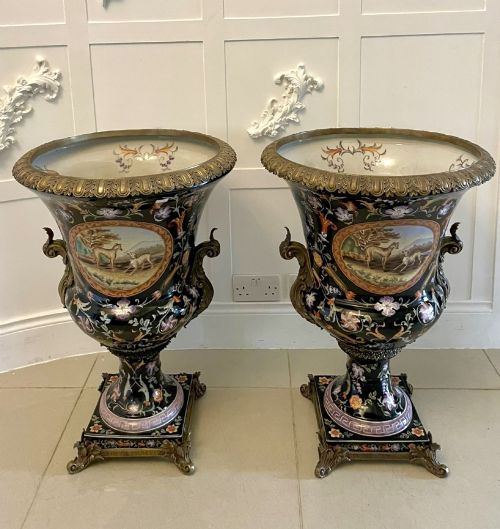
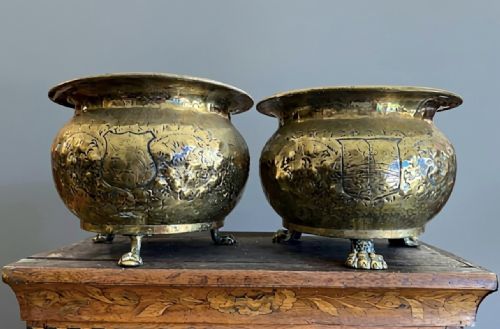
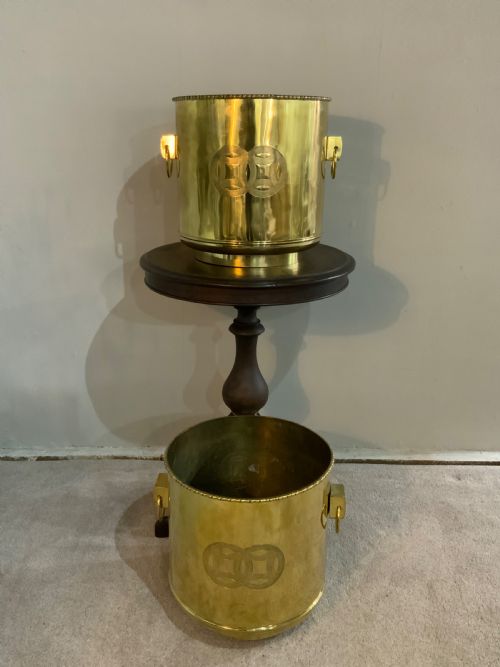


Brass Cachepot Pair
These brass cachepot pair selections bring period plant holders into the home, offering matched vessels for interior foliage.
Brass Cachepot Pair
A brass cachepot pair provides matching plant holders designed to conceal ordinary flowerpots within decorative metal containers. These decorative vessels appear across periods from the nineteenth century into the twentieth century, reflecting diverse international influences.
The selections on this page encompass various styles, including French Baroque, Napoleon III, Edwardian, Victorian, and Asian Revival. Buyers frequently encounter forms described as jardinières, planters, or plant pots in materials such as brass, bronze, and ormolu.
Origin variations include French, Dutch, Chinese, and Japanese designs, sometimes incorporating porcelain, enamel, wood, or copper elements. Each matched pair demonstrates the distinct aesthetic priorities of its period of manufacture.
Materials and construction methods
Metalworking techniques for these plant holders involve casting, polishing, and embossing brass, bronze, and ormolu. Artisans also utilised copper and incorporated porcelain panels or enamel details to enrich the decorative surface.
Mounting methods combine metalwork with other substances, such as porcelain bodies or wooden components. Surface treatments range from polished finishes to textured embossed patterns, including traditional dinanderie work.
The selection includes styles ranging from Victorian and Edwardian to Asian Revival and 19th Century Dutch designs.
Assessing quality in a brass cachepot pair
Distinctions in quality emerge through the crispness of casting and the depth of surface ornamentation, particularly in embossed or chased metalwork. Superior examples display careful finishing at the joins and well-integrated mounts.
The choice of secondary materials, such as fine porcelain inserts or genuine ormolu rather than plain alloys, elevates the character of a piece. Harmony between the two vessels in a pair ensures a balanced visual presentation.
The Brass Cachepot Pair Glossary
- Cachepot
- An ornamental container designed to hold an ordinary flowerpot and catch drainage water. It derives from the French word for hide pot.
- Jardinière
- A decorative stand or container for holding flowers and plants. These vessels often feature substantial ornamentation and heavy metal construction.
- Ormolu
- Gilded bronze used for decorative mounts on furniture and ornamental objects. The technique involves applying a gold amalgam to a bronze base.
- Dinanderie
- A traditional term for medieval and later brass or bronze wares produced in Belgium and northern France. It encompasses beaten and engraved decorative vessels.
- Japonisme
- The influence of Japanese art on Western culture during the late nineteenth century. This aesthetic appears in forms and decorative motifs of the period.
Brass Cachepot Pair: Frequently Asked Questions
What is a brass cachepot pair used for?
These matched vessels serve as decorative holders for potted plants inside the home, keeping ordinary flowerpots out of sight.
Historically, they sat on tables, windowsills, or plant stands to bring greenery into principal rooms while protecting furniture from moisture.
How do I date a brass cachepot pair?
Dating relies on stylistic clues, manufacturing techniques, and the specific metal alloys or secondary materials used in construction. Pieces from the nineteenth century often show distinct revival styles like French Baroque or Asian Revival.
Examining the construction methods, such as hand-chasing versus machine stamping, helps narrow down the period of manufacture.
Are cachepots waterproof?
Many older metal plant holders were designed primarily for decorative display rather than holding water directly. Using a modern inner plastic pot or saucer protects the historic interior from moisture and mineral deposits.
Checking the bottom and interior seams reveals whether the vessel was constructed to hold water without leakage.
How do I care for antique brass?
Care involves gentle dusting with a soft, dry cloth to prevent the accumulation of dirt in engraved or embossed details. Avoiding harsh chemical cleaners preserves the aged patina that develops on older metal surfaces over time.
If cleaning is necessary, mild soap and warm water followed by immediate drying will protect the metal finish.