

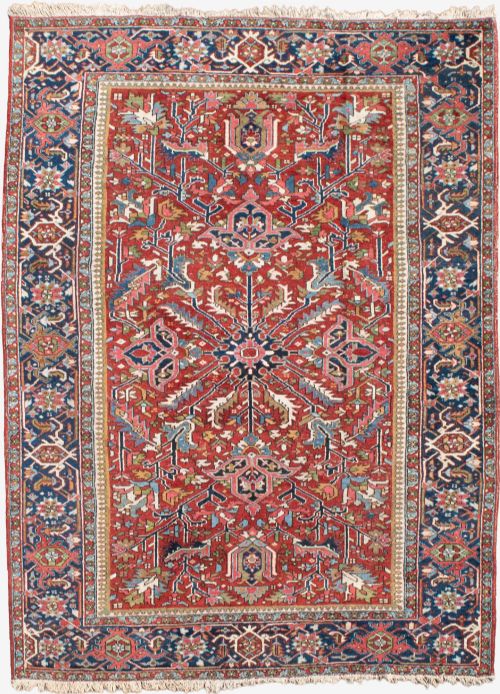


Large Area Carpet
A large area carpet grounds a room with significant scale, bringing centuries of regional weaving traditions directly to the floor.
Large Area Carpet
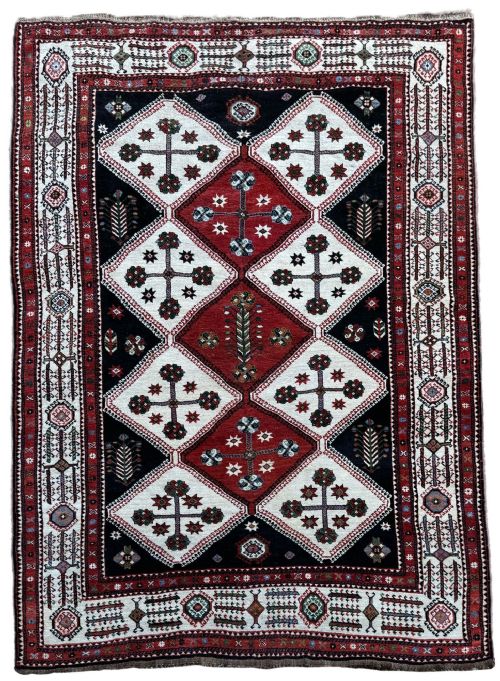
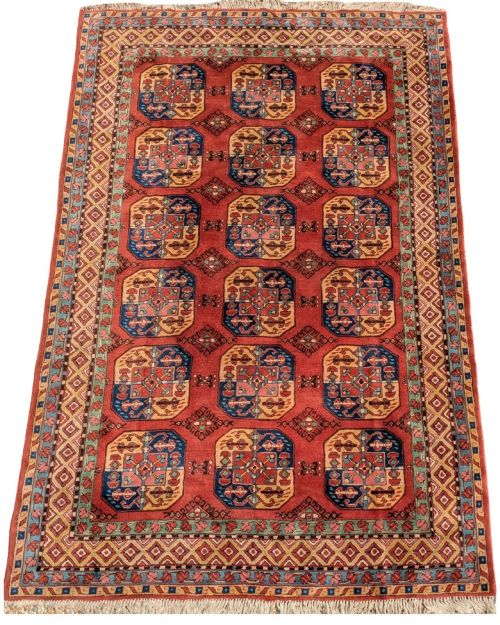
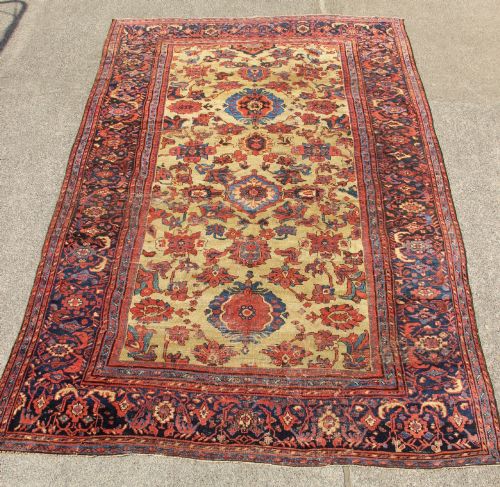
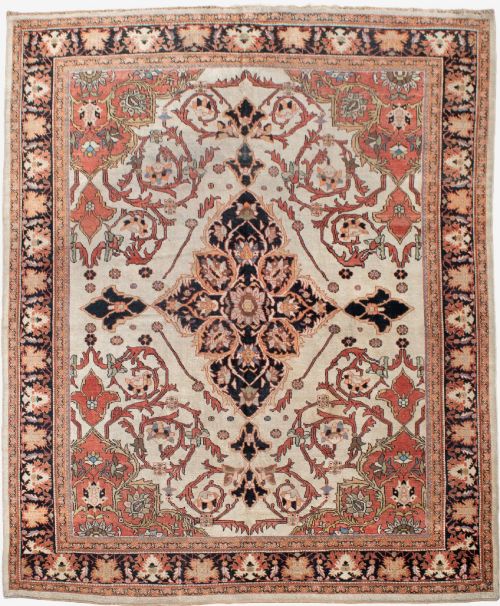
A large area carpet spans substantial floor space, designed to anchor sizeable reception rooms and country houses from the nineteenth and early twentieth centuries. These floor coverings emerge from diverse regional traditions, encompassing Persian city workshops, Anatolian towns, and tribal communities across Central Asia.
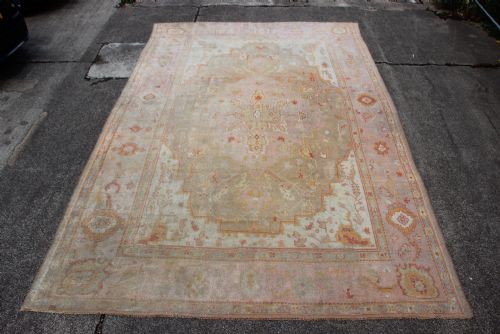
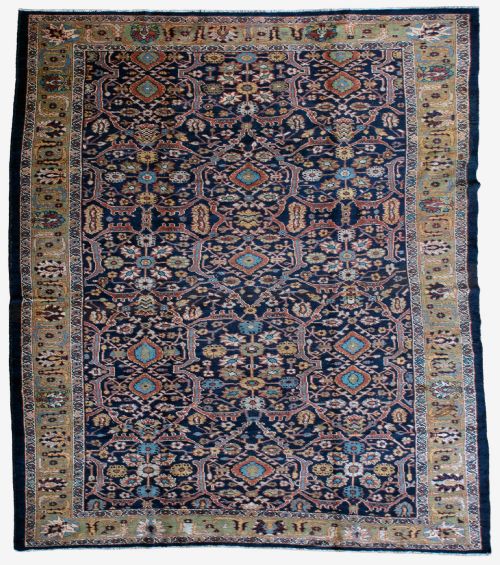
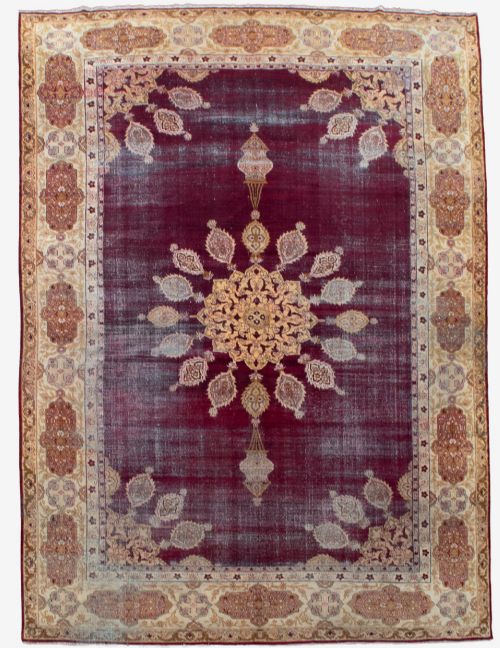
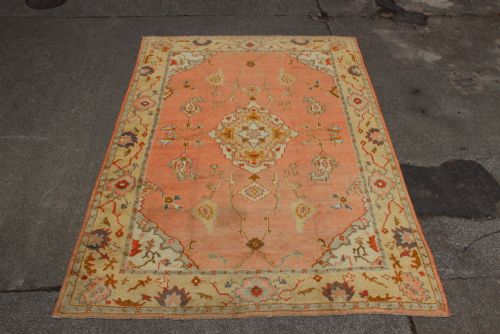
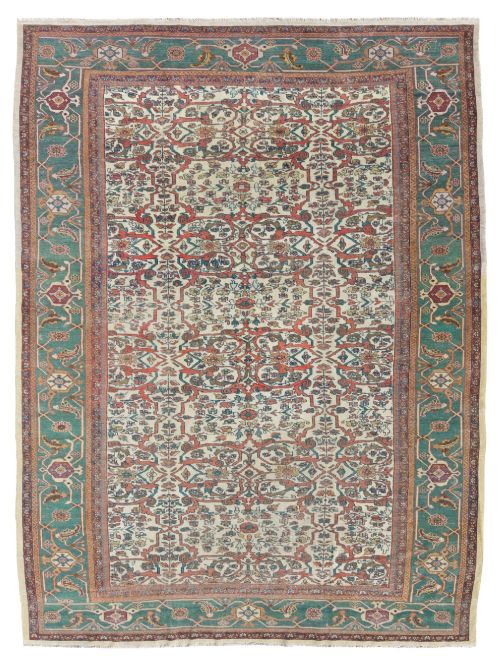
The selection on this page meets the search for a large area carpet through expansive formats originating from centres such as Heriz, Oushak, Mahal, and Amritsar. Buyers encounter both finely detailed room-sized Persian weaves and robust tribal main carpets created for enduring daily use.
Formats range from grand country house proportions exceeding five metres in length down to substantial square and rectangular formats. These textiles reflect the specific aesthetic preferences of their periods, spanning from the late nineteenth century up to the 1940s.
How they were made
Construction relies upon a foundation of durable cotton warps and wefts that support dense piles of hand-spun wool. Weavers knotted individual tufts by hand across the loom, creating resilient surfaces designed to withstand generations of foot traffic.
Dyeing methods combined natural materials to produce rich palettes dominated by warm reds, pale ivories, sky blues, and earthy tones. Over time, these natural colourants mellow gracefully, creating subtle tonal shifts across the surface of the wool pile.
Large Area Carpet Retail Price Guide 2026
Typical asking prices for large area carpet among the pieces listed under this phrase on Sellingantiques today, from the lower quarter to the upper quarter. They describe what is for sale here now, not the wider market.
Listings span periods from 1850 to 1940, utilising wool and cotton across Persian, Ottoman, and tribal styles.
What varies in quality
Quality rests in the precision of the knotting and the balance of the overall composition across a grand scale. Superior examples maintain structural integrity and crisp graphic clarity even when stretched to room-sized proportions.
The handling of natural dyes and the quality of the wool determine how gracefully a large area carpet ages under heavy use. Finer grades display greater intricacy in floral or geometric motifs and more harmonious transitions of colour.
Haji Jalili Tabriz
The Large Area Carpet Glossary
- Heriz
- A region in north-west Persia known for producing large carpets with bold geometric medallions and robust structural wool.
- Oushak
- An Anatolian weaving centre famous for large-scale decorative carpets featuring soft pastel palettes and expansive floral designs.
- Gul
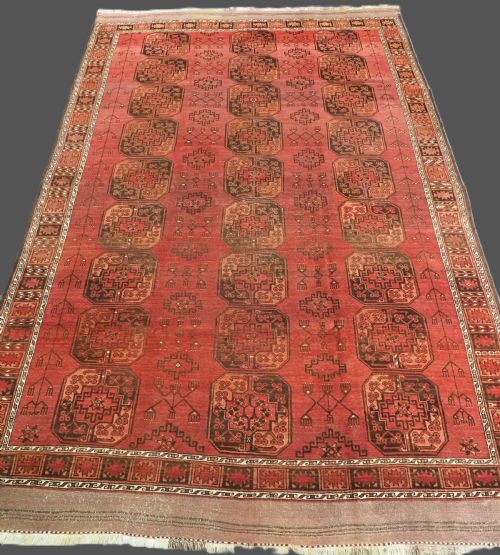
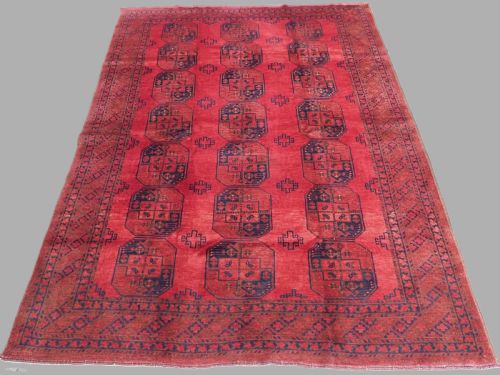
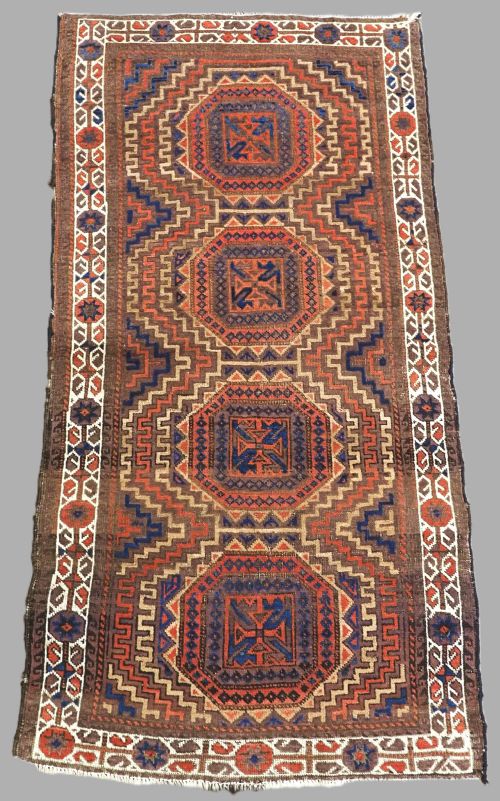
- A repeating octagonal or medallion motif frequently found in tribal carpets from Turkmen and Baluch traditions.
- Warp
- The vertical threads stretched tightly on the loom that form the foundational skeleton of a hand-knotted carpet.
Large Area Carpet: Frequently Asked Questions
How do I choose the right size?
Measure the room carefully, leaving an appropriate margin of exposed floorboards around the perimeter of the furniture arrangement. Large area carpets work best when furniture legs can sit comfortably on the textile.
Consider the traffic patterns in the space to ensure doors open freely over the pile height. Scale the carpet to the proportions of the room rather than just the furniture group.
How do I care for my carpet?
Vacuum the surface regularly using gentle suction without a rotating brush roll to protect the wool pile and foundational structure. Rotate the floor covering periodically to ensure even exposure to natural light and foot traffic.
Attend to spills immediately by blotting gently with a clean white cloth rather than rubbing. Professional cleaning by specialists in antique textiles is recommended every few years.
How do I identify a tribal carpet?
Tribal carpets display geometric motifs, repeating guls, and asymmetric designs passed down through generations of nomadic or village weavers. These pieces often feature thicker wool and more saturated, earthy colour palettes than formal city workshops.
Inspect the back of the textile for irregularities in the weave and knotting that reflect hand production outside organised urban factories.
What is an Oushak carpet?
Oushak carpets originate from a historic weaving town in western Anatolia known for distinct decorative styles. They typically feature large-scale floral patterns rendered in softer, muted tones of terracotta, ivory, and pale blue.
These carpets became popular in Western interiors due to their ability to complement diverse decorating schemes through their warm, faded appearance.