


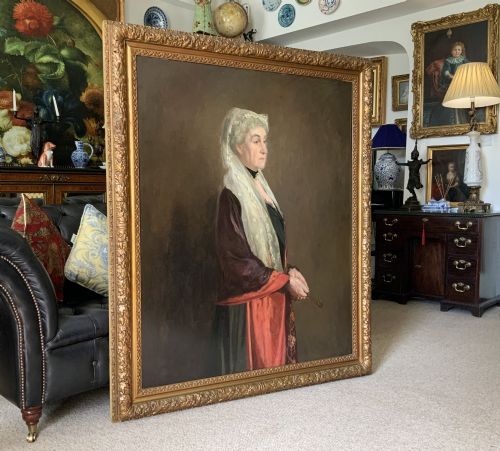
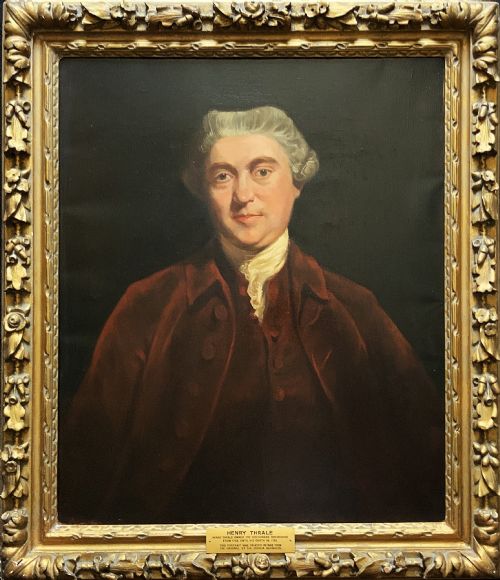
Large Framed Art
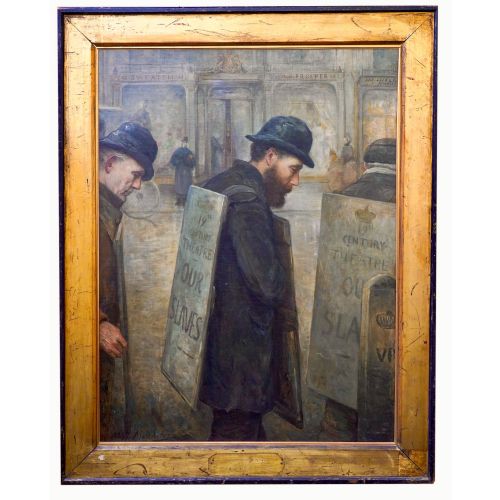
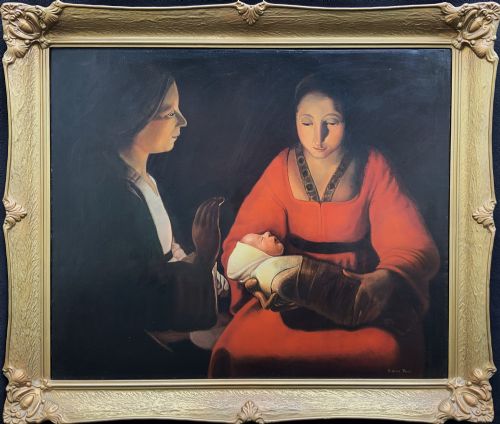
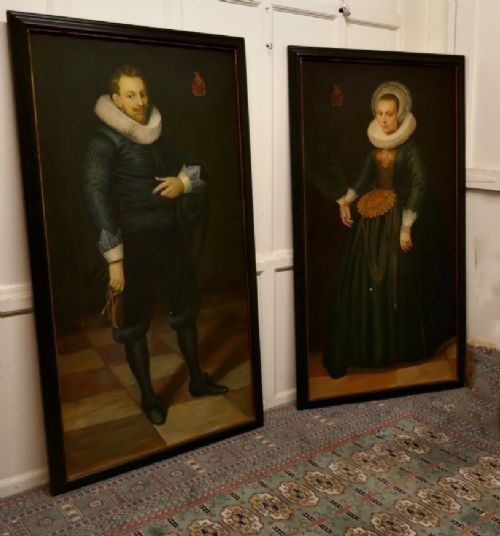
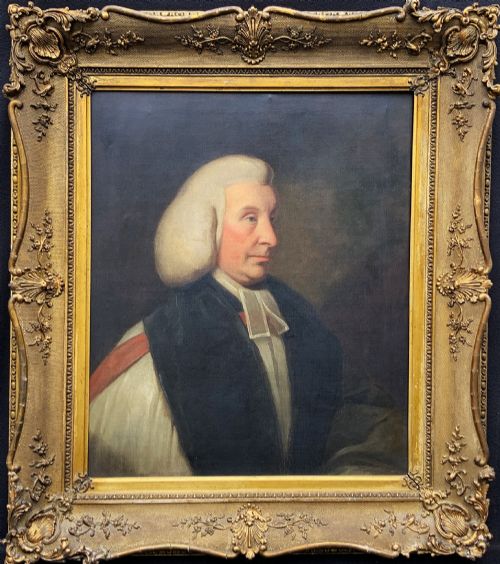
Large antique framed art brings commanding scale and historic presence to a room, ranging from oil portraits to botanical studies.
Large Framed Art
Large antique framed art encompasses substantial wall pieces created across the eighteenth, nineteenth, and early twentieth centuries. Buyers search for these works to anchor a room with period character and significant visual weight.
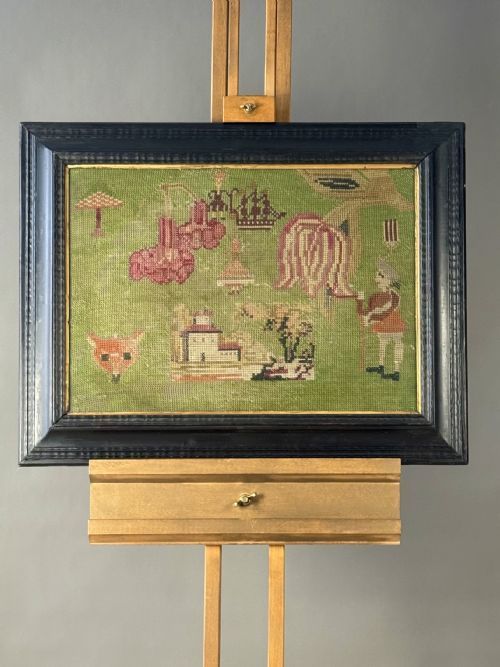
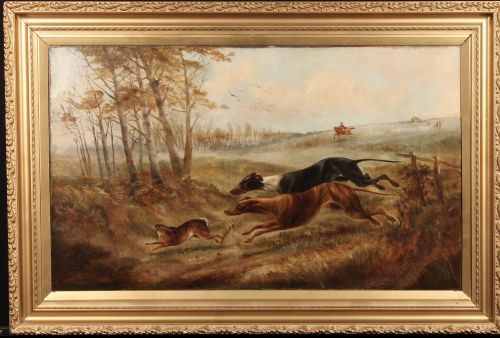
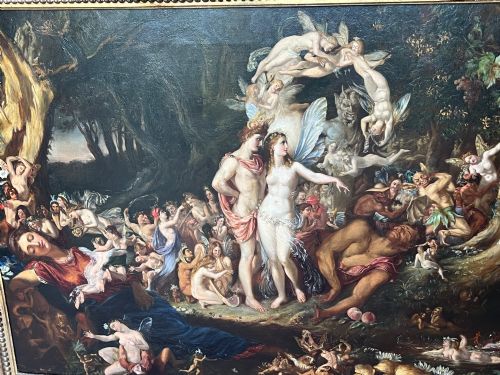
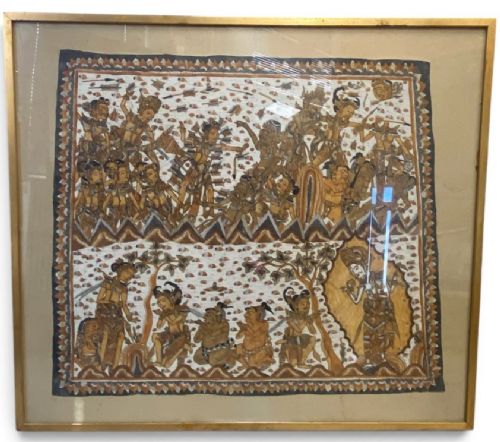
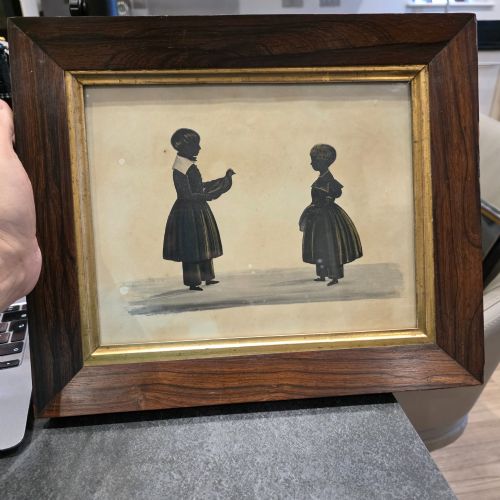
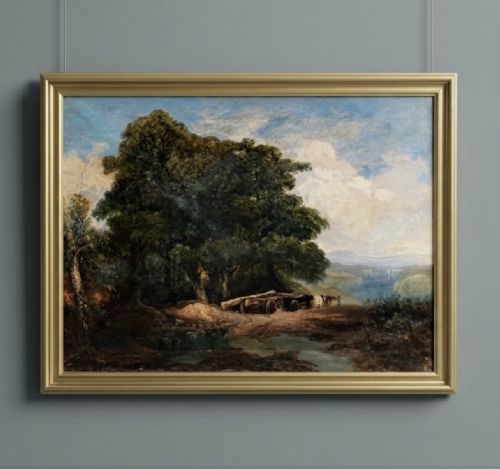
The category spans oil paintings on canvas, delicate needlework pictures, pastels on paper, and historic prints housed in period surrounds. Oil portraits and romantic landscapes from the Victorian and Georgian eras frequently appear.
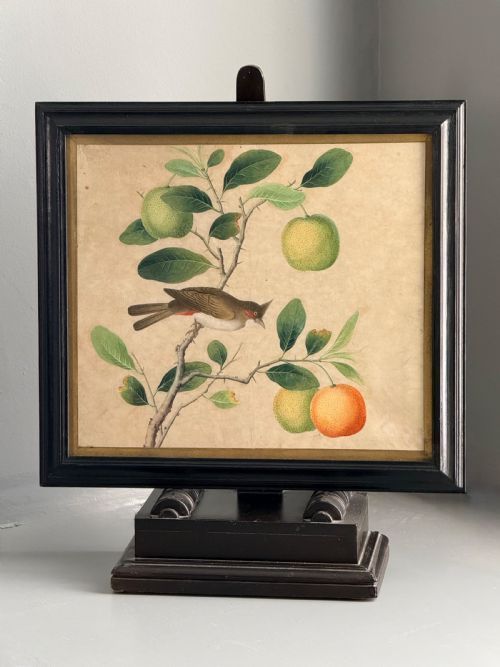
Makers and artists range from named portrait painters to traditional textile artisans working on silk and pith paper. Pieces often arrive framed in original wood or gilt mouldings that match the scale of the artwork.
Materials and construction
Artists painted primarily with oil on canvas or applied gouache to pith paper, while textile works utilised silk, wool, and embroidery thread. Supports required sturdy wooden stretchers or backing panels to sustain the heavy dimensions.
Frames were constructed from wood and finished with carved giltwood, decorative plaster mouldings, or simple oak borders. Glass protected delicate works on paper, pastel, and textiles from atmospheric damage.
One portrait keeps an eternal eye on the room alongside a painted pair of Chesapeake and Mermaid equestrian studies.
Quality and execution
Quality rests upon the skill of the draftsmanship, the handling of pigment, and the integrity of the original support. Finer paintings show expressive brushwork and anatomical precision, whereas standard decorative pieces rely on simpler formulae.
The preservation of the original frame and the surface stability of the canvas or paper dictate the desirability of the piece. Untouched oil paintings with minimal relining sit at the higher end of the range.
Richard Sebastian Bond·Felix Stone Moscheles·Sir Joshua Reynolds·Thomas Smythe·John Opie RA·George Watson
The Large Framed Art Glossary
- Giltwood
- Carved wood coated in a thin layer of gold leaf or gilt preparation. It creates a reflective, ornate border common in formal antique frames.
- Oil on Canvas
- Pigment mixed with drying oil applied to a stretched woven fabric support. This combination allows for rich colour blending and durability over centuries.
- Needlework Picture
- A decorative composition stitched with wool or silk threads on a canvas or linen ground. These framed textiles often depict historic or pastoral scenes.
- Pith Paper
- A delicate material made from the spongy interior of the tetrapanax papyrifer plant. Artists used it in the eighteenth and nineteenth centuries for miniature and gouache paintings.
- Triptych
- A work divided into three separate panels hinged or displayed together. They often feature central religious or narrative imagery flanked by complementary wings.
Large Framed Art: Frequently Asked Questions
Where should I place large art in a room?
Position large statement pieces on primary focal walls, such as above a fireplace mantel or along a main dining room elevation. Ensure the centre of the artwork sits at eye level for balanced viewing.
Keep pieces away from direct sunlight and strong heat sources to protect oil paint, paper, and textiles from fading or cracking over time.
How do I identify the period of a frame?
Frame styles often mirror the prevailing architecture and decorative tastes of their era, from Georgian neoclassical moulding to heavy Victorian giltwork. Look at the corner joins and backboards for signs of age, such as hand-cut screws or old fixings.
Many pieces retain their original frames, though some artworks were paired with period surrounds later in their history.
How do I clean antique oil paintings?
Dust surfaces gently with a soft, dry brush to remove loose particles without disturbing the pigment. Avoid using water, household cleaners, or chemical solvents on historic canvas.
Professional conservators should handle deeper cleaning, varnish removal, or canvas repairs to prevent permanent damage to the original paint layer.