




Large Couch
A large antique couch provides generous seating through traditional forms shaped by centuries of cabinet-making and upholstery.
Large Couch
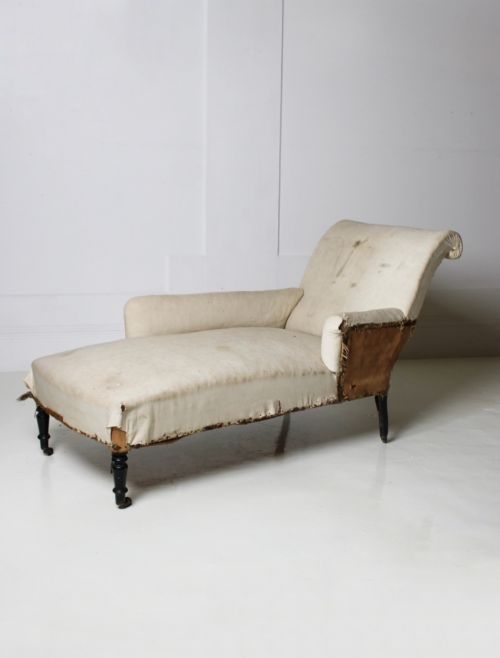
A large antique couch encompasses substantial multi-seater sofas, settees, daybeds, and chaise longues found across nineteenth-century and early twentieth-century periods. These seating forms served formal reception rooms, drawing rooms, and expansive country houses where seating capacity matched grand proportions.
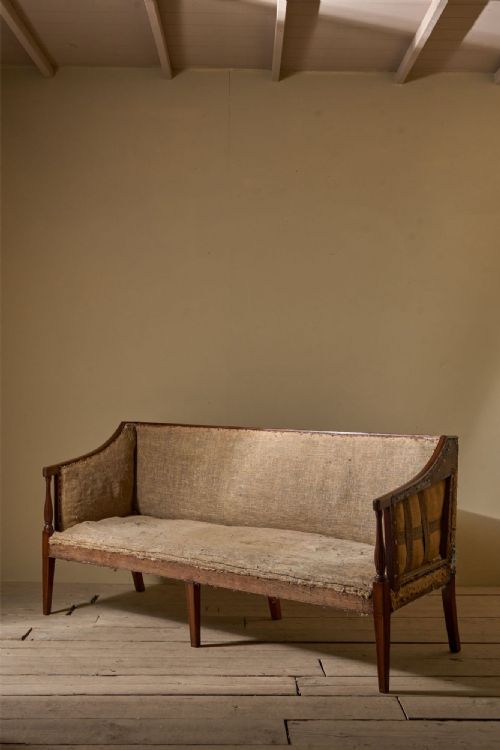
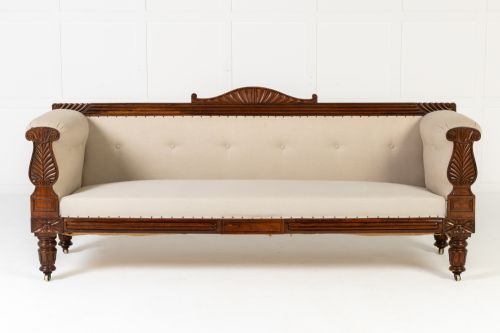
The versions most frequently encountered on this page include mahogany-framed William IV and Georgian settees, deep-seated Chesterfield sofas finished in leather or fabric, and carved giltwood French salon pieces. English country house examples alongside Regency and Victorian iterations dominate the available selection.
Formations range from open-arm reception settees and drop-arm designs to low-back triple-leg Chesterfields and show-frame drawing room seating. Such pieces combine heavy timber frames with expansive upholstered areas intended for comfortable lounging or formal entertaining.
Materials and construction methods
Frames rely heavily on dense hardwoods such as mahogany, rosewood, and walnut, frequently carved with floral motifs, scrolls, or structural mouldings. Giltwood frames employ gilded gesso over timber bases, particularly in French Louis-style and Regency seating.
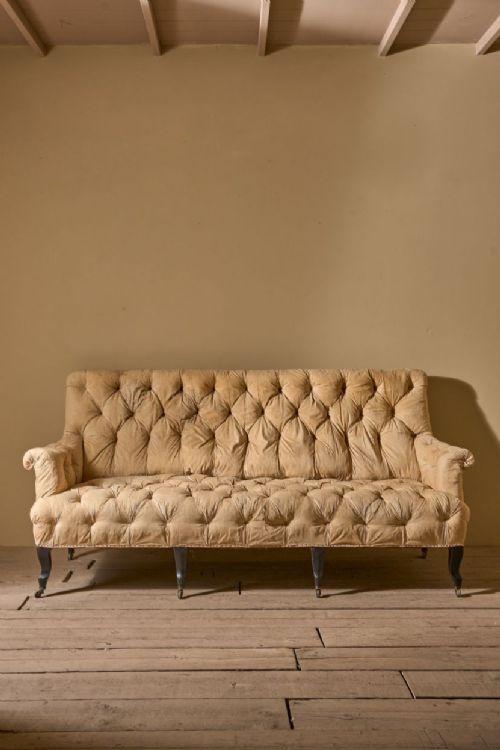
Upholstery techniques utilise traditional stuff-over methods employing hessian, horsehair, and ticking beneath top layers of leather, velvet, or fabric. Buttoning and hand-dyed finishes appear extensively on Chesterfield and knole styles to secure deep padding across backs and seats.
Several large couches arrive complete with original ticking, ready to whisper secrets of nineteenth-century drawing rooms.
Distinctions in quality
The standard of carving and timber selection dictates the baseline of craftsmanship, with figured mahogany and finely hand-carved rosewood framing sitting above simpler structural timbers. Original joinery integrity and the retention of primary frame members without substantial timber replacement distinguish superior examples.
Upholstery foundation quality separates exceptional pieces, notably where original webbing, hessian, and sprung interiors survive intact beneath period leather or velvet. The precision of buttoning, hand-stitching, and the presence of maker stamps or labels add significant distinction.
Howard & Sons·William Birch
The Large Couch Glossary
- Chesterfield
- A deep-tufted, heavily padded sofa traditionally upholstered in leather with arms and back of equal height. This form offers robust durability and classic nineteenth-century presence.
- Giltwood
- Timber coated with gold leaf or powder over a prepared gesso ground. This luxurious finish defines formal French and Regency salon seating.
- Chaise longue
- An upholstered sofa in the form of a chair with a long seat large enough to support the legs. These pieces suit boudoirs and extended reception spaces.
- Show frame
- A wooden structural framework left exposed around the upholstered elements of a seat. This design highlights the carved mahogany or rosewood craftsmanship.
- Drop arm
- A mechanical arm mechanism that lowers on one or both sides of a sofa. This feature allows the seating to convert into a daybed or day lounge.
Large Couch: Frequently Asked Questions
How do I clean antique leather?
Antique leather requires gentle cleaning with specialised saddle soaps or leather balms to maintain flexibility and preserve the original patina.
Avoid modern chemical detergents or excessive water, which can strip natural dyes and crack aged hide.
Can I reupholster a period sofa?
Many large antique couches are specifically acquired for reupholstering in fabrics of choice, using traditional webbing and horsehair.
Retaining original ticking or foundation materials preserves historical integrity where the underlying upholstery remains sound.
How do I date a Victorian couch?
Dating relies on examining timber species, carving styles, and construction techniques such as hand-cut screws or early coil springs.
Early Victorian pieces often feature rosewood and heavy scrolling, while later Victorian items incorporate walnut and simpler framing.
Where should I place a large couch?
These substantial seats function well as central focal points in large drawing rooms, libraries, or open-plan reception spaces.
Ensure adequate floor clearance around drop arms or chaise extensions to allow full movement and visibility of the frame.