




Period Mahogany Bench
A period mahogany bench brings rich timber and enduring architectural form to a hallway or drawing room.
Period Mahogany Bench
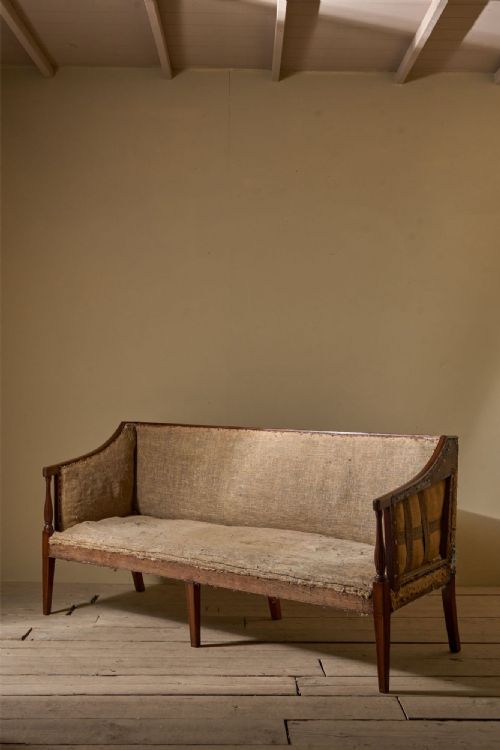
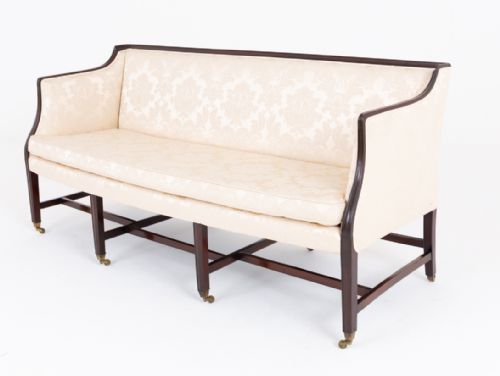
A period mahogany bench encompasses forms ranging from generous window seats and hall benches to substantial settees and multi-seat sofas. When searching for a period mahogany bench, buyers encounter varied seating constructed across the eighteenth and nineteenth centuries, spanning Georgian, Regency, and Edwardian eras.
The selection includes specific regional pieces, such as Irish examples, alongside country house sofas and carved window seats with scroll ends. These objects serve both functional seating roles and decorative architectural purposes within a traditional interior.
Earlier pieces from the eighteenth century feature classical Chippendale and Hepplewhite styling, while nineteenth-century iterations embrace Regency scroll ends and later revival movements. The forms bridge the gap between formal reception furniture and practical corridor seating.
Materials and Construction
Solid mahogany and mahogany veneers form the primary structural timber across these pieces, frequently paired with secondary woods for internal framing. Craftsmanship relies on traditional joinery techniques suited to supporting substantial upholstered or timber seating platforms.
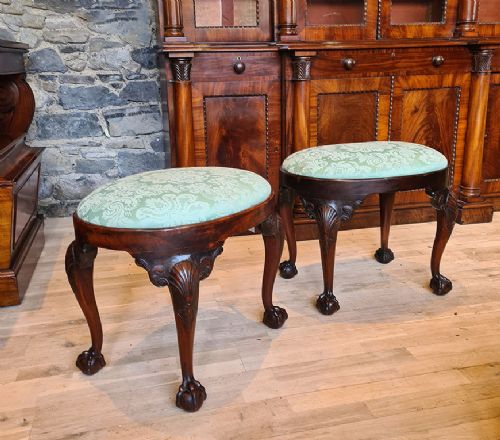
Upholstered variants incorporate traditional textile coverings including damask, hessian, calico, and general fabric upholstery over internal stuffing. Brass accents appear on specific designs, providing structural or decorative detailing to the timber framework.
Certain foot stands even carry the stamp of Gillows of Lancaster, proving that eighteenth-century makers loved branding their woodwork.
Defining Quality
Quality in these benches rests on the depth of the timber grain, the crispness of carved wooden details, and the integrity of the original frame construction. Superior examples maintain structural harmony between the timber supports and the upholstered portions.
The refinement of scroll ends, the proportion of the legs, and the selection of dense, richly coloured mahogany distinguish finer workshop output from simpler utilitarian seating. Original surface patination significantly elevates the standing of a piece.
The Period Mahogany Bench Glossary
- Mahogany
- A durable tropical hardwood valued for its rich reddish-brown colour and stability in furniture making. It accepts fine carving and develops a deep patina over centuries.
- Scroll end
- A decorative rolled terminal found on the arms or ends of benches and sofas. This feature defines many Regency designs.
- Window seat
- A specialised form of bench designed to fit within a window recess. These items frequently incorporate cylindrical roll-end supports.
- Chippendale
- A cabinet-making style associated with the mid-eighteenth century. It is characterised by ornate carved mahogany details and solid joinery.
Period Mahogany Bench: Frequently Asked Questions
Where should I place a mahogany bench?
These benches suit grand hallways, beneath large windows, or acting as low seating in a drawing room.
Their substantial timber presence requires adequate floor space to let the architectural form and carved details show clearly.
How do I identify a Regency bench?
Regency pieces often display characteristic scroll ends, bold mahogany grains, and classical architectural influences from the early nineteenth century.
Look for cylindrical roll supports and clean lines that separate them from earlier ornate eighteenth-century carvings.
Are these benches comfortable for daily use?
Upholstered variants with fabric or damask coverings offer softer seating, while solid timber hall benches provide firmer, upright support.
Most period examples function well for short seating periods rather than lounging.