
Large Centre Table
A large antique centre table anchors a room, offering substantial timber and presence suited to grand halls and libraries.
Large Centre Table
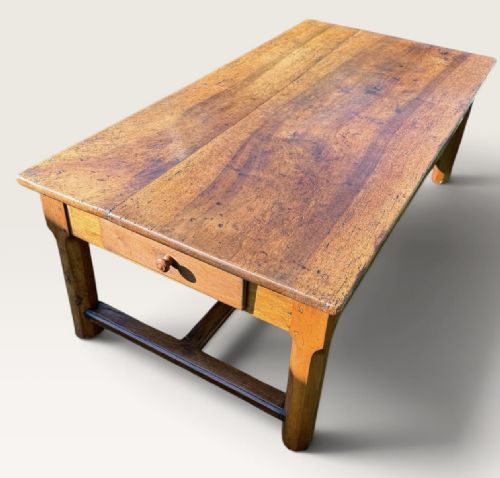
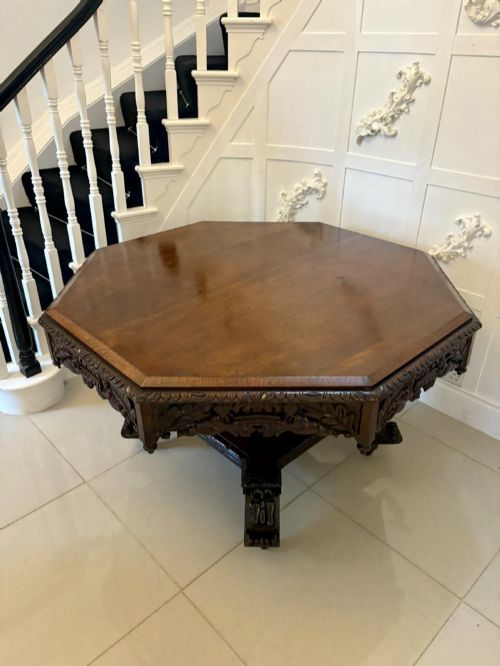
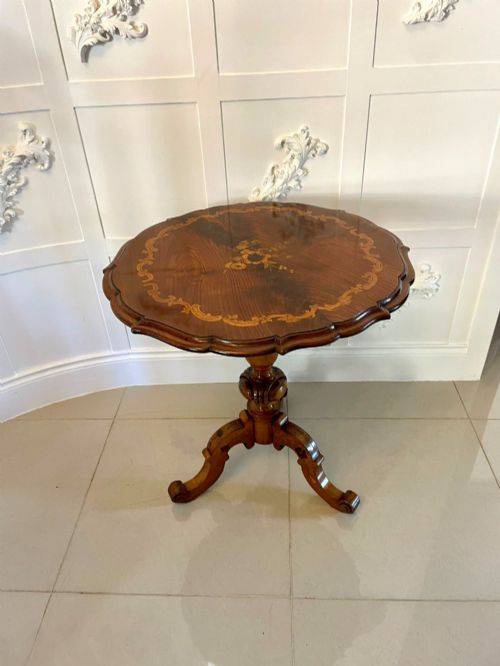
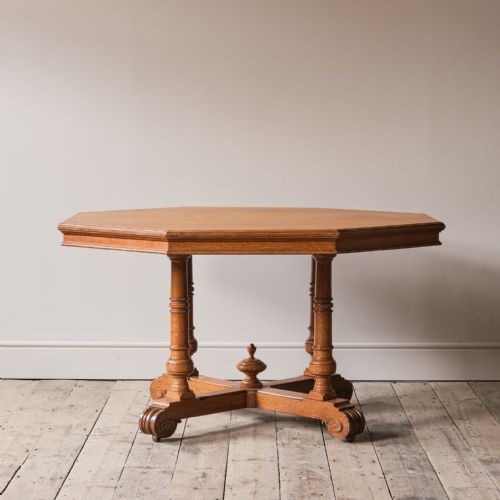
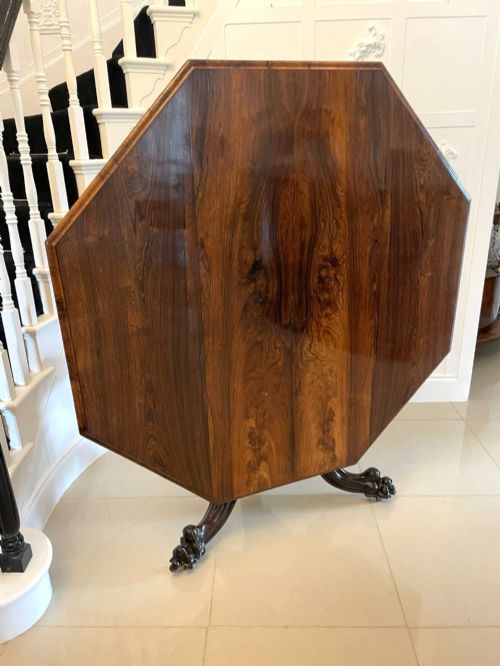
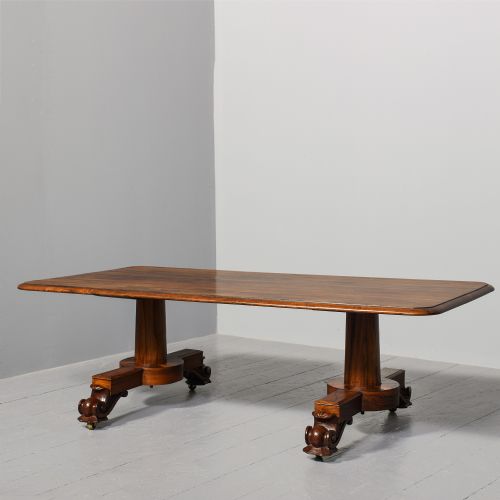
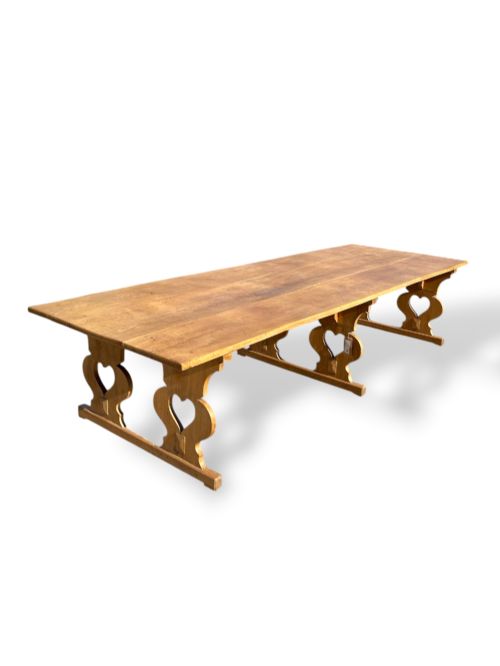
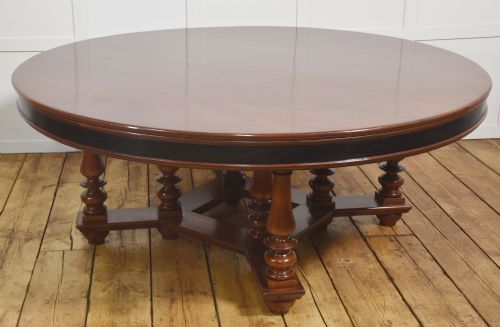
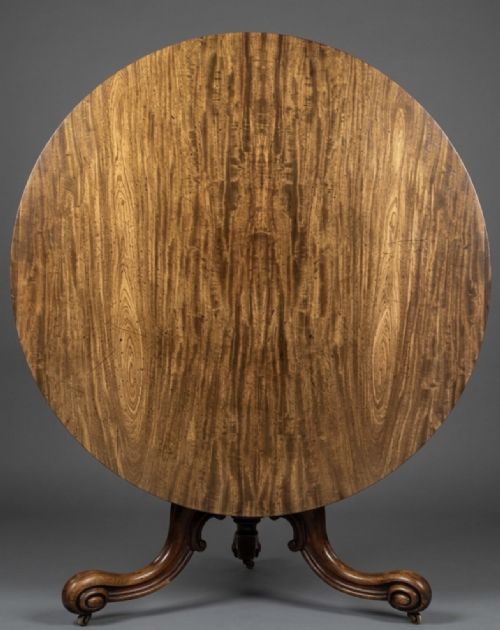
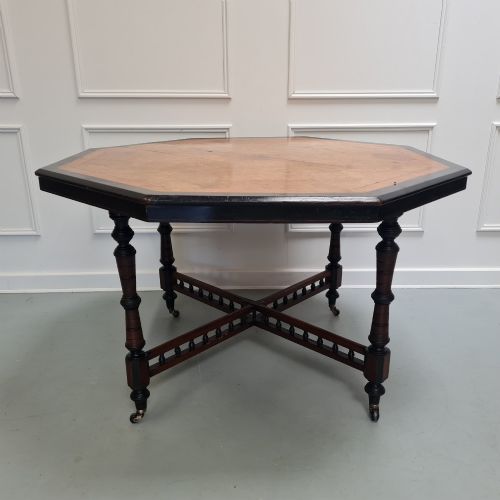
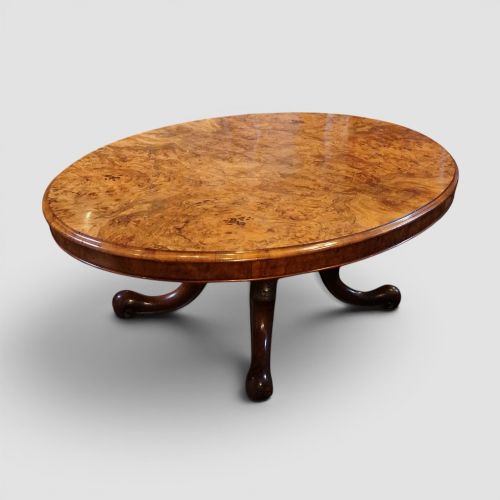
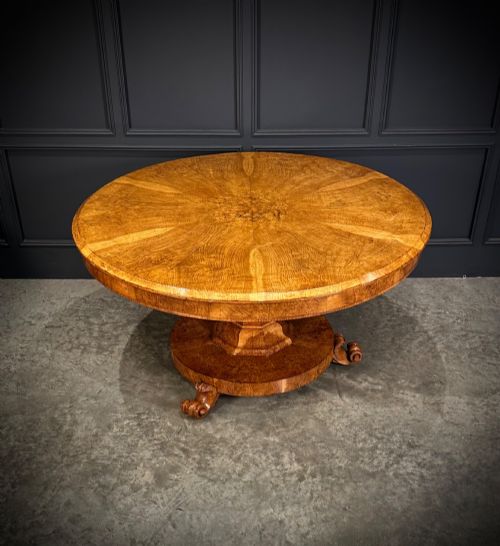
A large antique centre table functions as a freestanding piece designed to be viewed from all sides rather than pushed against a wall. Examples on this page span the 19th Century, Victorian period, Regency, and William IV eras, appearing in round, oval, octagonal, and rectangular forms.
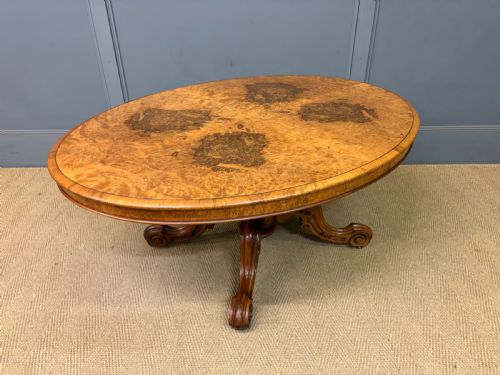
Makers and workshops constructed these pieces in mahogany, rosewood, oak, walnut, burr walnut, and yew wood, often incorporating marble tops, leather inserts, or marquetry inlay. Formats range from dining and breakfast tables to library tables, coffee tables, and occasional tables.
Materials and construction
Cabinetmakers utilised dense hardwoods such as mahogany, rosewood, and oak for structural stability, frequently applying decorative veneers like burr walnut and flame mahogany to tabletops.
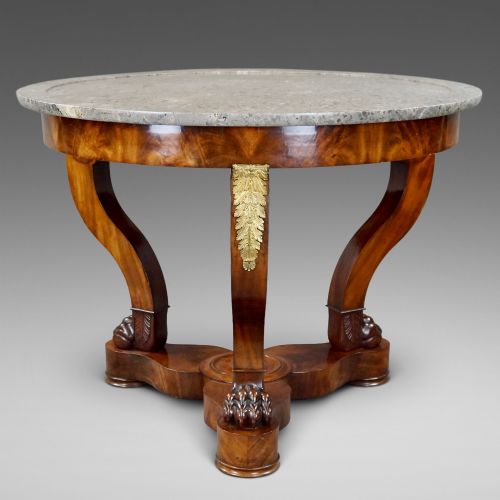
Techniques included tilt-top mechanisms for storage, marquetry inlay with contrasting timbers, brass mounts, and carved pedestals or tripod bases to support heavy stone and marble tops.
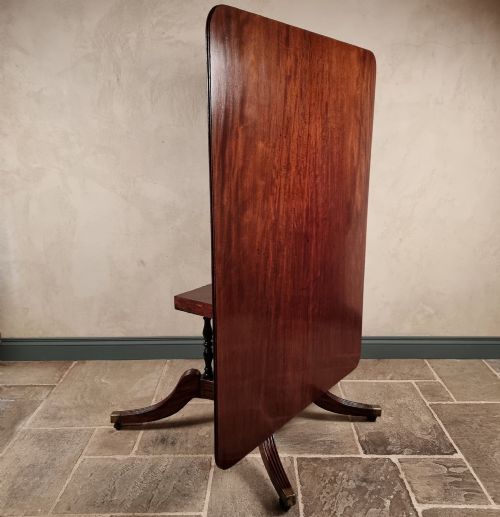
Several heavy tables hide subtle tilt-top mechanisms, built so a sprawling piece of furniture could flip upright and stand quietly against the wall.
Judging quality and craftsmanship
Quality depends on the selection of figured timber veneers, the precision of marquetry inlay, and the crispness of carved wooden details on pedestals and friezes.
Stable construction, heavy gauge materials such as solid marble or thick leather writing surfaces, and attribution to documented makers elevate a piece above standard domestic production.
Gillows·Egan Workshop·Joseph Rodgers·Edwards & Roberts
The Large Centre Table Glossary
- Gueridon
- A small French table, often circular, supported by a central pillar or figures. These pieces frequently feature marble tops and decorative wood finishes.
- Marquetry
- Decorative patterns formed by fitting together thin veneers of wood, ivory, or shell onto a solid background. This technique creates detailed pictorial or geometric designs on table tops.
- Tilt-top
- A hinged tabletop mechanism that allows the surface to be rotated and locked into a vertical position when not in use. It appears frequently on larger breakfast and centre tables.
- Library table
- A large freestanding table designed for writing and holding books, often fitted with inset leather tops and drawers within the frieze.
- Frieze
- The horizontal band situated directly beneath the tabletop, which sometimes houses drawers or receives carved ornamentation.
Large Centre Table: Frequently Asked Questions
Where should a centre table go?
A centre table requires an open space where people can walk entirely around it, making it ideal for large entrance halls, libraries, or spacious reception rooms. Because these pieces are finished on all sides, they command attention away from walls.
Positioning one beneath a central ceiling rose or chandelier enhances its presence as the primary focal point of the interior.
How do I date a Victorian table?
Dating a Victorian piece involves looking at timber choices, construction methods, and stylistic influences. Early Victorian examples often use rosewood or mahogany with heavy pedestal bases, while later decades embraced walnut, oak, and aesthetic movement or Gothic revival details.
Examine the underside and drawer linings for tool marks, screw types, and secondary timbers which reveal manufacturing shifts across the nineteenth century.
Can I use a centre table for dining?
Many large antique centre tables double as dining or breakfast tables, particularly round tilt-top and pedestal forms from the Regency and Victorian periods. Their sturdy pillar bases provide ample legroom for seating guests comfortably.
Check the height clearance beneath the frieze and ensure the diameter accommodates the number of chairs required for your dining setup.
How do I care for marble tops?
Marble and stone tops require gentle cleaning with a damp cloth and mild, neutral soap to preserve the polished surface. Avoid acidic substances like vinegar, citrus, or wine, which can etch and dull the stone over time.
Using coasters and placemats protects the polished marble from scratching and staining during everyday use.