
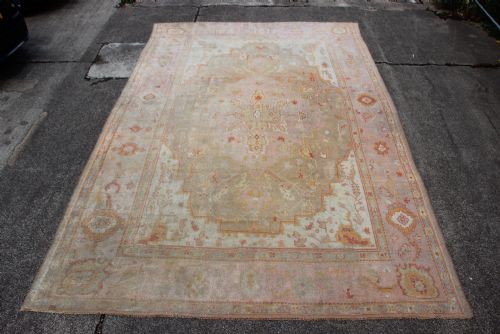
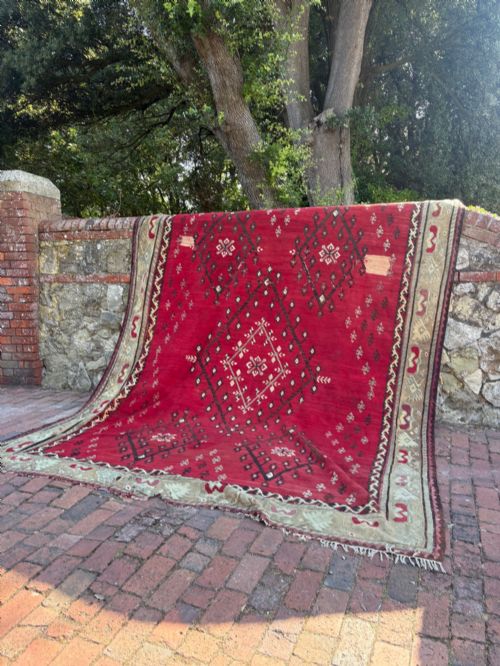
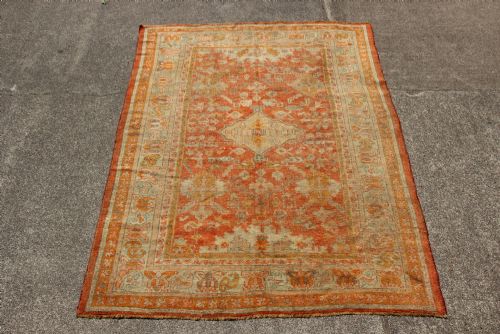


Large Anatolian Wool Rug
These large anatolian wool rug pieces bring substantial floor coverings with deep regional character to a room.
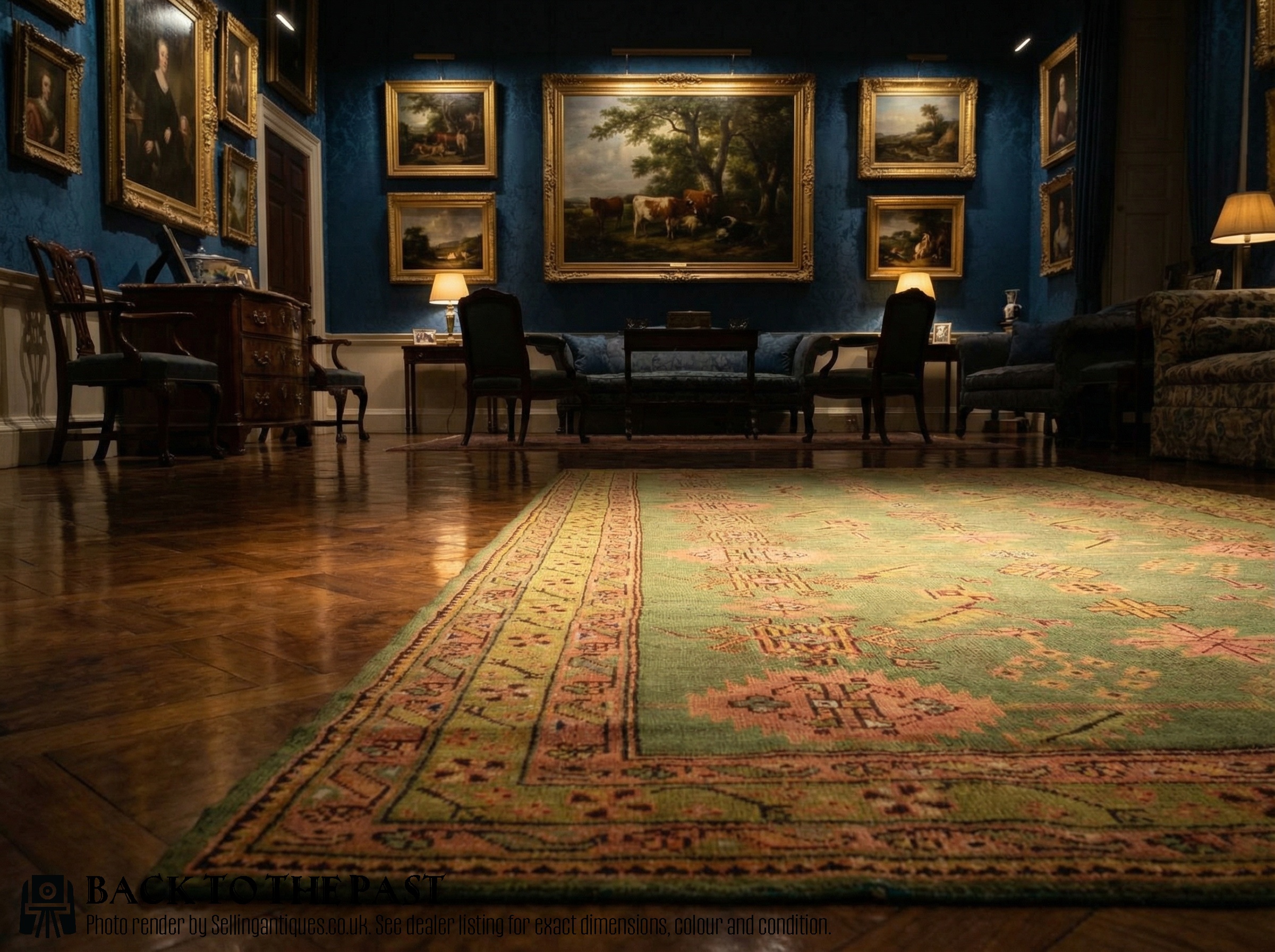
Large Anatolian Wool Rug
A large anatolian wool rug brings substantial floor coverage originating from Turkey during the late nineteenth and early twentieth centuries. These pieces appear primarily as large format carpets and flatweave kilims spanning centuries of traditional regional design.
The selection centres heavily upon Oushak carpets alongside village pieces from centres such as Bergama, Melas, Kula, Kayseri, Konya, and Sivas. Buyers encounter room sized floor coverings bearing Ottoman, traditional Anatolian, and tribal patterns.
How they were made
Weavers constructed these large formats using wool, cotton foundations, and occasionally angora wool. Artisans knotted or flatwove these materials by hand on vertical looms.
Dyes yielded soft pinks, pale blues, pastel tones, and scarce green fields across the surviving inventory. Natural colorants integrated into wool piles created the weathered surfaces seen today.
Materials recorded across the inventory consist strictly of wool, cotton, and angora wool.
What varies in quality
Design nuance and palette variation separate standard production from unusual examples. Scarce configurations such as willow tree motifs, specific green fields, and pink grounds alter the visual weight of a room.
Structural preservation and material integrity define the state of surviving textiles. Timeworn repairs and overall wear influence how flatweaves and knotted carpets rest upon a floor.
The Large Anatolian Wool Rug Glossary
- Kilim
- A flatwoven carpet or rug produced without a pile. These items utilise slit weave techniques to form geometric patterns.
- Oushak
- A significant tradition of rug weaving centred in Western Turkey. These carpets utilise distinctive knotting and softer pastel palettes.
- Flatweave
- A textile made by interweaving warp and weft threads directly without knotting. This technique produces a thin, pliable rug.
- Pile
- The upright yarn loops or cut ends forming the surface of a carpet. Wool fibres comprise this upper layer in knotted examples.
- Foundation
- The underlying structure of warp and weft threads supporting the rug. Cotton typically forms this base in traditional Anatolian pieces.
Large Anatolian Wool Rug: Frequently Asked Questions
How do I clean a wool rug?
Professional dusting and gentle surface washing preserve wool fibres and traditional dyes. Harsh chemicals damage the historical materials.
Regular light vacuuming without a rotating brush bar prevents dirt accumulation within the pile. Keep these textiles away from direct, prolonged sunlight to prevent colour fade.
Where were these rugs made?
Weavers produced these textiles across various regions of Turkey, including Oushak, Bergama, Konya, and Sivas. Each district developed distinct regional patterns and colour palettes.
Village workshops and tribal communities utilised locally sourced wool and traditional dyeing methods. This local production created the diverse styles found within the inventory.
Are these rugs suitable for heavy traffic?
Sturdy wool construction and thick pile depths allow many of these large carpets to handle general daily movement. Placing a quality underlay beneath the rug reduces friction and wear.
Flatweave kilims and heavily worn antique pieces require gentler placement in rooms with lower foot traffic. Assess the existing pile depth and foundation strength before positioning a piece in a busy hallway.
How do I identify an Oushak carpet?
Oushak carpets typically display larger scale floral motifs, medallion designs, and soft pastel palettes featuring muted pinks and blues. Artisans used slightly looser knots compared to Persian counterparts.
Lighter wool textures and distinctive warm undertones separate these Western Turkish pieces from other regional styles. The evidence shows these pieces often span significant room dimensions.