




Lalique Opalescent Glass Dish
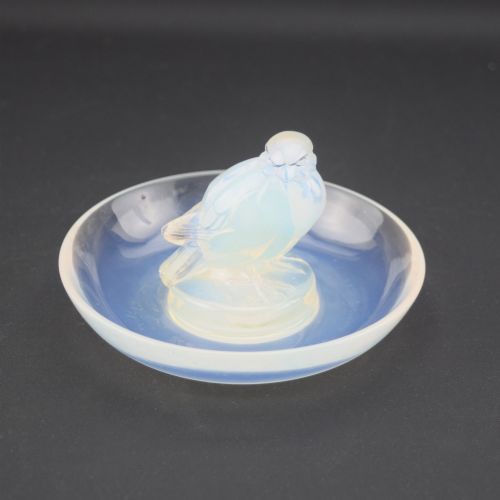
A lalique opalescent glass dish brings the luminescent, milk-blue fire of the interwar studio straight to your table.
Lalique Opalescent Glass Dish
When you search for a lalique opalescent glass dish, you encounter decorative bowls, chargers, and plates produced during the Edwardian and subsequent twentieth-century periods. These tablewares and display pieces capture light through translucent material that shifts in tone depending on the angle of illumination.
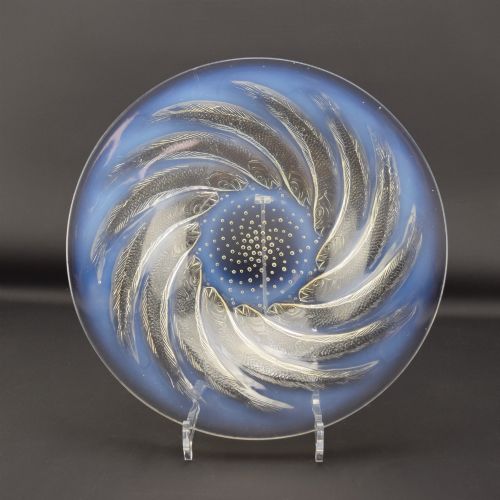
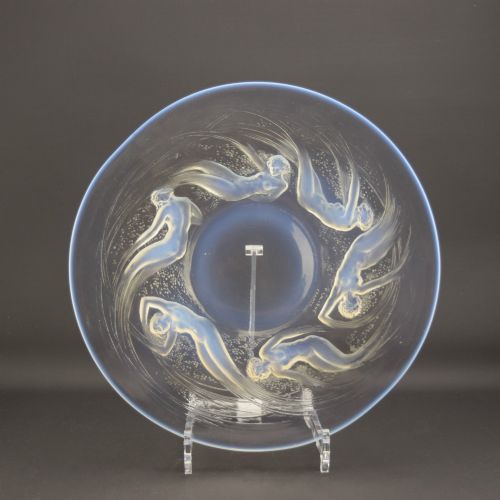
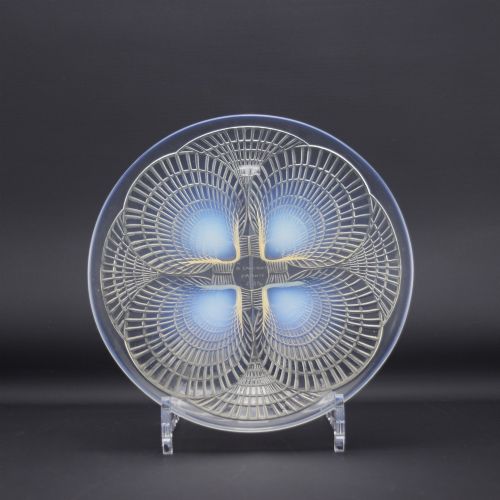
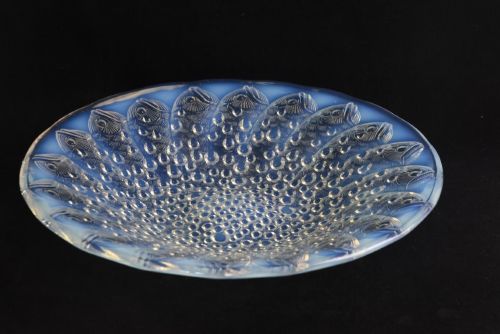
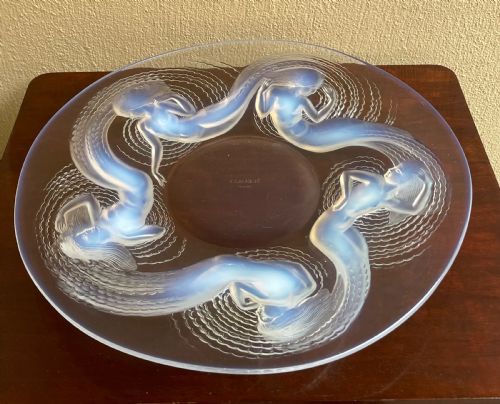
The selection centres heavily on Art Deco aesthetics, featuring moulded and pressed forms named after natural motifs such as fish, flowers, and foliage. Pieces range from shallow dishes and footed bowls to broad chargers carrying named designs like Ondines and Poissons.
Makers represented in this category include René Lalique, whose workshop defined the medium through distinctive pressed and moulded techniques. You will find specific named models such as Coquilles, Roscoff, and Lys appearing across the inventory.
Materials and Techniques
Makers utilised glass, mould-pressed and moulded into intricate relief patterns that trap and reflect ambient light. The characteristic milky-blue opalescence emerges from specific chemical additions and thermal manipulation during the cooling process.
Frosted glass finishes provide contrast against clear or opalescent areas, accentuating the depth of carved or moulded motifs such as petals, scales, and feathers. This interplay between polished surfaces and satin textures defines the physical construction of each item.
Judging Quality and Execution
The distinction between standard production and exceptional execution lies in the strength of the opalescent fire and the crispness of the moulded relief. Stronger optical shifting produces deeper blues and ambers when held to the light, separating masterworks from flatter, duller examples.
Depth and clarity in surface frosting determine how successfully the object renders fine details like fish scales or floral veins. Well-preserved definition along the high points of the relief indicates minimal wear from handling over the decades.
René Lalique
The Lalique Opalescent Glass Dish Glossary
- Opalescent glass
- Glass containing agents that cause it to appear milky-blue when viewed by reflected light and warm amber by transmitted light. This optical property creates the signature glow of the period.
- Moulded glass
- Glass shaped by being pressed into a metal or wooden mould while hot. This technique allowed makers to achieve repeatable, high-relief decorative patterns.
- Frosted glass
- Glass treated by acid-etching or sandblasting to produce a textured, non-reflective surface. It contrasts sharply with polished transparent areas on decorative vessels.
- Coupe ouverte
- An open bowl shape frequently utilised for large table centrepieces and decorative dishes. The term translates directly from French as an open cup.
- Charger
- A large decorative plate or tray used primarily for display rather than service. These substantial pieces often showcase the most complex moulded motifs.
Lalique Opalescent Glass Dish: Frequently Asked Questions
What is a lalique opalescent glass dish?
It is a decorative vessel made from pressed or moulded glass that exhibits a milky-blue luminescence under light.
These objects include plates, chargers, and bowls created during the Art Deco era.
How were these glass dishes used?
They served as decorative table bowls, service plates, and display chargers in interwar interiors.
Many functioned as centrepieces designed to catch and refract ambient room light.
How do I identify different patterns?
Moulded motifs on these pieces typically depict natural subjects such as fish, flowers, and human figures.
Titles like Poissons, Ondines, and Coquilles correspond to specific botanical and aquatic designs.
What period do these pieces date from?
The inventory spans the Edwardian period through the 1920s and 1930s.
Production concentrates heavily around the Art Deco movement of the interwar years.