

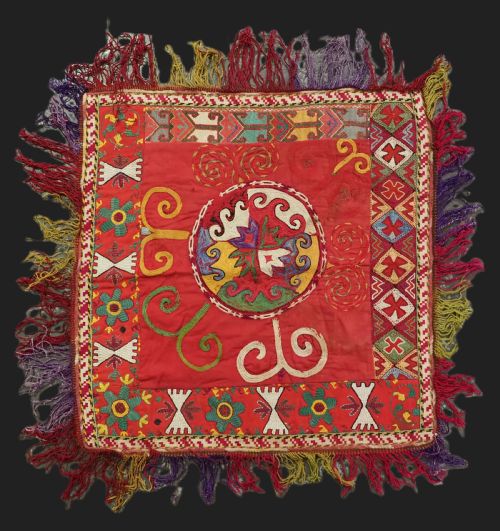


Lakai Embroidered Tapestry
Lakai embroidered tapestry pieces are vibrant Central Asian tribal works crafted for domestic interiors and ceremonies, prized for their bold geometric wool and silk needlework.
Lakai Embroidered Tapestry
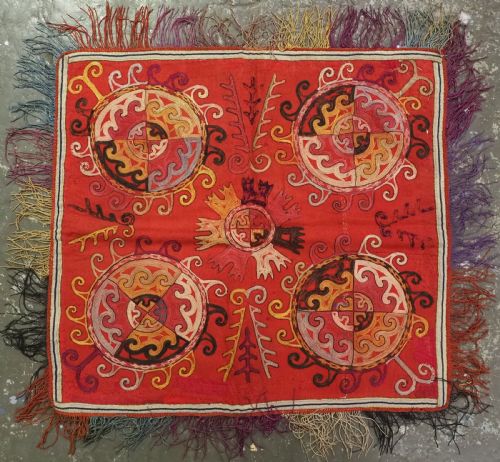
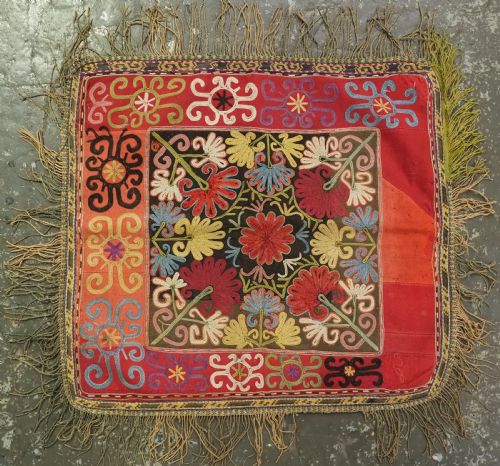
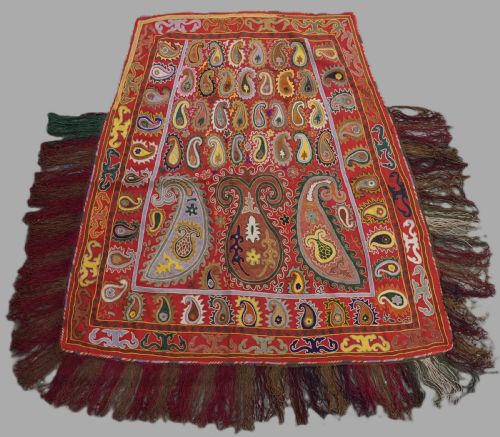
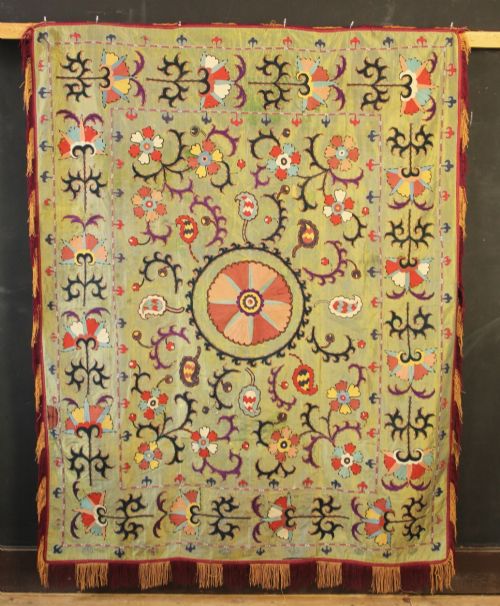
When you search for lakai embroidered tapestry, you are looking at Central Asian tribal textiles created by the Lakai people of Uzbekistan. These pieces include dowry embroideries known as ilgich, tent bags called uut kap ilgich, NIM suzanis, and ceremonial horse or saddle covers. Most examples on this page date from the late nineteenth century through the early twentieth century.
The visual vocabulary relies on Central Asian traditional and folk art motifs rather than classical urban workshop designs. Pieces function primarily as wall hangings and textile wall art, bringing nomadic pattern and rich texture into modern rooms. Each form carries the distinct aesthetic of Uzbek tribal makers working across different decades.
How They Were Made
Makers stitched these textiles using silk, cotton, and wool yarns on foundational fabric supports. The needlework employs dense surface embroidery techniques that build up the characteristic raised patterns and firm textures of tribal wall hangings.
Materials interact through the contrast of glossy silk threads against matte cotton or wool grounds. This combination gives the embroidery its tactile depth and durability, ensuring the needlework survives across generations of domestic use.
Lakai Embroidered Tapestry Retail Price Guide 2026
Typical asking prices for lakai embroidered tapestry among the pieces listed under this phrase on Sellingantiques today, from the lower quarter to the upper quarter. They describe what is for sale here now, not the wider market.
Listings feature silk, cotton, and wool textiles spanning the late nineteenth century to the early twentieth century.
What Varies in Quality
Quality rests on the precision of the needlework and the vitality of the composition. Superior examples display confident spacing, dense stitching, and harmonious colour placement that elevate the tribal motifs.
Condition and integrity further divide the range. Well-preserved ground fabrics and intact silk embroidery determine how successfully a textile translates its historic ceremonial function into a decorative wall hanging.
The Lakai Embroidered Tapestry Glossary
- Ilgich
- A Central Asian dowry embroidery created by tribal women for domestic wall display. These pieces form a major part of the surviving textile tradition.
- Nim Suzani
- A smaller version of the traditional Uzbek embroidered wall hanging. The prefix denotes a half-sized format utilised for compact spaces.
- Uut Kap Ilgich
- An embroidered bag or hanging associated with nomadic tent storage. Collectors prize these functional objects for their specific tribal iconography.
- Suzani
- An embroidered textile originating from Uzbekistan, worked in silk or cotton. The term covers various domestic furnishings produced across the region.
- Central Asian Tribal
- A stylistic classification denoting work produced by nomadic or semi-nomadic groups outside urban centres. This origin defines the bold geometric aesthetic.
Lakai Embroidered Tapestry: Frequently Asked Questions
What is a lakai tapestry used for?
These textiles were originally produced as dowry items, ceremonial horse covers, or decorative wall hangings by the Lakai tribe in Uzbekistan. They served important cultural functions within nomadic and village life.
Today, collectors and interior designers use them primarily as textile wall art. Their rich colours and bold patterns bring warmth and historic character to residential spaces.
How old are these embroideries?
The pieces available generally date from the late nineteenth century through the early decades of the twentieth century. This period encompasses traditional tribal work created before industrial dyes and modern production methods dominated.
Datings rely on stylistic evidence, material analysis, and structural characteristics typical of Uzbek folk art from those decades. Each piece reflects the aesthetic standards of its specific period of origin.
What materials make up the textiles?
Makers constructed these works using combinations of silk, cotton, and wool. Silk thread typically provides the glossy surface embroidery, while cotton or wool serves as the foundational cloth.
This material mix creates a robust textile capable of enduring both nomadic use and subsequent display as a wall hanging. The interaction of these natural fibres gives the surface its characteristic texture.
How do I hang a textile safely?
Proper mounting requires distributing the weight evenly across the entire upper edge of the fabric. Conservation-grade Velcro or a padded sleeve stitched by a professional conservator prevents local stress on fragile historical fibres.
Keep mounted pieces away from direct sunlight and strong artificial light to protect the natural dyes. Stable indoor humidity levels ensure the silk and cotton components remain preserved over time.