
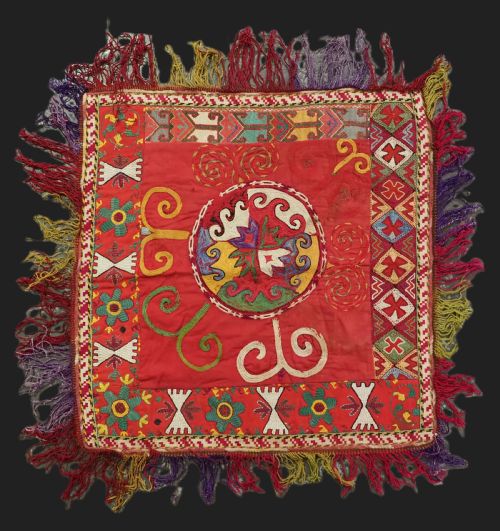


Antique Uzbek Embroidered Ilgich
An antique uzbek embroidered ilgich is a nomadic wall hanging of textile art that brings rich Central Asian tribal colour to a room.
Antique Uzbek Embroidered Ilgich
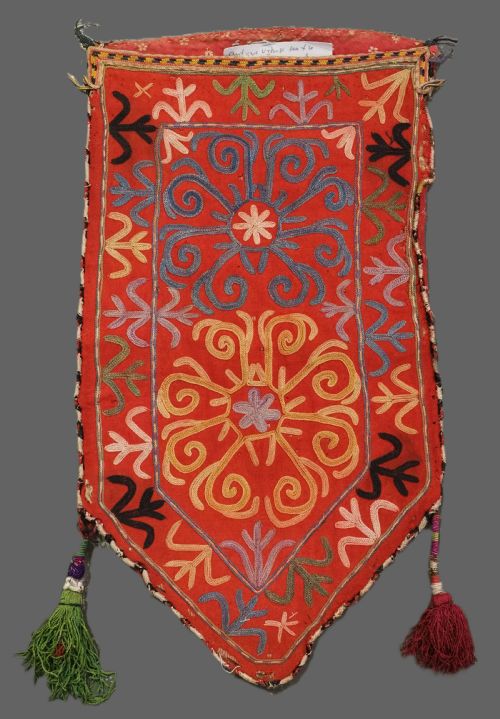
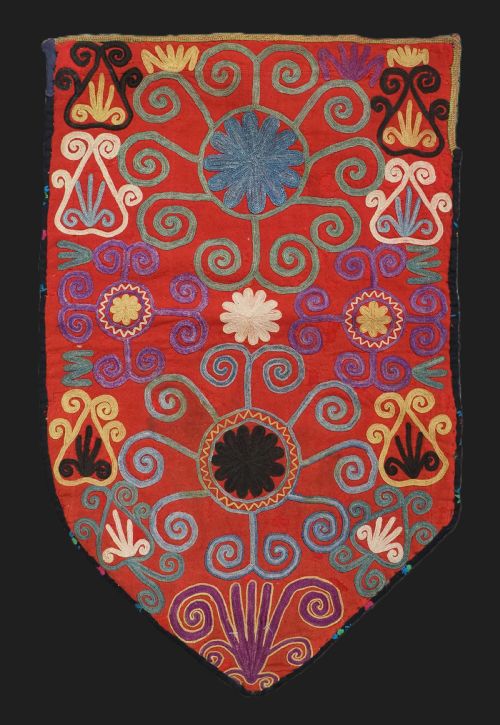
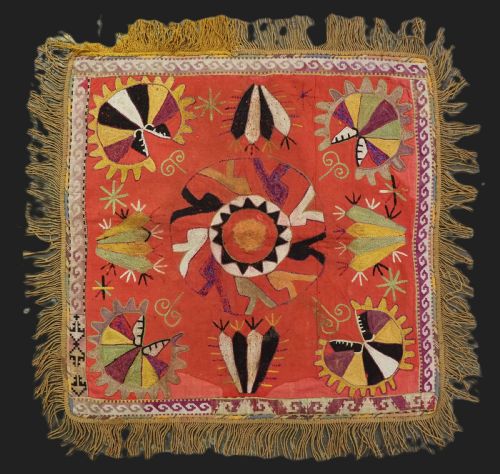
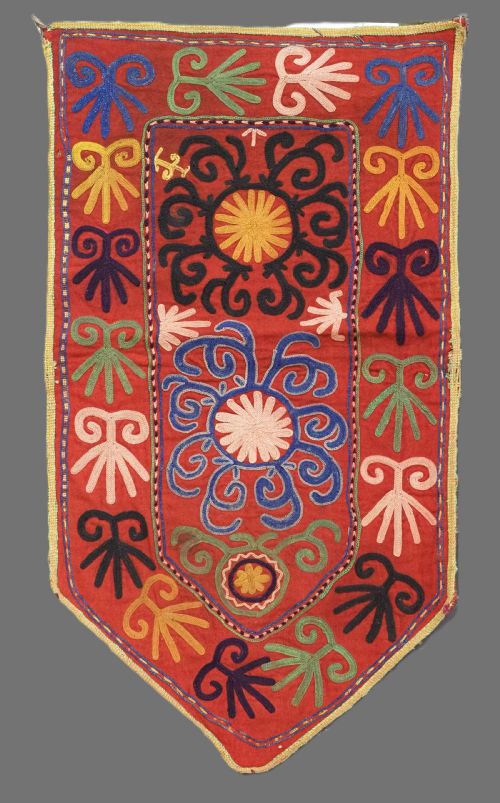
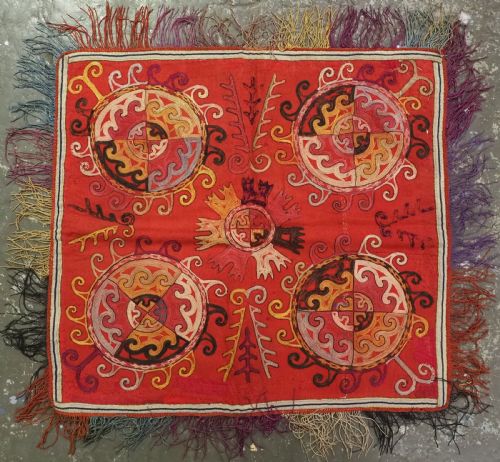
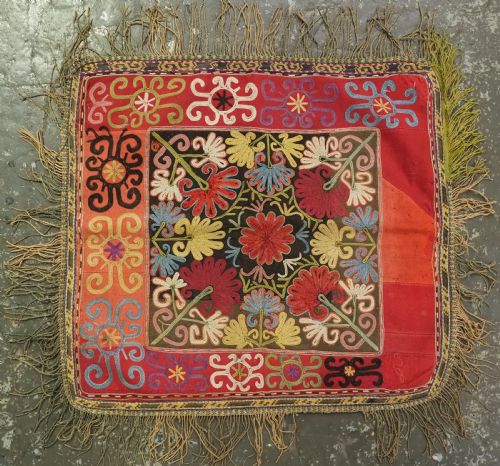
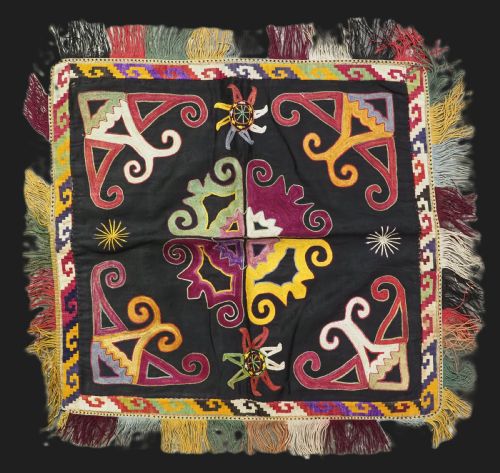
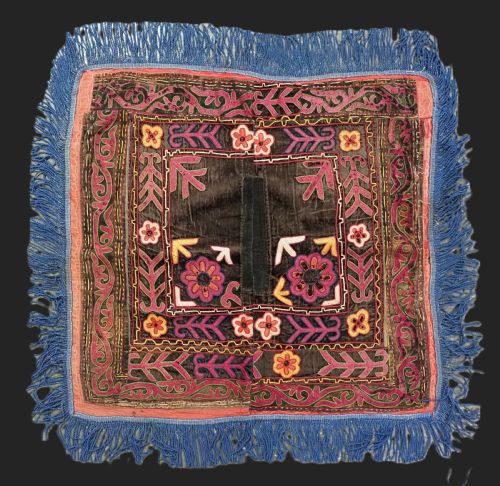
When you examine an antique uzbek embroidered ilgich, you are looking at Central Asian textile art made for nomadic and tribal domestic interiors. These pieces frequently take the form of wall hangings and dowry embroideries created by the Lakai tribe.
The most common examples on this page are wall hanging embroideries and storage bag faces associated with the Lakai tribe from Shakrisabz. They date from the late nineteenth century and around nineteen hundred, reflecting the nomadic traditions of Uzbekistan.
These textiles served practical and decorative roles within the yurt or home, functioning as dowry items or covers. Collectors prize them for their bold geometric compositions and visceral connection to Central Asian craft.
Materials and construction
Makers embroidered these textiles using silk thread on grounds of cotton, wool, and velvet. Certain examples feature silk embroidery applied directly onto a Mogul red wool ground.
The needlework relies on dense surface stitches characteristic of nomadic Central Asian embroidery traditions. These techniques created heavy, tactile surfaces designed to withstand domestic use.
Distinctions in quality
Quality rests in the density of the silk embroidery and the crispness of the tribal motifs. Tightly worked surfaces with vibrant colour palettes distinguish the finer examples from simpler decorative pieces.
The complexity of the design, such as double-faced execution or specific regional attributions like Shakrisabz work, elevates the standing of an individual textile within the tradition.
Lakai Tribe
The Antique Uzbek Embroidered Ilgich Glossary
- Ilgich
- A traditional embroidered wall hanging originating from Central Asia. These textiles were often made as part of a bride's dowry.
- Uut kap
- A nomadic storage bag or bag face used within a yurt. Examples are frequently worked in silk embroidery by tribal makers.
- Torba
- A small hanging bag or torba ilgich used for household storage. They display the same needlework skills seen on larger wall hangings.
- Shakrisabz
- A city in Uzbekistan associated with distinctive regional embroidery styles. Pieces from this area show specific aesthetic choices in colour and layout.
Antique Uzbek Embroidered Ilgich: Frequently Asked Questions
What is an ilgich?
An ilgich is a traditional embroidered textile from Central Asia, typically created as a wall hanging or dowry piece. These works reflect nomadic tribal traditions.
Maker communities such as the Lakai produced them using silk on cotton, wool, or velvet grounds.
How were they used?
Nomadic families used these textiles to decorate the interior of living spaces or as functional storage bags known as uut kap. They formed an important part of a bride's dowry.
Over time, their decorative impact led to them being displayed purely as wall hangings in homes.
How old are these pieces?
The pieces available date from the late nineteenth century up to around nineteen hundred. They originate from Central Asian regions including Shakrisabz.
Such dates place them firmly in the late period of traditional nomadic textile production.
How do I hang a textile?
These wall hangings require careful mounting to support their weight without damaging the historic fabric. Professional framing or a sleeve attachment method works best.
Keep them away from direct sunlight to protect the silk threads and wool grounds from fading.