

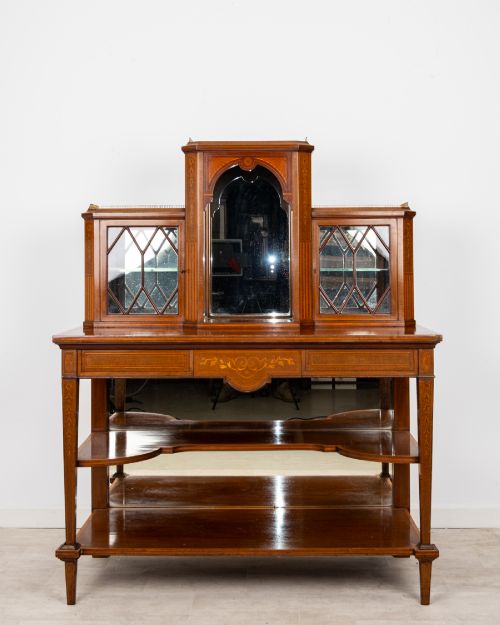
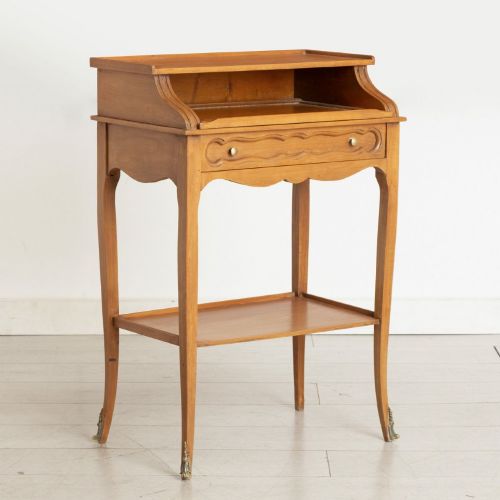


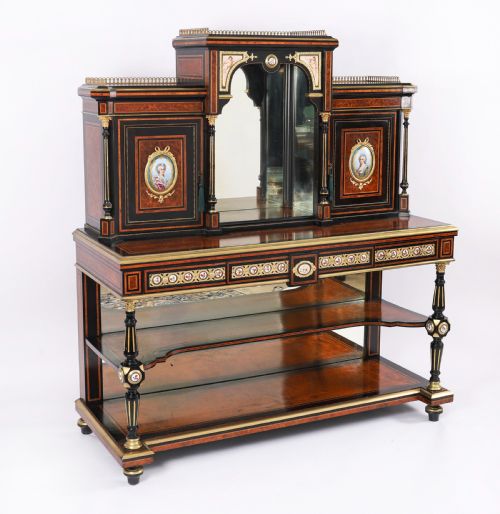

Ladies Writing Cabinet
These ladies writing cabinet examples combine compact proportions with refined marquetry, offering an elegant workstation designed specifically for personal correspondence.
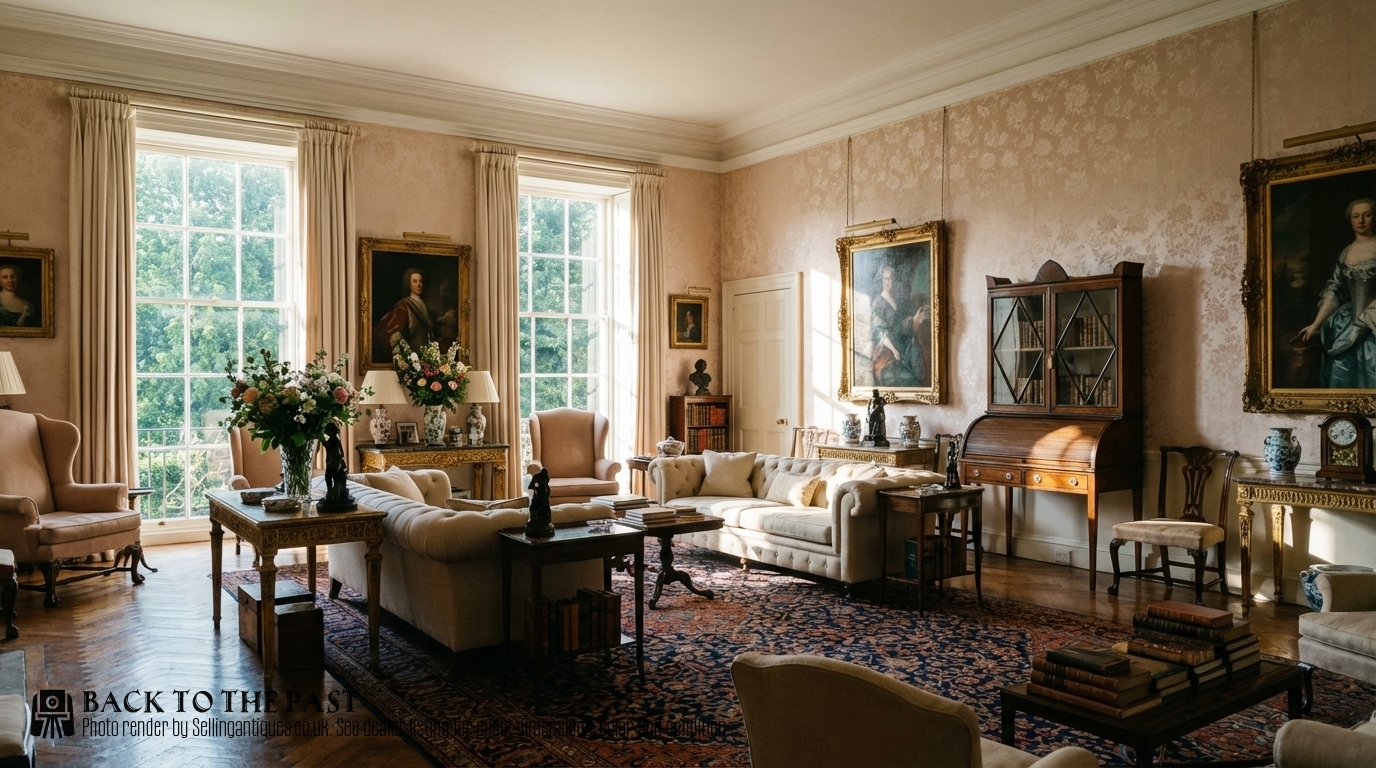
Ladies Writing Cabinet
A ladies writing cabinet encompasses several closely related forms intended for light correspondence and personal organisation. When you search for this phrase, you encounter compact writing furniture that frequently incorporates upper display shelving, small drawers and pigeonholes.
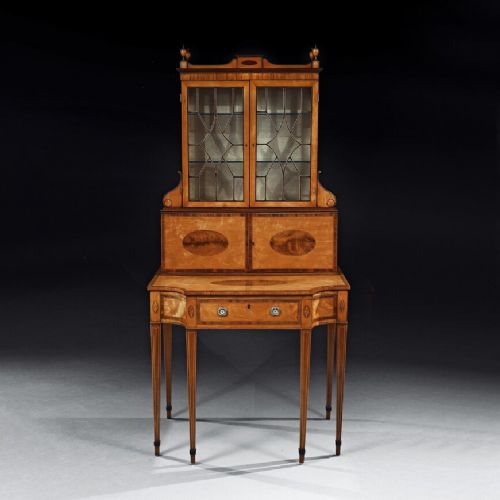
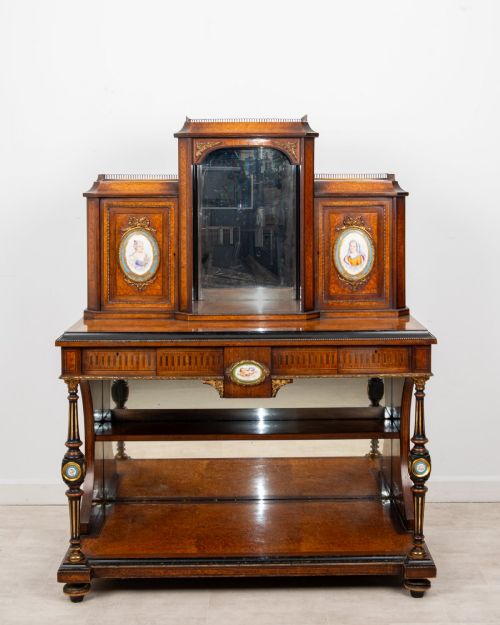
The pieces appearing on this page span the eighteenth, nineteenth and early twentieth centuries. You find Georgian satinwood examples alongside elaborate Victorian bureau de dame creations and French Louis XV revival bonheur du jour variants.
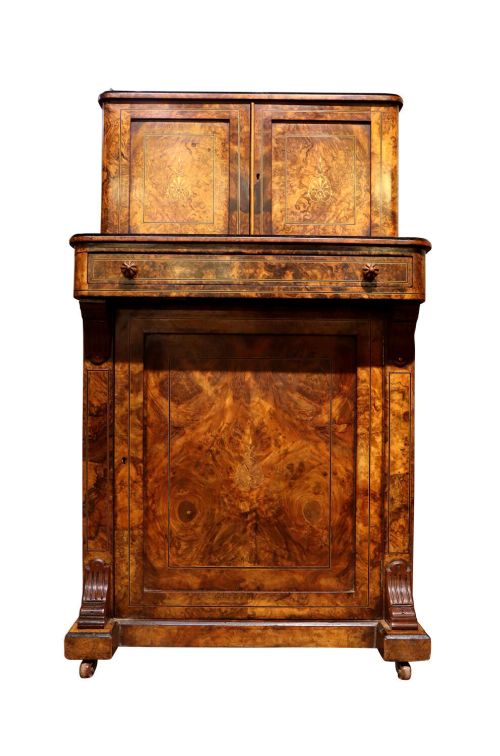
Makers often integrated subsidiary functions, producing designs that double as work tables, jewellery storage units or miniature cylinder display desks. Walnut, mahogany and exotic woods dominate the forms, frequently embellished with marquetry and brass mounts.
How They Were Made
Cabinetmakers constructed carcasses using native timbers such as mahogany and walnut, frequently applying rich veneers of rosewood, kingwood, satinwood and amboyna. Artisans deployed intricate marquetry patterns and contrasting stringing to create decorative surface movement.
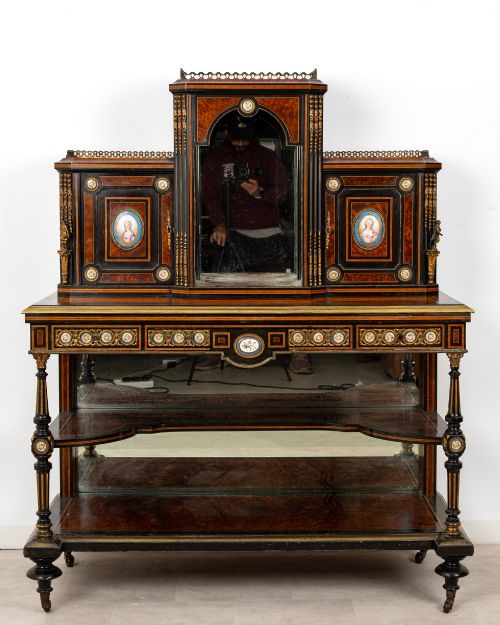
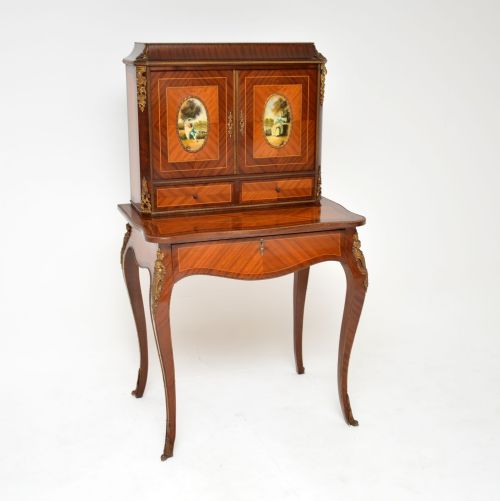
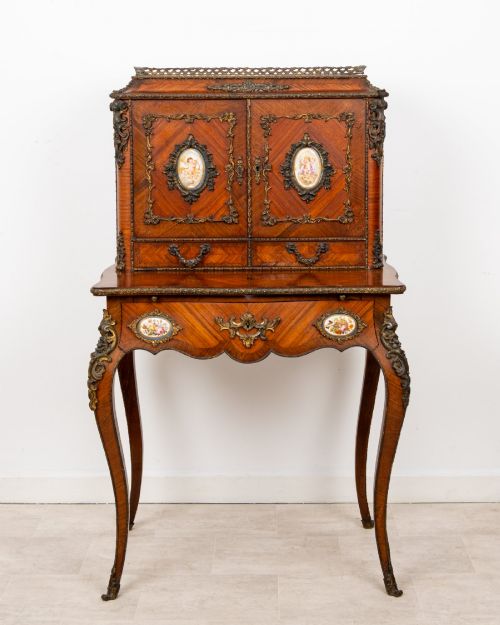
French workshops mounted these cabinets with cast and gilt ormolu, occasionally incorporating hand-painted porcelain plaques or Vernis Martin panels. Structural details included secret drawers, tambour shutters and finely turned galleries.
Listings demonstrate a strong preference for nineteenth-century French production, particularly walnut and kingwood bonheur du jour cabinets adorned with ormolu.
What Varies in Quality
Hardware quality marks the upper tier of production, evidenced by chased ormolu mounts rather than plain cast brass, alongside branded maker signatures on locks and timber carcasses.
Edwards & Roberts·Shoolbred of London·Linke
The Ladies Writing Cabinet Glossary
- Bonheur du jour
- A small writing desk featuring a small cabinet or set of shelves upon the top surface. This French form gained popularity during the eighteenth century.
- Marquetry
- Decorative patterns formed by fitting together thin slices of wood veneer and other materials onto a structural carcass. Craftsmen utilise the contrasting natural tones of different timbers to create pictorial designs.
- Ormolu
- Gilded bronze mounts applied to furniture for decorative enrichment. French cabinetmakers used these cast metal elements extensively during the nineteenth century.
- Bureau de dame
- A lady writing desk usually fitted with a sloping fall front enclosing small drawers and pigeonholes. These portable writing surfaces sit upon slender cabriole or tapered legs.
- Sabicu
- A dense tropical hardwood resembling mahogany, utilised in high-status eighteenth-century cabinetmaking. Its deep colour and durability suited structural framing and fine veneers.
Ladies Writing Cabinet: Frequently Asked Questions
What is a bonheur du jour?
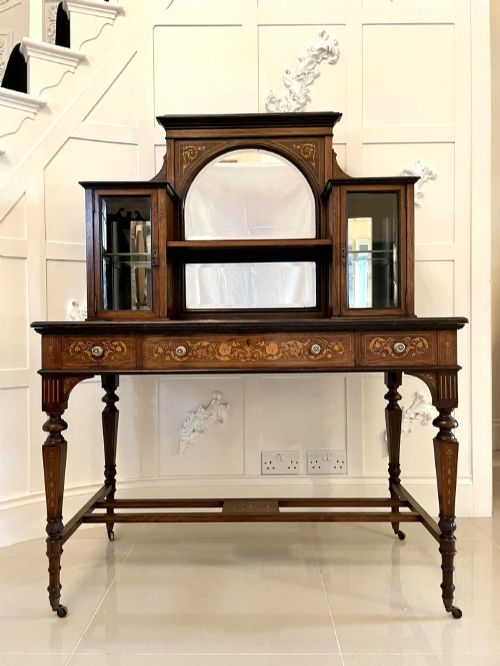
A bonheur du jour is a light, elegant writing desk featuring an enclosed cabinet or tier of small shelves on the upper surface. These pieces emerged in France during the eighteenth century and became popular throughout the nineteenth century.
They served as private writing desks for correspondence rather than heavy administrative work. The upper section allowed the display of small decorative items while keeping writing materials close at hand.
How do I distinguish French and English styles?
French examples from the nineteenth century frequently employ kingwood or tulipwood veneers, extensive ormolu mounts, porcelain plaques and curved cabriole legs. They lean toward flamboyant revival styles.
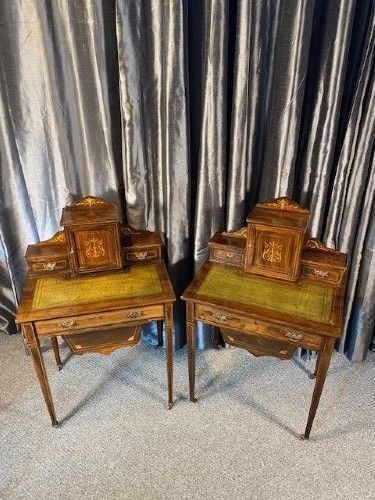
English pieces tend to feature mahogany, satinwood or rosewood with geometric inlay and straight tapered legs. They reflect classic restraint rooted in Sheraton and Georgian traditions.
Where were these cabinets used?
These pieces belonged in private withdrawing rooms, boudoirs or bedrooms rather than formal libraries. They provided a personal space for writing letters and managing private accounts.
Their compact footprints allowed them to sit against bedroom walls or beside windows where natural light favoured delicate writing tasks.
What is vernis martin?
Vernis martin is a decorative lacquer technique developed in eighteenth-century France to imitate expensive Asian lacquerware. It involves applying multiple translucent varnish layers to create a lustrous painted surface.
Cabinets featuring these panels display pastoral scenes or floral motifs executed in rich colours beneath a clear protective finish.