

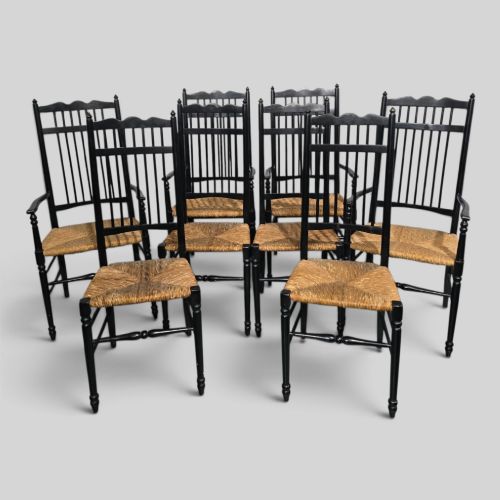
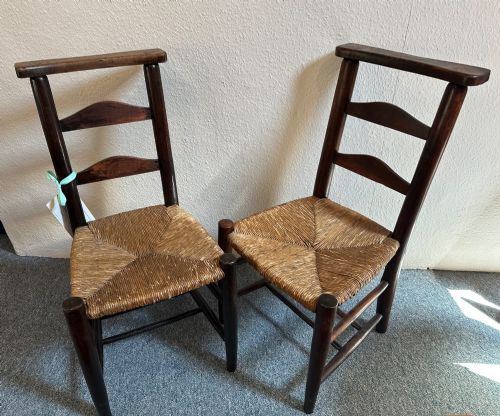


Ladder Back Rush Chair
A ladder back rush chair brings traditional utility and honest regional craftsmanship into a room.
Ladder Back Rush Chair
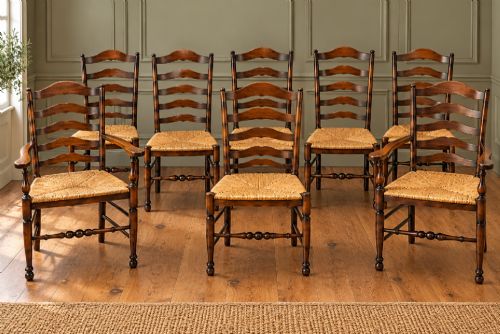
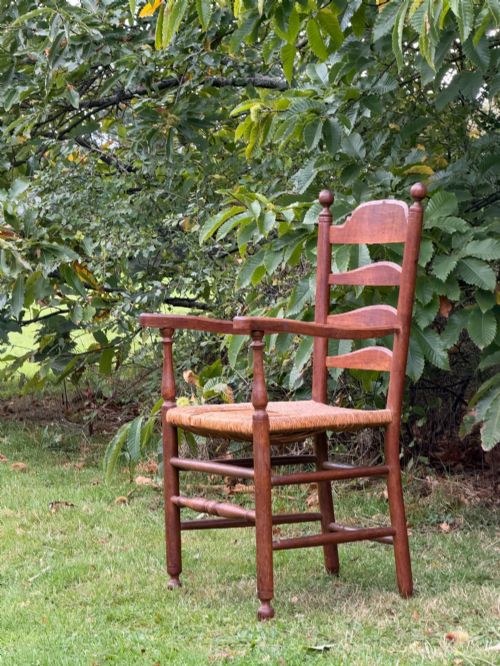
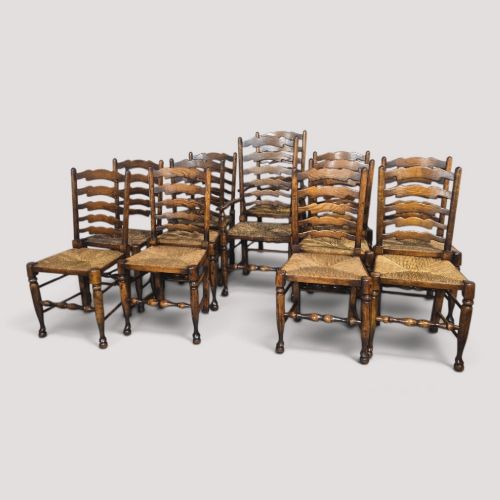
A ladder back rush chair is a traditional form defined by horizontal slats across the back frame and a woven seating surface. These utilitarian seats span English country workshops, French provincial kitchens, and the revival output of the Arts and Crafts movement. Dining chairs, carvers, rockers, and high chairs appear frequently across the periods.
Makers produced these chairs in regional centres using local hardwoods like oak, ash, elm, and beech. Vernacular pieces range from Cheshire and Lancashire regional variations to continental European interpretations influenced by Louis XV style. Dining sets appear alongside individual armchairs and children's rockers.
How They Were Made
Joiners turned and shaped solid timbers such as ash, oak, elm, and beech to construct the uprights and horizontal back slats. Frames often combined multiple wood types within a single chair, pairing elm seats with ash or beech frames. Workshops utilised natural rush material to weave durable, tensioned seats directly onto the wooden rungs.
Makers sometimes applied paint to ash frameworks or left the native timber untreated. Construction relied on traditional mortise and tenon joints to secure the ladder rails into the back posts. Artisans shaped the rungs and uprights using lathe turning and hand-shaving techniques.
Ladder Back Rush Chair Retail Price Guide 2026
Typical asking prices for ladder back rush chair among the pieces listed under this phrase on Sellingantiques today, from the lower quarter to the upper quarter. They describe what is for sale here now, not the wider market.
Several miniature high chairs and children's rockers prove that historic toddlers needed proper posture just as much as adults.
What Varies in Quality
Quality rests in the integrity of the timber framing and the tightness of the rush weave. Regional proportions, such as the height of the back rails and the taper of the uprights, distinguish standard village output from superior maker-attributed pieces. Original matching sets demonstrate a higher level of uniformity than assembled groupings.
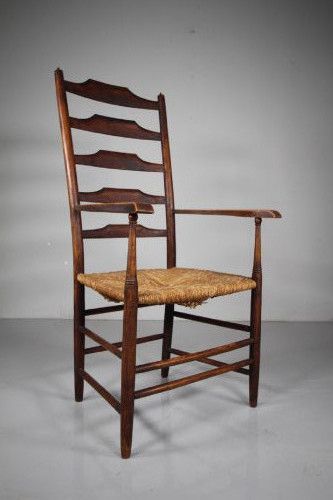
The survival of original surface treatments, whether patinated wood or early paint, influences the character of the piece. Master workshops from the Arts and Crafts period applied deliberate design execution to traditional forms, creating balanced proportions that elevate the standard utility build.
Philip Clissett·Dicon Nance·Lawrence Neal·Edward Gardener·Liberty and Co·Titchmarsh and Goodwin·Heals
The Ladder Back Rush Chair Glossary
- Ladder back
- A chair back featuring multiple horizontal wooden slats resembling the rungs of a ladder.
- Rush
- Natural marsh plant material twisted into cords and hand-woven to form a durable, flexible chair seat.
- Carver
- An armchair designed to match a set of dining chairs, typically positioned at the head of a table.
- Vernacular
- Furniture built by regional craftsmen using local traditions and materials rather than following metropolitan academic designs.
- Spindle back
- A variation featuring thin turned wooden rods rather than flat slats across the back frame.
Ladder Back Rush Chair: Frequently Asked Questions
How do I identify a regional ladder back chair?
Regional attribution relies on timber choices, turning profiles on the posts, and specific slat shapes associated with areas like Lancashire or Cheshire. Local turners utilised accessible woods like ash and elm to shape distinct local patterns.
Comparing the finials, leg stretchers, and overall proportions against documented vernacular examples helps pinpoint the likely manufacturing district.
Are rush seats durable for daily dining use?
Natural rush yields a resilient and supportive surface that flexes with weight while retaining its woven tension. These seats served centuries of daily kitchen and dining use without synthetic reinforcement.
Maintaining moderate indoor humidity prevents the natural plant fibres from becoming brittle over decades of regular sitting.
What is the difference between an armchair and a carver?
Carvers specifically denote armchairs built to accompany a matching set of dining table chairs. Standard armchairs often serve as standalone fireside or reading seats.
Dining carvers feature specific height proportions designed to clear table aprons while offering lateral elbow support.
How do Arts and Crafts chairs differ from earlier country models?
Arts and Crafts makers revived traditional construction methods with a deliberate focus on honest materials and simplified aesthetic balance. Workshops associated with this movement credited individual designers and applied careful finishing to vernacular forms.
Earlier country chairs prioritized immediate utilitarian function within local agricultural communities without recording individual maker attributions.