





Church Hall Side Chairs
Church hall side chairs bring rugged ecclesiastical timber and sharp architectural lines straight from the vestry into domestic rooms.
Church Hall Side Chairs
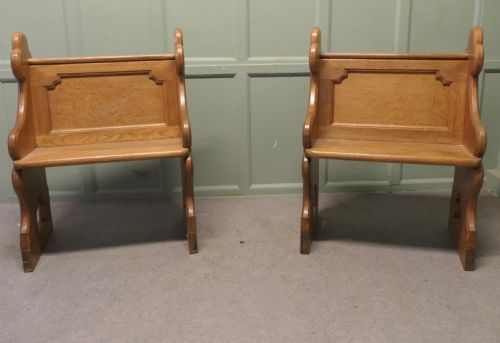
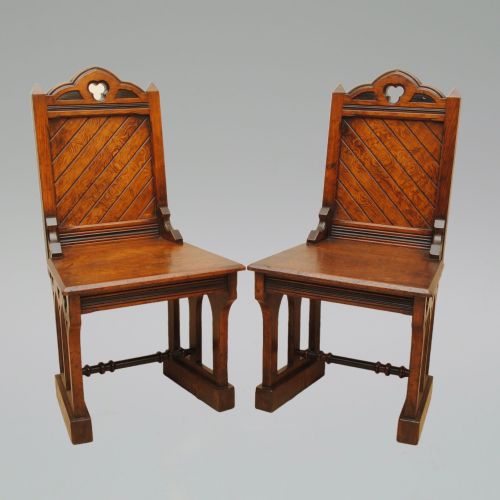
Church hall side chairs are sturdy wooden seating built for communal ecclesiastical spaces, parish rooms and cathedrals during the Victorian, Edwardian and nineteenth-century periods. These robust items carry strong Gothic Revival, Victorian Gothic and ecclesiastical design influences, often shaped for narrow hall or library settings.
The versions most commonly met on this page are pairs and sets of pitch pine or oak side chairs, frequently featuring tall backs and pointed arch details. Makers produced these pieces for notable locations like St Paul's Cathedral, blending utilitarian service with devout architectural ornament.
How they were made
Carpenters constructed church hall side chairs using dense timbers such as oak and pitch pine, selected for longevity in heavy-use public spaces. Joinery methods prioritised structural strength to withstand decades of communal gatherings and parish meetings.
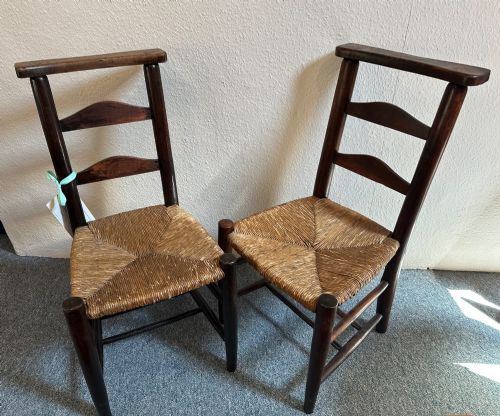
Craftsmen enriched the plain wood frames with carved architectural motifs, occasional brass fittings, and applied upholstery fabrics like leather, tapestry or rush seating. Some examples include engraved metal plaques or specific cathedral inventory marks denoting their precise ecclesiastical origins.
Church Hall Side Chairs Retail Price Guide 2026
Typical asking prices for church hall side chairs among the pieces listed under this phrase on Sellingantiques today, from the lower quarter to the upper quarter. They describe what is for sale here now, not the wider market.
Materials recorded across the inventory include oak, pitch pine, brass, rush, ebonised wood, leather, tapestry and upholstery fabric.
What varies in quality
Quality in church hall side chairs rests upon the selection of timber and the crispness of the Gothic carving rather than mere age. Denser oak and well-figured pitch pine show superior grain and structural integrity compared to plain utilitarian variants.
Provenance and documented parish or cathedral association elevate certain pieces far above standard workshop production. Surviving original metal plaques and maker or site stamps create a clear distinction between ordinary utilitarian seating and historically significant ecclesiastical commissions.
The Church Hall Side Chairs Glossary
- Gothic Revival
- An architectural and decorative style drawing on medieval forms, pointed arches and vertical proportions. This aesthetic dominates nineteenth-century ecclesiastical furniture.
- Pitch pine
- A durable, resinous softwood widely utilised for nineteenth-century church and hall furniture due to its strength and pronounced grain pattern. It takes a hardwearing finish.
- Ecclesiastical
- Relating to the Christian Church or its clergy, describing items specifically commissioned for parish halls, vestries or cathedrals. These objects often bear strict functional designs.
- Hall chair
- A rigid, upright wooden seat designed for corridors, entrances or waiting areas rather than prolonged lounging. They frequently feature high panelled backs and minimal padding.
Church Hall Side Chairs: Frequently Asked Questions
Where were church hall side chairs used?
These seats originally furnished parish rooms, vestries, cathedral naves and communal gathering spaces across Britain. They served congregations during meetings, choir practices and local community events.
In modern interiors, their narrow frames suit hallways, landings and dining tables where floor space is limited. Their sturdy timber construction handles daily domestic use with ease.
How do I date these chairs?
Dating relies upon stylistic markers such as Victorian Gothic proportions, timber choices like pitch pine or oak, and construction techniques. Nineteenth-century examples often display deep chamfering and heavy ecclesiastical detailing.
Some pieces carry direct clues like engraved metal plaques, cathedral inventory stamps or specific maker attribution. Comparing these details to known production periods narrows the age accurately.
Are they comfortable for dining?
Church hall side chairs were built for upright posture during meetings or services rather than long lounging sessions. Most feature rigid wooden seats or simple rush pads.
Pairs and sets work well around a kitchen or dining table if you prefer firm support and strong architectural presence. Cushions can easily soften the timber seats for longer meals.
What woods should I look for?
The listings show a strong reliance on durable English oak and resinous pitch pine. These timbers withstood heavy institutional wear in damp or busy halls.
Less common finishes include ebonised wood or pieces paired with rush, leather and tapestry fabric. Each material dictates the weight, tone and historical context of the individual chair.