




Lacquered Wooden Coffer
Lacquered wooden coffer pieces are substantial storage forms carrying rich pigment layers, sought for their striking surface depth and historic utility.
Lacquered Wooden Coffer
A lacquered wooden coffer is a robust storage piece designed for security and display, spanning centuries of Asian and Anglo-Indian cabinetmaking traditions. When exploring this category, buyers encounter forms ranging from 18th century export pieces to 19th century trunks, cabinets, and painted chests.
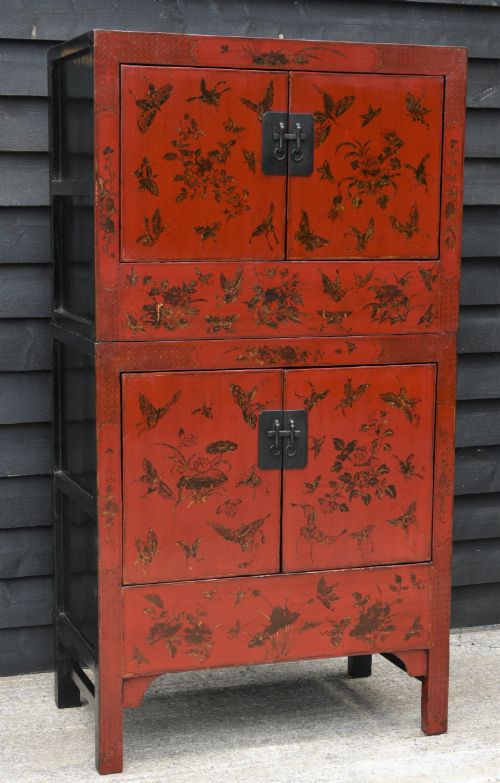
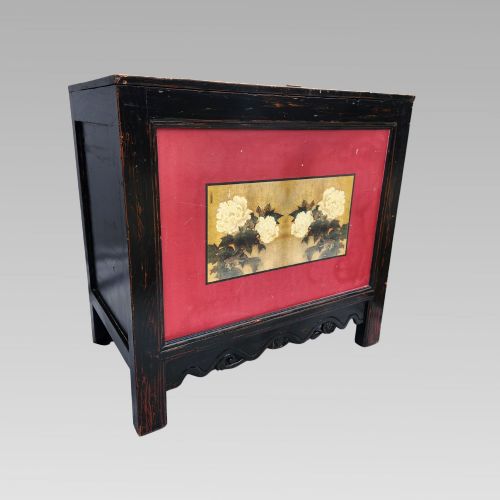
The selection here encompasses traditional Chinese, Japanese Meiji, Korean Joseon, and Anglo-Indian styles, reflecting diverse regional aesthetics. Red lacquer, black lacquer, and natural timber finishes dominate the objects currently represented on this page.
While the literal coffer appears alongside related storage forms like blanket boxes, marriage cabinets, and writing desks, each shares the fundamental use of protective lacquer coatings over solid wooden foundations.
Materials and construction techniques
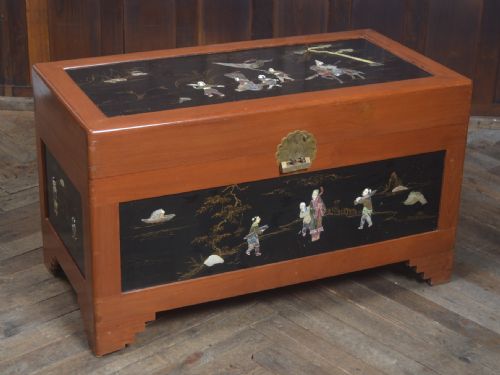
Makers built these pieces using native timbers such as elm and camphor wood, applying multiple coats of lacquer to create a durable, glossy surface. Artisans frequently enhanced the black or red lacquer grounds with gold leaf, pigment, and intricate Chinoiserie decoration.
Hardware played a functional and decorative role, incorporating brass and iron mountings, hinges, and lock plates to reinforce the structural joinery of the heavy timber carcases.
Listings in this category span the 18th, 19th, and early 20th centuries, featuring materials like brass, iron, gold leaf, elm, and camphor wood.
Assessing quality in lacquered wooden coffer pieces
Quality rests in the preservation of the original lacquered surface and the crispness of any gold leaf or painted pigment details. Pieces retaining their early pigment layers without extensive modern intervention command greater interest among purists.
The integrity of the underlying wood, whether elm or camphor wood, and the retention of original brass or iron hardware determine the structural and aesthetic success of the piece.
The Lacquered Wooden Coffer Glossary
- Lacquered wooden coffer
- A heavy storage chest finished with a protective resinous coating derived from tree sap. These pieces served domestic storage needs across various Asian and colonial markets.
- Chinoiserie
- European artistic interpretation of Chinese and East Asian artistic traditions, often found painted on black or red lacquer grounds. This decorative style gained immense popularity during the 18th and 19th centuries.
- Camphor wood
- A fragrant timber frequently utilised for storage chests and trunks due to its insect-repellent properties. It provides a stable, aromatic carcase for lacquer application.
- Qing Dynasty
- The final imperial dynasty of China, spanning from the seventeenth to the early twentieth century. Pieces from this era often feature bold red or black finishes and traditional pictorial motifs.
- Meiji Period
- An era in Japanese history characterised by the modernisation of arts and crafts. Work from this period often demonstrates exceptional technical precision in metalwork and lacquering.
Lacquered Wooden Coffer: Frequently Asked Questions
What is a lacquered wooden coffer used for?
These pieces served primarily for storing garments, valuables, and domestic goods safely within the home.
Today, they function as practical storage furniture that doubles as a strong decorative focal point in a room.
How do I care for lacquer furniture?
Keep the pieces away from direct sunlight and extreme temperature fluctuations to prevent the lacquer from cracking.
Dust gently with a soft, dry cloth and avoid harsh chemical cleaners that can damage the delicate pigment layers.
How can I tell the period of a lacquer chest?
Examine the underlying timber, the construction joints, and the wear patterns within the lacquer and metal hardware.
Stylistic cues such as Kangxi revival designs or Qing Dynasty motifs also help narrow down the date of manufacture.
Are these pieces made of solid wood?
Yes, traditional makers utilised solid native timbers such as elm and camphor wood to construct the heavy carcases.
These dense woods provided a stable foundation capable of supporting multiple layers of resinous lacquer.