
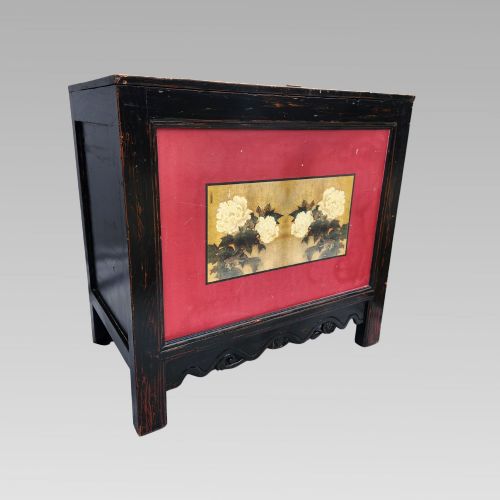


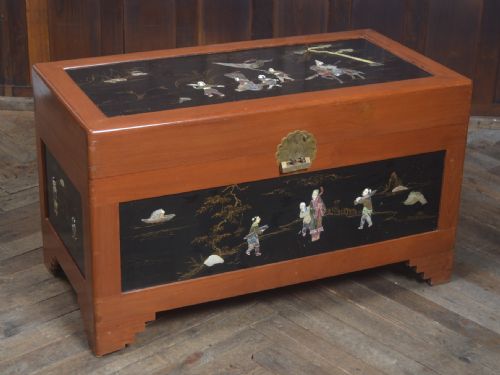


Lacquered Blanket Box
These lacquered blanket box examples bring rich regional character and deep historical storage into your home.
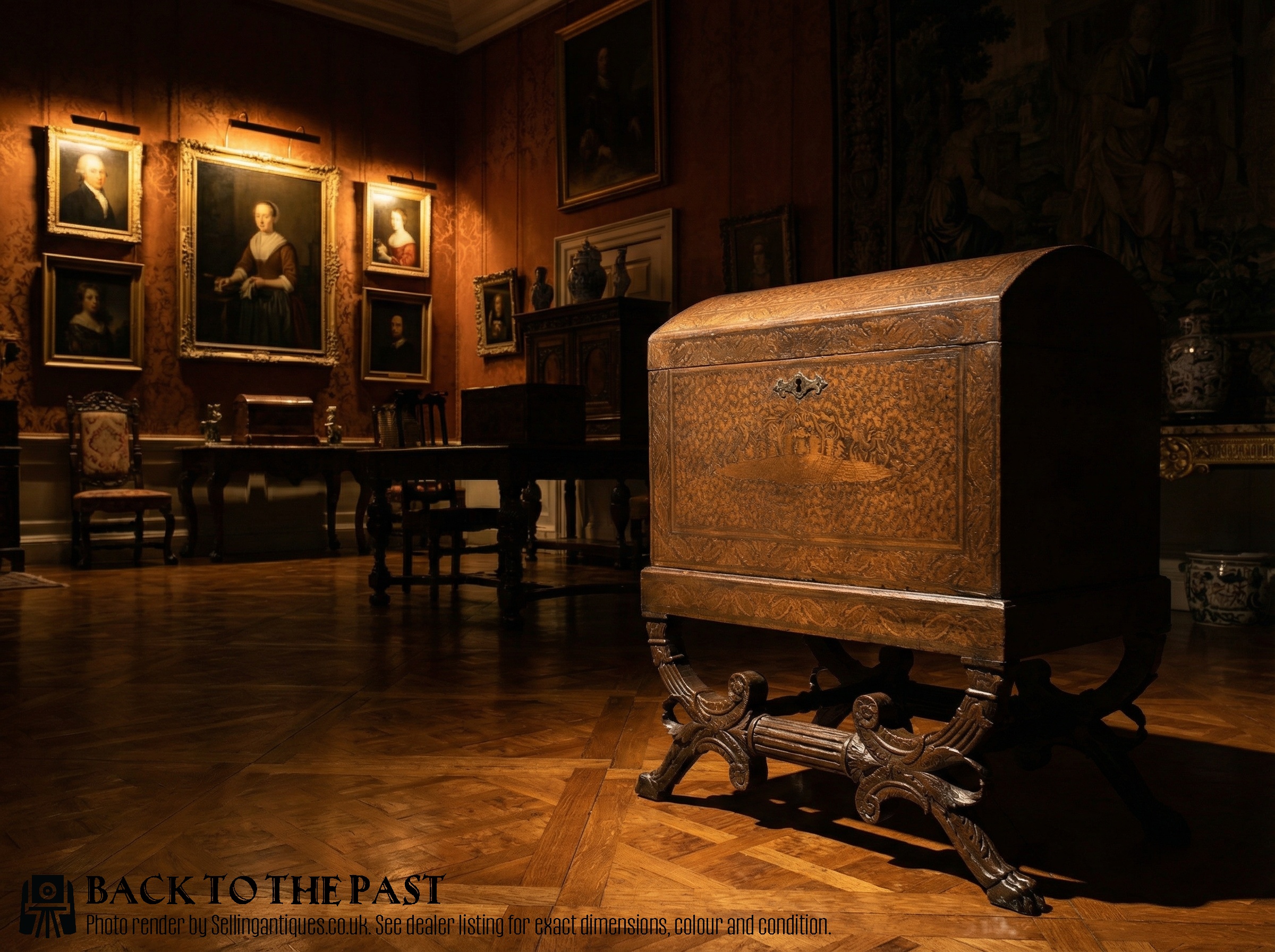
Lacquered Blanket Box
When you search for a lacquered blanket box, you encounter substantial storage trunks and coffers originating primarily from Chinese, Japanese, and Indian workshops. These pieces frequently date from the eighteenth, nineteenth, and early twentieth centuries, reflecting diverse trade and regional traditions.
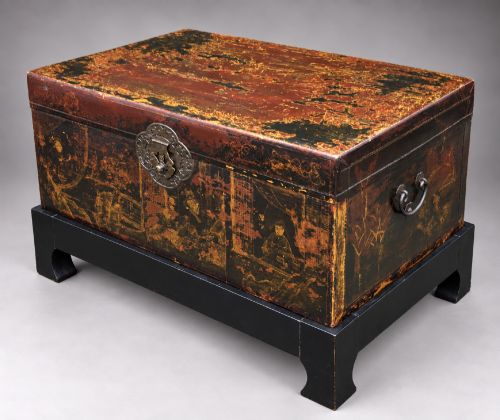
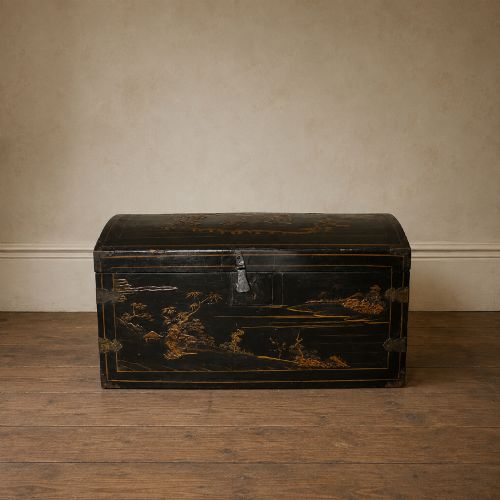
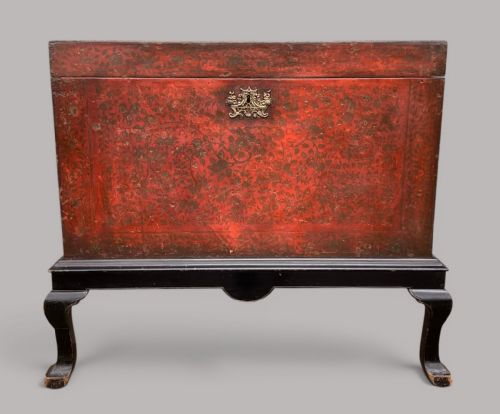
You are most likely to meet nineteenth-century Chinese export trunks and Indian chests on stands on this page. Many examples display detailed black or red lacquer finishes enriched with gilt decoration, floral chinoiserie, or pigment.
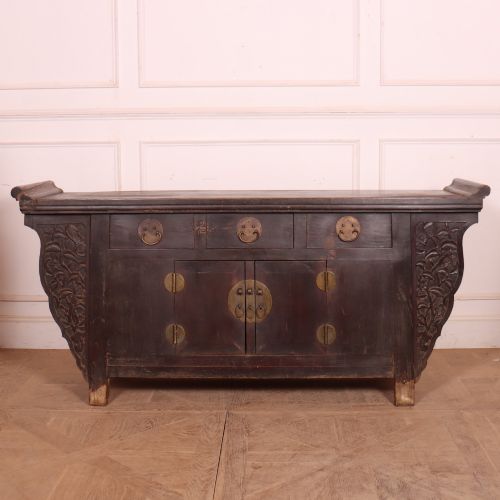
Alternative forms span camphor wood storage chests, leather-covered trunks, and occasional sideboards or chests on stands. These items combine practical storage utility with decorative surface work that defined global trade furniture.
How they were made
Construction relies upon solid timber carcasses, frequently utilising camphor wood or pine beneath the decorative skins. Master craftspeople applied multiple layers of natural lacquer or pigment to build durable, lustrous surfaces.
Surface enrichment often incorporated gold leaf, intricate hand-painted chinoiserie motifs, and contrasting brass hardware. Certain regional examples combined pig skin or leather over wooden frames to ensure robust travel durability.
The listings span the eighteenth, nineteenth, and early twentieth centuries, featuring lacquer, wood, brass, and gold leaf.
What varies in quality
The sophistication of the surface decoration largely dictates the distinction between standard storage trunks and finer display pieces. Hand-painted gilt work, deeply layered lacquer, and well-preserved pigment display greater artistic depth than simpler commercial export items.
Structural integrity also separates individual examples, particularly concerning the survival of original stands, hinges, and brass locks. Pieces retaining their matching bases or early carrying mounts demonstrate higher original status.
The Lacquered Blanket Box Glossary
- Lacquer
- A durable finish applied in multiple layers from natural tree resins or specialised varnishes. It cures to a smooth, hard surface that resists moisture and wear.
- Chinoiserie
- European decorative style imitating Chinese artistic traditions. It appears widely on nineteenth-century export trunks and cabinets.
- Coffer
- A large, heavy chest traditionally used for storing valuables or textiles. Many examples feature hinged lids and sturdy timber construction.
- Pigment
- Finely ground coloured powder mixed with a binder to create opaque surface colours. It provides the vivid hues seen on regional Indian and Chinese chests.
- Camphor wood
- A fragrant timber native to Asia traditionally used for storage trunks. Its natural scent helped protect stored textiles from insects.
Lacquered Blanket Box: Frequently Asked Questions
Where should I place a lacquered blanket box?
Position your chest away from direct sunlight and strong heat sources such as radiators to prevent the lacquer from cracking. Stable indoor humidity helps preserve both the timber substrate and the delicate surface decoration.
These substantial boxes work effectively at the foot of a bed, as a coffee table substitute, or as a statement piece in a hallway.
How can I tell the difference between periods?
Eighteenth-century examples often display simpler, restrained export designs with deep patination and hand-forged hardware. Nineteenth-century pieces frequently incorporate richer gilt chinoiserie and varied regional styles from India, China, and Japan.
Early twentieth-century items often show standardised manufacturing techniques alongside traditional decorative motifs.
Were these chests made for travel?
Many trunks and shipping chests were constructed specifically to withstand long maritime journeys across trade routes. Sturdy brass mounts, reinforced corners, and robust side handles aided handling by cargo crews.
Other domestic coffers remained stationary in homes for storing heavy blankets, garments, and family documents.