
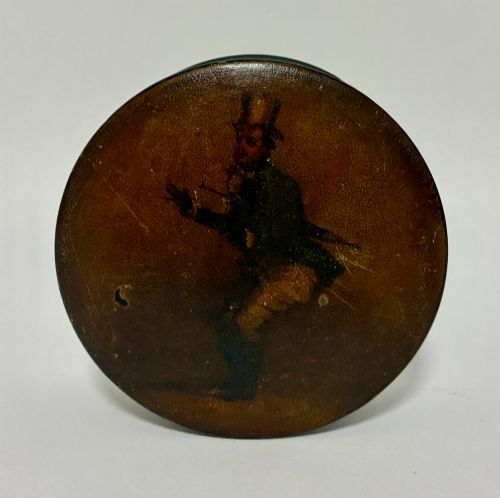
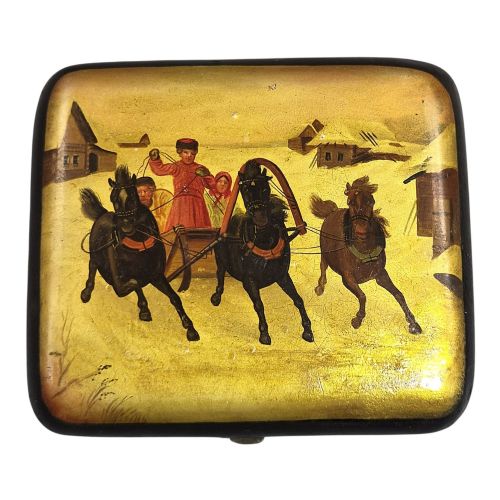
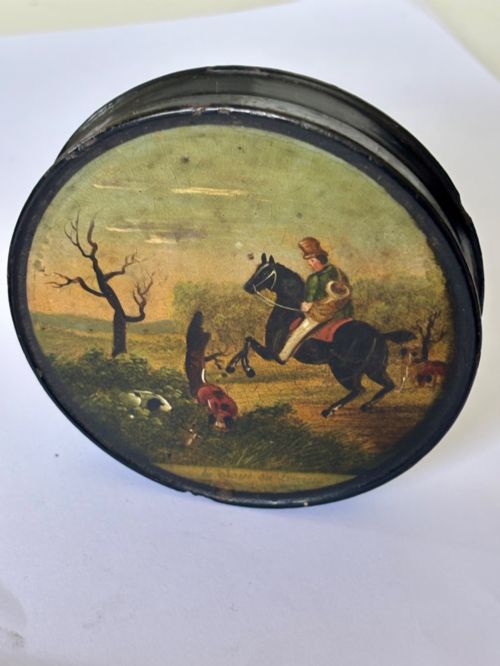


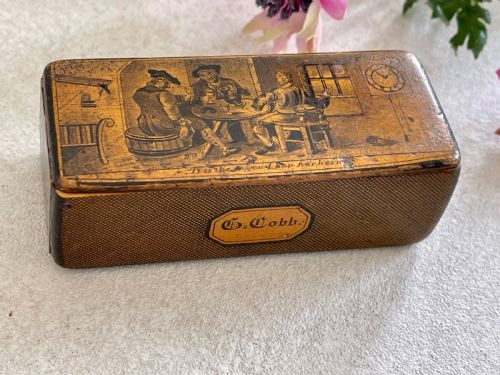


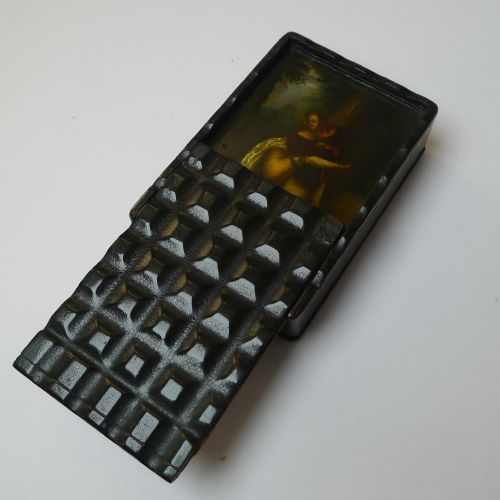


Lacquered Tobacco Box
These lacquered tobacco box pieces are pocket-sized works of applied art from the Georgian, Victorian, and Edwardian eras, offering tactile historical charm for the desk or cabinet.
Lacquered Tobacco Box
When you search for a lacquered tobacco box, you encounter small lidded vessels primarily fashioned from papier-mâché, painted tin, and wood. These pieces served to hold loose tobacco, snuff, or cigarettes, functioning as portable status items for daily use.
The versions you meet most frequently on this page date from the 19th century and take the form of pocket snuff boxes, table snuff boxes, and lidded pots. Their origins stretch from Georgian England and Germany to Imperial Russia, France, and Kashmir.
Makers utilised durable pressed paper pulp and metal foundations, then applied protective dark varnishes and detailed hand-painted or pen-work imagery. Continental workshops and English makers alike produced these sturdy containers to withstand constant handling.
How they were made
Craftsmen built papier-mâché boxes by pressing layered paper pulp into rigid moulds, creating a lightweight yet tough body that resisted warping. They then smoothed the surface with grounds before applying coats of dark lacquer to seal the material.
Decoration relied on skilled hand painting, oil paint, pen work, and gold leaf application directly onto the lacquered ground. Artisans often finished the pieces with clear varnish layers to protect delicate hunting scenes, portraits, and decorative motifs from wear.
Listings feature items spanning the 19th century, Georgian, and Edwardian periods, constructed from lacquer, papier-mâché, paint, sycamore, and gold leaf.
What varies in quality
The refinement of the hand painting and pen work separates standard utility boxes from superior artistic examples. Crisp detailing in miniature portraits or hunting scenes indicates a master hand rather than a hurried workshop output.
The integrity of the original lacquer and the precision of the lid fit dictate the preservation standard. Finer pieces retain smooth, deep varnished surfaces without heavy cracking or loss to the underlying gold leaf and pigment.
Vishnyakov Workshop·Stobwasser·G Cobb
The Lacquered Tobacco Box Glossary
- Papier-mâché
- A composite material consisting of paper pieces or pulp reinforced with glue, starch, or resin. It provided a stable, lightweight base for lacquering and miniature painting.
- Stobwasser
- A renowned German family of lacquer artists and manufacturers known for high-quality snuff boxes. Their workshop style set a benchmark for European papier-mâché production.
- Pen work
- A decorative technique using fine ink lines on a prepared ground to create intricate imagery. It often resembles etching and requires immense steady control from the artisan.
- Snuff box
- A small container designed to hold powdered tobacco inhaled through the nose. These pocket-sized items became canvases for elaborate miniature art during the Georgian and Victorian eras.
Lacquered Tobacco Box: Frequently Asked Questions
What were they used for?
These boxes held snuff, tobacco, or cigarettes for daily personal use by gentlemen and ladies. Their compact size allowed them to be carried easily in a pocket or displayed on a desk.
Opening the tight-fitting lid provided access to dry goods while simultaneously showcasing miniature art to companions. They combined practical storage with sophisticated personal expression.
How do I date them?
Dating relies on observing the materials, fastening methods, and the style of the painted artwork on the lid. Georgian examples often feature deep table boxes, whereas later Victorian pieces utilise varied industrial methods.
Costume and subject matter depicted in the hand-painted scenes also offer clear chronological clues. Comparing the lacquer finish and wood types helps narrow the decade of origin.
Are they all made of paper?
Many examples use papier-mâché as the primary structural body, formed from compressed paper pulp. However, other pieces utilise painted tin, sycamore wood, or mixed media foundations.
Every variant relied on a smooth lacquer surface to receive the fine oil paint, gold leaf, or ink decoration. The underlying material dictates the weight and rigidity of the box.
How should I care for them?
Keep these items away from direct sunlight, excessive heat, and high humidity to protect the brittle lacquer and paint layers. Dust them gently with a dry, soft cloth without using liquid cleaners.
Handle the lids carefully by their edges to prevent oils from your skin damaging the aged varnish. Stable indoor environments preserve the original hand-painted surfaces best.