


Lacquered Longcase Clock
Lacquered longcase clocks bring striking colour and intricate Chinoiserie decoration into a room, standing as monumental timepieces from the Georgian era and later revivals.

Lacquered Longcase Clock
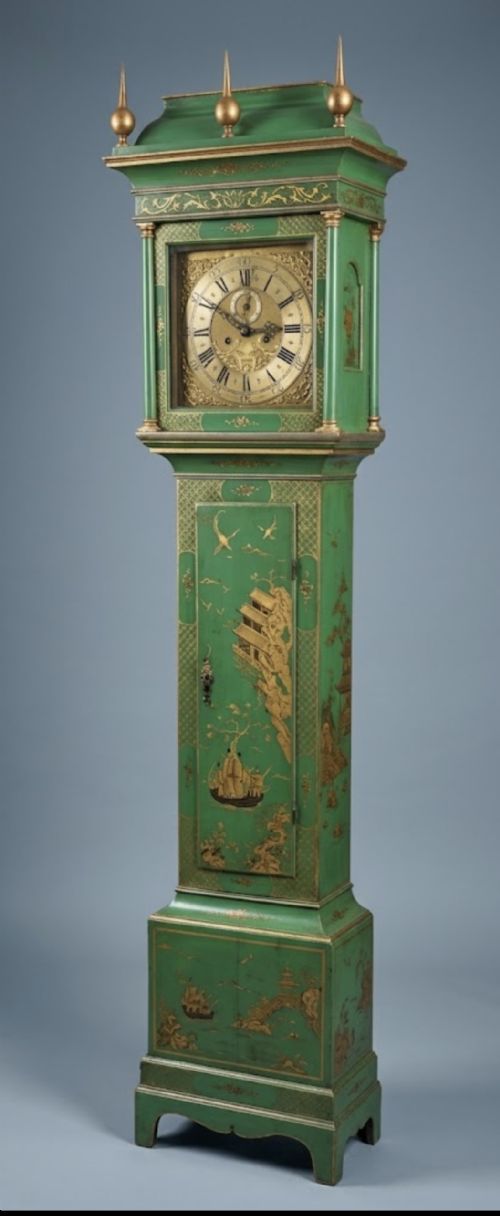
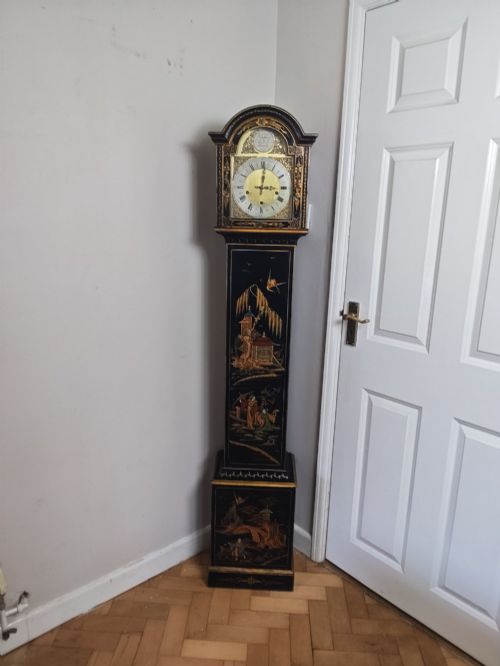
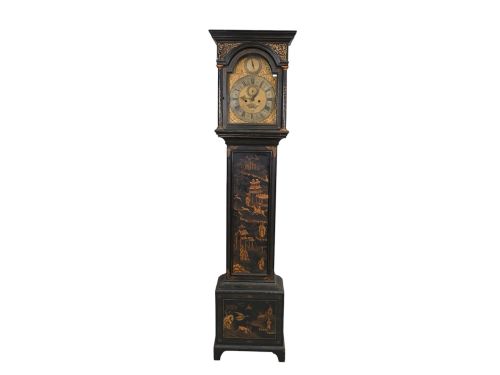
A lacquered longcase clock combines a tall wooden tallboy case with a mechanical clock movement, often housed alongside a brass dial. The pieces found here span the 18th century as well as later 20th-century revivals including smaller grandmother clocks.
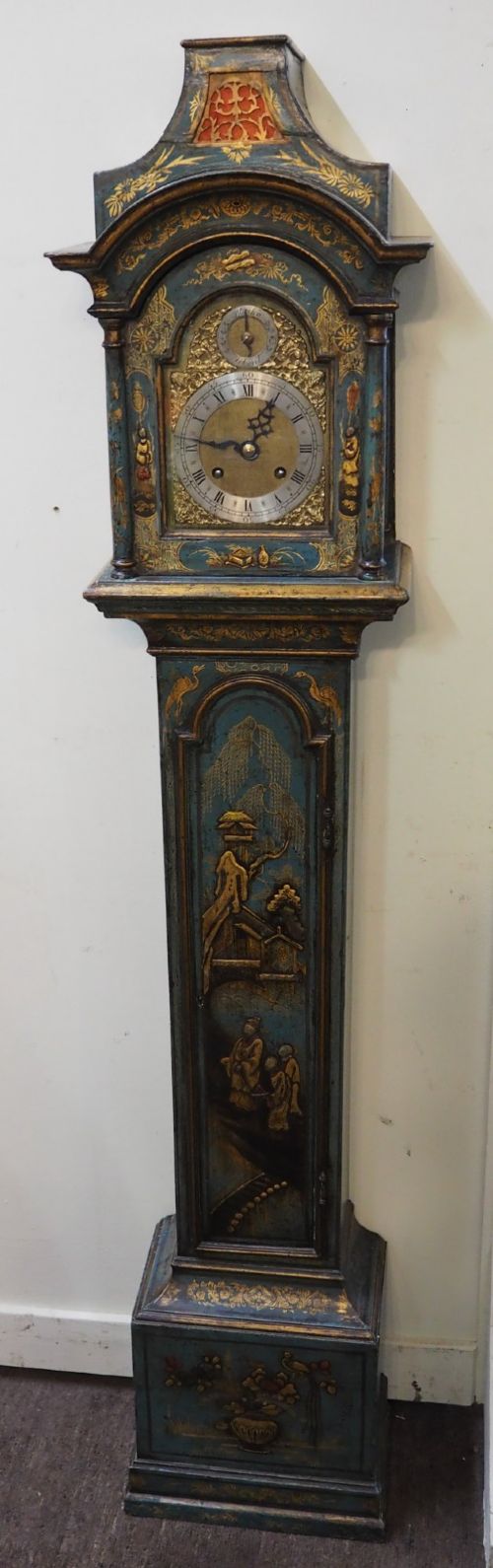
Most examples display Chinoiserie decoration, borrowing motifs from Asian art such as figures, pavilions and landscapes painted or raised in gold leaf upon coloured grounds like green, blue, red or cream. Makers from London and various regional centres signed many of these brass movements.
Grandfather and grandmother variations appear across the selection, offering different heights while retaining the characteristic tall door and hood. Georgian and George III periods dominate the earlier items, alongside pieces dated to the 1920s and 1930s.
How they were made
The cases utilise wood prepared with layers of lacquer or japanning, building up a smooth ground before artists applied gold leaf and painted details. Brass forms the material for the clock dials and internal movements, while glass protects the face within the hood.
Makers shaped the timber into tall floor-standing cases with hinged doors for accessing the weights and pendulum. Specialist decorators applied the Chinoiserie scenes by hand, creating raised pictorial surfaces characteristic of the technique.
Object types span standard longcase clocks, smaller grandmother clocks and automaton movements.
What varies in quality
Quality rests in the crispness of the Chinoiserie detailing and the depth of the lacquer layers across the wooden case. Finer examples display intricate hand-painted figures and gold leaf work that remains sharp and expressive.
The reputation of the maker inscribed on the brass dial also influences distinction, alongside the originality of the movement and the untouched preservation of the coloured finish.
John Fielder of Alton·William Kipling London·Wise of Reading·Thomas Utting of Yarmouth·Gardner of London·Robert Berry·Thomas Deykin of Worcester·Herring of London·Estwick of London
The Lacquered Longcase Clock Glossary
- Chinoiserie
- European decorative style reflecting Chinese artistic motifs, featuring painted landscapes, figures and pavilions.
- Japanning
- European imitation of East Asian lacquerwork, created using layers of varnish heated and polished to a hard finish.
- Grandmother clock
- A smaller version of the traditional longcase clock, typically produced in the 20th century.
- Longcase clock
- A tall pendulum clock enclosed in a wooden case, commonly known as a grandfather clock.
- Movement
- The internal mechanism of a clock, comprising gears, springs and weights that drive the hands and strike the time.
Lacquered Longcase Clock: Frequently Asked Questions
What is a lacquered longcase clock?
A lacquered longcase clock is a tall floor-standing timepiece housed in a wooden case decorated with lacquer or japanning. These pieces frequently feature intricate Chinoiserie artwork.
They combine tall cabinetry with a mechanical brass movement and dial, serving as both functional timekeepers and decorative furniture.
How were these clocks used in historical homes?
These clocks stood in principal rooms and hallways where guests could admire the vibrant coloured lacquer and intricate gold leaf decoration. They provided accurate time for the household while demonstrating the owner's taste for exotic styles.
The tall door allowed easy access to wind the weights and tend to the pendulum regularly.
Where were longcase clocks made?
Makers constructed these clocks in workshops across London and various regional British towns. Names such as William Kipling and Wise of Reading signed dials from the Georgian period.
Regional centres developed distinct regional characteristics in both the cabinetwork and the engraved brass clock faces.