


Kutani Porcelain Statue
A kutani porcelain statue brings sculpted Japanese deities and figures into a room with rich enamel colour and gold detail.
Kutani Porcelain Statue
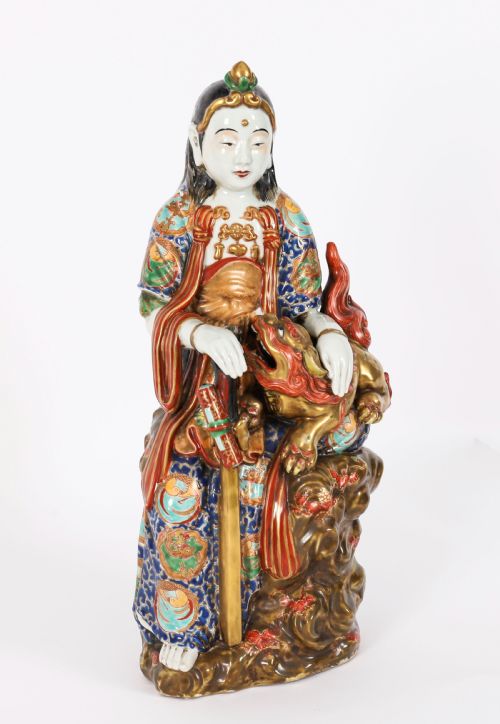
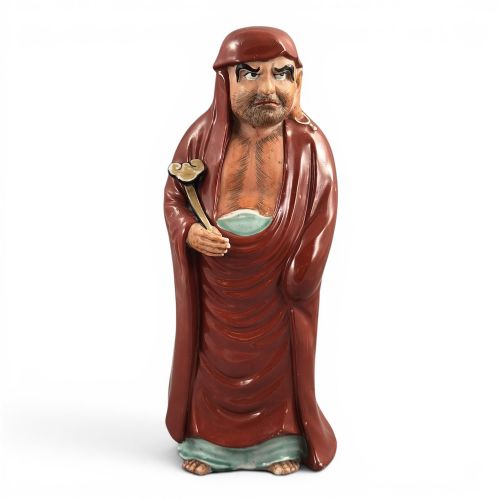
A kutani porcelain statue represents figures such as Kannon, Jurojin, Daruma, and the Buddhist lion known as a shishi. These pieces appear frequently as nineteenth century figures from the Meiji period and the Edwardian era, depicting deities, monks, and traditional subjects.
The sculptural forms range from large okimono figures to triads and detailed figurines holding drums or seated upon temple beasts. Makers shaped these works to capture both mythological reverence and human grace through glazed ceramic forms.
Originating primarily from Japanese kilns, the examples on this page span the Meiji and Taisho periods alongside general nineteenth century dates. Collectors encounter both single monastic figures and complex multi-figure groups executed in traditional styles.
Materials and construction
The foundation of every kutani porcelain statue is white ceramic clay shaped into detailed figurines and fired to a hard body. Artisans then applied polychrome enamel alongside gold leaf and gilt decoration to highlight robes, facial expressions, and temple attributes.
Surface treatments frequently incorporate raised slip work known as moriage, which adds tactile relief to garments and decorative borders. Clear glaze seals the painted details while allowing the underlying porcelain and gold leaf to catch the light.
Several statues double as divine bookkeeping, reminding owners that gods of longevity and Buddhist lions take their duties very seriously.
Distinctions in quality
The depth and complexity of the sculpting distinguish standard figures from superior sculptural works, particularly in pieces featuring animals like the shishi or multiple figures forming a triad. The preservation of the delicate gilt work and enamel pigments over time also marks the upper tier of these pieces.
The Kutani Porcelain Statue Glossary
- Kutani
- A style of Japanese porcelain traditionally characterised by vibrant polychrome enamels and generous use of gold. The kilns producing these wares gained renown for distinct pictorial and sculptural output during the nineteenth century.
- Okimono
- A Japanese decorative figurine designed for display on a shelf or tokonoma alcove. These sculptures range from deities to figures from everyday life.
- Moriage
- A decorative ceramic technique using piped clay slip to create raised surface patterns and textures. This method adds a tactile dimension beneath the enamel and gilt layers.
- Shishi
- A mythical Buddhist lion or temple dog used in guardian figures. Sculptors often pair these beasts with deities or render them as powerful standalone subjects.
- Triad
- A group of three religious figures displayed together as a devotional unit. In these listings, such groups commonly feature Kannon flanked by attendants.
Kutani Porcelain Statue: Frequently Asked Questions
What do these statues represent?
These figures typically depict Buddhist deities, Taoist immortals, monks, and mythological beasts from Japanese tradition. Common subjects include Kannon the goddess of mercy, Jurojin the god of longevity, and Daruma.
The iconography reflects traditional spiritual beliefs and folklore. Each figure holds specific attributes, such as sacred scrolls or temple instruments, that identify the character portrayed.
How do I date a Meiji period piece?
Dating relies on stylistic markers, historical periods associated with the kilns, and recorded production eras like the Meiji or Taisho periods. Nineteenth century examples often exhibit specific enamel palettes and modelling techniques characteristic of those decades.
Comparison with documented pieces from the same kilns helps narrow the decade of origin. The transition from early Meiji styles to later nineteenth century work shows shifts in glazing and decorative density.
Where should I display my statue?
These sculptures suit stable, well-lit surfaces where the polychrome enamels and gold leaf can be appreciated safely away from heavy traffic. A dedicated shelf or cabinet provides a secure environment for delicate ceramic pieces.
Keep the figures out of direct sunlight to protect the surface enamels from fading over time. Adequate clearance prevents accidental knocks to protruding elements like robes or raised hands.
How should I clean porcelain figures?
Dusting requires only a soft, dry brush or a feather duster to remove particles from recessed areas and raised moriage details. Avoid using water, chemical cleaners, or abrasive cloths that might damage delicate gilt highlights.
Regular, gentle maintenance preserves the integrity of the enamel and gold leaf surfaces. Professional conservation advice should be sought if deeper cleaning ever becomes necessary.