

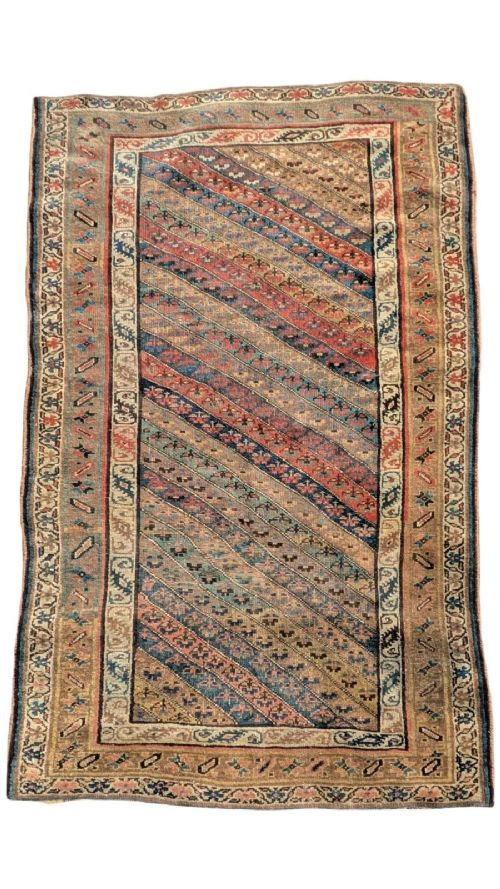
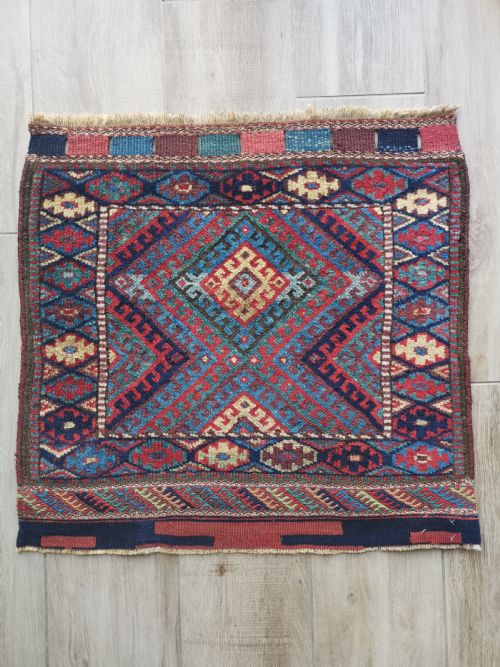
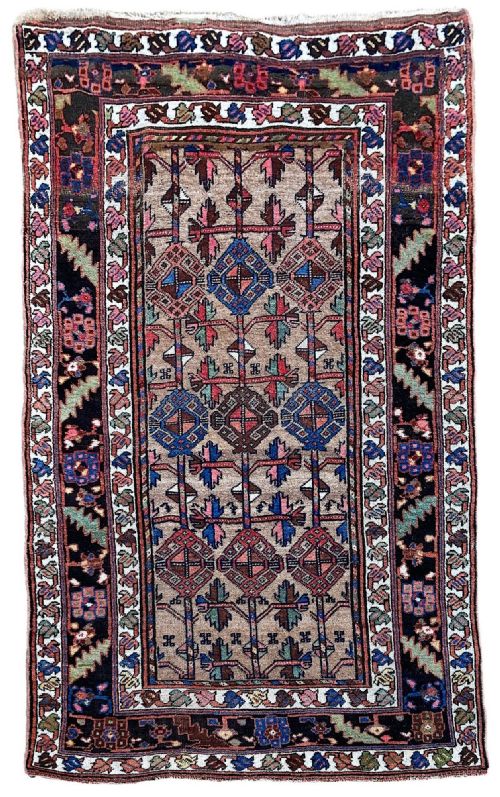
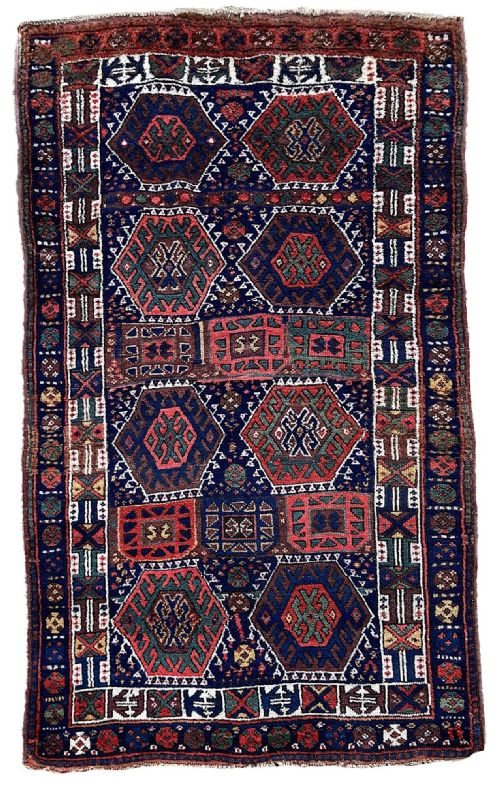
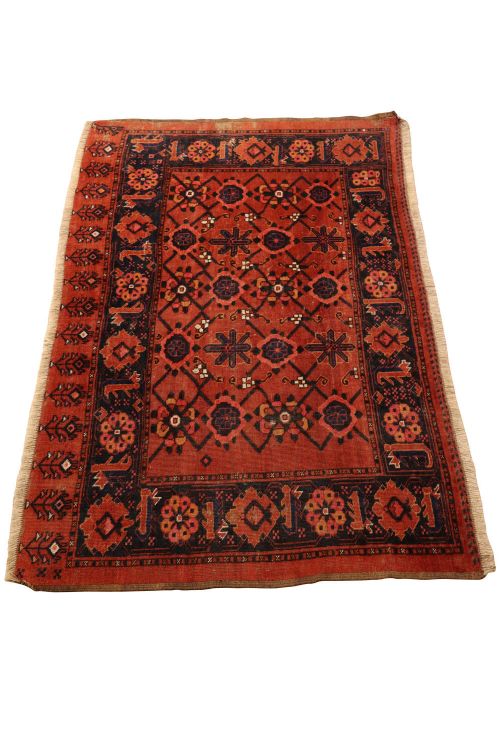


Kurdish Woven Carpet
These heavy, characterful floor coverings known as a kurdish woven carpet bring the robust tribal designs of nineteenth and early twentieth-century village weavers directly into modern rooms.
Kurdish Woven Carpet
A kurdish woven carpet encompasses heavy floor coverings, long runners and smaller village formats produced across Persian, Anatolian and Caucasian tribal regions from the nineteenth century onward. Buyers most frequently encounter formats originating from centres such as Bidjar, Senneh, Hamadan and Quchan, often bearing robust geometric medallions, latch hooks or traditional shrub motifs.
These textiles emerge from distinct tribal groups including the Jaf, Kolyai and Sauj Bulagh, reflecting the nomadic and village traditions of Kurdish lands. Pieces range from compact bag faces and family rugs to expansive kelleh long rugs designed to anchor substantial rooms.
Materials and Technique
Weavers constructed these carpets using wool pile set against wool or cotton foundations, relying heavily on hand-spun wool that accepts dye with deep variation. Natural dyes provided the foundational palette for these village textiles, yielding rich tones across yellow grounds, deep indigos and earthy reds.
Makers employed sturdy hand-knotted techniques suited to domestic floor use, resulting in dense, resilient structures designed to withstand decades of heavy foot traffic.
Listings span periods from the early nineteenth century through to the 1920s, utilising wool, cotton, hand-spun wool and natural dyes.
Variations in Quality
The standard of a kurdish woven carpet rests in the handled density of the wool, the clarity of the natural dyes and the crispness of the tribal motifs such as Memlinc guls or latch hook medallions. Tighter knotting and finer hand-spun wool distinguish urban-influenced village weaving, such as work from Senneh or Bidjar, from coarser nomadic output.
Structural integrity, including the survival of original side corded edges and remaining kelim ends, determines the preservation state and historical value of older nineteenth-century examples.
The Kurdish Woven Carpet Glossary
- Kelleh
- A large rectangular carpet format, longer than a standard room rug but wider than a runner.
- Bagface
- The decorated front panel of a storage sack produced by nomadic weavers for domestic transport.
- Gul
- A repeating octagonal or medallion motif used across tribal carpet designs.
- Latch hook
- A stepped geometric outline ornamenting the edges of medallions and borders.
- Hand-spun wool
- Yarn spun by hand rather than machinery, resulting in irregular thickness that absorbs natural dyes unevenly for mottled colour depth.
Kurdish Woven Carpet: Frequently Asked Questions
Where were these carpets made?
Production centred across the historical Kurdish lands spanning north-west Persia, parts of Anatolia and the southern Caucasus. Village weavers and nomadic tribes created these textiles in distinct local workshops and encampments.
Specific weaving centres such as Bidjar, Senneh and Hamadan developed recognizable regional styles that separate Persian Kurdish work from Caucasian or Anatolian examples.
How do I care for an old rug?
Protect the textile by placing a quality breathable underlay beneath it to prevent slipping and reduce friction against hard floors. Vacuum gently using standard suction without rotating brush bars that can pull at aged wool pile.
Rotate the floor covering periodically to ensure even exposure to foot traffic and sunlight. Professional cleaning by specialists in antique textiles remains essential when washing is required.
How can I tell the age of a piece?
Dating relies on examining the palette of natural dyes, the structural materials such as hand-spun wool or cotton foundations, and the specific tribal iconography. Nineteenth-century examples often exhibit softer wool textures and entirely organic dye variations.
Later pieces from the early twentieth century frequently incorporate firmer cotton warps and brighter transitional tones while retaining traditional village motifs.
What is a runner format used for?
Runners provide long, narrow floor coverings traditionally suited to narrow hallways, corridors and stair landings. Their elongated proportions allow tribal designs and repeating medallions to display sequentially.
These formats bring structural warmth and colour to transitional spaces within country houses and modern interiors alike.