


Kurdish Tribal Rug
These Kurdish tribal rug pieces combine traditional wool structures with distinctive tribal patterns, offering any interior a grounded, historic centrepiece.
Kurdish Tribal Rug
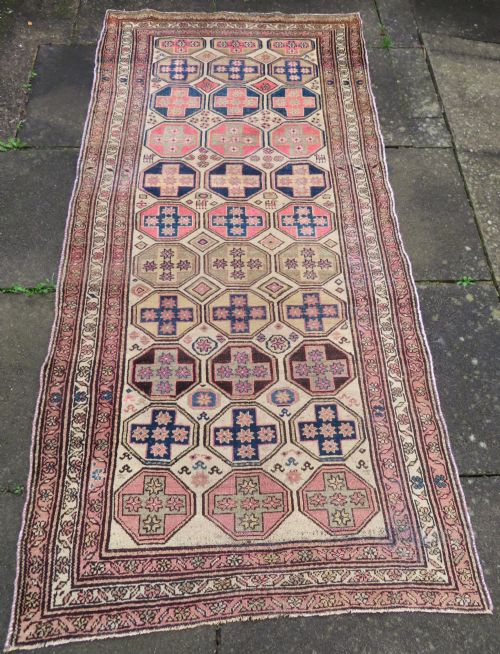
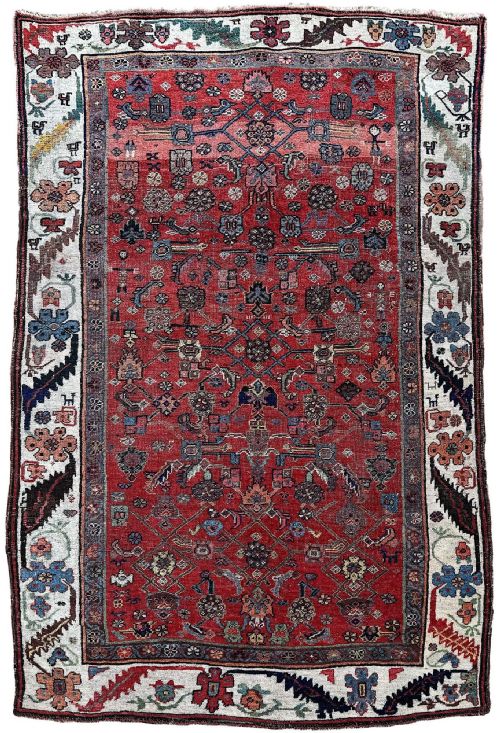
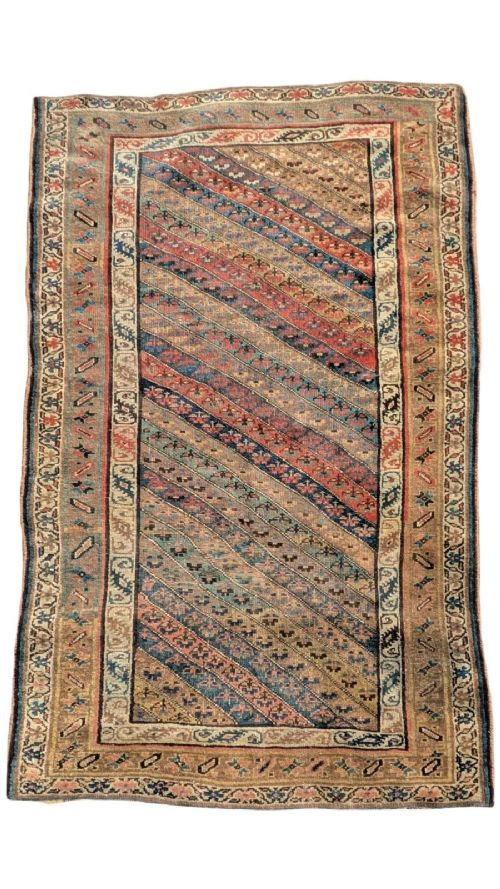
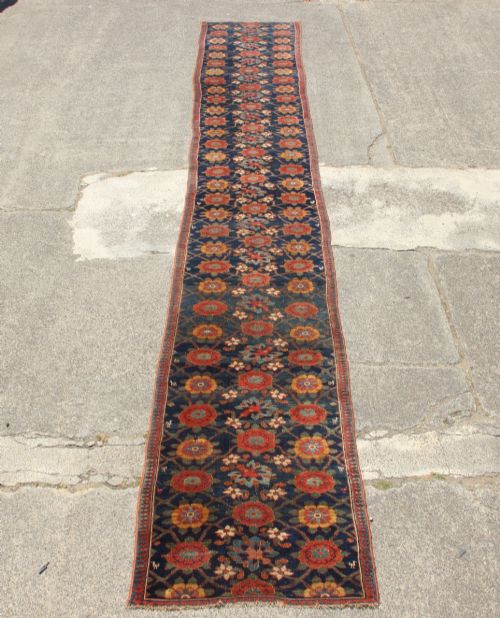
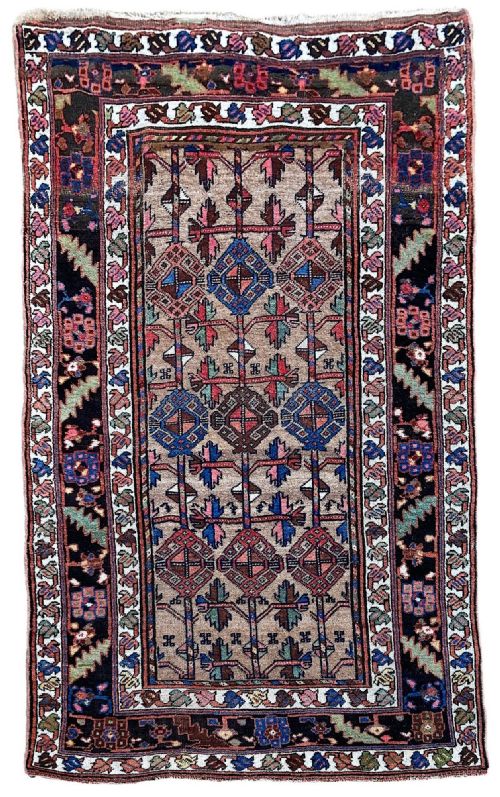
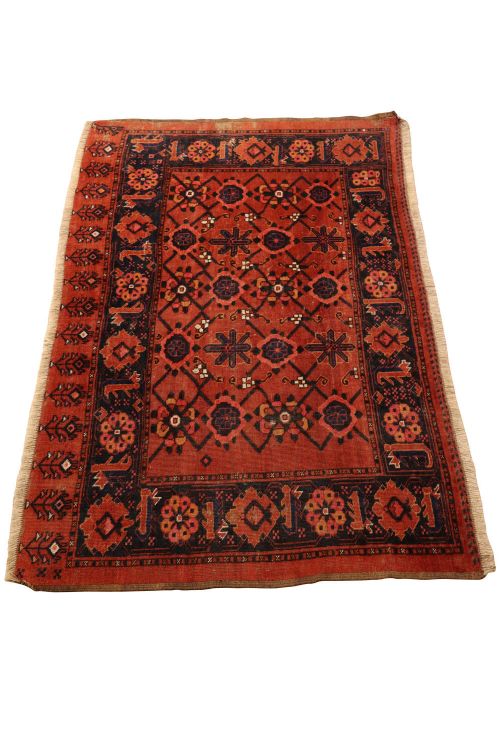
When you search for a Kurdish tribal rug, you encounter hand-knotted and woven textiles originating from regions like North West Persia, Persian Kurdistan, and the South Caucasus. These functional floor coverings and storage pieces embody the heritage of nomadic and village weavers, spanning late nineteenth-century origins through the early decades of the twentieth century.
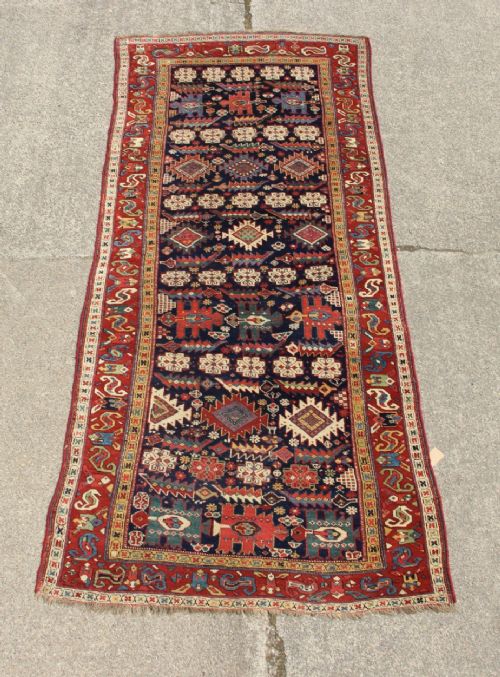
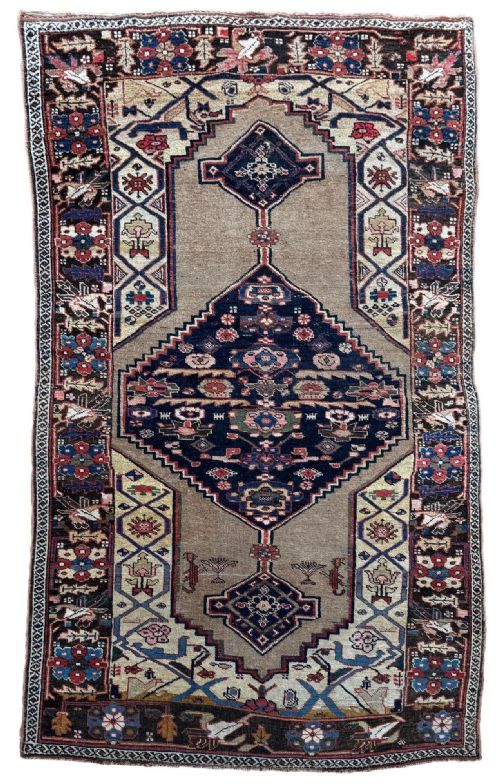
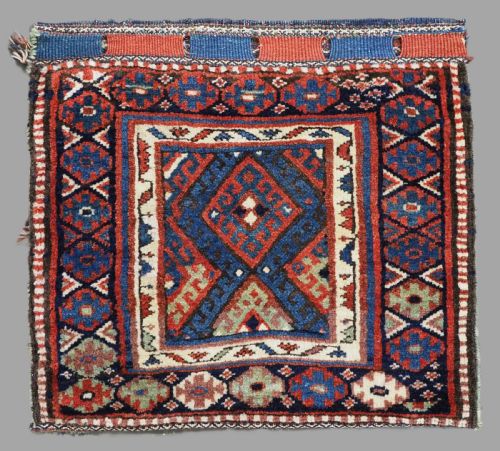
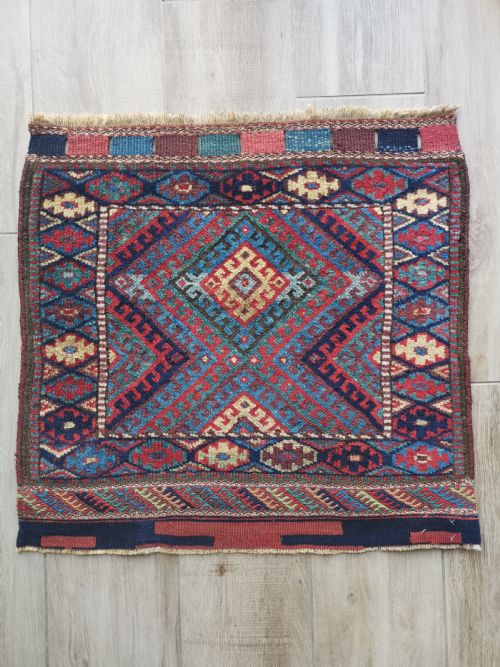
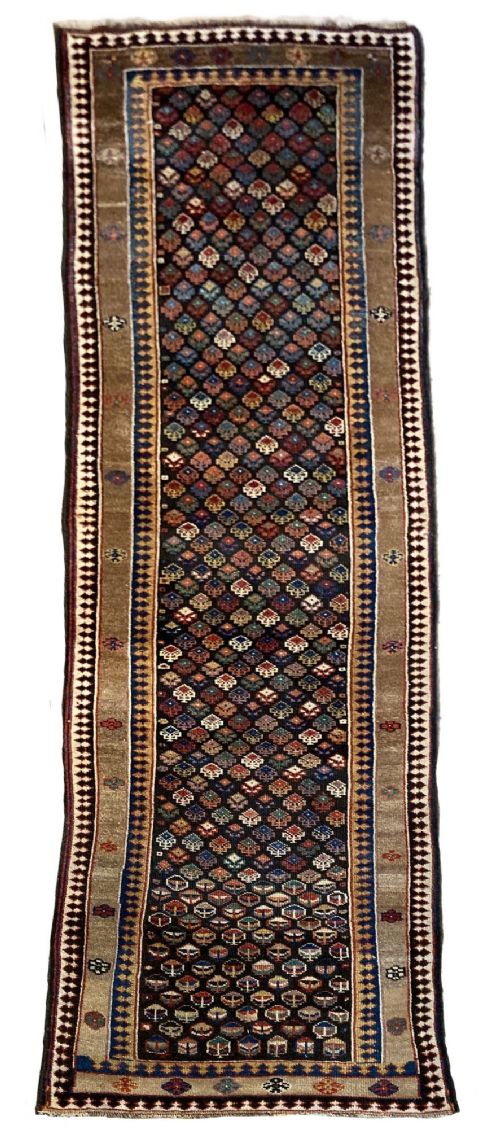
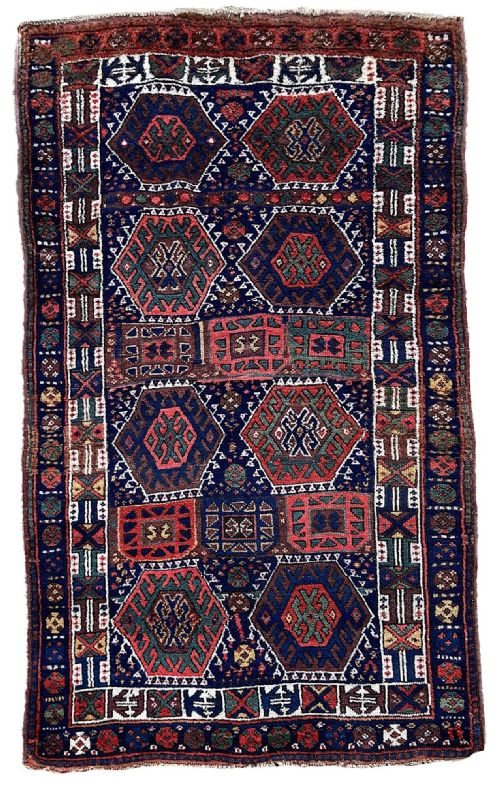
The versions most frequently met on this page include room-sized area rugs, narrow runner rugs, and complete bag faces featuring plain weave elements. Their forms reflect the practical needs of village life, encompassing everything from compact scatter formats to elongated hallway runners and structural bag pieces.
Stylistic influences range widely across Kurdish, Persian, Persian tribal, and Caucasian traditions. Individual examples display distinctive regional characteristics, such as the paired figures found in narrow runner formats or the geometric compositions typical of southern Caucasian workshops.
How they were made
The construction of these textiles relies fundamentally on traditional materials, predominantly utilising wool and hand-spun wool for the pile and surface decoration. Cotton frequently appears in the foundational warps and wefts, providing structural stability and crisp definition to the geometric motifs.
Weavers employed hand-knotting techniques alongside flatweave methods, particularly visible in the plain weave backs attached to utilitarian bag pieces. This combination of dense pile work and flat-woven textile engineering ensured durability for nomadic and domestic use.
Kurdish Tribal Rug Retail Price Guide 2026
Typical asking prices for kurdish tribal rug among the pieces listed under this phrase on Sellingantiques today, from the lower quarter to the upper quarter. They describe what is for sale here now, not the wider market.
What varies in quality
The distinction between ordinary and exceptional examples rests upon the integrity of the materials and the precision of the hand-spinning process. Finer grade wools yield a more resilient handle and allow for greater clarity within complex tribal patterns.
Design execution and compositional balance further separate superior examples from standard production. Pieces that maintain symmetrical proportions, harmonious colour distribution, and crisp execution of motifs command greater attention from collectors.
The Kurdish Tribal Rug Glossary
- Pile
- The upright yarn loops that form the tactile surface of a rug. It is created by knotting wool around the warp threads during construction.
- Warp
- The stationary lengthwise threads stretched across the loom before weaving begins. These foundational cords support the entire structure of the textile.
- Weft
- The horizontal threads passed alternately over and under the warp threads to bind the knots in place. Together with the warp, it forms the stable grid of the rug.
- Flatweave
- A textile produced without a pile by interlocking warp and weft threads directly. This technique appears frequently on the reverse sides of storage bags.
- Jaf
- A specific Kurdish tribal designation associated with distinct weaving traditions. Pieces from this group often incorporate practical bag formats with plain weave construction.
Kurdish Tribal Rug: Frequently Asked Questions
What is a Kurdish tribal rug?
These textiles are traditional floor coverings and utilitarian pieces produced by Kurdish weavers in regions spanning Persia and the Caucasus. They utilise hand-spun wool and cotton structures to form durable, patterned surfaces.
Created primarily between the late nineteenth century and the early twentieth century, they reflect the distinct cultural motifs and weaving techniques of their specific tribal origins.
How were these rugs used?
Weavers produced these pieces for practical domestic functions, including floor insulation, seating, and animal transport. Runner formats served narrow interior spaces, while specialised bag pieces stored belongings within nomadic tents.
Over time, these utilitarian items transitioned into decorative furnishings valued for their authentic tribal artistry and robust construction.
How do I care for a Kurdish rug?
Protect these historic wool textiles by placing them in low-traffic areas away from direct, harsh sunlight. Regular gentle vacuuming without a rotating brush bar prevents dust accumulation within the pile.
Professional cleaning tailored to antique carpets ensures the preservation of natural dyes and delicate hand-spun wool fibres.
How do I identify a Kurdish rug?
Identification involves examining the structural materials, knotting density, and characteristic geometric or figurative motifs. References to specific groups, such as the Jaf or Sinjabi tribes, provide clues to origin.
Stylistic elements often blend Persian and Caucasian design vocabularies, supported by the presence of hand-spun wool and cotton foundations.