


Kurdish Persian Weaving
Kurdish persian weaving brings robust tribal character into a room through hand-knotted wool rugs, long runners and practical bag faces.
Kurdish Persian Weaving
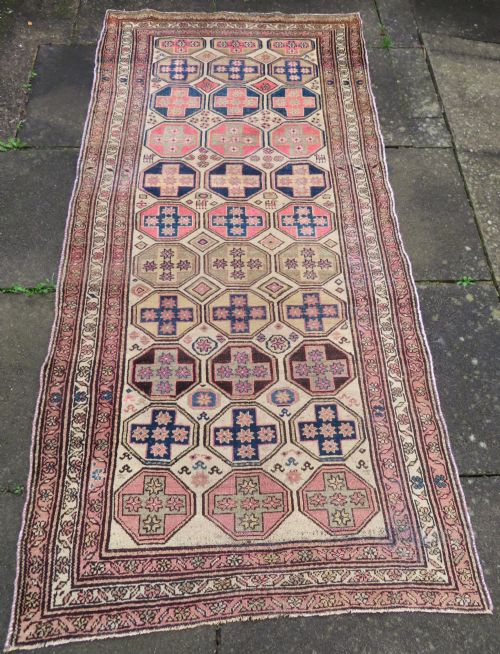
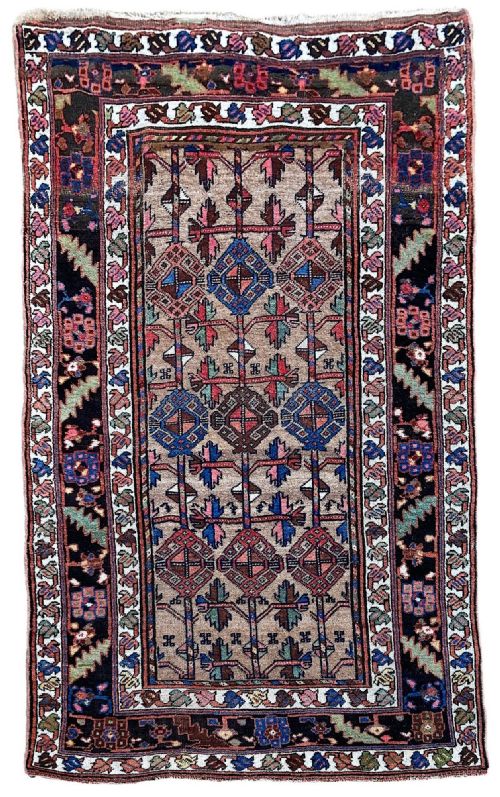
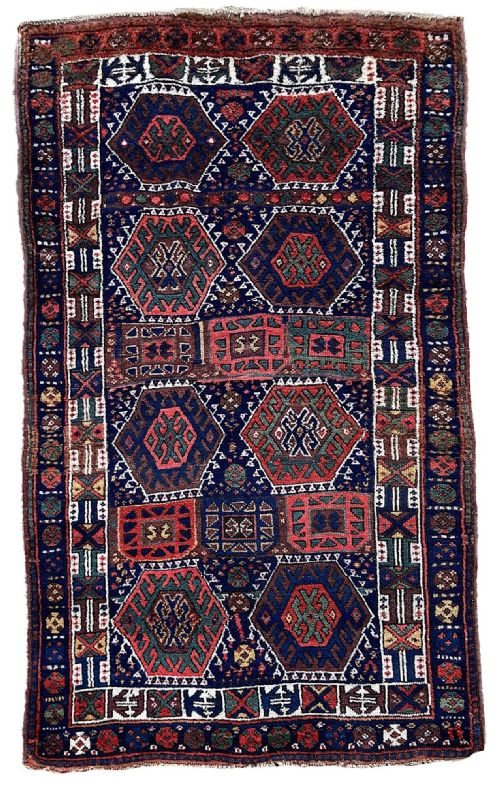
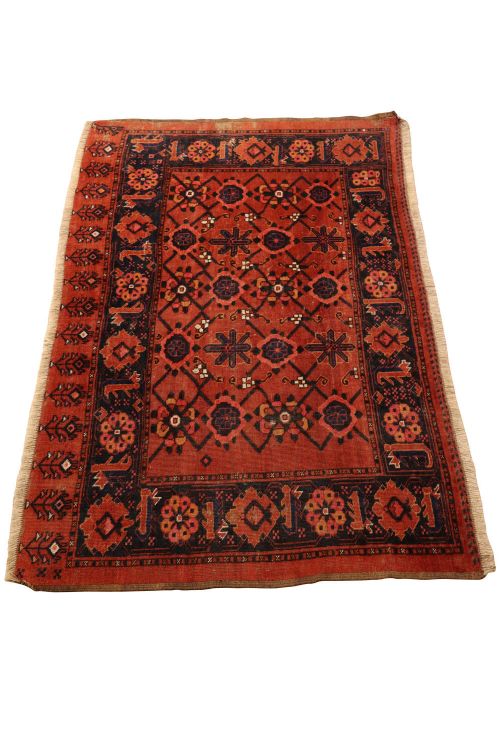
When you search for kurdish persian weaving, you encounter hand-knotted tribal rugs, long kelleh carpets, runners and utilitarian bags made across the rugged lands of north-west Persia. The pieces span from the mid-nineteenth century into the early twentieth century, reflecting the distinct artistic traditions of village and nomadic weavers.
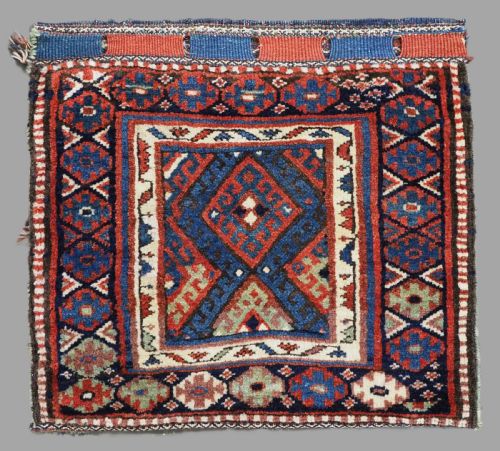
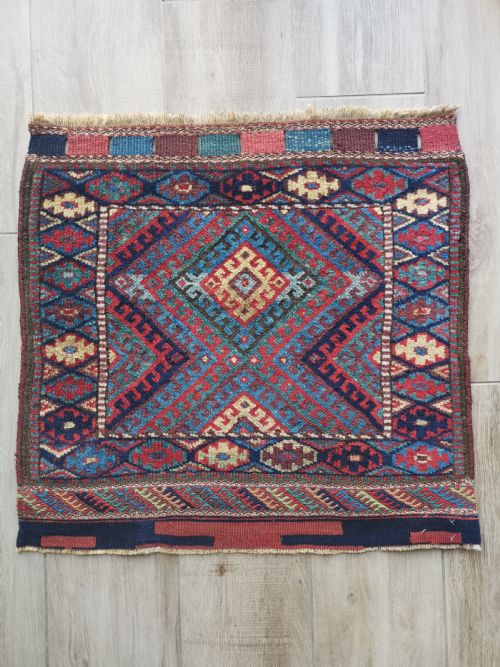
You are most likely to meet smaller scatter rugs, utilitarian saddlebag faces and long runner formats carrying geometric motifs or repeating guls. These textiles served daily domestic functions in tribal life before entering the antique market as decorative floors and collectible pieces.
Materials and Construction
Weavers relied principally on wool, often hand-spun, combined with cotton foundations and occasional goat hair for structural durability along the edges. Natural dyes provided the palette, yielding stable tones of yellow, madder red and deep indigo that settle gracefully over decades.
The construction employs sturdy hand-knotting techniques characteristic of tribal workshops, producing thick pile rugs alongside flatwoven bag backs and kilims. This dense knotting ensured the textiles could withstand the heavy wear of nomadic encampments and country houses alike.
Several bags preserve their original plain weave backs, surviving a century of domestic service entirely intact.
Factors That Distinguish Quality
Quality rests in the handling of the wool and the precision of the natural dyes, which determine the depth and longevity of the surface. Finer examples display tightly packed knots and crisp drawing within geometric fields, whereas coarser output shows broader execution.
The integrity of the original plain weave backs on bags and the survival of complete borders distinguish better-preserved specimens. Pieces with uncommon ground colours, such as lemon or clear yellow, demonstrate higher artistic ambition among regional makers.
The Kurdish Persian Weaving Glossary
- Kelleh
- A large long rug format, typically significantly longer than it is wide, designed for specific room proportions.
- Chanteh
- A small tribal bag or pouch, often featuring decorative pile work on the face and flatweave construction on the reverse.
- Gul
- A repeating medallion or floral motif central to many tribal rug designs.
- Kilim
- A flatwoven textile produced without a pile, utilised for covers, floor coverings and functional bags.
- Bidjar
- A centre of weaving in western Persia known for extremely dense construction and heavy wool foundations.
Kurdish Persian Weaving: Frequently Asked Questions
What is a Jaf bag?
Jaf bags are utilitarian storage containers produced by the Jaf tribe, featuring distinctive geometric patterns and often retaining their original flatweave backs.
Collectors prize them for their robust wool and expressive tribal design vocabulary.
How do I care for an antique rug?
Protect the textile by placing it in a low-traffic area out of direct sunlight and using a breathable underlay beneath the foundation.
Vacuum gently without a rotating brush roll and consult a specialist in antique textiles for professional washing.
Where were these pieces made?
These textiles originate from the Kurdish regions of north-west Persia, including Hamadan, Senneh, Bidjar and surrounding valleys.
Local tribes and village communities produced them for personal use and regional trade.
What distinguishes Senneh weaving?
Senneh pieces generally exhibit finer knotting, intricate boteh patterns and precise geometric layouts compared to heavier tribal counterparts.
They often appear in narrow runner or delicate carpet formats.