


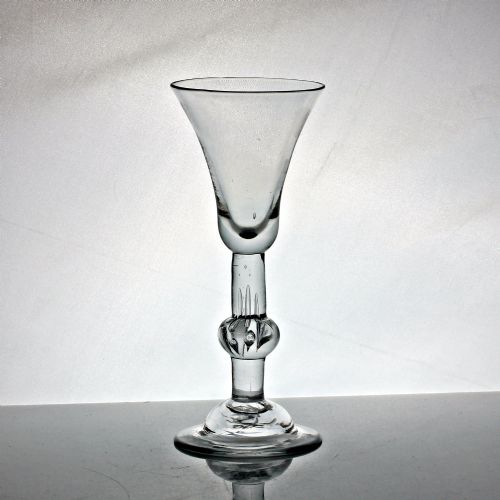


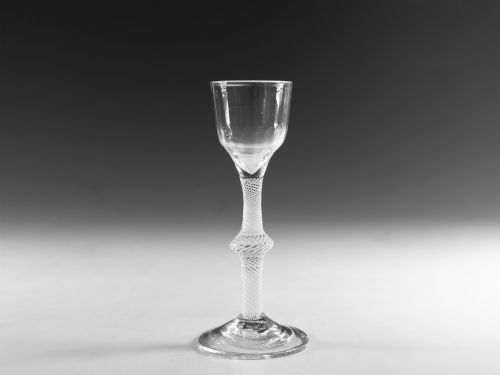
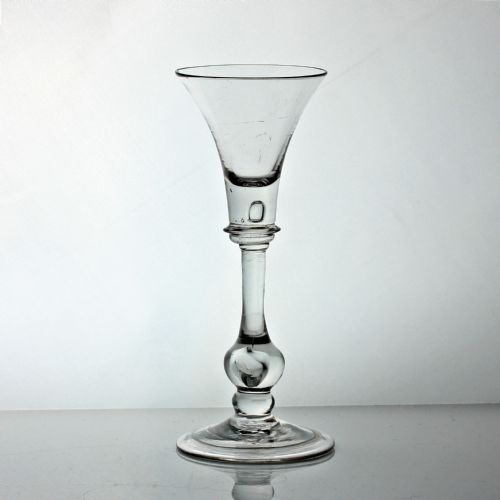



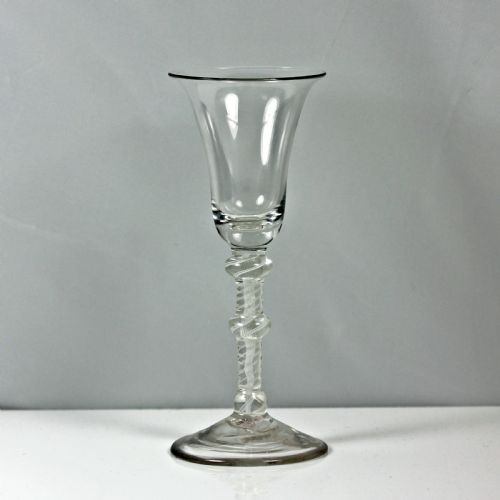
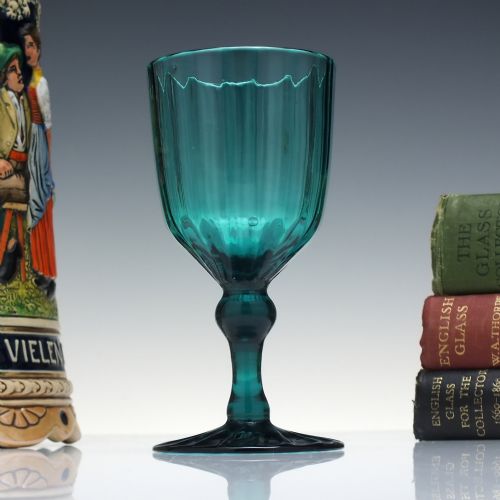


Knopped Stem Glass Goblet
These knopped stem glass goblet pieces are tactile drinking vessels defined by distinct thickened nodes along the stem, prized by collectors for their historical weight and form.
Knopped Stem Glass Goblet
When you search for a knopped stem glass goblet, you are looking at drinking vessels and stemware spanning the early eighteenth century through to the Edwardian period, with Georgian examples forming a major part of the selection.
The pieces encompass various historical forms including wine glasses, gin glasses, rummers, and sherry glasses, created across multiple periods from the 1700s to the early twentieth century.
Georgian and Victorian examples dominate the available selection, displaying distinct stylistic shifts from early baluster forms to later coloured and cut glass drinking vessels.
Materials and construction
These items are shaped from hand-blown glass, lead glass, and lead crystal, resulting in substantial weight and clarity in the finished stemware.
Makers utilised techniques such as rib moulding, honeycombing, nut moulding, and air-tearing within the stems, alongside surface decoration including white enamel and detailed engraving.
Knopped Stem Glass Goblet Retail Price Guide 2026
Typical asking prices for knopped stem glass goblet among the pieces listed under this phrase on Sellingantiques today, from the lower quarter to the upper quarter. They describe what is for sale here now, not the wider market.
Listings feature lead glass, clear lead glass, and hand-blown glass, shaped into wine glasses and rummers across the 18th century, Georgian, and Victorian periods.
Distinctions in quality
Quality rests in the precision of the stem formations, where multiple knops, complex air twists, or multi-spiral opaque twists demonstrate superior glassmaking skill over plain stems.
The crispness of mould work, such as honeycomb or rib patterns, and the depth of armorial or commemorative engraving further separate standard utilitarian drinking glasses from exhibition pieces.
The Knopped Stem Glass Goblet Glossary
- Knop
- A thickened protuberance or bulbous node on the stem of a glass. This serves both a decorative function and a practical purpose for grip.
- Baluster
- A heavy, swelling stem form typical of early eighteenth-century drinking vessels. It derives its silhouette from architectural stone balusters.
- Air Twist
- A spiral thread of air enclosed within the glass stem. This optical effect is achieved by drawing out bubbles trapped inside the molten metal.
- Opaque Twist
- A series of white or coloured enamel threads twisted within the stem of the glass. These threads contrast sharply with the clear lead crystal body.
Knopped Stem Glass Goblet: Frequently Asked Questions
How do I date a knopped stem glass goblet?
Dating relies on observing the silhouette of the bowl, the thickness of the metal, and the complexity of the stem construction. Early eighteenth-century examples often display heavy baluster forms, whilst later Georgian pieces introduce refined twists and lighter proportions.
Changes in glass chemistry, such as the adoption of heavy lead crystal, also help narrow down the period of manufacture alongside any engraved dates or armorials.
What is an air twist stem?
An air twist stem contains elongated bubbles pulled into delicate spirals during the blowing process. Master glassmakers manipulated the hot metal to trap and stretch these air channels inside the clear crystal.
This technique creates a shimmering internal pattern that catches the light without relying on external cutting or coloured enamels.
How were these goblets used historically?
These vessels served primarily for consuming wine, gin, or ale during formal dining and social gatherings. Their robust construction and generous bowl sizes suited the heavy toasts of the Georgian and Victorian eras.
Some specialised pieces, such as armorial or friendship glasses, recorded specific political allegiances, marriages, or social clubs.
Are coloured glass goblets authentic?
Coloured glasses, including Bristol green and turquoise blue examples, appear frequently across Victorian and Edwardian manufacturing periods. These tones derived from metallic oxides added directly to the molten batch.
While clear lead glass dominates the earlier eighteenth-century entries, rich hues became highly fashionable in later nineteenth-century stemware.