



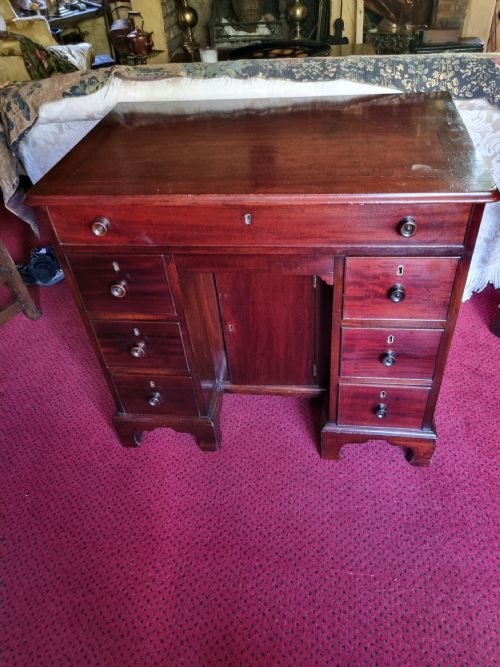


Kneehole Dressing Chest
A kneehole dressing chest organises small personal items within a recessed central compartment, offering a refined workspace that dates primarily from the eighteenth century.
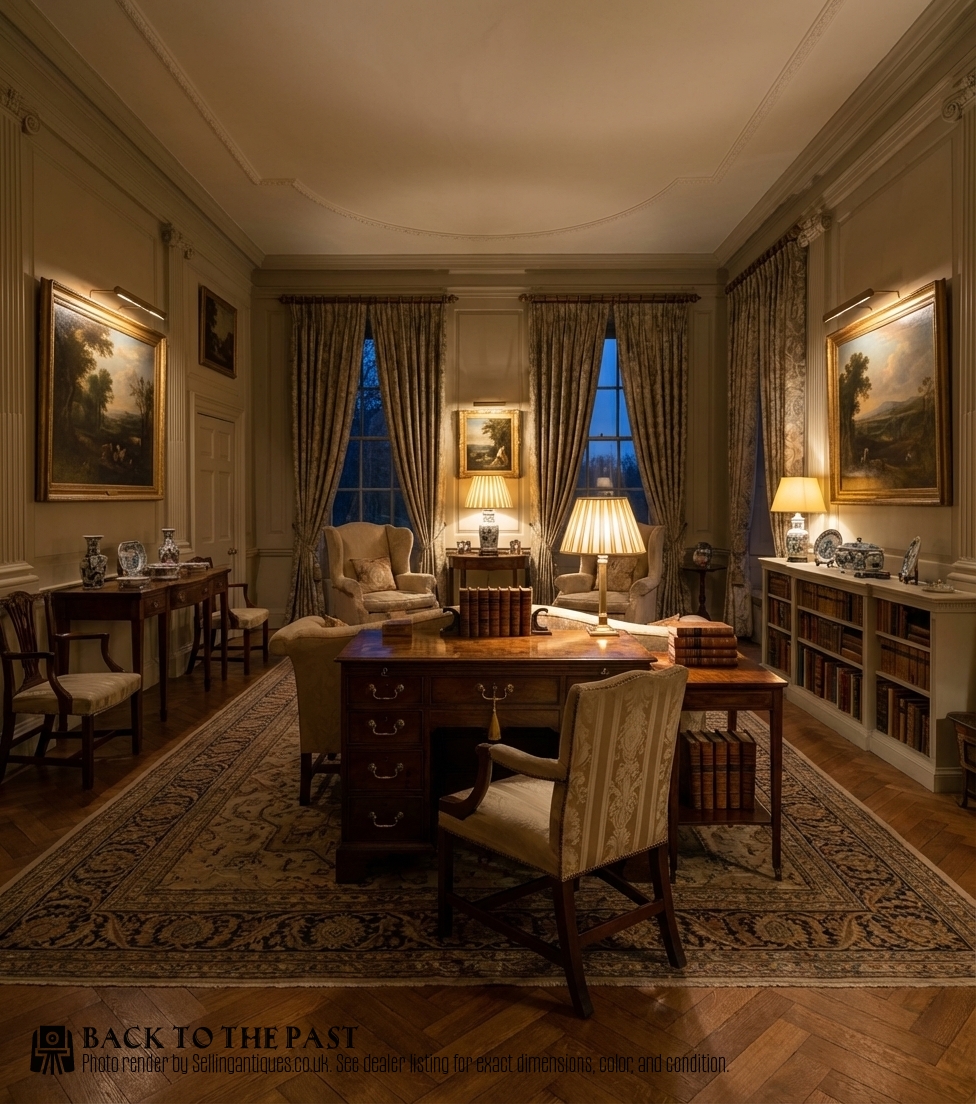
Kneehole Dressing Chest
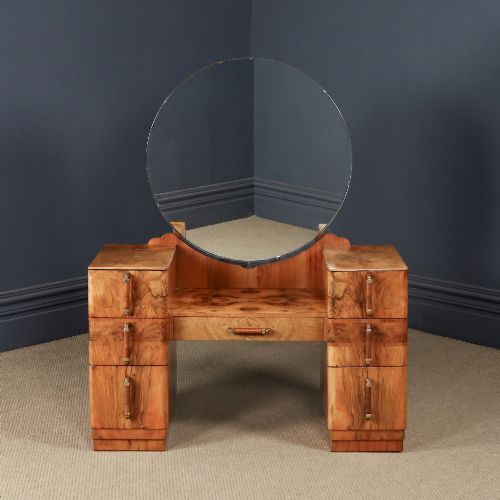
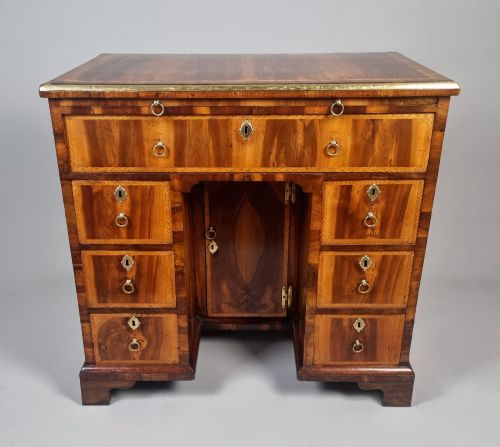
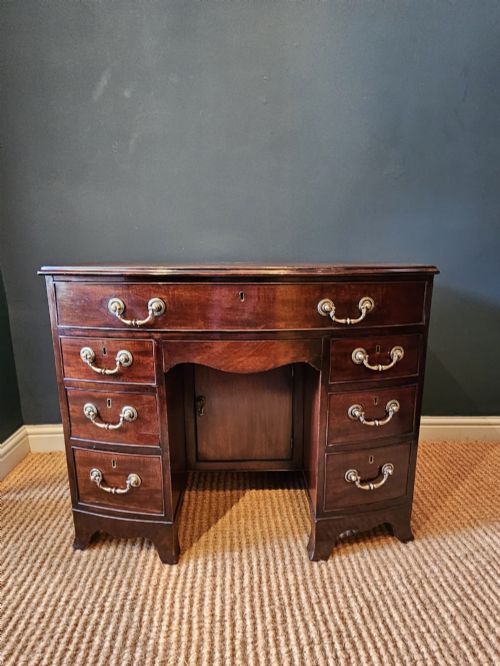
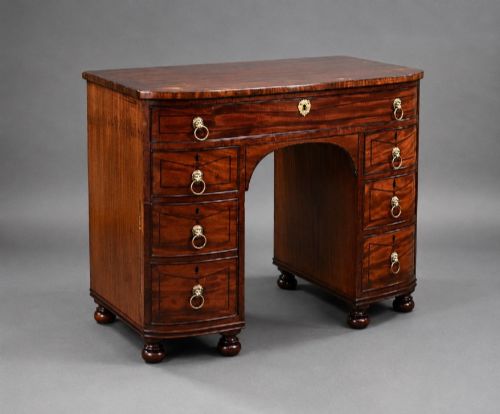
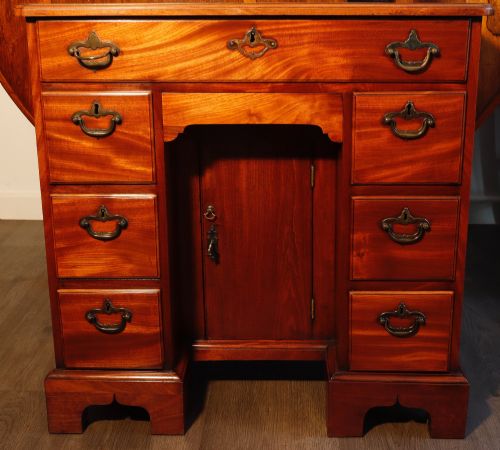
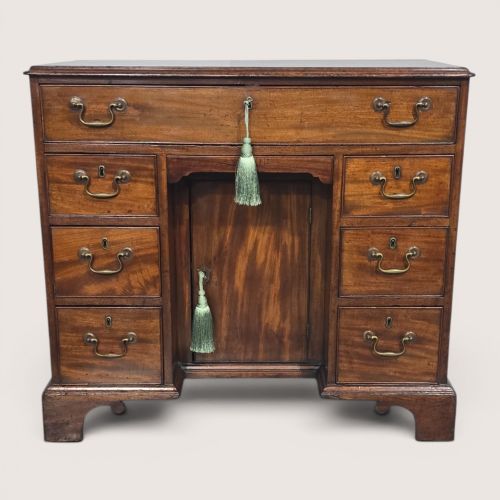
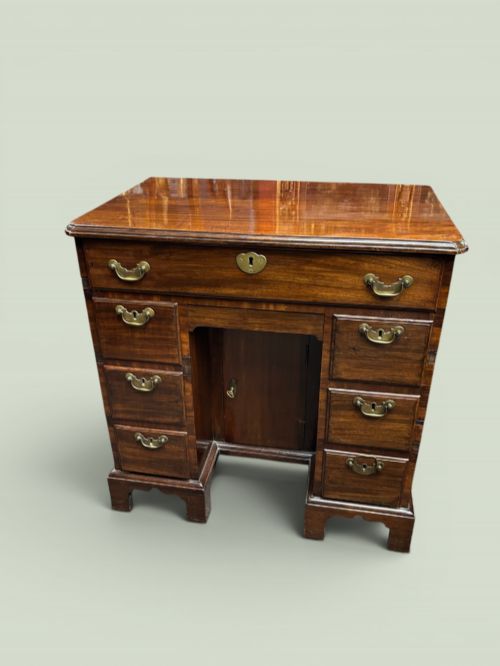
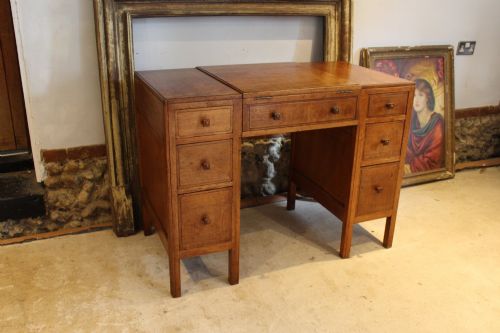
When you search for a kneehole dressing chest, you encounter compact cabinetry designed for personal grooming and private correspondence, predominantly originating from the Georgian and eighteenth-century eras. These pieces combine a central recessed cupboard or kneehole space flanked by banks of small drawers, often topped by a fold-down writing slide or a dedicated mirror arrangement.
The version you are most likely to meet on this page is constructed from mahogany or walnut, reflecting the dominant cabinet woods of the Georgian period, though variants in oak, yew wood, and burr walnut appear frequently. Earlier examples from the George I and George II reigns show meticulous attention to veneer work and featherbanding, while later Victorian and Art Deco interpretations adapt the traditional pedestal format with inlaid satinwood or figured grains.
Materials and construction methods
Cabinetmakers utilised dense hardwoods such as mahogany, oak, and walnut, frequently applying choice veneers like burr walnut or yew wood to primary surfaces. Carcases incorporate secondary timbers for drawer linings and internal divisions, whilst brass hardware, including original drop handles and escutcheons, secures the structural integrity of the drawers.
Joinery methods rely on hand-cut dovetails for drawer construction and pegged mortise and tenon joints for the main frame. Surfaces receive hand-applied polish or wax finishes that highlight the natural grain patterns of Cuban mahogany and figured walnut without obscuring the timber.
Listings feature eighteenth-century Georgian designs alongside Victorian interpretations and Art Deco burr walnut dressing tables.
Distinctions in craftsmanship
The hierarchy of quality rests upon the selection of timber and the precision of the cabinetwork, particularly in the matching of veneer grains across drawer fronts. Pieces boasting untouched original brasses and undisturbed secondary woods command higher regard among collectors than those with replaced hardware or extensive timber restoration.
Sophistication of internal layout further separates standard items from exceptional examples, such as those featuring fitted secretaire drawers with pigeonholes and hidden compartments. The crispness of carved details, such as bracket feet, cockbeading around drawers, and featherbanding, indicates the skill of the original workshop.
Heal and Sons·Shapland and Petter
The Kneehole Dressing Chest Glossary
- Kneehole
- A recessed space in the centre of a desk or dressing chest designed to accommodate the user's legs. This architectural feature allows the piece to combine storage with a comfortable seated position.
- Featherbanding
- A decorative inlay technique using small sections of veneer laid diagonally to form a herringbone pattern around drawer perimeters. It frames the primary wood panels on high-status walnut pieces.
- Lowboy
- A small table with drawers supported on four legs, frequently serving as a dressing table or side table in eighteenth-century interiors. These precursors share dimensions and drawer configurations with kneehole chests.
- Secretaire
- A desk or drawer fitted with a drop-front panel that conceals a writing surface and small pigeonholes. This feature allows a dressing chest to function simultaneously as a writing table.
- Bracket foot
- A structural support projecting from the lower corners of a case piece, shaped in a curve or mitred at the corner. This foot style supersedes earlier bulbous supports on eighteenth-century chests.
Kneehole Dressing Chest: Frequently Asked Questions
How were kneehole dressing chests used?
These pieces served individuals for morning grooming rituals, writing letters, and storing personal valuables in the smaller side drawers.
The central cupboard often concealed storage for washing basins or served as a discreet knee space while seated at the chest.
How do I distinguish eighteenth-century pieces from later copies?
Examination of the drawer linings reveals hand-cut dovetails and timber shrinkage consistent with age rather than machine-cut uniformity.
Secondary woods such as oak or pine used inside the carcase provide reliable indicators of the period of manufacture.
Can I use a kneehole dressing chest as a desk?
The compact proportions and integrated writing slides or knee spaces make these chests suitable for modern laptop use or correspondence.
Ensuring the knee clearance matches seating requirements allows comfortable daily use in a study or bedroom.
What maintenance do antique walnut and mahogany surfaces require?
Regular application of bees-wax maintains the moisture balance in historic timber and protects the hand-polished finish from daily wear.
Placing the chest away from direct heat sources and strong sunlight prevents veneer lifting and timber splitting.