
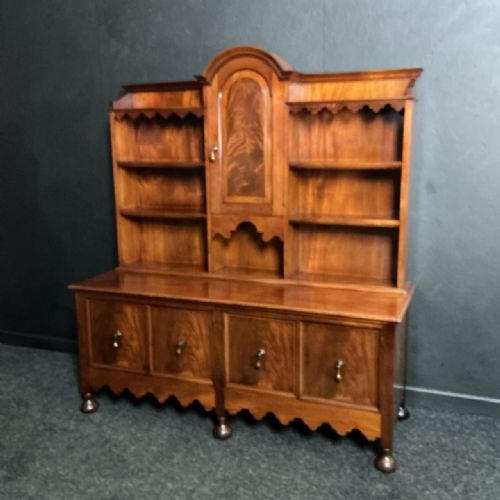
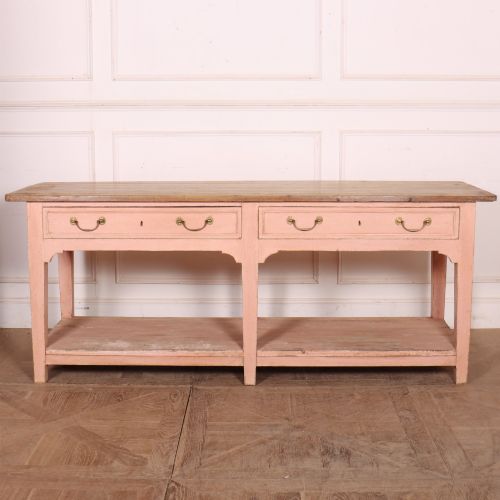
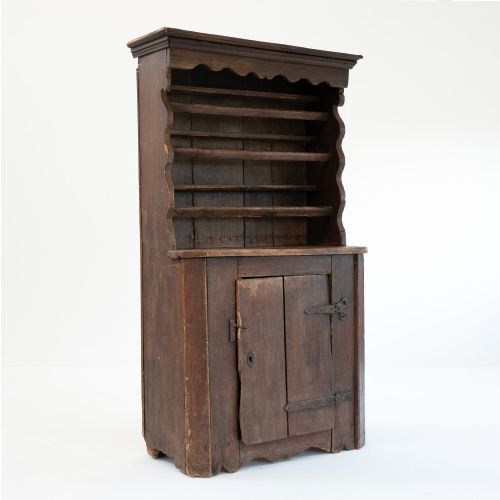
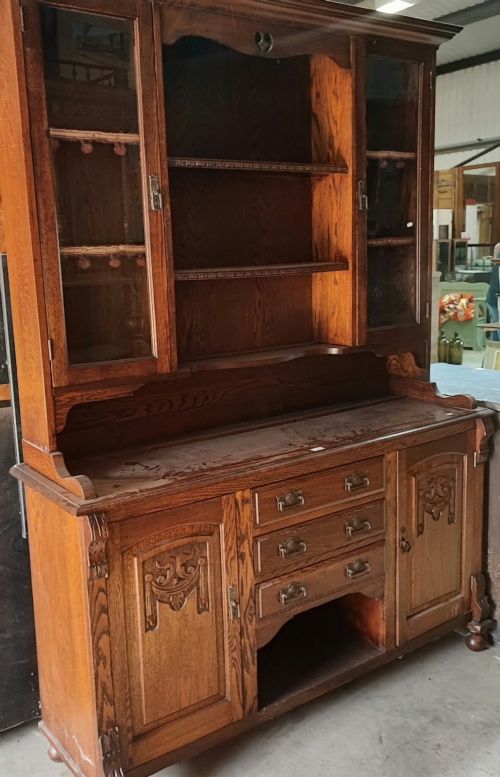
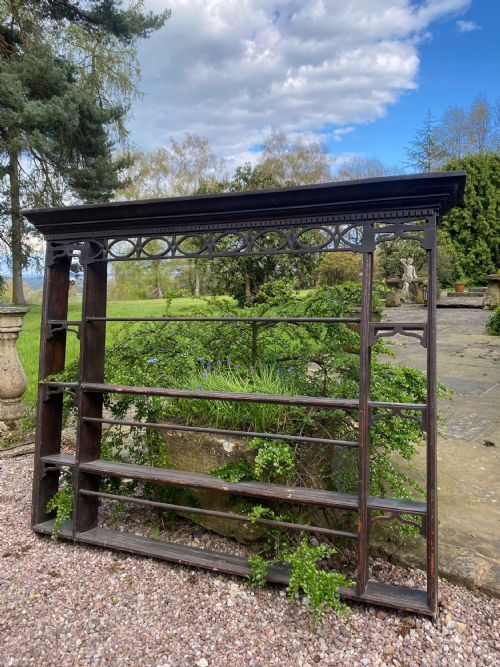
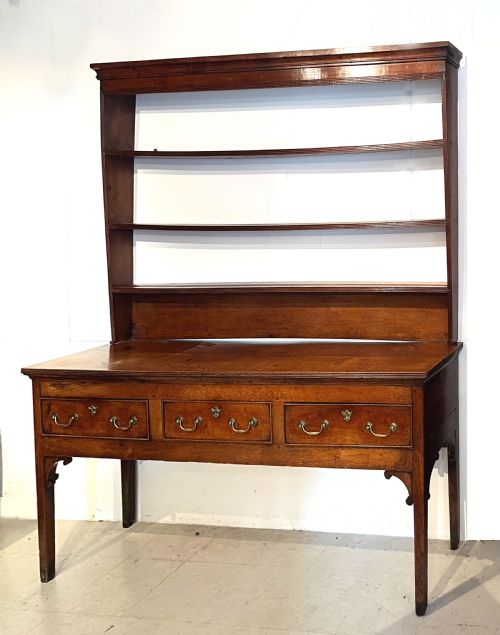
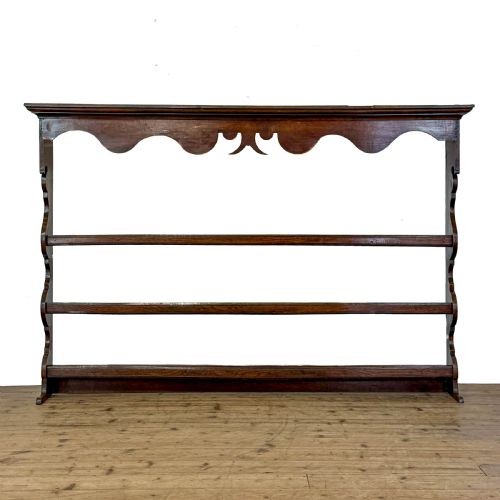
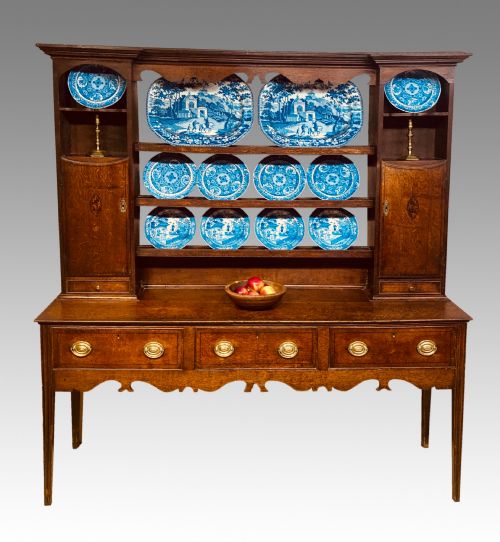
Kitchen Dresser with Shelves
A kitchen dresser with shelves provides sturdy storage and practical display space for crockery.
Kitchen Dresser with Shelves
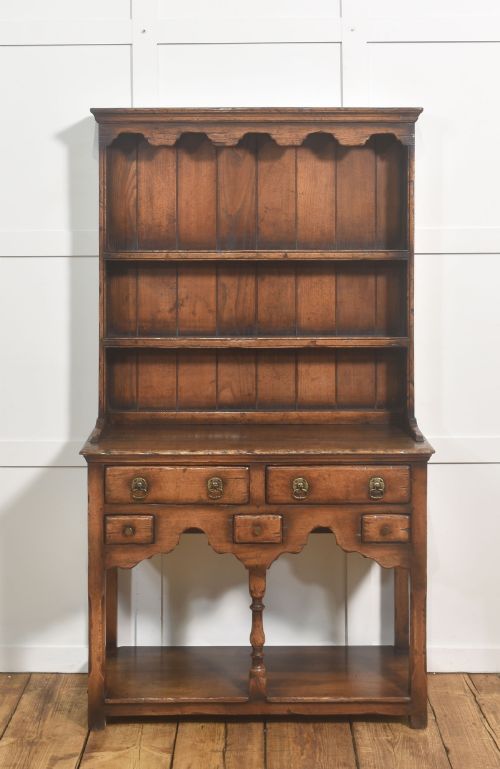
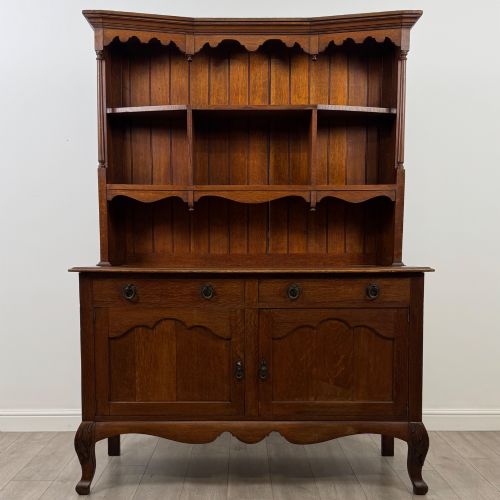
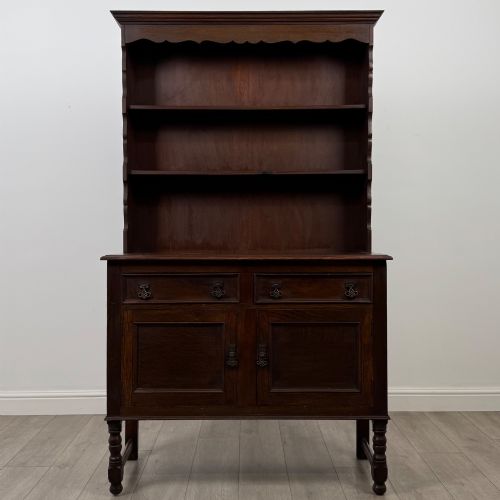
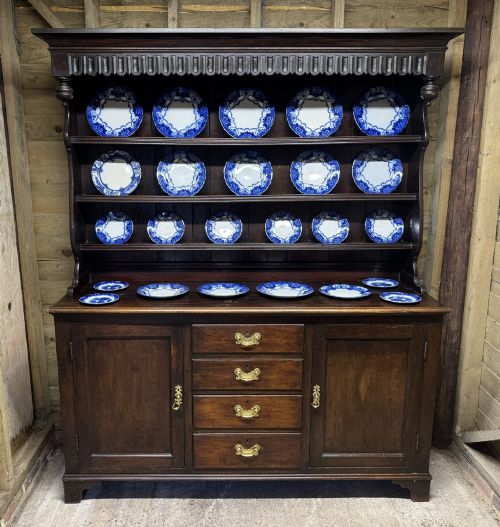
A kitchen dresser with shelves unites a lower storage base, often featuring cupboards or drawers, with an upper plate rack or tier of wall shelves. These items emerge from various periods including the eighteenth century, nineteenth century, and Edwardian eras.
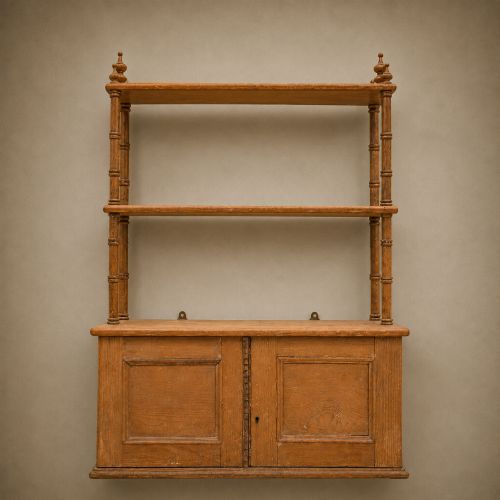
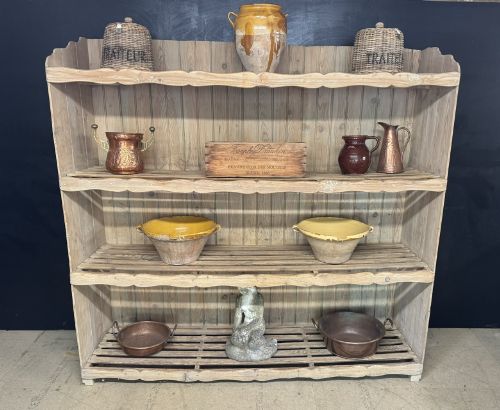
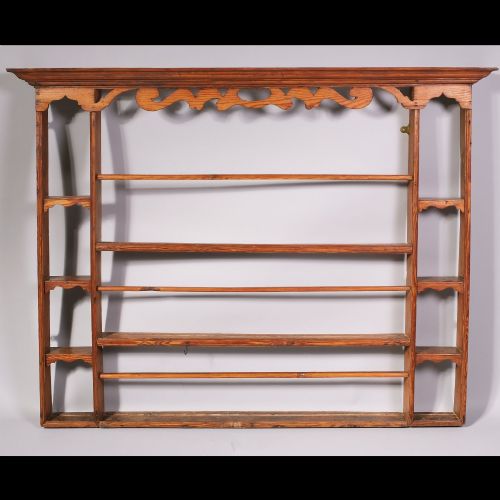
The common varieties on this page range from robust oak country pieces and Welsh dressers to pine wall shelves and multi-part mahogany designs. Regional examples, such as Shropshire or Talwrn dressers, appear alongside styles like Georgian, Victorian, and Jacobean Revival.
Materials and construction methods
Construction relies heavily on timbers such as oak, pine, and mahogany, frequently supplemented by secondary woods, burr walnut, and elm. Hardware includes brass handles and iron fittings, whilst glazed doors occasionally protect upper compartments.
Joinery techniques reflect traditional cabinetmaking, joining solid timber bases securely to upright plate racks. Carved details, fretwork on delft racks, and pot boards beneath the lower sections demonstrate period craftsmanship.
Certain antique dressers incorporate secret compartments behind the plate racks for hiding grandmother's best silverware.
Factors determining quality
Quality rests upon the selection of timber, such as figured mahogany or dense golden oak, and the integrity of the original construction. Pieces retaining their matching base and upper rack display greater harmony than mismatched components.
Refinement in surface finish, minimal restoration to structural elements, and well-executed decorative carvings separate standard utility furniture from finer country and revival examples.
The Kitchen Dresser with Shelves Glossary
- Welsh dresser
- A traditional furniture form combining a lower base of drawers and cupboards with an upper open rack for displaying plates. These units serve as both storage and focal points in domestic interiors.
- Plate rack
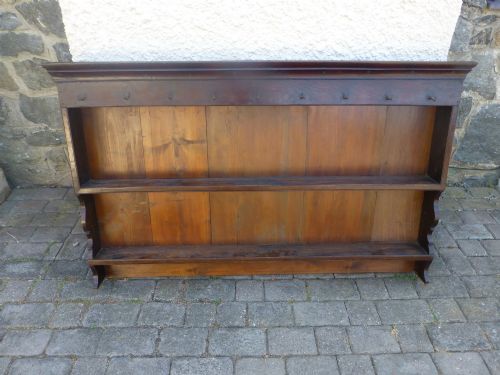
- The upper open-shelved section of a dresser designed to hold plates upright against a timber backing. Grooves along the shelves keep crockery secure.
- Pot board
- A lower open shelf positioned near the floor on traditional dressers, originally intended for storing heavy pots and pans. It forms an integral part of the base structure.
- Delft rack
- An open wall-mounted shelving unit specifically built for displaying delftware and ceramic plates. They often feature shaped friezes or fretwork.
- Tiger oak
- Oak timber exhibiting distinctive medullary ray patterns that resemble tiger stripes. This figuring occurs naturally when the wood is quarter-sawn.
Kitchen Dresser with Shelves: Frequently Asked Questions
What is a Welsh dresser?
A Welsh dresser is a traditional form that pairs a lower storage cabinet with an upper plate rack.
These pieces were originally used in kitchens to store and display everyday earthenware and serving dishes.
How do I date an oak dresser?
Dating relies on examining construction methods, timber choice, and hardware styles across the piece.
Earlier examples from the eighteenth century typically show hand-planed surfaces and pegged joinery, whereas later Victorian and Edwardian items utilise factory-cut boards and machine-made fixings.
Where should I place a dresser?
A kitchen dresser with shelves fits naturally in a dining room, kitchen, or large hallway.
Ensure the wall space can accommodate the combined height of the base and the upper rack safely.
Can I separate the top and bottom?
Many nineteenth and twentieth-century dressers are built in two separate parts for easier transport.
Older eighteenth-century pieces are frequently constructed as a single integrated unit or fastened permanently together.