
Kingwood French Occasional Table
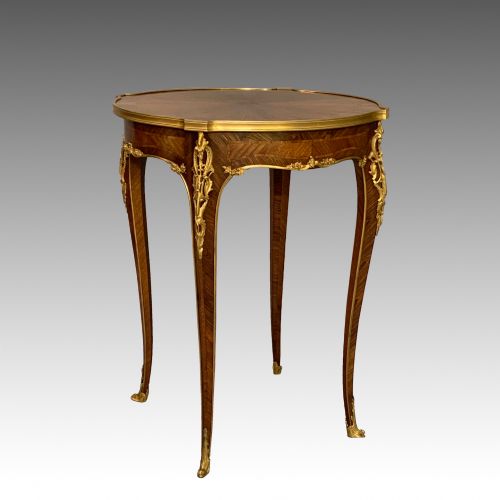
When you want a kingwood french occasional table, you are looking at nineteenth-century pieces that combine rich veneers with gilt mounts for practical elegance.
Kingwood French Occasional Table
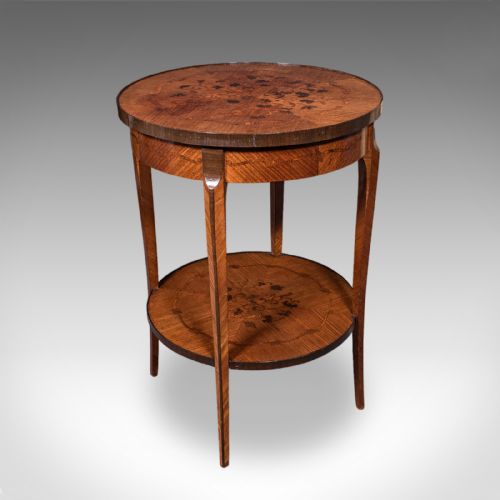
A kingwood french occasional table is a versatile nineteenth-century form designed for display, reading, or bedside use in formal interiors. The records show these pieces appearing frequently from the mid-nineteenth century through the Edwardian period, often reflecting the revivals of eighteenth-century court tastes.
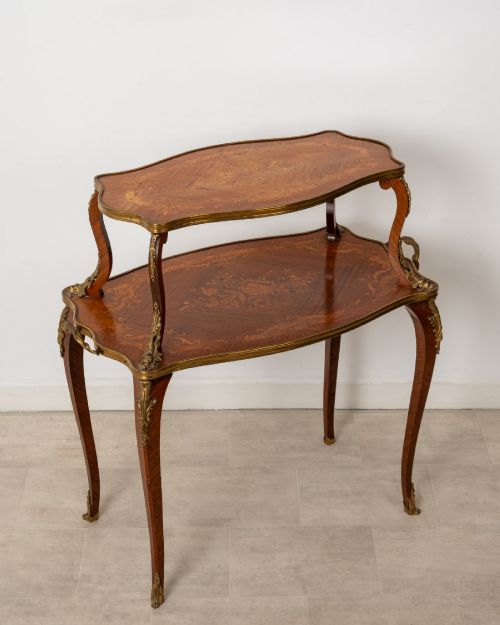
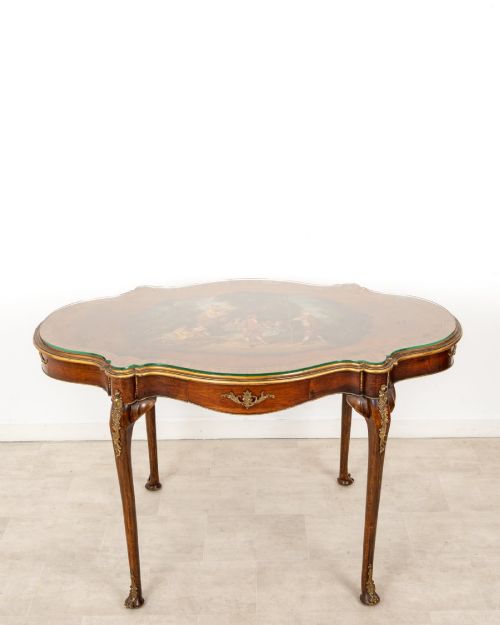
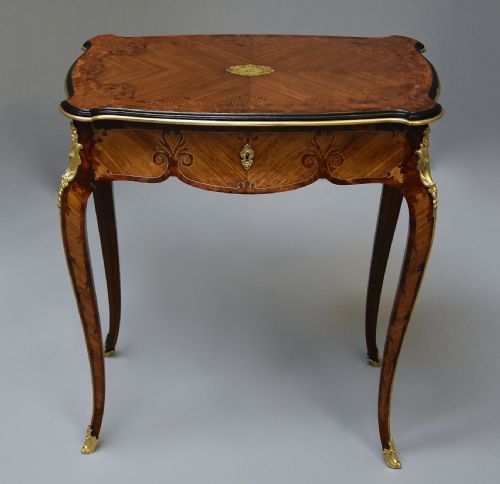
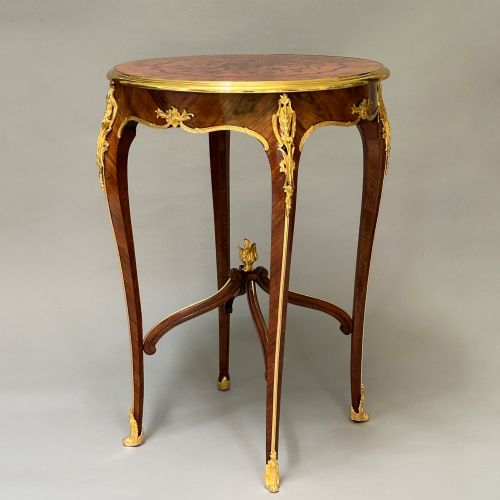
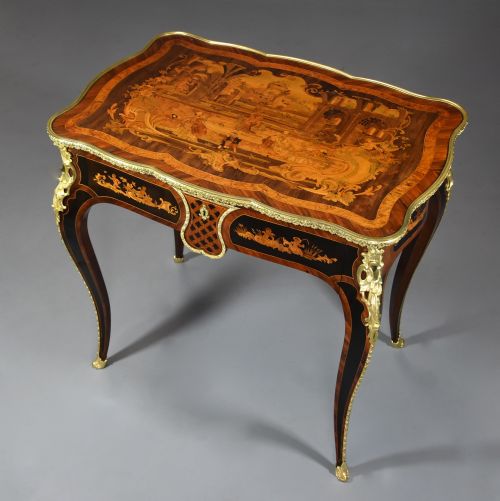
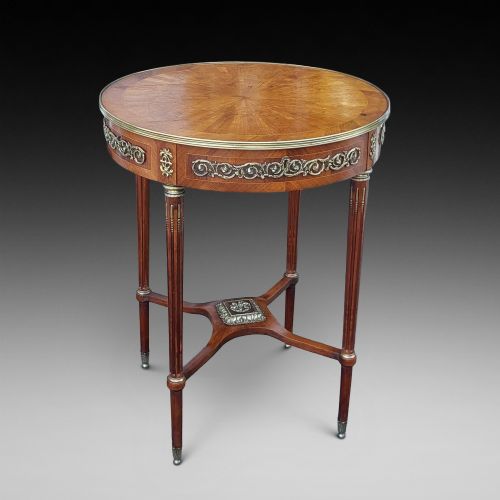
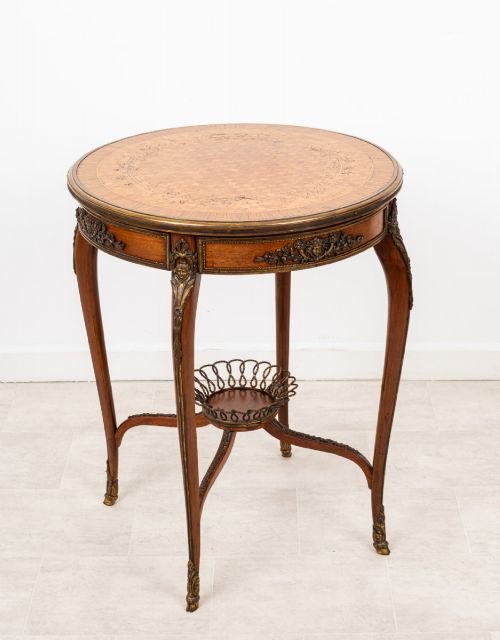
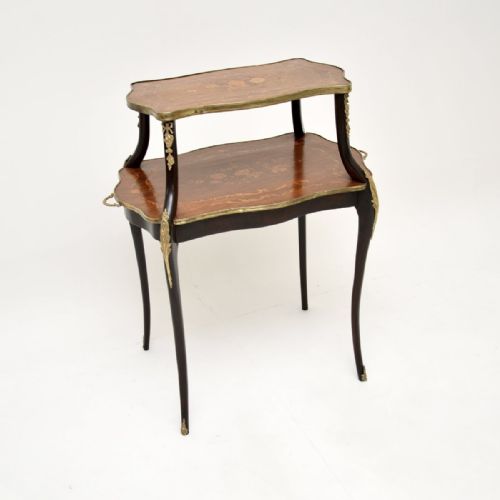
You will encounter various specific forms in this selection, including freestanding centre tables, two-tier étagères, kidney-shaped side tables, and small work tables with drawers or compartmented interiors. Many follow Louis XV or Louis XVI style idioms, incorporating curved cabriole legs or straight tapered supports depending on the exact design period.
The materials specified in the archive combine exotic timber veneers with polished stone or cast metal mounts. These tables function as decorative accents that retain their original utility as lamp stands, jardiniere supports, or small writing surfaces.
Materials and Construction Methods
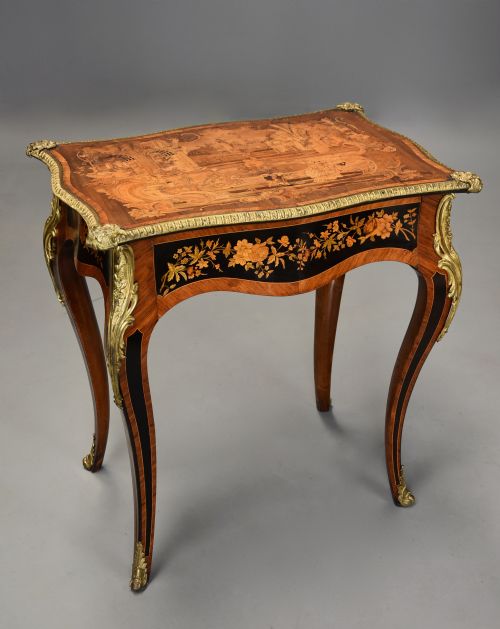
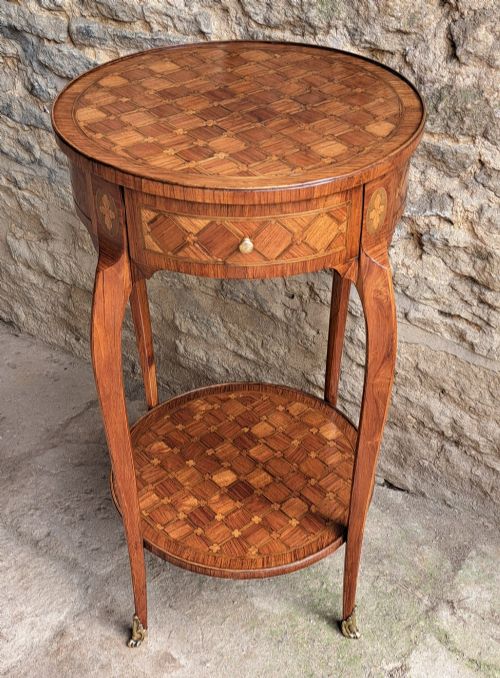
Cabinetmakers built these tables using oak or pine carcases as a stable base for decorative veneers of kingwood, rosewood, walnut, and tulipwood. The timber was cut thinly and laid down in intricate marquetry patterns depicting floral sprays or geometric parquetry designs across the tops and sides.
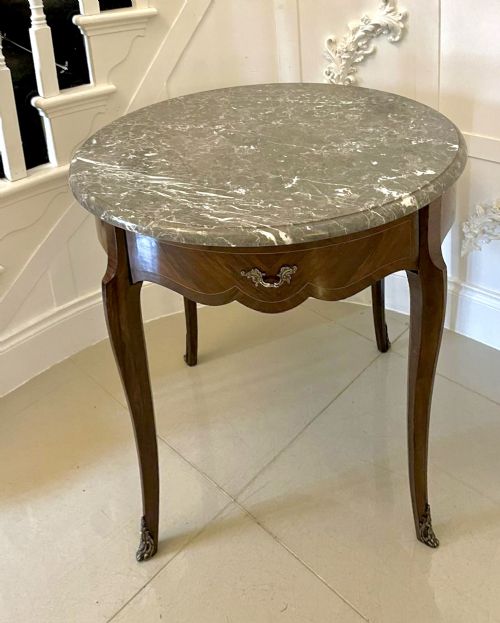
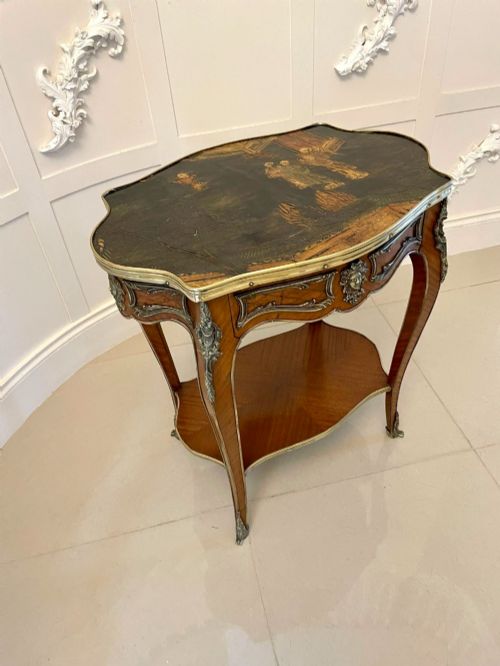
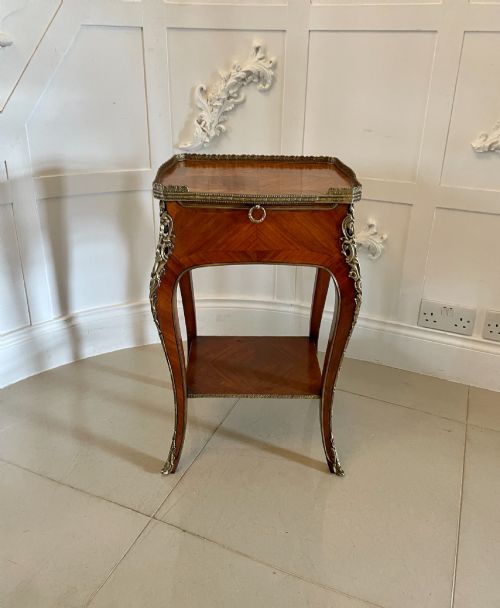
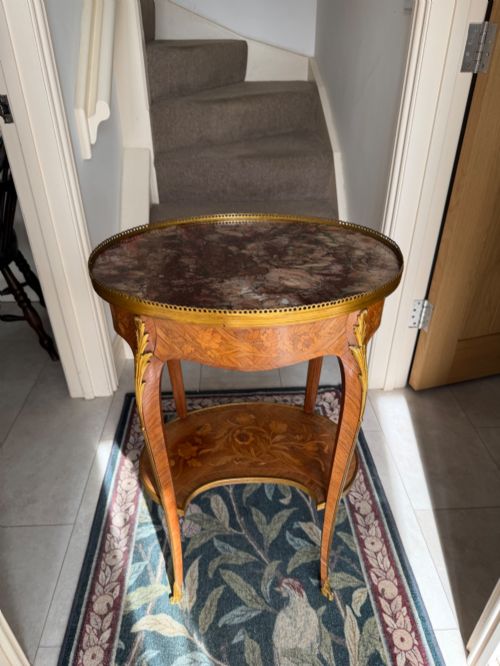
Mounts cast in brass, gilt bronze, or ormolu were hand-chiseled and applied to protect vulnerable corners and accentuate the structural lines of the frame. Selected pieces incorporate inset marble tops, shaped porcelain plaques, or scagliola panels fitted precisely into the timber borders.
The listings span the nineteenth century through the Edwardian era, featuring marble, ormolu, and kingwood across multiple table forms.
Distinguishing Quality Levels
The distinction between standard commercial production and top-tier workshop output lies in the crispness of the gilt bronze mounts and the complexity of the timber inlay. Master makers employed heavier, more deeply chased ormolu and arranged contrasting veneers to create genuine depth within floral marquetry panels.
Structural refinement also separates the grades, visible in the smoothness of drawer mechanisms, the precise fit of marble slabs into their rebated surrounds, and the fluidity of hand-shaped cabriole legs. Pieces associated with recorded master cabinetmakers exhibit superior timber selection and uncompromised structural integrity throughout the framework.
Joseph-Emmanuel Zwiener·François Linke·Millet
The Kingwood French Occasional Table Glossary
- Kingwood
- A dense, richly grained tropical timber from the Dalbergia genus showing violet-brown tones with darker streaks, prized for French veneer work. It appears extensively across nineteenth-century cabinetmaking.
- Ormolu
- Gilded bronze mounts cast and chased to ornament furniture edges and legs. The best examples display sharp detail and rich fire-gilded surfaces.
- Marquetry
- Pictorial veneer work using various coloured woods to create floral or scenic designs. Craftsmen cut the pieces together to fit flush into the ground veneer.
- Étagere
- An open tiered stand or small table with multiple levels for display. These pieces provide compact surfaces for lamps or decorative objects.
- Parquetry
- Geometric wood inlay arranged in repetitive patterns such as cubes or lozenges. This technique demonstrates precise woodworking skills.
Kingwood French Occasional Table: Frequently Asked Questions
What is a kingwood french occasional table used for?
These tables served various light domestic duties in nineteenth-century drawing rooms and boudoirs. Owners placed them beside seating for lamps, books, or writing materials, while tiered versions held decorative items or plants.
Today, they function as versatile accent pieces in modern interiors, fitting easily beside sofas or beds while providing useful surface area without dominating a room.
How can I tell Louis XV style from Louis XVI style?
Louis XV pieces feature asymmetrical curves, flowing rococo contours, and cabriole legs that sweep outward without straight lines. The ornament leans toward organic floral motifs and fluid gilt bronze mounts.
Louis XVI design marks a return to classical symmetry, featuring straight fluted legs, right angles, and restrained geometric parquetry. The mounts on these pieces reflect architectural proportions and classical emblems.
Are marble tops original to these tables?
Many nineteenth-century centre and side tables were designed specifically to accommodate inset marble or scagliola tops. These stone slabs added weight and stability to freestanding tables while offering a durable, heat-resistant surface for lamps and vases.
When inspecting a marble top, check that the stone sits flush within the timber or ormolu gallery and matches the period of the wooden base underneath.
How do I care for kingwood veneer and ormolu mounts?
Protect kingwood veneer by keeping tables away from direct sunlight and maintaining stable room humidity to prevent timber movement. Dust regularly with a soft, dry cloth and apply occasional high-quality beeswax to nourish the wood surface.
Clean gilt bronze mounts gently with a dry or barely damp cloth, avoiding abrasive metal cleaners that can strip the original fire-gilt finish.