



Vintage French Marquetry Desk
A vintage french marquetry desk brings patterned timbers and gilt mounts together for writing.
Vintage French Marquetry Desk
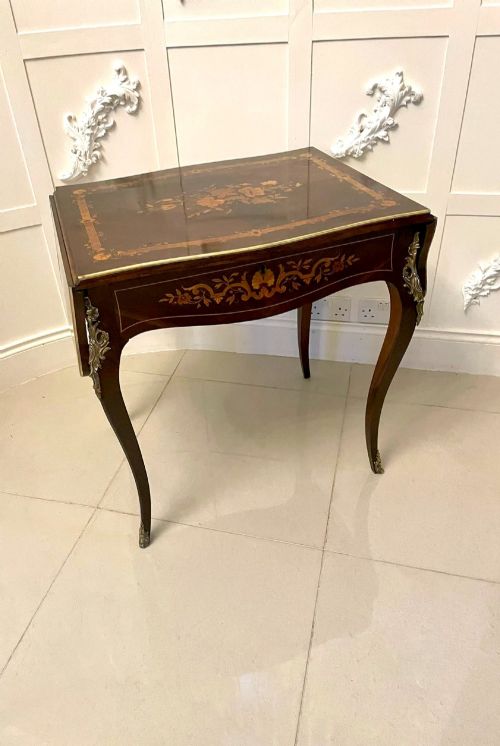
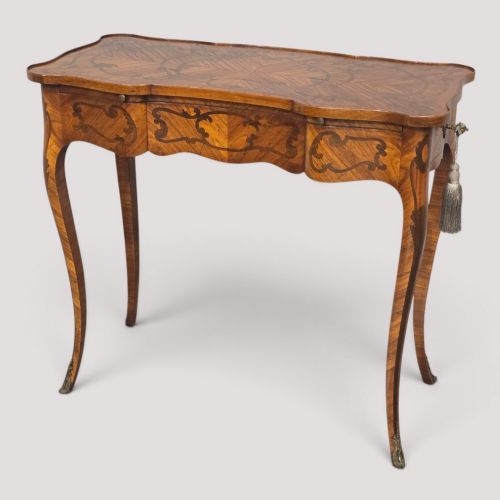
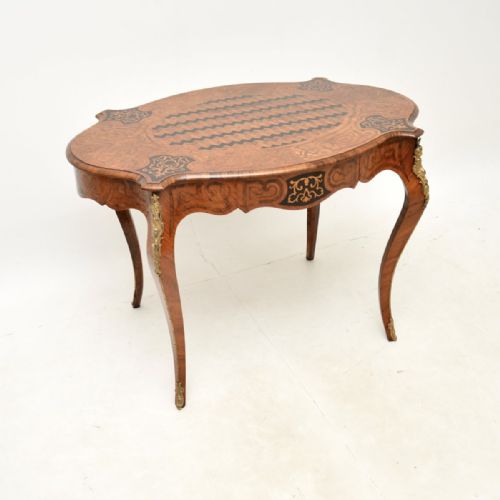
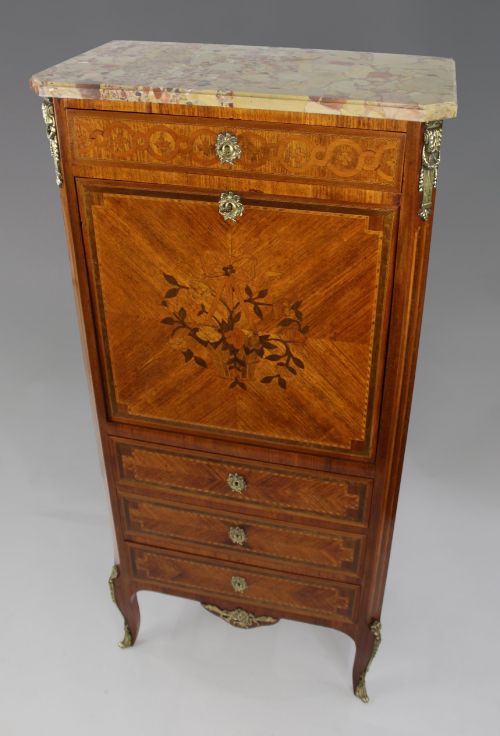
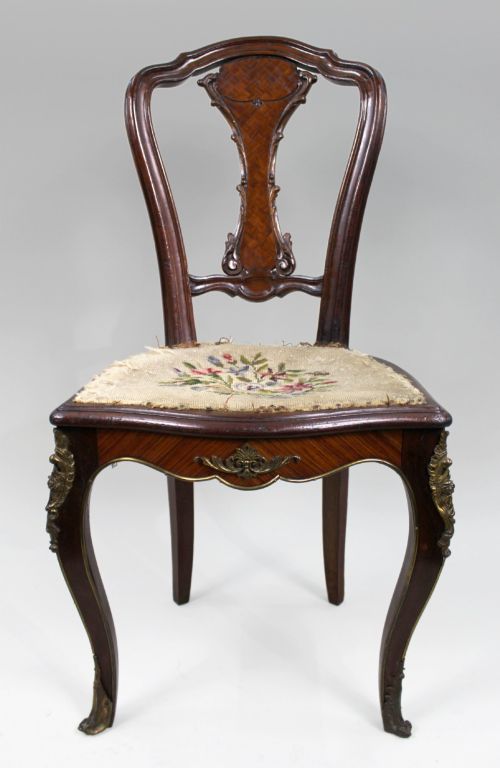
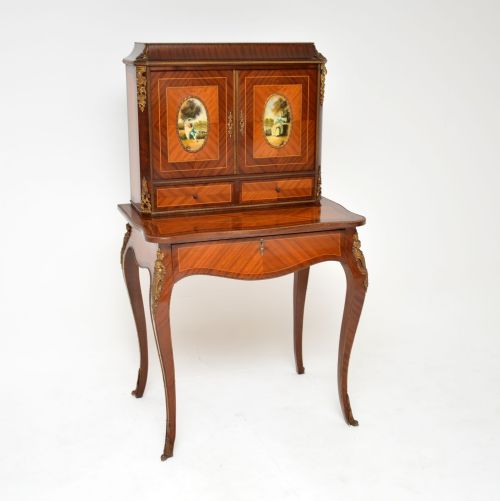
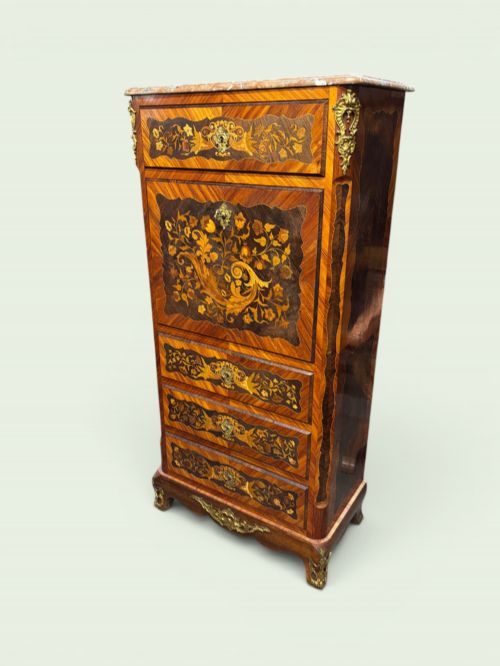
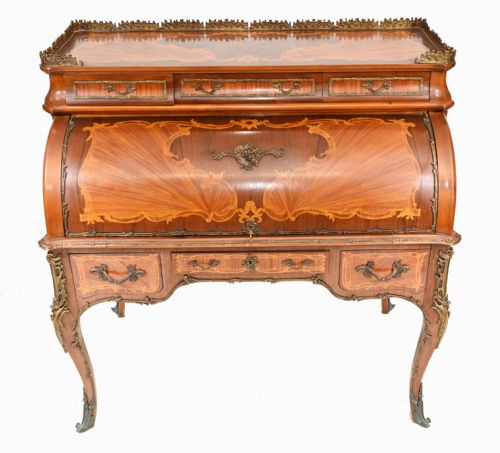
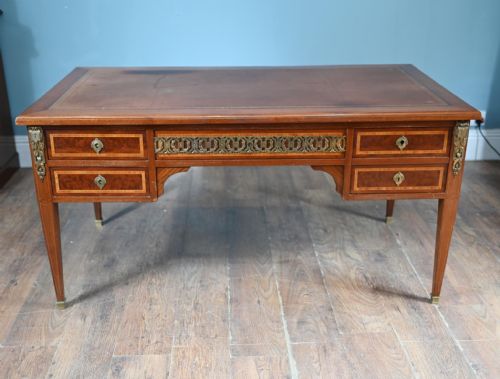
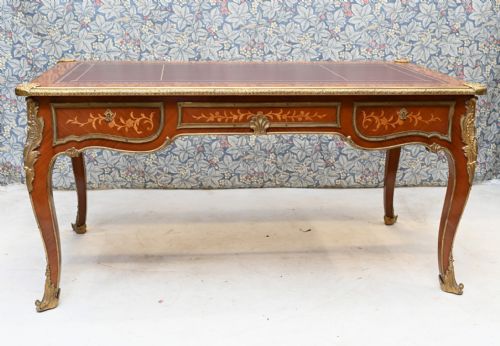
A vintage french marquetry desk unites writing surfaces with detailed wood inlay, appearing in forms such as the bureau plat, writing table, and escritoire. These pieces typically draw on revival aesthetics, particularly Louis XV and Louis XVI styles, alongside Napoleon III and Empire influences.
The selection ranges from compact writing tables dating around nineteen hundred to grander nineteenth-century freestanding examples finished with intricate floral or geometric patterns. Walnut, kingwood, rosewood, and mahogany provide the primary surfaces for these inlaid compositions.
Materials and Technique
Craftsmen built these desks using cabinet timbers like kingwood, rosewood, walnut, and mahogany, often laid as veneers to create complex marquetry or parquetry patterns. Cut sections of contrasting woods fit together precisely to form floral sprays or geometric arrangements across the surface.
Cast ormolu and gilt bronze mounts edge drawers, corners, and legs, providing metallic contrast to the timber. Selected pieces incorporate marble slabs fitted directly to the top surface above the writing area.
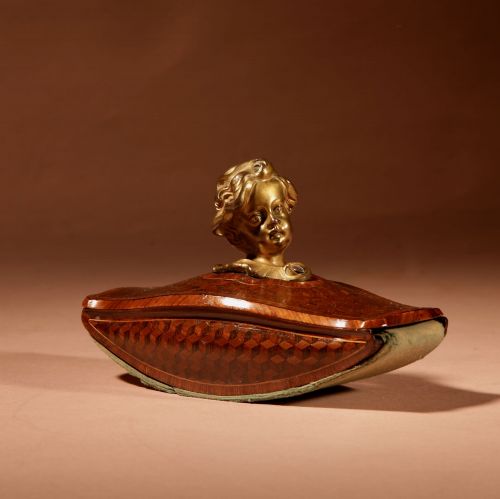
One tiny nineteenth-century miniature desk sits quietly among full-sized companions, perfectly scaled down in every detail.
Judging Quality
Quality rests upon the precision of the timber cut and the integration of the inlay into the core wood. Finer examples display tight joins within the marquetry pattern and natural grain variation that adds depth to the design.
The weight and finish of the ormolu mounts indicate grade, with sharper chased detailing distinguishing superior castings. Structural integrity in the drawers and stability in the freestanding frame further separate ordinary production from finer cabinet work.
Henry Marc
The Vintage French Marquetry Desk Glossary
- Marquetry
- Decorative patterns formed by fitting together thin slices of wood veneer onto a support structure. This technique allows for complex pictorial or floral designs across furniture tops.
- Bureau Plat
- A freestanding writing table fitted with drawers across the frieze, lacking a superstructure. It typically sits in the middle of a room.
- Ormolu
- Gilt bronze mounts applied to furniture edges, feet, and corners for decoration. The term derives from the French for ground gold.
- Parquetry
- Geometric wood inlay patterns such as cubes or chequers. It differs from marquetry through its reliance on straight-lined repeating shapes.
- Escritoire
- A writing cabinet featuring a fall-front or sloping lid that conceals internal compartments. These pieces often incorporate drawers or small pigeonholes.
Vintage French Marquetry Desk: Frequently Asked Questions
How do I care for marquetry?
Protect the wood surfaces from direct sunlight and excessive temperature shifts to prevent veneer lifting or timber drying. Regular dusting with a soft cloth maintains the finish without moisture.
Avoid placing damp items directly onto the polished wood or marble tops.
What is the difference between kingwood and rosewood?
Kingwood is a dense, heavy timber featuring dark violet-brown tones with lighter golden streaks. It was frequently used for high-end French cabinetmaking.
Rosewood displays a deeper reddish-brown colour with prominent black grain figuring, offering a heavier visual contrast in inlaid patterns.
Where were these desks placed?
These desks were designed for principal reception rooms, studies, and private dressing rooms as functional furniture that doubled as display pieces. Freestanding models sat centrally to show off finished backs and ormolu mounts from all angles.
Smaller ladies writing desks fit easily into bedroom alcoves or private sitting rooms.