
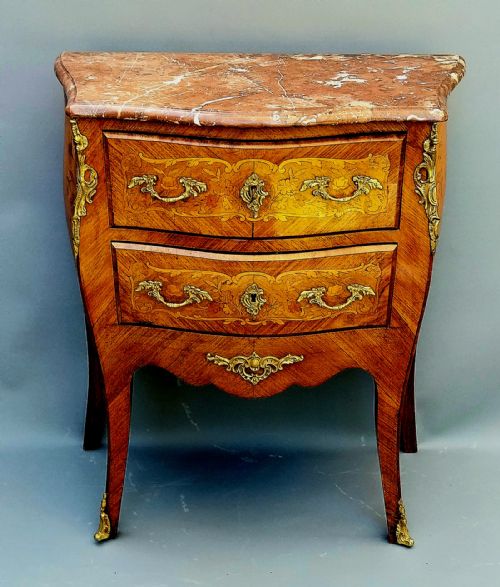


Kingwood French Bedside Cabinets
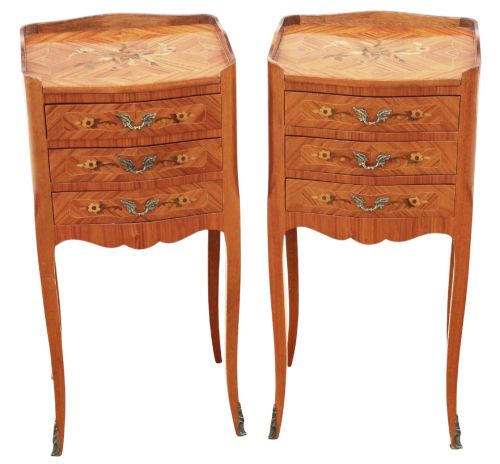
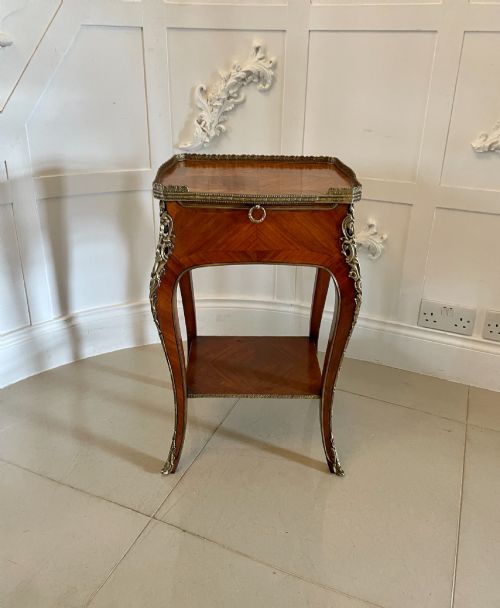
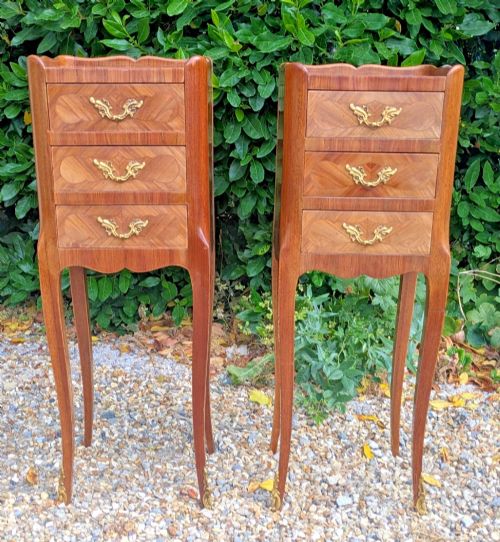
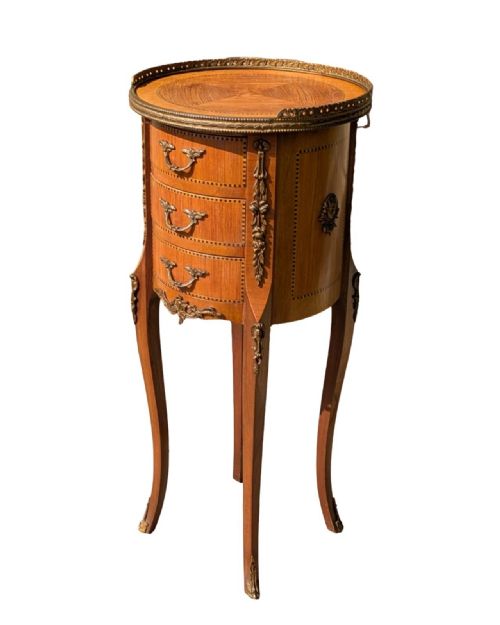
Kingwood french bedside cabinets combine rich, figured veneers with graceful serpentine curves, offering an elegant storage solution for the bedroom.
Kingwood French Bedside Cabinets
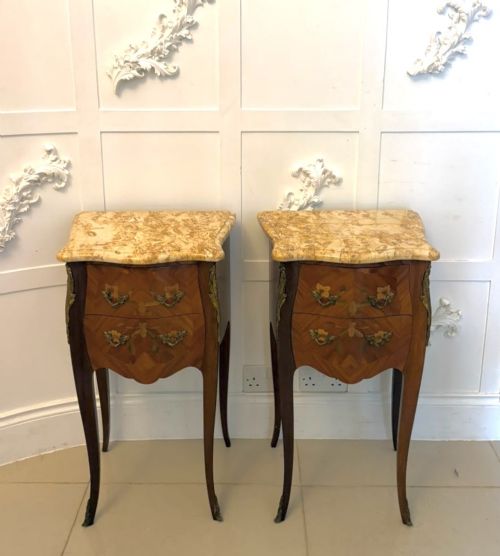
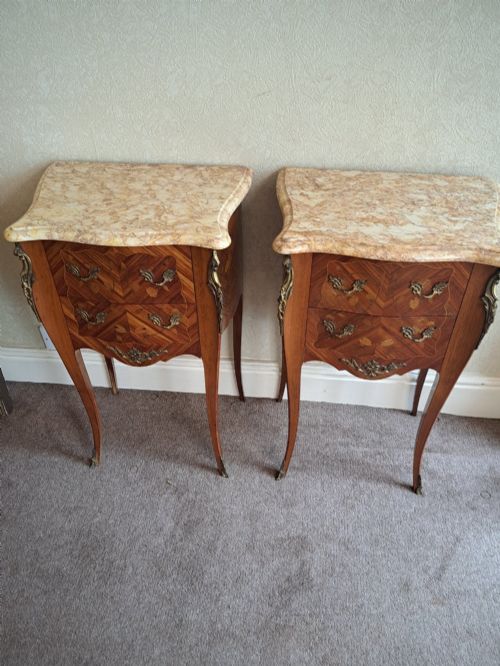
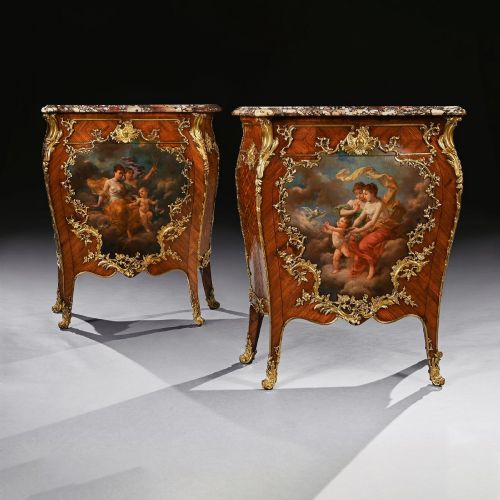
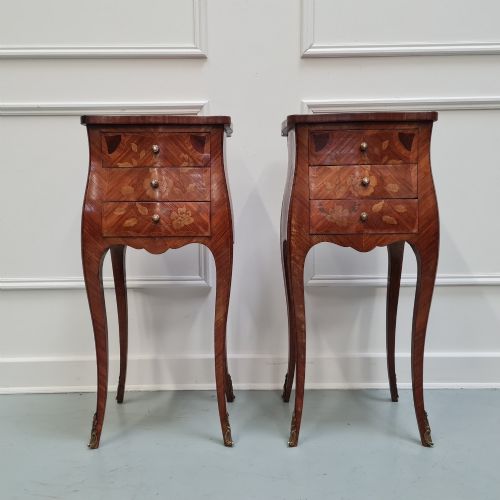
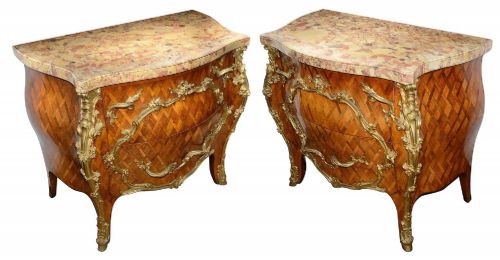
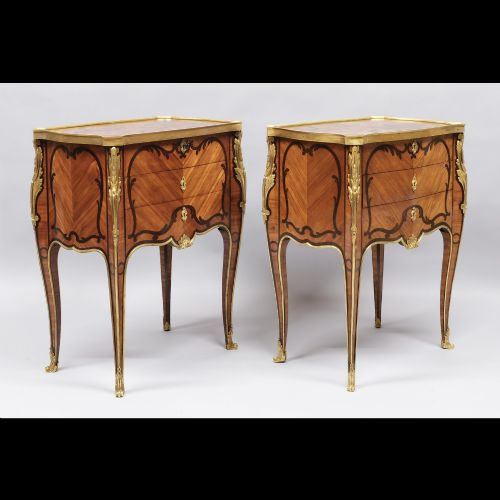
When searching for kingwood french bedside cabinets, buyers encounter compact bedside tables, commodes, and pot cupboards designed in the continental taste. These pieces originate predominantly from the nineteenth and early twentieth centuries, spanning periods from Victorian craftsmanship to the 1930s. The most common variations found here are matched pairs featuring marble tops and intricate marquetry or parquetry patterns.
The architectural forms lean heavily toward Louis XV and Louis XVI revivals, displaying bombe contours or neat rectilinear proportions. Walnut, rosewood, and satinwood frequently accompany kingwood within the veneer work, establishing traditional French aesthetic standards. These items served historically as functional nightstands in domestic chambers, adapting easily to contemporary interior spaces as occasional tables.
How they were made
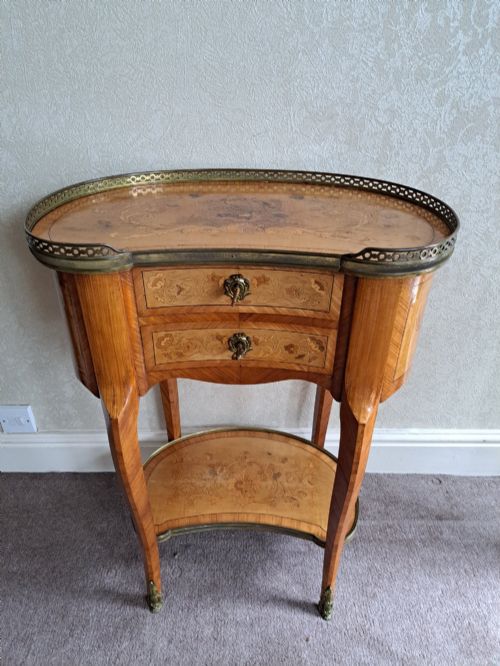
Cabinet makers utilised dense exotic timbers like kingwood, sliced thinly into veneers to lay intricate geometric parquetry and floral marquetry designs across carcases of secondary wood. This technique allowed artisans to create complex curved and bombe surfaces without risking the structural splitting inherent in solid tropical hardwoods.
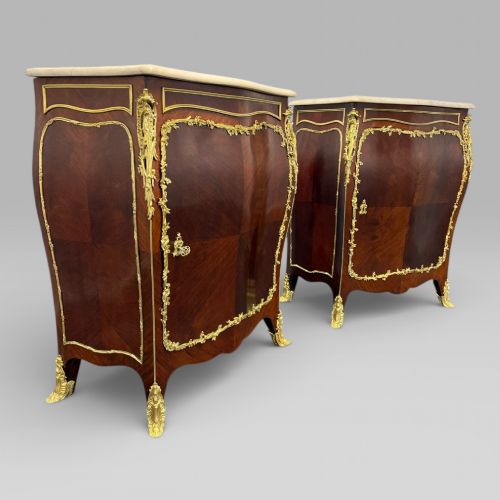
Cast and chased ormolu, gilt bronze, and brass mounts reinforce vulnerable corners and frame the drawers, pairing structural protection with decorative opulence. Inset marble slabs, usually featuring natural grey or white veining, crown the upper surface to provide a durable, liquid-resistant shelf for daily bedside use.
Early twentieth-century French artisans evidently believed no bedside table was complete without enough curves to confuse a compass.
What varies in quality
The sophistication of the marquetry sets exceptional examples apart from standard workshop production, with top-tier pieces displaying finely shaded woods and detailed botanical motifs rather than repetitive geometric patterns. Precision in the matching of veneer grain across multiple drawers indicates a higher level of cabinet-making skill.
Metalwork differentiation similarly marks the distinction between grades, where hand-chased ormolu mounts exhibit crisp relief and secure seating against the wood. Lower quality items often rely on simpler, factory-cast brass mounts with softer definition and minimal subsequent hand-finishing.
E. Kahn·Sormani
The Kingwood French Bedside Cabinets Glossary
- Kingwood
- A dense, heavily figured Brazilian timber with dark violet-brown streaks used extensively in high-end cabinet making. It was prized by eighteenth-century French ébénistes and later nineteenth-century revivalists for its striking contrast when quarter-veneeered.
- Ormolu
- Gilded bronze mounts applied to furniture edges, corners, and aprons for decorative accent and physical protection. The process involves coating cast bronze with a mercury-gold amalgam and heating it to drive off the mercury.
- Marquetry
- The art of forming decorative patterns by fitting together thin veneers of different coloured woods, shells, or ivory. Master craftsmen cut these designs using a donkey saw before gluing them down onto the carcase.
- Bombe
- A bulging, outward-curving furniture shape that swells on the front and sides, typical of mid-eighteenth-century Rococo design. Achieving this contour requires specialist shaping of both the internal framing and external veneers.
- Parquetry
- Geometric wood inlay patterns such as lozenges, cubes, or chequers arranged in precise repetitive grids. Unlike marquetry, parquetry relies on strict symmetry and straight lines rather than pictorial motifs.
Kingwood French Bedside Cabinets: Frequently Asked Questions
What are french bedside cabinets?
These compact storage items are small tables or cupboards designed to stand beside a bed for holding personal items. They typically incorporate enclosed cabinet space or small drawers beneath a decorative surface.
Originating largely from continental revival periods, they translate grand salon furniture styles into domestic bedroom proportions.
How do I identify kingwood?
Kingwood is characterised by a rich chocolate-brown colour intersected with distinct violet and black grain markings. It carries a heavy weight and a fine natural lustre when polished.
Cabinet makers frequently arranged these striking veneers symmetrically to create dramatic contrasting patterns across drawer fronts and table tops.
Why do many pieces have marble tops?
Marble surfaces provided a practical, waterproof shelf that resisted staining from spilled water jugs or medicines in nineteenth-century bedrooms. This heavy stone also added necessary stability to lightweight, highly ornamented wooden frames.
These slabs are usually inset into a moulded wooden rim or left freestanding with polished bullnose edges.
How do I care for antique veneer?
Protect antique veneers by keeping them away from direct sunlight and maintaining stable room humidity to prevent the wood from drying or warping. Apply microcrystalline wax sparingly to nourish the timber and build a protective barrier.
Avoid using modern liquid polishes or placing damp objects directly on the polished wooden surfaces.