

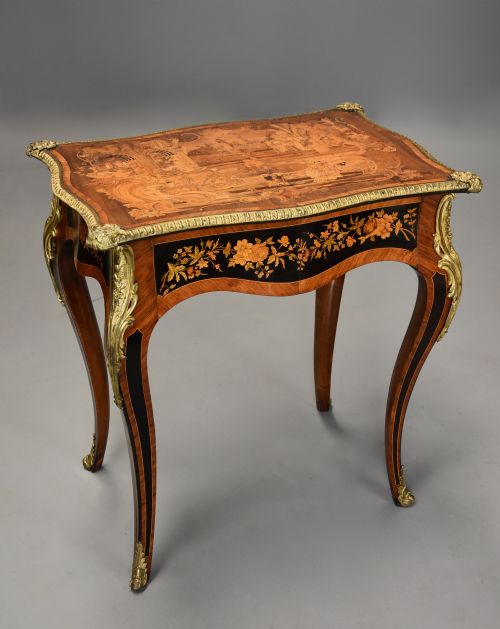


Kingwood Centre Table
A kingwood centre table brings unmistakable French revival elegance to a room, offering a freestanding piece designed to be admired from every angle.
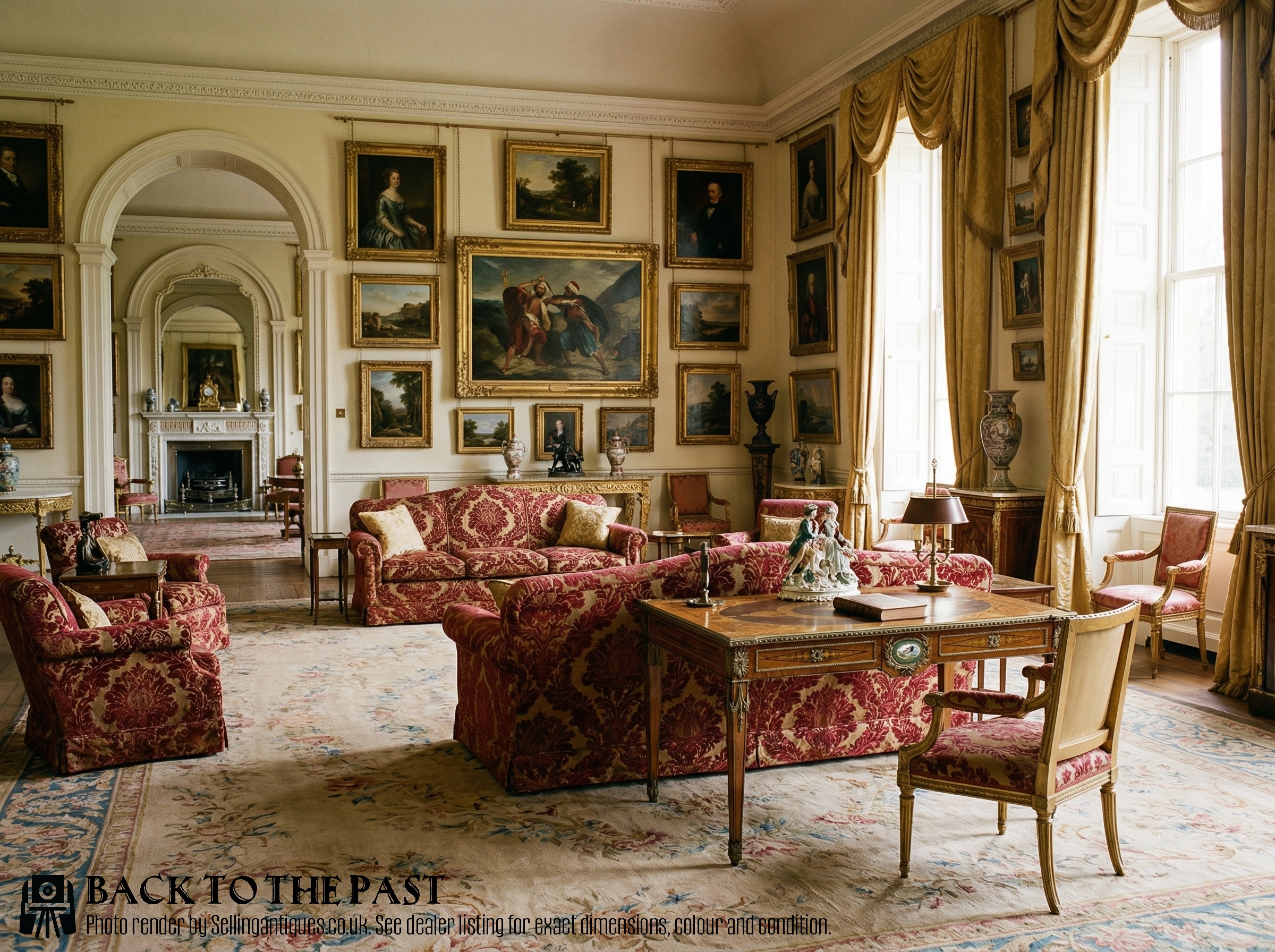
Kingwood Centre Table
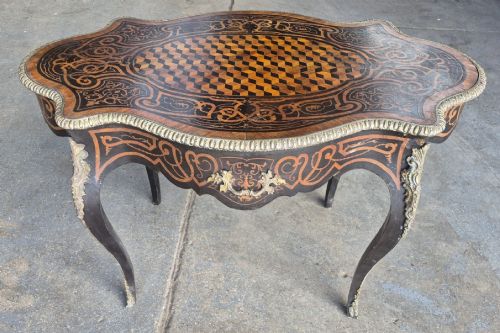
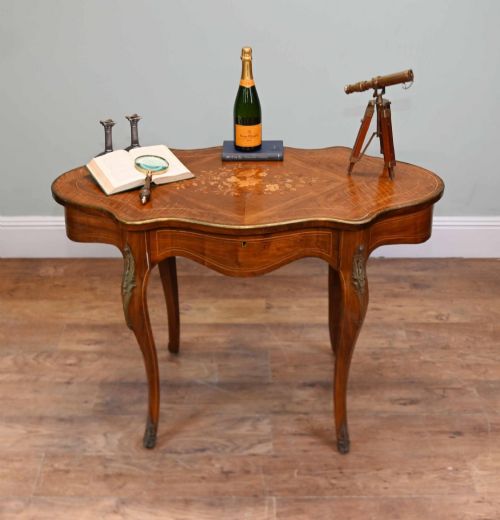
A kingwood centre table is a freestanding item designed to sit in the middle of a room rather than against a wall. When searching for a kingwood centre table, buyers encounter nineteenth-century French revival designs, particularly in the Louis XV and Louis XVI styles.
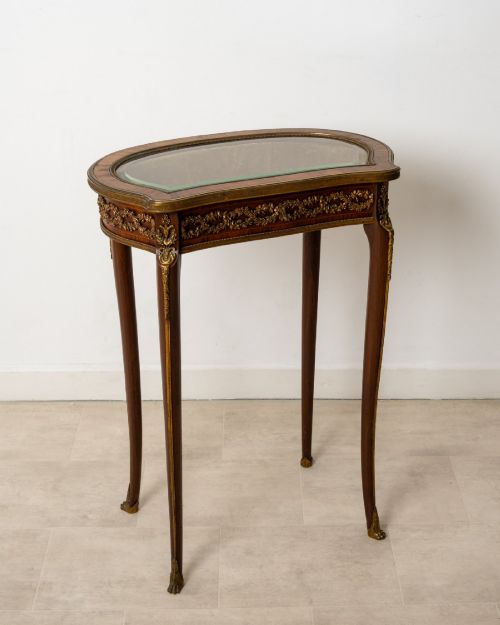
The surviving examples frequently date from the mid to late nineteenth century, including Edwardian interpretations. Forms range from traditional occasional and lamp tables to writing tables, bureau plats, and jardinières.
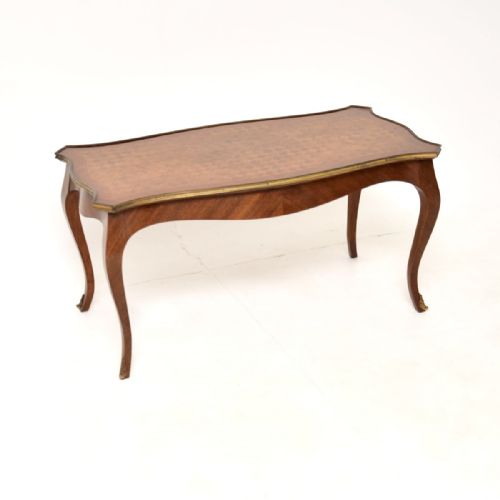
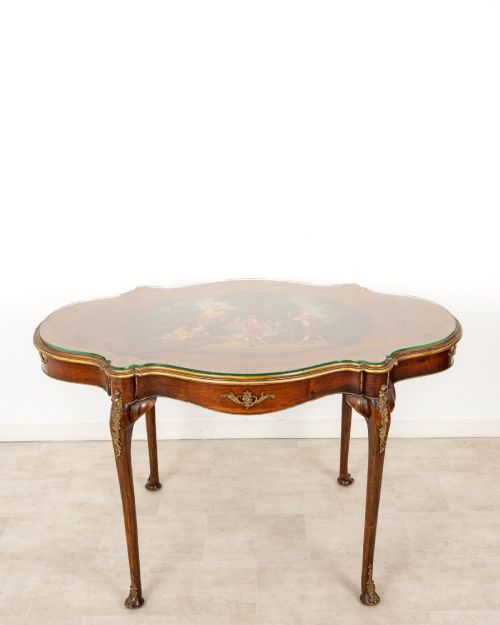
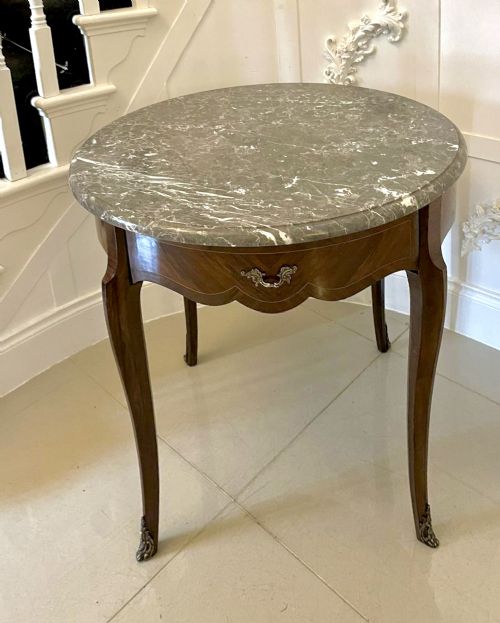
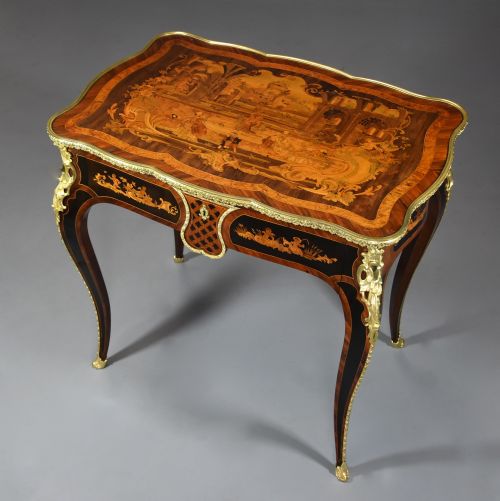
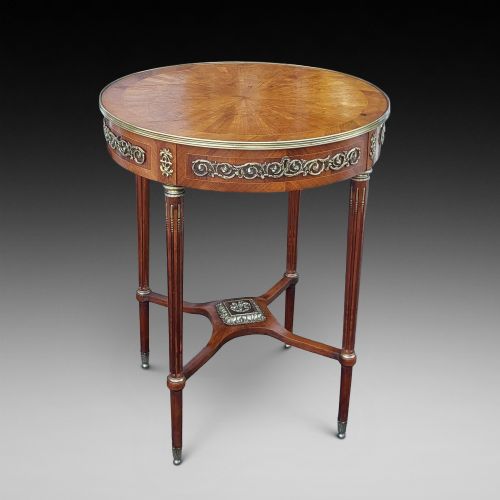
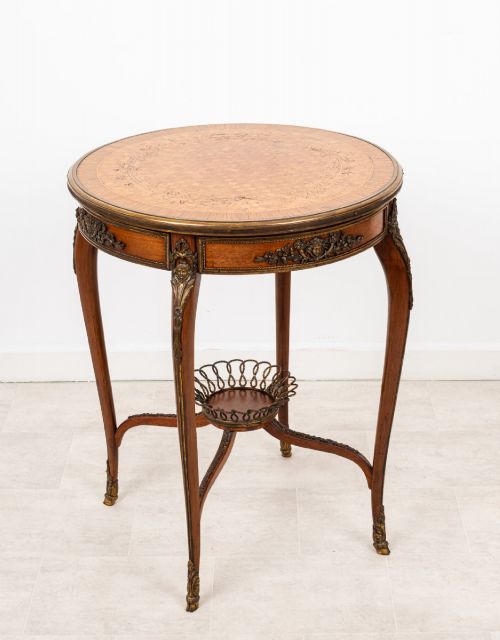
These pieces showcase intricate parquetry and marquetry surfaces supported by cabriole or tapered legs. Many incorporate marble tops or tiered under-tiers, fulfilling both decorative and practical roles in the interior.
How they were made
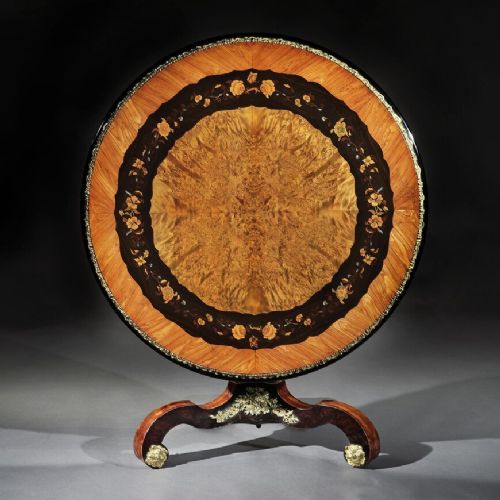
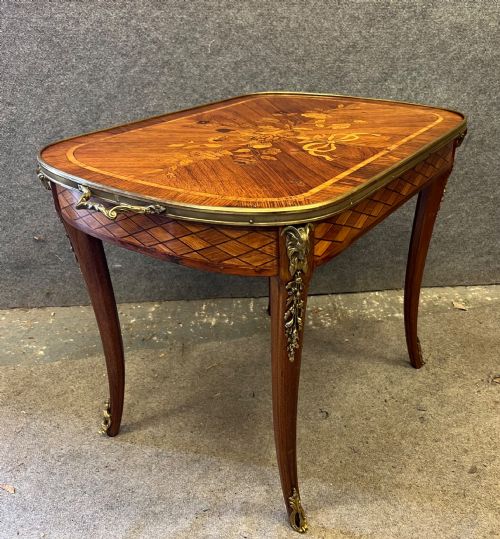
Cabinetmakers constructed these tables using dense timbers such as kingwood, walnut, and rosewood as a base for elaborate veneer work. Parquetry and marquetry patterns were meticulously cut and fitted to create geometric designs or floral motifs across the top and sides.
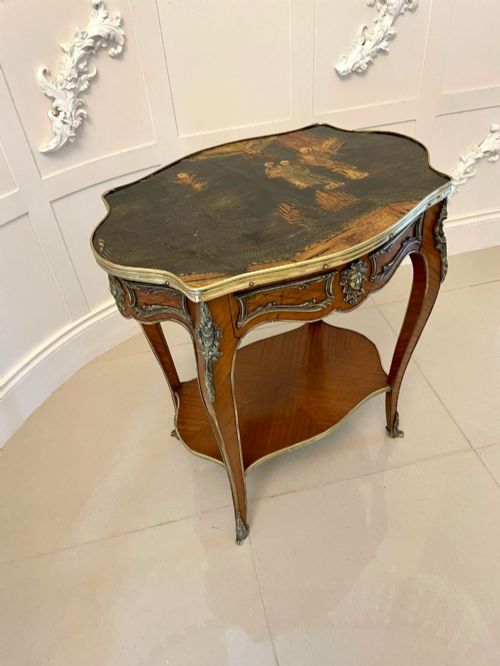
Cast and chased ormolu, gilt bronze, and brass mounts were applied to accent the corners, legs, and aprons. Some iterations incorporated porcelain plaques or retained inset marble tops secured within moulded metal borders.
Kingwood Centre Table Retail Price Guide 2026
Typical asking prices for kingwood centre table among the pieces listed under this phrase on Sellingantiques today, from the lower quarter to the upper quarter. They describe what is for sale here now, not the wider market.
What varies in quality
The distinction between ordinary production and master craftsmanship lies in the crispness of the gilt bronze or ormolu mounts and the precision of the wood inlay. Finer pieces display hand-chased metalwork with sharp detail and seamless veneer matching across complex curves.
Attribution to known makers or prominent workshops elevates a table, reflected in the structural rigidity of the carcase and the fluidity of the marquetry. Lesser examples rely on stamped brass and repetitive veneer patterns with minimal hand finishing.
Edward Holmes Baldock·Francois Linke·Joseph Emmanuel Zwiener·The Gillows
The Kingwood Centre Table Glossary
- Kingwood
- A dense, highly figured Brazilian timber prized for its violet-brown colour and contrasting dark stripes. It was widely utilised by elite nineteenth-century cabinetmakers for decorative veneer.
- Ormolu
- Gilded bronze mounts applied to furniture edges and legs. High-quality ormolu is hand-chased after casting to sharpen the decorative details.
- Marquetry
- The art of applying pieces of veneer to a structure to form decorative patterns and pictorial designs. Cabinetmakers used contrasting timbers to achieve naturalistic shading.
- Parquetry
- Geometric mosaic woodwork forming repeating patterns such as cubes or chequers. This technique is frequently seen on the tops of French revival tables.
- Bureau plat
- A freestanding double-sided writing desk featuring a flat top and drawers within the frieze. These tables often double as refined centre pieces.
Kingwood Centre Table: Frequently Asked Questions
Where should I place a centre table?
A centre table is designed to be viewed from all sides, making it ideal for the middle of a spacious drawing room or a grand entrance hall. It also functions well as a large lamp table or a freestanding writing surface.
Ensure there is enough clearance around the piece to walk freely and appreciate the parquetry or bronze mounts. Placing it away from direct sunlight protects the delicate kingwood veneer from fading over time.
How do I care for kingwood veneer?
Maintain the wood by dusting regularly with a soft, dry cloth and avoiding silicone-based polishes. Keep the table away from radiators and extreme temperature shifts to prevent the veneer from lifting.
Periodic application of appropriate wax nourishes the timber and preserves the natural sheen of the polished surface. Treat ormolu mounts gently without harsh chemical cleaners.
Are these tables strictly French?
While the majority of these tables follow French styles such as Louis XV and Louis XVI, many were produced in England by makers influenced by continental designs. English firms frequently adopted French revival aesthetics during the Victorian period.
The construction techniques and timber choices often reveal whether a piece originated in a Parisian workshop or an English cabinet maker's establishment.
What is the difference between a centre table and an occasional table?
Centre tables are typically larger, more ornate, and finished identically on all four sides because they stand in open spaces. Occasional tables are generally smaller and lighter, intended to be moved around a room as needed.
Both forms utilise fine veneers and metal mounts, but a centre table usually serves as the visual anchor of a room.