

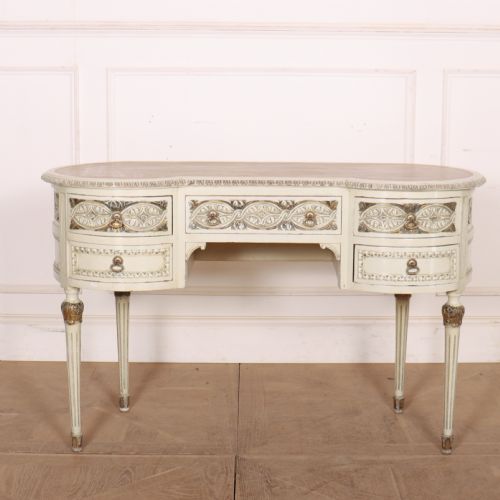


Kidney Shaped Vanity
A kidney shaped vanity offers a distinctive concave curve that hugs the body, combining elegance with practical surface space for grooming or writing.
Kidney Shaped Vanity
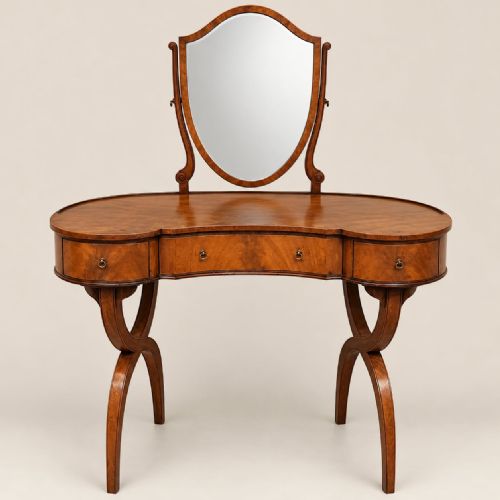
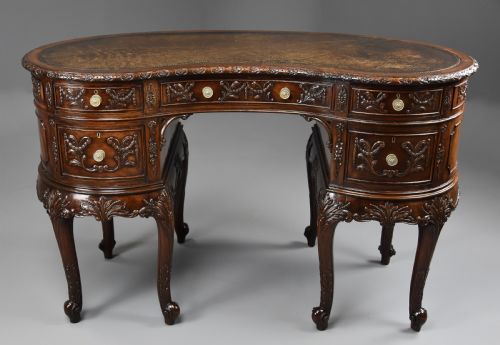
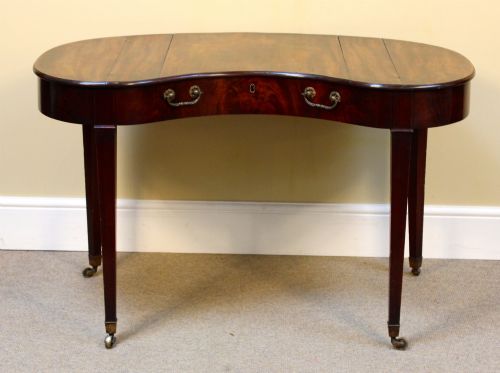
When you search for a kidney shaped vanity, you are looking at specialised dressing tables and desks designed with a signature curved outline. These pieces date across the Victorian, Edwardian, and Georgian periods, showcasing varied craftsmanship from different decades.
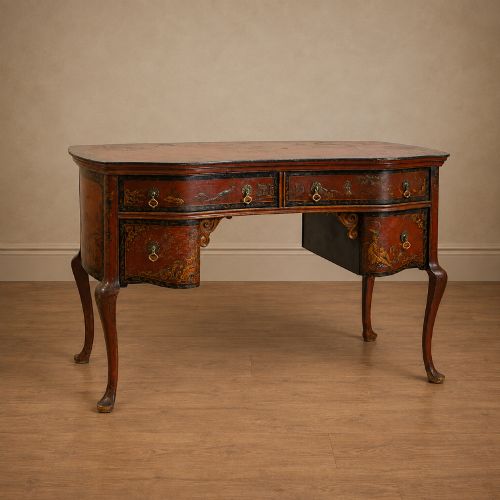
You are most likely to meet mahogany or painted wood variants on this page, often styled with revival influences such as Sheraton Revival or Chinoiserie lacquer. They serve as both functional furniture and striking centrepieces in a bedroom or study.
How they were made
Cabinet makers constructed these curved forms using solid wood carcasses and fine veneers like mahogany, satinwood, and burr walnut. Skilled woodworking techniques allowed craftsmen to achieve the smooth, concave kidney contour without compromising structural integrity.
Surface decoration often involved intricate marquetry, hand-painting, and black lacquer in Chinoiserie styles. Details such as gilt wood accents and brass hardware completed the construction of these decorative items.
Kidney Shaped Vanity Retail Price Guide 2026
Typical asking prices for kidney shaped vanity among the pieces listed under this phrase on Sellingantiques today, from the lower quarter to the upper quarter. They describe what is for sale here now, not the wider market.
The listings on this site span from the Georgian era through the Victorian period and into Edwardian times, utilising mahogany, satinwood, and lacquer.
What varies in quality
The standard of timber selection and veneer matching defines the upper tier of these pieces. Fine examples display carefully chosen grain patterns and precise marquetry rather than simple painted finishes.
Carving depth and hardware selection further separate ordinary items from exceptional ones. Pieces by established workshops exhibit superior attention to detail in their secondary woods and structural joints.
Edwards & Roberts
The Kidney Shaped Vanity Glossary
- Marquetry
- The art and craft of applying pieces of veneer to a structure to form decorative patterns. It adds visual texture and intricate detail to the surface.
- Satinwood
- A durable wood with a lustrous, satin-like sheen often used for fine cabinet-making. It provides a pale, golden background for contrasting inlay work.
- Burr walnut
- Wood taken from a tree growth featuring swirling, knotty grain patterns. Furniture makers prize it for its rich and decorative appearance.
Kidney Shaped Vanity: Frequently Asked Questions
What is a kidney shaped vanity used for?
These pieces functioned primarily as dressing tables for grooming or as compact writing desks. The curved front allowed the user to sit closer to the surface while keeping cosmetics or writing materials within reach.
Over time, their decorative appeal made them popular statement pieces in bedrooms and boudoirs alike.
How do I date a kidney shaped vanity?
Dating relies on examining the timber species, construction methods, and stylistic revival influences present in the piece. Victorian and Edwardian examples often employ specific wood veneers and hardware styles characteristic of their respective decades.
Looking at the secondary woods inside drawers also helps establish the approximate period of manufacture.
Where should I place this in a room?
Freestanding models look best positioned where their finished backs can be seen, such as away from walls or near a window. Their compact curves make them adaptable for placement in corners or as bedroom focal points.
Pairing them with a matching low chair ensures comfortable daily use.
Are these pieces suitable for daily writing?
Many examples feature fitted leather writing surfaces designed specifically for correspondence and daily desk tasks. The unique curve provides comfortable arm placement during extended writing sessions.
Care should be taken with older leather inserts to preserve their original finish.