

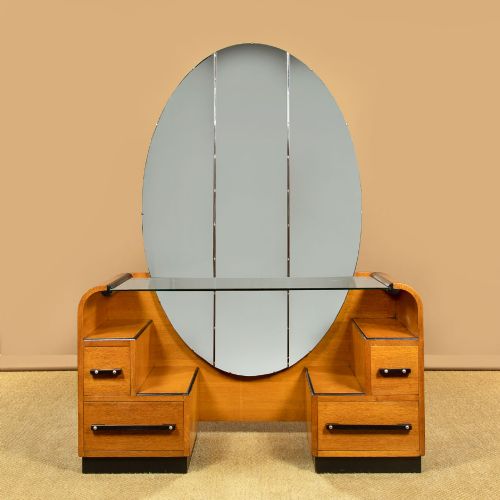
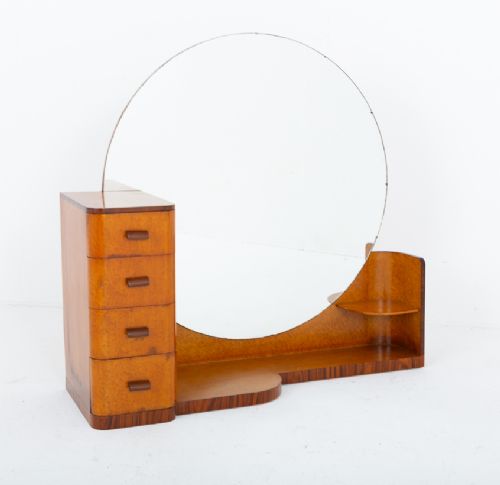
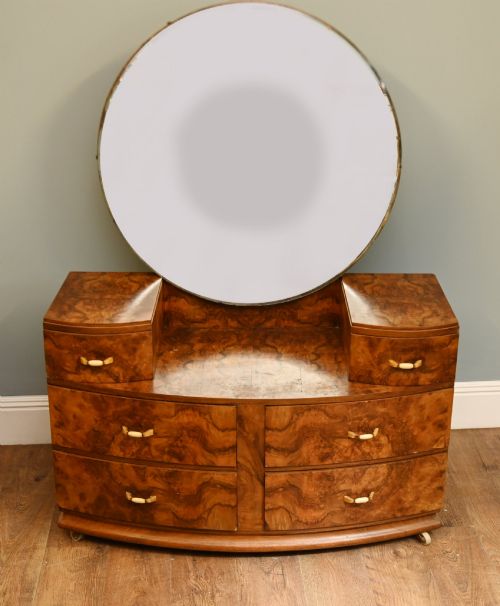
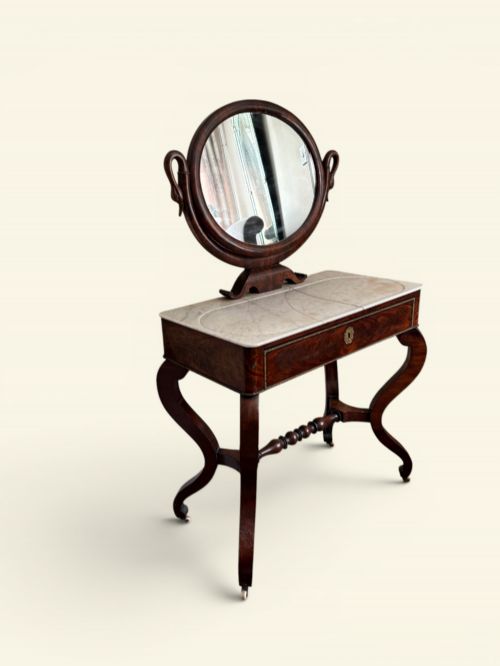
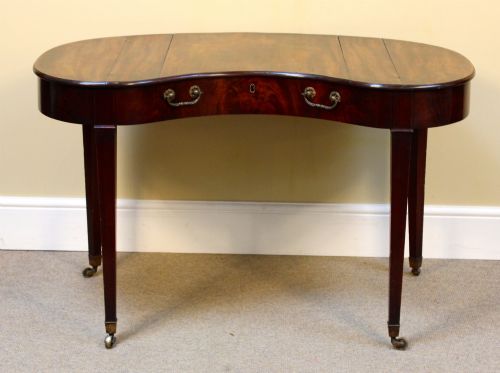


Curved Vanity Desk
A curved vanity desk delivers fluid lines to a bedroom, combining functional surface area with sculptural form.
Curved Vanity Desk
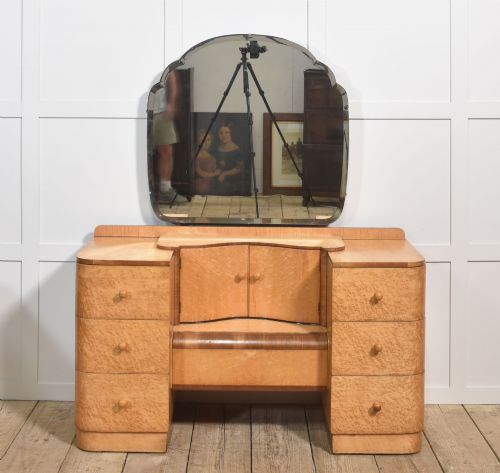
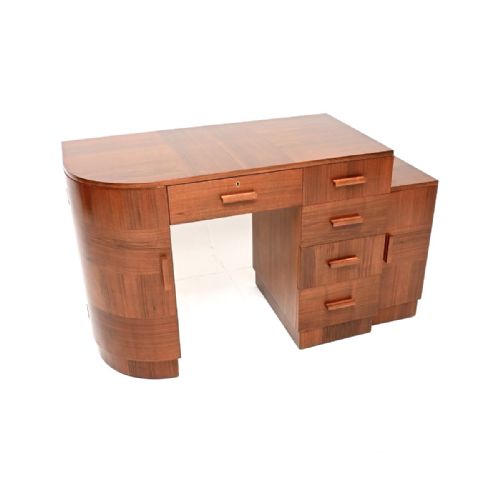
A curved vanity desk takes various forms across periods from the eighteenth century to the twentieth century, with kidney shapes and sweeping fronts appearing frequently in the listings. These pieces function as personal grooming stations or writing spaces, often incorporating matching mirrors or companion seating.
The twentieth-century examples lean towards Art Deco aesthetics from nineteen thirty, whilst earlier iterations draw on Georgian and Edwardian traditions. Buyers encounter dressing tables, kidney-shaped desks, and specialised writing furniture sharing this characteristic sweep.
How they were made
Cabinet makers utilised choice timbers including mahogany, burr walnut, and satinwood, frequently applying veneers to achieve continuous grain patterns over curved surfaces. Inlays, marquetry, and polished glass surfaces complete the construction of these refined forms.
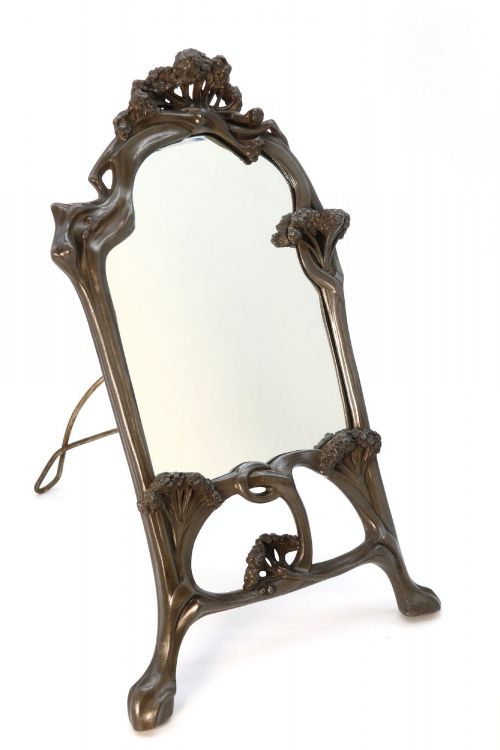
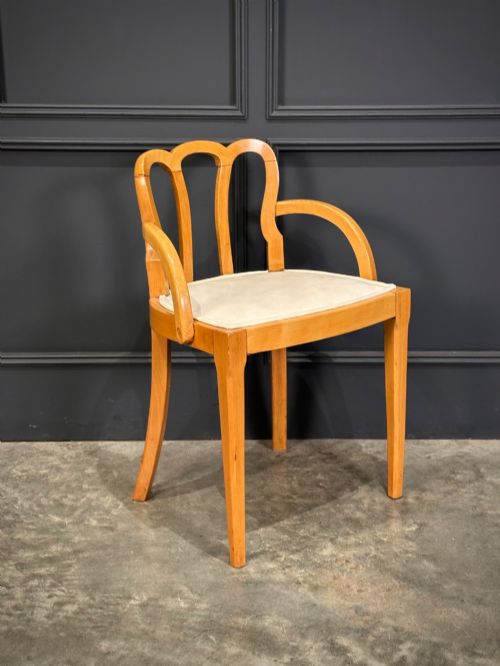
Metal elements such as brass appear in hardware and mounts, while pewter provides detail on specific mirrors. Upholstered seats employ traditional textile and leather integration to match the principal wooden frames.
Curved Vanity Desk Retail Price Guide 2026
Typical asking prices for curved vanity desk among the pieces listed under this phrase on Sellingantiques today, from the lower quarter to the upper quarter. They describe what is for sale here now, not the wider market.
Listings feature mahogany, burr walnut, and satinwood alongside periods spanning from Georgian to Art Deco.
What varies in quality
The selection of timber veneer determines much of the visual impact, with figured walnut and birds-eye maple displaying superior grain movement compared to plain grounds. Master cabinet work shows in the seamless execution of complex radiused shapes and tight joints.
Attribution to documented makers elevates certain examples, alongside the survival of original integrated mirrors and matching chairs. The crispness of marquetry work and the integration of brass fittings further distinguish the standard of production.
Harry and Lou Epstein·Edwards and Roberts·Collinson and Lock·Betty Joel·Louis Auguste Moreau
The Curved Vanity Desk Glossary
- Kidney shaped
- A curved furniture design resembling a bean, allowing the user to sit close to the centre. This profile appears frequently in desks and dressing tables.
- Burr walnut
- Timber taken from the burl growth of a walnut tree, producing swirling, complex patterns. Cabinet makers prized this wood for high-status veneer work.
- Marquetry
- Decorative woodwork where pieces of veneer are fitted into a ground to form patterns. It requires precise cutting and careful assembly.
- Satinwood
- A durable, yellowish timber yielding a reflective, satiny lustre. It found favour in eighteenth-century and Edwardian fine furniture.
- Pedestal
- A supporting base or column structure. Twin pedestal desks incorporate storage blocks on either side of a central seating space.
Curved Vanity Desk: Frequently Asked Questions
What is a curved vanity desk?
A curved vanity desk is a piece of furniture designed for personal grooming or writing, featuring a rounded or kidney-shaped front. These items serve as functional workspace and decorative bedroom centerpieces.
They appear across multiple eras, ranging from eighteenth-century designs to nineteen-thirty Art Deco creations.
How do I style a curved vanity desk?
Position the desk against a bedroom wall or angled in a corner to showcase its rounded silhouette. Pair it with a matching armchair or side chair to complete the setup.
Keep surface accessories minimal to highlight the natural grain of woods like burr walnut or mahogany.
How do I date a curved vanity desk?
Examine the primary materials, construction methods, and overall design style visible in the piece. Art Deco examples from nineteen thirty display streamlined forms, whereas Georgian pieces show classic proportions and mahogany construction.
Hardware styles and secondary timbers inside drawers also provide clues regarding the period of manufacture.
Were these desks used for writing or dressing?
Many pieces served dual functions depending on the specific domestic requirements of the household. Some examples include integrated mirrors for grooming, while others function primarily as writing tables with kneehole spaces.
The inclusion of drawers and compartments dictates whether the surface suited paperwork or cosmetics.