

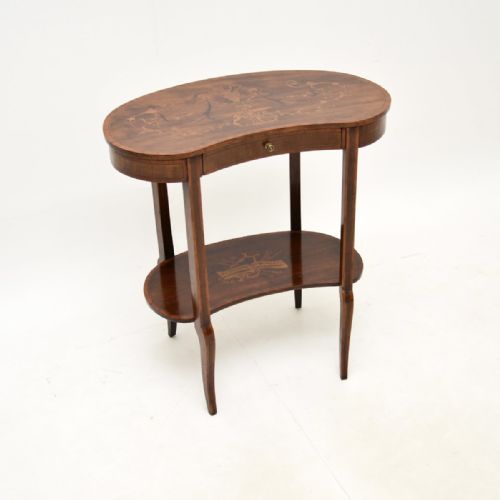
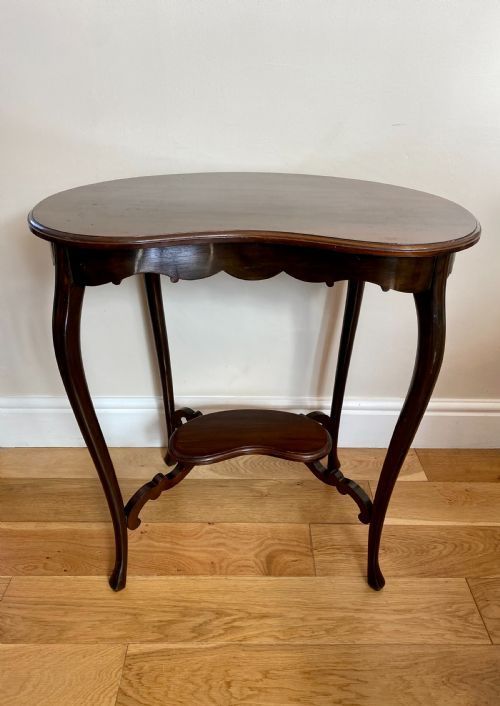
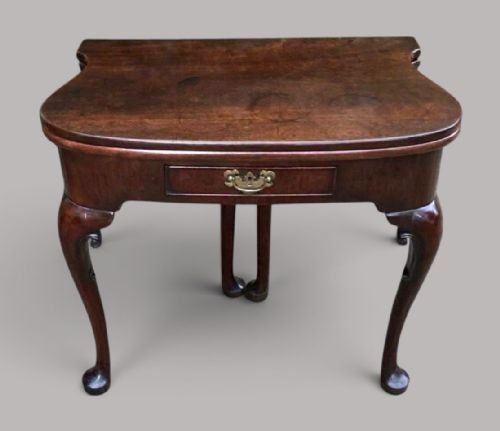
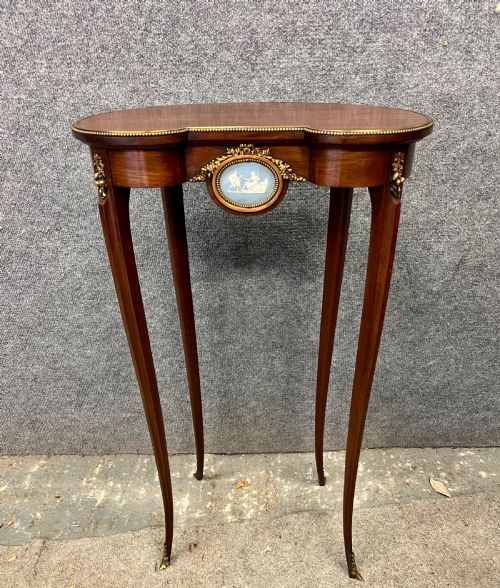
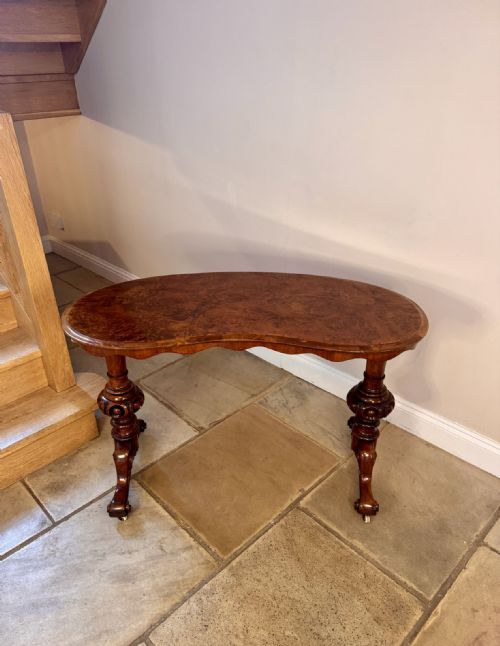
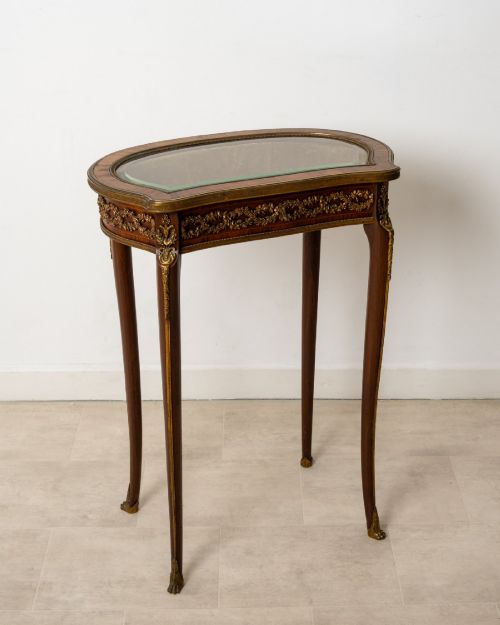
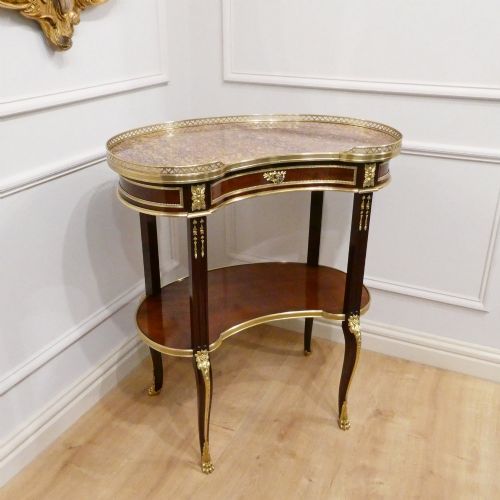
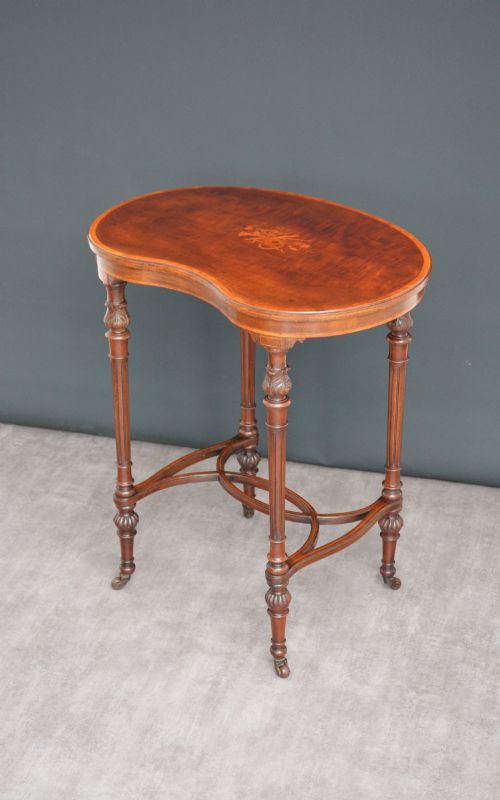
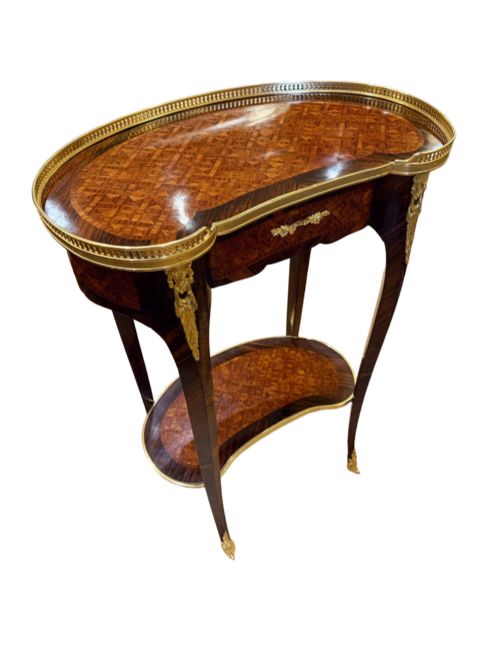
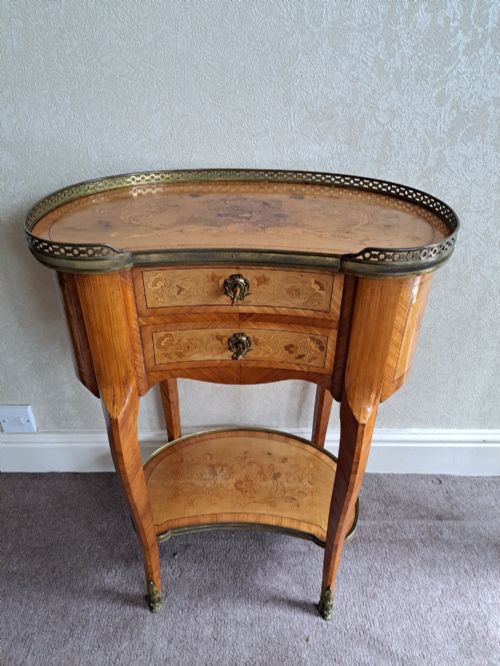
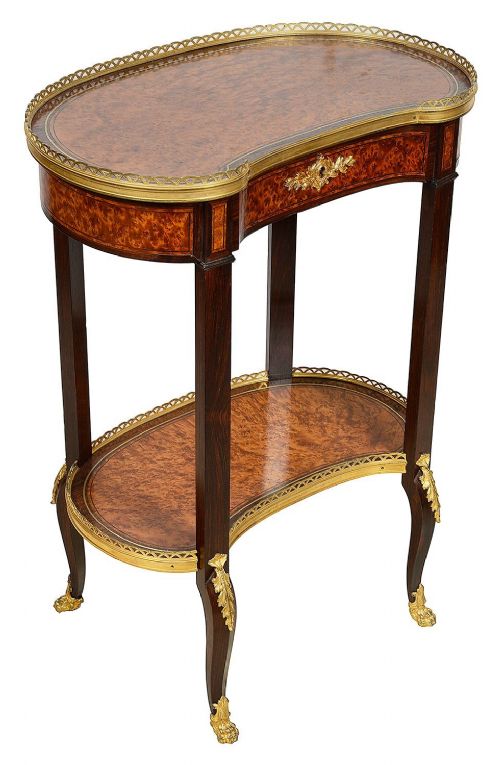


Kidney Shape Side Table
A kidney shape side table brings a distinctive serpentine curve to a room, offering a neat surface that fits snugly beside a chair.
Kidney Shape Side Table
A kidney shape side table follows an asymmetrical, inward-curving outline designed to sit comfortably against a seated person or within a tight corner. These pieces appear primarily across Victorian, Edwardian, and early twentieth-century periods, with French influences frequently shaping their decorative vocabulary.
The common iterations on this page include occasional tables, compact bedside units, and writing desks tailored for ladies' chambers. Makers of the nineteenth and early twentieth centuries adopted the silhouette for display tables, jardiniere stands, and two-tier occasional pieces.
Mahogany and burr walnut dominate the structural timbers, often enhanced by satinwood, kingwood, or rosewood veneers. Many examples incorporate intricate marquetry and parquetry, reflecting Sheraton Revival and Louis XV or Louis XVI revival aesthetics.
Materials and Construction Methods
Craftsmen built the curved frames using solid timbers such as mahogany and walnut for structural integrity, applying fine veneers of kingwood, satinwood, and burr walnut across the top surfaces. The distinctive kidney top required careful cutting and shaping of the wooden substrate before applying decorative parquetry or marquetry inlay.
Gilt bronze, ormolu, and brass mounts frequently edge the tabletops, often forming decorative galleries designed to retain small objects on marble or wooden surfaces. Brass hardware also appears on feet, handles, and framework accents, particularly on French revival pieces from the nineteenth and twentieth centuries.
Kidney Shape Side Table Retail Price Guide 2026
Typical asking prices for kidney shape side table among the pieces listed under this phrase on Sellingantiques today, from the lower quarter to the upper quarter. They describe what is for sale here now, not the wider market.
Some nineteenth-century makers curved the timber so acutely that polite Victorian correspondence found a uniquely shaped partner.
Judging Quality in Kidney Shape Side Tables
The distinction between standard production and exhibition grade work lies in the precision of the timber matching and the intricacy of the inlay. Tables bearing signatures or attribution to notable workshops display superior joinery in the complex curves of the frieze and legs.
The selection of cabinet woods, such as highly figured burr walnut or richly grained kingwood paired with detailed marquetry, indicates higher workshop standards. Furthermore, the weight and finish of applied brass galleries and ormolu mounts separate simpler domestic items from pieces intended for formal salons.
Richardson and Sons·Maison Millet·F. Linke
The Kidney Shape Side Table Glossary
- Marquetry
- Decorative patterns formed by inserting pieces of wood, shell, or ivory into a veneered surface. This technique creates pictorial or geometric designs across tabletops.
- Parquetry
- Geometric mosaic woodwork used for ornamenting floors or furniture surfaces. It utilises small blocks of various timbers to form repeating patterns.
- Ormolu
- Gilt bronze ornamentation applied to furniture mounts and feet. The technique involves coating bronze with a finely ground mercury and gold amalgam.
- Gallery
- A raised ornamental border of pierced metal or wood running along the edge of a tabletop or shelf. It prevents items from sliding off the curved surface.
- Vitrine
- A glass-sided display cabinet or table designed for showing fragile ornaments. These glazed compartments protect delicate items while offering all-round visibility.
Kidney Shape Side Table: Frequently Asked Questions
What rooms suit a kidney shape side table?
These pieces fit naturally beside a drawing room armchair or function as a compact bedside table in a bedroom. Their curved front profile allows them to occupy minimal floor space while providing a practical surface.
They also serve effectively as freestanding occasional tables or small writing desks in studies and libraries, where the serpentine edge complements traditional seating arrangements.
How do I date a kidney shape side table?
Dating relies on examining the underlying timbers, construction methods, and decorative styles visible across the piece. Victorian examples often feature solid mahogany or burr walnut with restrained inlay, whereas Edwardian and Sheraton Revival pieces frequently showcase lighter satinwood banding and delicate marquetry.
French revival items from the later nineteenth and early twentieth centuries typically incorporate kingwood veneers, marble tops, and cast brass galleries alongside Louis-style mounts.
Were these tables used for writing?
Many examples function specifically as writing desks or ladies' vanity tables, often fitted with small drawers beneath the curved top. The concave front allowed the user to sit closer to the writing surface.
Simpler occasional variants lack drawers entirely, serving instead to hold lamps, magazines, or decorative ornaments within a reception room.
How should I care for veneered surfaces?
Polished wood veneers require protection from direct sunlight and excessive heat fluctuations to prevent timber movement or fading. Regular dusting with a soft, dry cloth maintains the finish without abrasive buildup.
Applying a traditional beeswax polish periodically helps nourish older cabinet woods, while marble inserts benefit from gentle cleaning with a damp cloth.