

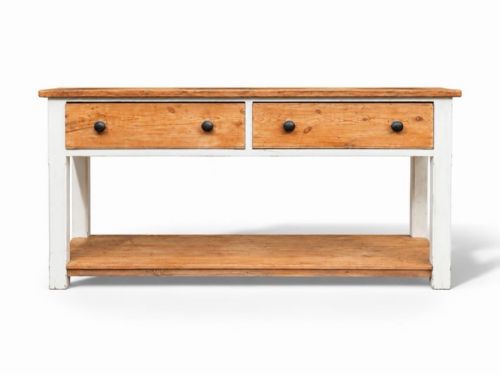
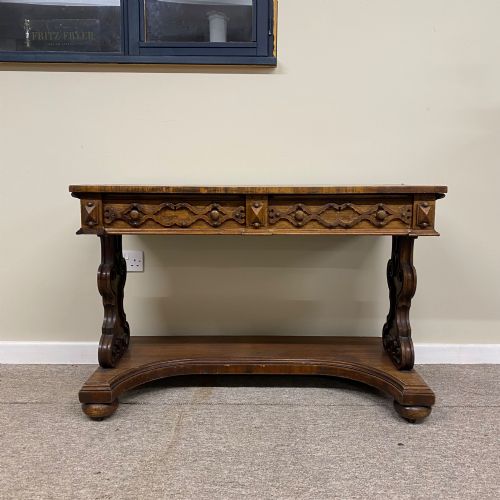
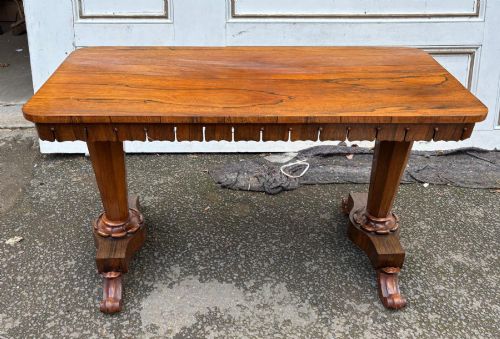
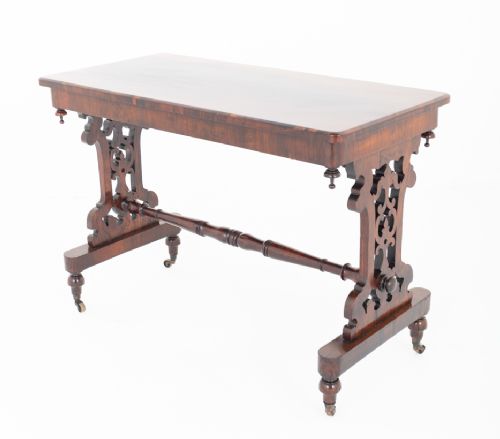
Victorian Sofa Side Table
A Victorian sofa side table brings practical surface space to a room, offering refined timber work and period proportions.
Victorian Sofa Side Table
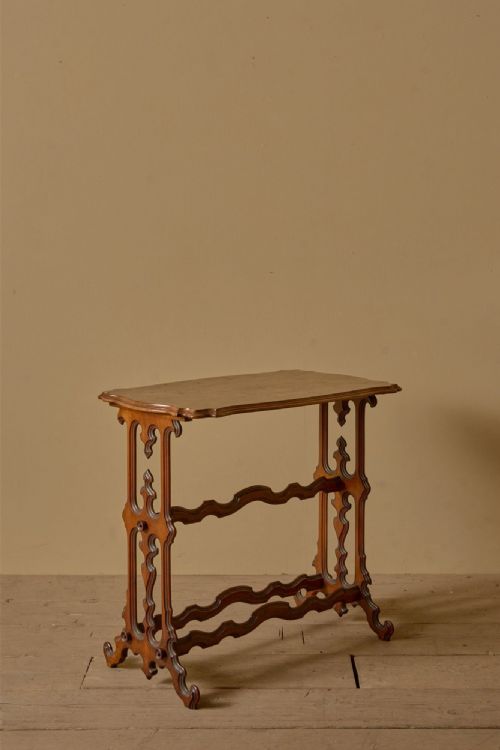
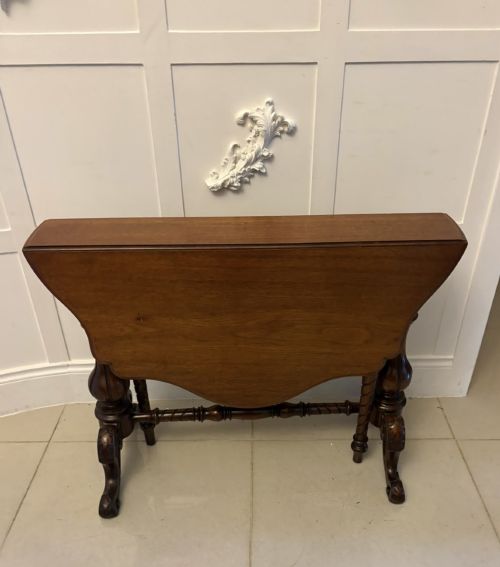
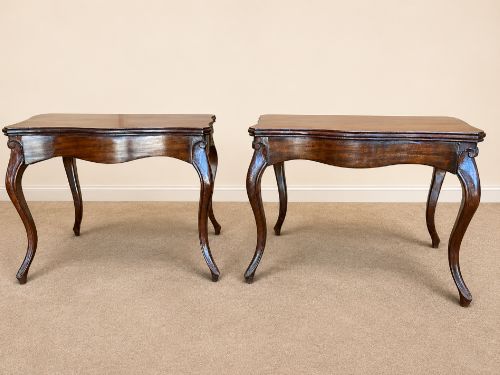
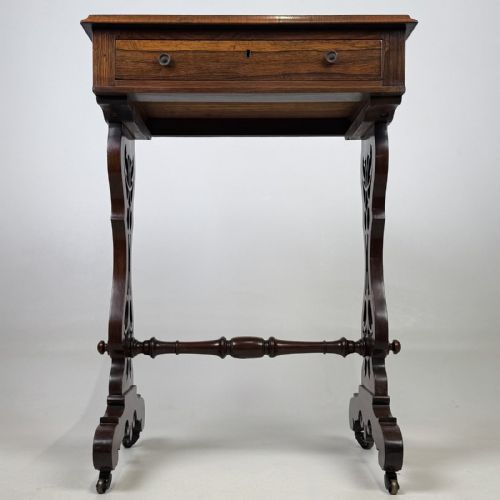
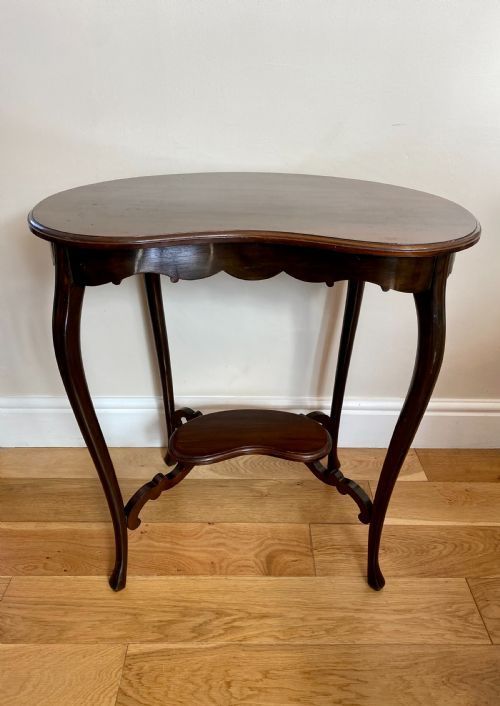
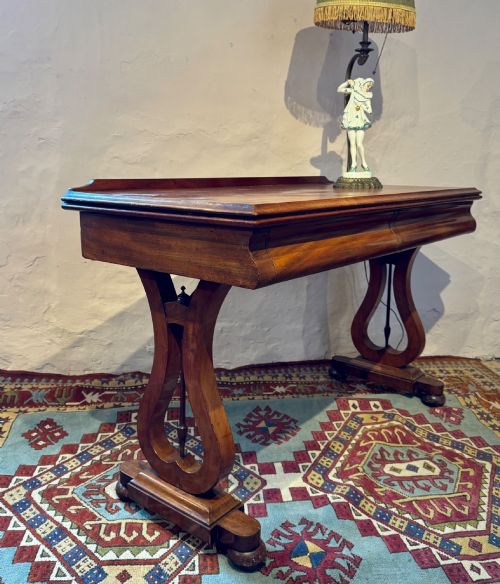
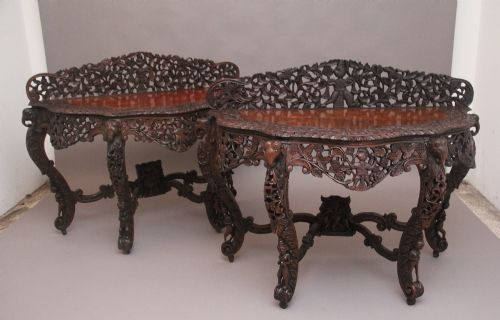
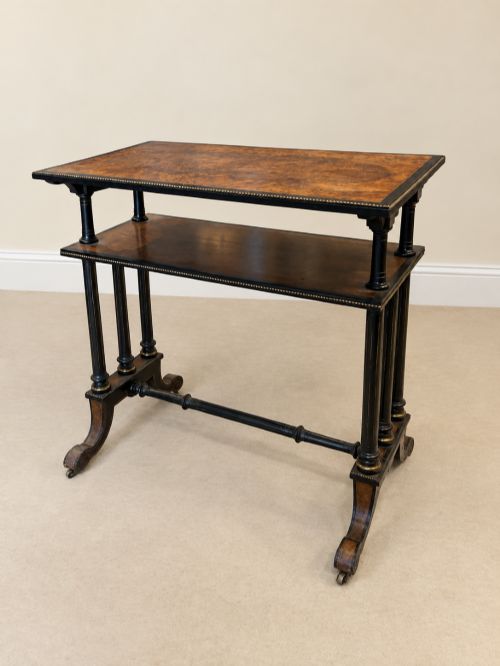
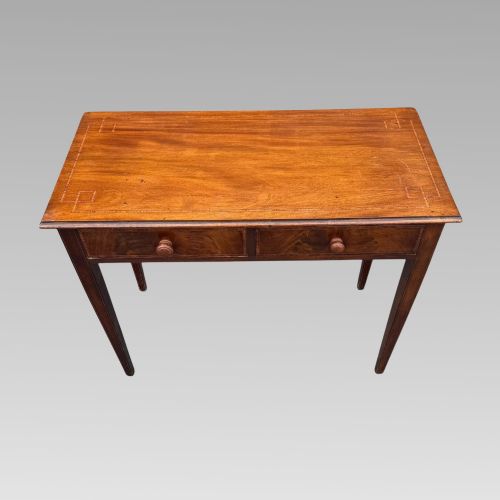
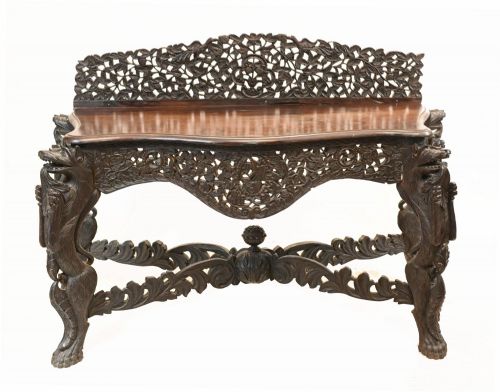
A Victorian sofa side table serves as a compact surface for lamps, books, or writing, designed to sit neatly beside seating or against a wall. The pieces available here span the nineteenth century and encompass forms such as occasional, console, centre, card, and Sutherland tables.
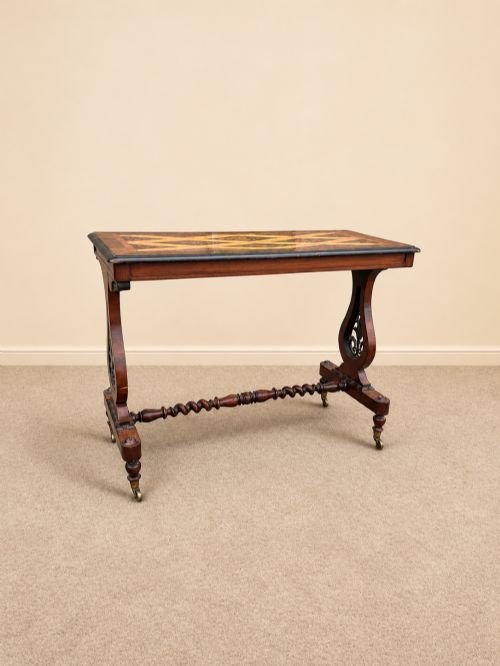
Mahogany and walnut predominate among the surviving examples, often enriched with burr veneers, rosewood, or satinwood inlay. Makers utilised these dense timbers to create kidney-shaped tops, drop leaves, and lyre end supports suited to formal drawing rooms and parlours.
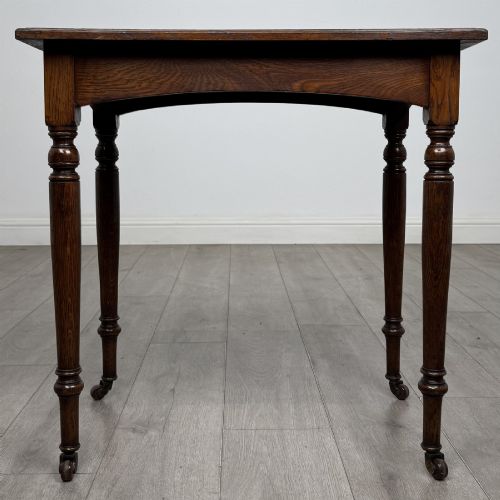
Regional and stylistic variations include Anglo-Indian and Burmese carved furniture, alongside Gothic Revival and French Rococo Revival designs. Buyers frequently encounter turned legs fitted with brass castors, stretcher bases, and occasional drawer compartments.
Materials and Construction
Cabinet makers constructed these tables using solid hardwoods like mahogany, walnut, and oak for structural integrity, applying finely figured veneers of burr walnut or rosewood to primary display surfaces. Inlays of satinwood and ebony added geometric or floral contrast.
Joinery techniques involved sturdy framing, turned components such as bobbin legs, and specialised mechanisms for drop leaves and folding card tables. Brass castors provided mobility, while hand-carved details defined stylistic influences from Gothic to Rococo.
Victorian Sofa Side Table Retail Price Guide 2026
Typical asking prices for victorian sofa side table among the pieces listed under this phrase on Sellingantiques today, from the lower quarter to the upper quarter. They describe what is for sale here now, not the wider market.
Quality Variations
The degree of refinement in timber selection and veneer matching distinguishes finer examples, particularly where burr walnut or rosewood displays complex natural grain patterns. Superior pieces exhibit precise hand-cut inlay and crisply executed carving on supports and legs.
Structural harmony also dictates standing, where well-balanced proportions in pedestal bases, cabriole legs, or lyre supports indicate superior workshop design.
Richardson and Sons
The Victorian Sofa Side Table Glossary
- Burr walnut
- A prized timber harvested from walnut tree growths, featuring swirling, mottled grain patterns used for decorative veneer.
- Sutherland table
- A narrow drop-leaf table with hinged leaves that fold down almost vertically, supported by swing legs.
- Lyre end
- A furniture support shaped in the form of an ancient Greek lyre, commonly found on nineteenth-century tables.
- Marquetry
- The art of applying pieces of veneer to a structure to form decorative patterns and pictures.
- Pembroke table
- A small table featuring two hinged drop leaves on opposing sides and frequently a single drawer.
Victorian Sofa Side Table: Frequently Asked Questions
Where should I place a sofa side table?
These pieces fit naturally beside a sofa, armchair, or against a hallway wall to hold lamps and decorative objects. Their compact footprints allow them to occupy tight corners without dominating a room.
Freestanding centre tables function well in the middle of a room, while drop-leaf versions adapt easily to changing space requirements.
How do I identify a Victorian piece?
Look for characteristic nineteenth-century timber choices such as rosewood, mahogany, and burr walnut, often paired with traditional construction methods. Details like turned wooden legs, brass castors, and period styles such as Gothic Revival or French Rococo offer clear indicators.
Hardware and joinery inspection further confirm the nineteenth-century manufacturing period.
How do I care for nineteenth-century wood surfaces?
Maintain polished timber surfaces by dusting regularly with a soft, dry cloth and avoiding excessive moisture. Occasional application of appropriate furniture wax preserves the finish and natural grain.
Keep tables away from direct heat sources and strong sunlight to prevent veneer splitting and fading.