
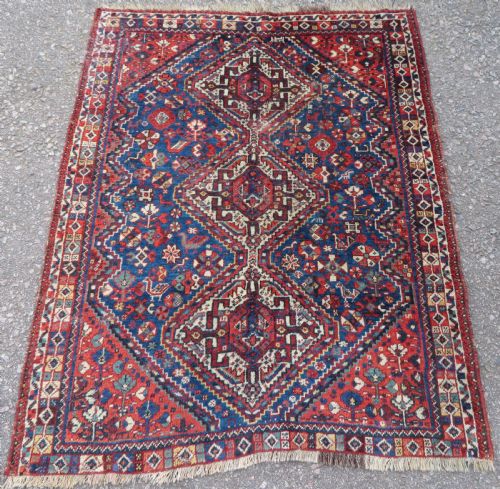
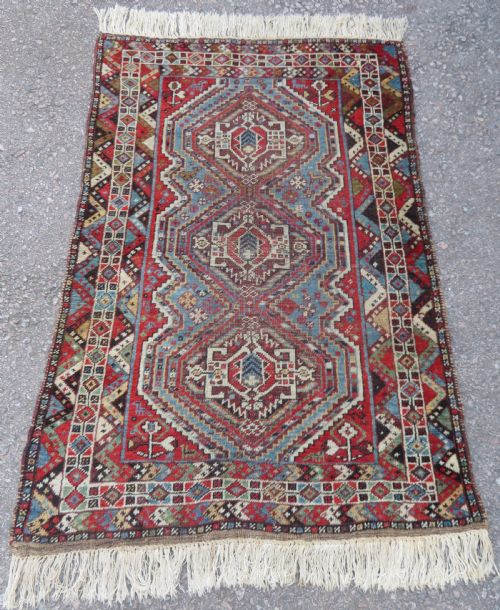
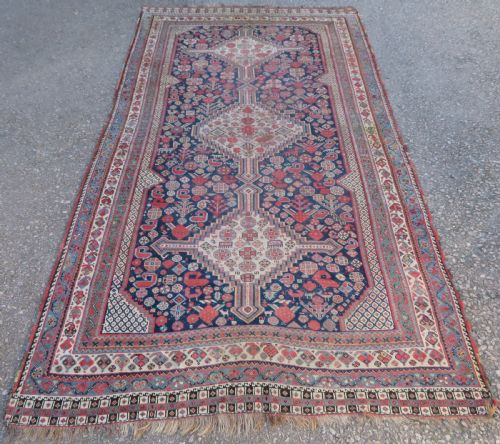

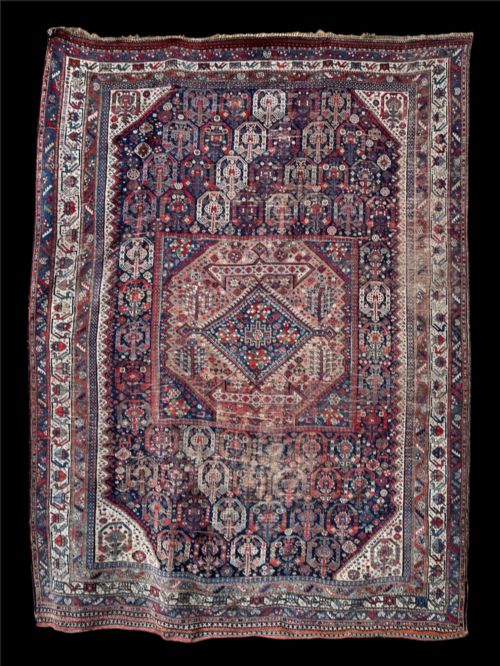
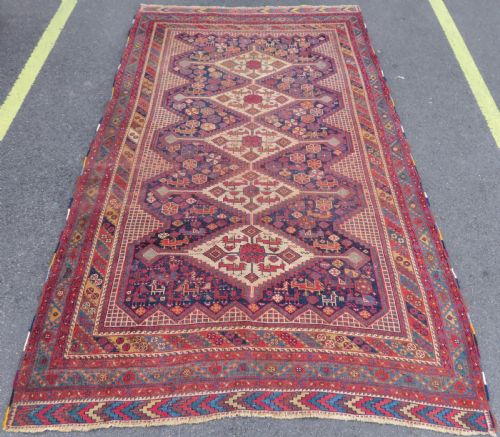


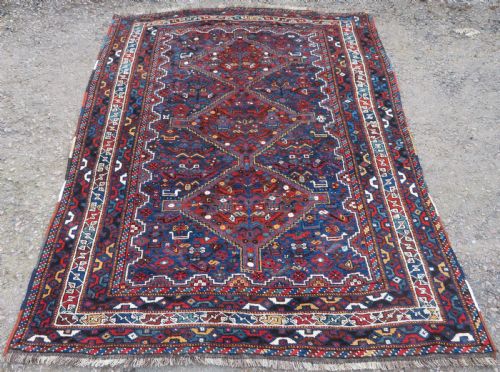


Khamseh Tribal Area Rug
When you select a khamseh tribal area rug, you bring home the vibrant hand-woven artistry of South-West Persian confederations.
Khamseh Tribal Area Rug
A khamseh tribal area rug represents the textile traditions of nomadic and confederated tribes from South-West Persia, particularly the Fars Province. These pieces emerge from historical groups such as the Baharlu, Arab, and Shekarlu, showcasing distinct cultural motifs.
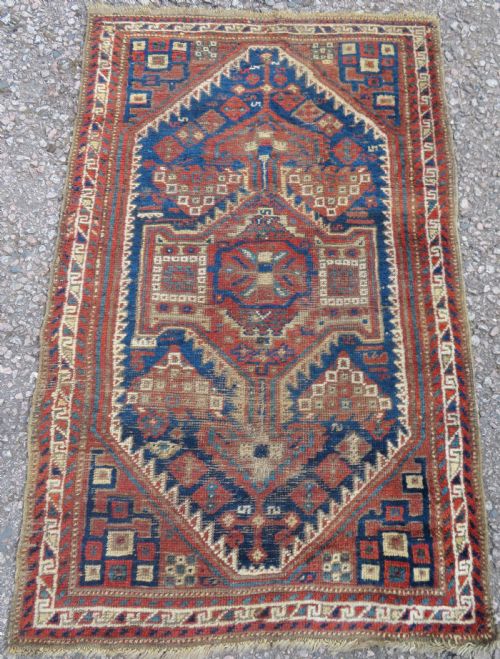
The format ranges from small nomadic mats to large main carpets suitable for substantial interior spaces. Collectors frequently encounter traditional formats woven during the late nineteenth and early twentieth centuries, spanning periods from the eighteen-seventies onward.
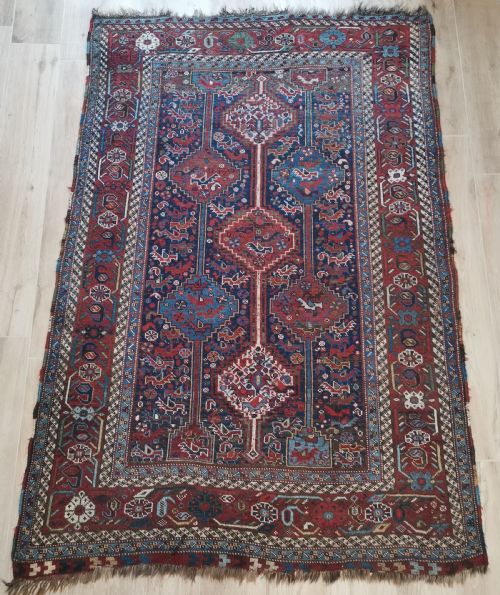
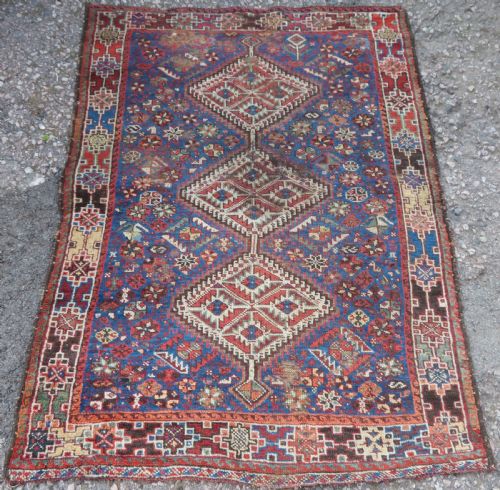
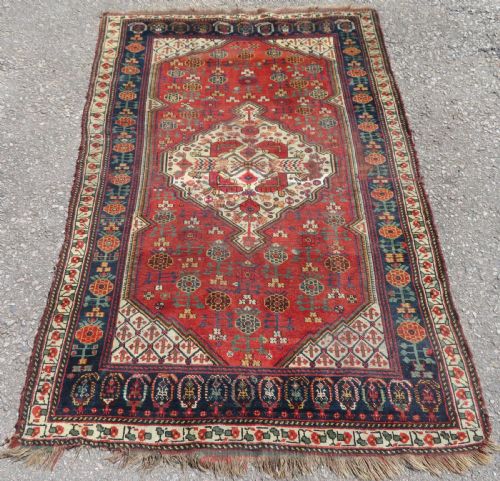
Designs on these floor coverings often incorporate characteristic tribal iconography, including geometric birds, pecking chickens known locally as morghi, pomegranate patterns, and tree of life motifs. The visual language connects directly to the pastoral life of the weavers.
Materials and Construction
Weavers utilised hand-spun wool for the pile and foundation elements, yielding a resilient texture designed for daily nomadic utility. Cotton foundation threads appear alongside wool in various examples, providing structural stability to the larger carpets.
Natural dyes impart the characteristic deep colour palette found across these tribal textiles, interacting with the wool fibres over generations. Artisans dyed the fleece using local plant and mineral extracts before knotting the rugs by hand.
Charming rows of pecking chickens march across several carpets, immortalising nomadic poultry in durable wool.
Quality and Execution
The fineness of the weave and the precision of the knotting differentiate standard room-sized carpets from exceptional tribal pieces. Greater density in the foundation allows complex geometric and figurative motifs to resolve with distinct clarity.
The richness and depth of the natural dyework heavily influence the visual impact of an individual textile. Purity in the wool preparation and consistency in the hand-spinning process further elevate the standing of a woven piece.
The Khamseh Tribal Area Rug Glossary
- Confederation
- A political alliance of distinct nomadic tribes in Persia. This union created shared artistic vocabularies among groups like the Baharlu and Arab tribes.
- Morghi
- A traditional Persian motif depicting small chickens or birds. Weavers frequently arranged these figures in repeating diagonal rows across the field.
- Kelleh
- A long, narrow format of carpet traditionally suited for specific architectural spaces in Persian homes. These elongated proportions accommodate narrow rooms.
- Shekarlu
- A sub-tribe associated with Khamseh and Qashqai weaving traditions. Their distinctive border designs appear on various nineteenth-century carpets.
- Natural Dyes
- Colourants derived from plants, insects, and minerals rather than synthetic compounds. These materials produce complex patination as the textile ages.
Khamseh Tribal Area Rug: Frequently Asked Questions
What is a khamseh tribal area rug?
These floor coverings are hand-woven textiles produced by nomadic and settled tribes within the Khamseh confederation of South-West Persia. They reflect the cultural heritage and daily environment of the Fars Province weavers.
Most surviving examples date from the late nineteenth century to the early twentieth century. They utilise traditional materials and geometric iconography passed down through generations.
How were these rugs used originally?
Nomadic families utilised these heavy wool textiles as functional floor coverings, sleeping mats, and decorative partitions within tents. Their durable construction provided insulation against harsh terrain and weather.
Over time, these utility items gained recognition for their artistic merit. They transitioned from nomadic camp essentials into prized decorative objects for domestic interiors.
How do I live with an antique rug?
Place your textile in a low-traffic area or mount it securely on a wall to protect the historic wool pile from excessive wear. Use a breathable underlay to keep the rug stable on hard flooring.
Keep the piece away from direct, harsh sunlight to preserve the natural dyed colours. Gentle vacuuming without a rotating brush roll helps maintain the cleanliness of the fibres.
How do I tell different tribal designs apart?
Examine the specific iconography embedded within the field, such as repeating chicken motifs, peacock figures, or specific border arrangements. These stylistic markers link individual carpets to particular tribal groups or sub-tribes.
Consider the colour palette and structural materials alongside the design motifs. Subtle variations in wool preparation and knotting style help differentiate Khamseh work from neighbouring Qashqai or Luri traditions.