


Japanned Cabinet on Chest
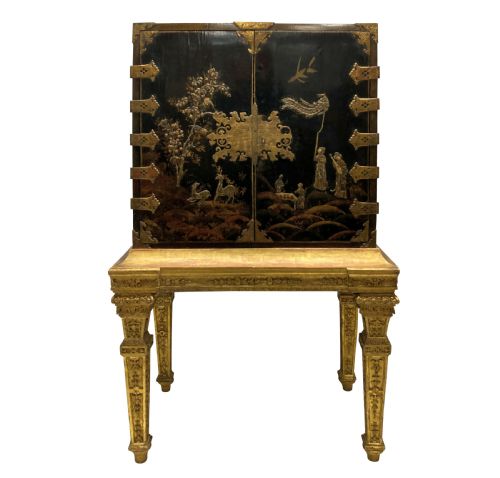
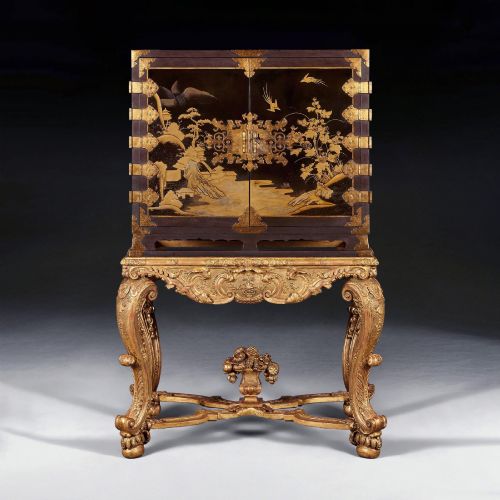
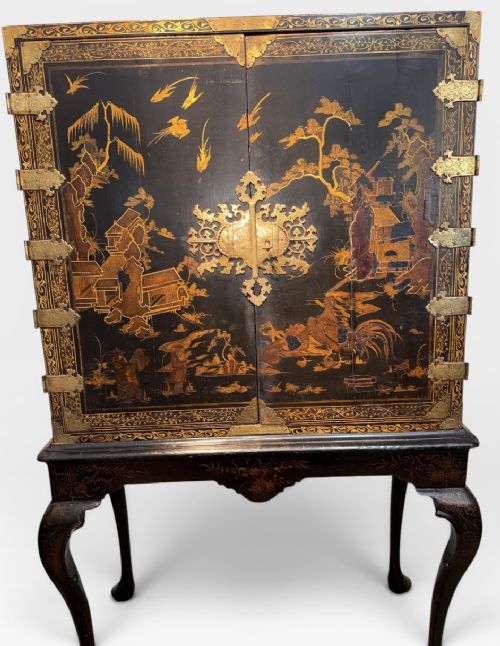
A japanned cabinet on chest brings the bold imagery of East Asian lacquerwork and European Chinoiserie into a room with striking presence.
Japanned Cabinet on Chest
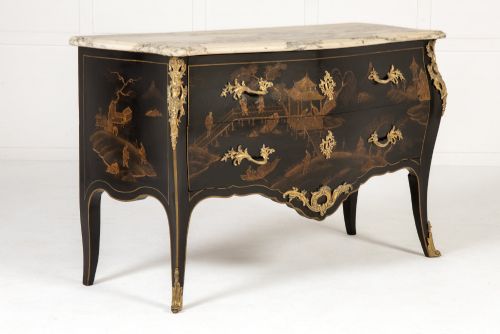
A japanned cabinet on chest encompasses elevated storage pieces finished with European lacquerwork imitating Asian export pieces. The form bridges grand seventeenth and eighteenth-century origins and later twentieth-century interpretations.
Buyers encounter distinct variations ranging from monumental seventeenth-century William and Mary stands to smaller table cabinets and later twentieth-century cocktail cabinets. Chinoiserie decoration dominates the visual language across these diverse periods.
The architectural arrangement pairs an upper enclosed storage section with a supporting stand or lower chest of drawers. Proportions vary from tall upright bureau bookcases to compact tabletop kodansu units.
Materials and construction methods
Construction relies on timber carcases prepared with multiple layers of gesso and varnish to receive the characteristic painted finish. Artisans built up surface depth before applying detailed pictorial scenes.
Gold leaf and gilt highlight raised motifs of figures, birds, and botanical elements against dark or pale backgrounds. Engraved brass hinges and elaborate escutcheons secure the doors and drawers while adding metallic contrast.
Secret drawers hidden behind painted birds and flowers reward anyone curious enough to inspect these cabinets closely.
Assessing craftsmanship and execution
The depth and intricacy of the painted decoration distinguish finer examples from simpler decorative items. Superior pieces exhibit meticulous brushwork and raised gesso relief that creates genuine tactile dimension.
The integrity of the underlying woodwork and the originality of the brass hardware influence the standing of any piece. Cohesion between the upper cabinet and its supporting base remains central to the construction.
Harrods
The Japanned Cabinet on Chest Glossary
- Japanning
- European imitation of East Asian lacquerwork using layered varnishes and metallic dust. This technique created glossy dark surfaces decorated with raised gilt motifs.
- Chinoiserie
- European theatrical interpretation of Chinese and East Asian artistic traditions. The style flourished in furniture decoration throughout the seventeenth and eighteenth centuries.
- Giltwood
- Timber carved and surfaced with thin sheets of gold leaf. This material frequently appears on grand stands supporting seventeenth and eighteenth-century cabinets.
- Kodansu
- Traditional small Japanese portable cabinet featuring multiple internal drawers. These tabletop pieces often incorporated fine lacquer finishes.
- Escutcheon
- Protective plate surrounding a keyhole, frequently cast in brass. Elaborate mounts added both security and ornamental detail to cabinet doors.
Japanned Cabinet on Chest: Frequently Asked Questions
How do I date a japanned cabinet?
Dating relies on examining the underlying timber construction, the style of the brass hardware, and the composition of the lacquer layers. Earlier seventeenth and eighteenth-century examples display different cabinet proportions compared to twentieth-century revivals.
Secondary woods and hinge fixings offer further clues to the period of manufacture. Comparing the decorative motifs against known historical design books helps confirm the era.
Where should I place a cabinet on stand?
These tall decorative pieces require a stable wall position away from direct sunlight to protect the delicate lacquer surface. Placing them in a hallway or principal reception room allows the painted Chinoiserie scenes to be appreciated fully.
Ensure the room maintains stable humidity levels to prevent the timber carcase from moving. Generous clearance around the stand displays the legs and stretcher base properly.
What is the difference between Chinoiserie and Japanese export styles?
Chinoiserie represents European artisans interpreting Chinese and Asian motifs through a distinct Western decorative lens. Japanese export work involved genuine goods produced overseas specifically for Western trade.
Japanning bridges these traditions by applying European lacquer techniques to mimic imported aesthetics locally. The resulting pieces combine familiar European furniture forms with exotic pictorial themes.