
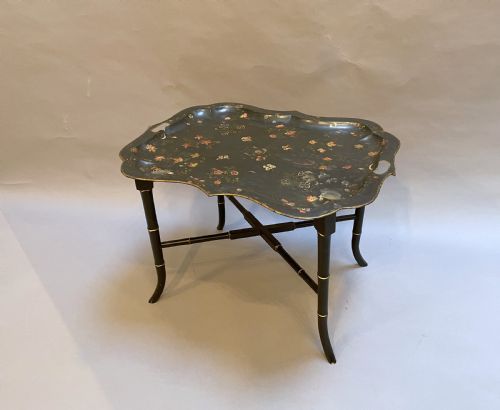


Japanned Bamboo Table
These japanned bamboo table pieces bring distinctive Chinoiserie surface decoration and organic bamboo frames into period interiors.
Japanned Bamboo Table
A japanned bamboo table combines natural or tiger bamboo supports with lacquered, hand-painted panels influenced by Eastern design. These pieces emerged strongly during the Victorian era and the Aesthetic Movement, offering lightweight versatility for nineteenth-century parlours and drawing rooms.
The selection here spans various practical forms including side tables, occasional tables, tiered sewing tables, and nests of tables. Examples range from simple two-tier surfaces with magazine racks to more elaborate bijouterie and card tables reflecting Regency style revivals.
Materials and construction
The structural framework relies on natural bamboo or tiger bamboo, often joined with brass fittings to secure multiple tiers, folding actions, or stands. This lightweight framework provides sturdy support while maintaining a delicate profile suited to domestic spaces.
Surfaces feature applied lacquer, toleware, or papier-mâché panels decorated with hand-painted Chinoiserie motifs and gilding. Artisans built these tables using traditional woodworking and lacquering techniques adapted from Asian export goods during the nineteenth and early twentieth centuries.
Materials across these listings include bamboo, lacquer, wood, papier-mâché, brass, gilding, and toleware.
Evaluating craftsmanship
Quality rests primarily on the preservation of the hand-painted lacquered decoration and the stability of the bamboo joints. Tables featuring intricate multi-tier designs, brass hardware, or fitted sewing compartments generally represent finer domestic production.
The depth of the japanning and the complexity of the painted scenes distinguish standard occasional furniture from more ambitious Aesthetic Movement pieces. Uniformity in the bamboo stalks and clean joinery indicate higher workshop standards.
The Japanned Bamboo Table Glossary
- Japanning
- European imitation of traditional East Asian lacquerwork, created by applying layers of varnish and heat-cured finishes. This technique produced glossy dark surfaces decorated with raised or painted metallic motifs.
- Aesthetic Movement
- A late nineteenth-century design current that rejected heavy Victorian moralism in favour of art for art's sake. It promoted the integration of Japanese and Chinese motifs into British furniture.
- Chinoiserie
- European artistic style reflecting Chinese aesthetic influences, characterised by picturesque landscapes, figures, and pavilions. It appeared frequently on lacquered furniture and painted panels.
- Toleware
- Enamelled or japanned metalware, frequently used for trays and table surfaces during the nineteenth century. These metal inserts provided durable, wipe-clean tops for stands and side tables.
- Bijouterie table
- A glass-topped display table designed to showcase small decorative objects, medals, or jewellery. These pieces often featured hinged glazed lids and lined interiors.
Japanned Bamboo Table: Frequently Asked Questions
What periods do these tables date from?
The pieces span the nineteenth and early twentieth centuries, with a strong concentration in Victorian production, the Aesthetic Movement, and later Edwardian revivals.
Specific dates range from Regency-style interpretations to pieces made around eighteen-eighty and nineteen-twenty.
How were these tables used originally?
Owners placed them in parlours and drawing rooms as versatile furniture for holding tea, displaying ornaments, or serving as card and sewing tables.
Tiered versions and models with magazine racks accommodated books and needlework within domestic spaces.
How do I care for japanned surfaces?
Protect the lacquer and painted decoration by keeping the table away from direct sunlight and excessive temperature fluctuations. Dust gently with a dry microfibre cloth and avoid moisture or chemical cleaners.
Maintaining stable indoor humidity preserves both the bamboo structure and the delicate surface finish.