


Vintage Magazine Table
A vintage magazine table is a functional piece designed to keep periodicals tidy, most often encountered here as a period canterbury or occasional side table.
Vintage Magazine Table
A vintage magazine table combines a sturdy surface for lamps or cups with dedicated partitions for reading material. When searching for a vintage magazine table, buyers commonly encounter traditional canterburys alongside oak and mahogany side tables from the nineteenth and twentieth centuries.
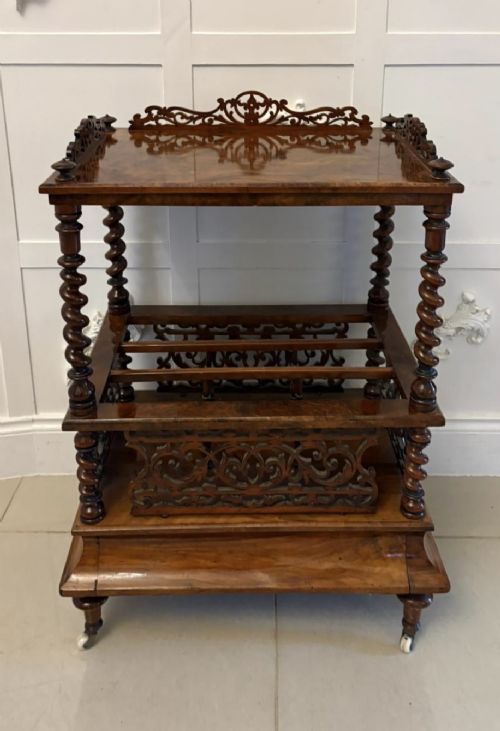
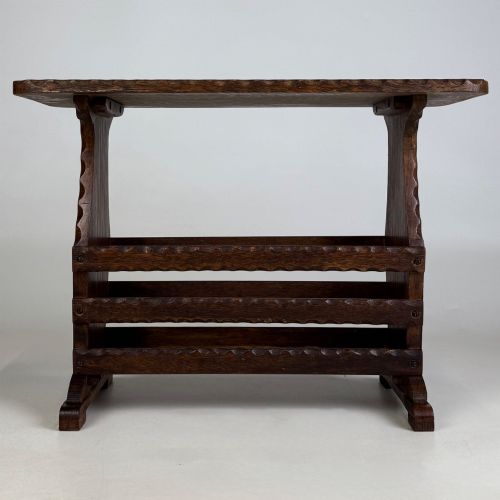
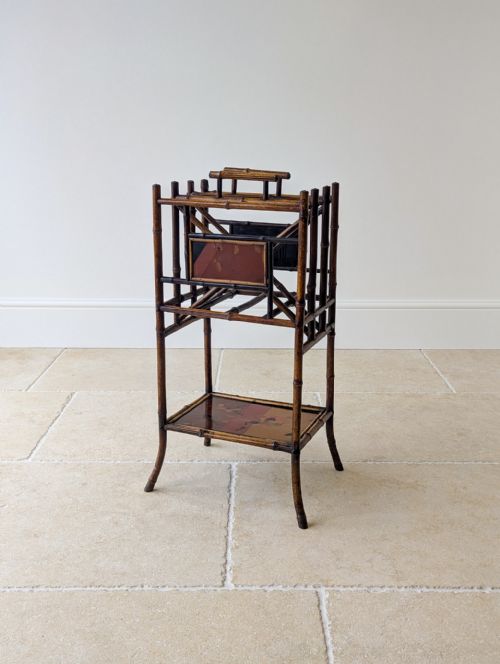
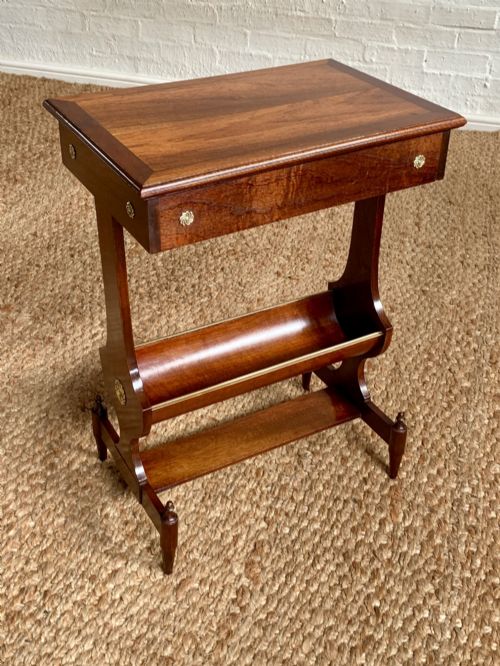
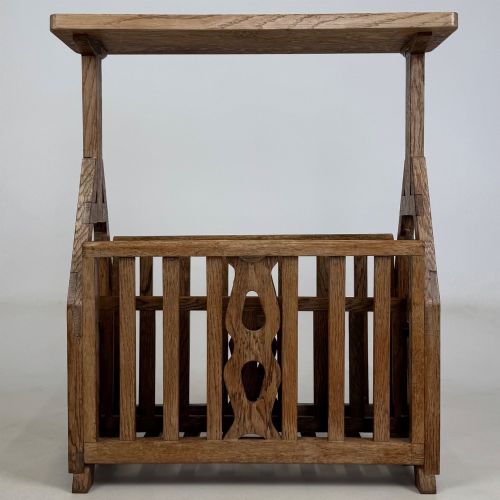
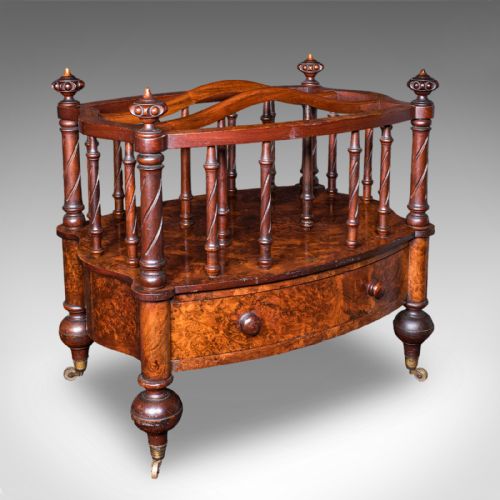
The selection ranges from Victorian burr walnut designs with lower partitions to Art Deco blonde oak coffee tables and bamboo stands. Pieces frequently incorporate drawers, book troughs, or folding reading surfaces alongside standard rack compartments.
Materials and construction
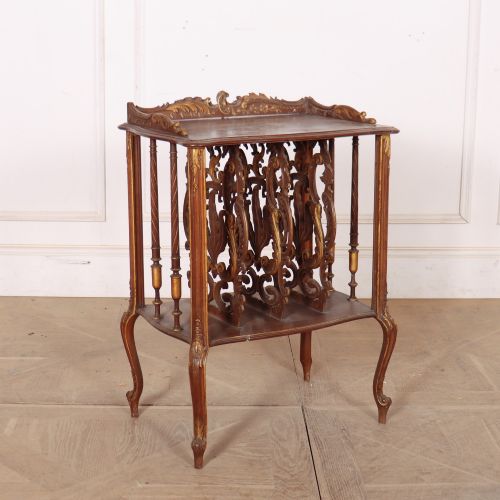
Timbers dominate the construction, with burr walnut, mahogany, rosewood, and oak utilised across various stylistic periods. Cabinetmakers employed rich veneers, fine inlays, and carved details on foundational hardwoods to create both formal and rustic variants.
Alternative materials appear in specific contexts, such as brass and tiger bamboo utilised for lighter, more exotic aesthetic movement designs. Structural joinery ranges from classic nineteenth-century drawer construction to twentieth-century folding mechanisms.
Object forms range from traditional canterburys and whatnot stands to twentieth-century coffee tables, book troughs, and folding reading tables.
What separates examples
Superior execution shows in the choice of timber figure, such as highly figured burr walnut veneers or dense, rich mahogany grains. Finely turned spindles, crisp carving, and integrated drawers elevate the craftsmanship of a piece far above simple utilitarian racks.
The integration of multiple functions, combining a stable coffee table or lamp surface with well-balanced newspaper compartments, defines the more ambitious examples seen across different eras.
The Vintage Magazine Table Glossary
- Canterbury
- A low, freestanding stand with partitioned sections for newspapers, music sheets, or magazines, often fitted with a drawer below. These originated in the late eighteenth century and evolved through the Victorian period.
- Burr walnut
- A prized timber veneer sourced from the abnormal growth knots of the walnut tree, showing swirling, highly decorative grain patterns. Cabinetmakers used it extensively on high-end Victorian occasional furniture.
- Aesthetic Movement
- A late nineteenth-century design style that emphasised visual beauty over narrative or moral function, frequently incorporating Japanese-inspired bamboo and ebonised woods. Pieces from this movement often display lighter, more exotic frames.
- Book trough
- A V-shaped receptacle designed to hold books or periodicals upright and accessible on a tabletop or stand. These appear frequently in Edwardian library and occasional furniture.
- Whatnot
- A multi-tiered piece of freestanding furniture with open shelves supported by slender pillars, sometimes combined with magazine storage. It allowed for the display of decorative objects alongside everyday reading material.
Vintage Magazine Table: Frequently Asked Questions
What is a canterbury?
A canterbury is a partitioned wooden stand designed to hold loose papers, sheets of music, and periodicals. They typically feature vertical dividers and often include a small drawer at the base.
Originally created in the Georgian era, these stands remained popular through the Victorian period as living room tidies.
How were these tables used?
These pieces served dual purposes in period sitting rooms and libraries, providing both a surface for lamps or drinks and nearby storage for current reading. Book troughs and rack compartments kept newspapers off the floor and within reach of armchairs.
Over time, forms adapted from formal canterburys to low coffee tables and folding reading stands suited for twentieth-century parlours.
What woods should I expect?
Traditional examples rely heavily on rich hardwoods such as mahogany, rosewood, and figured walnut. Cabinetmakers utilised burr walnut veneers to create highly decorative surfaces on the tops and sides of Victorian pieces.
Later Edwardian and Art Deco pieces frequently feature oak, while exotic variants incorporate tiger bamboo and brass for lighter aesthetic styles.
How do I date a piece?
Dating relies on combining the stylistic clues, construction methods, and timber choices visible in the piece. Victorian examples often display rich burr walnut or rosewood with turned spindle supports, while Edwardian pieces lean towards simpler oak or mahogany forms.
Art Deco items from the 1930s introduce modernist blonde oak finishes and clean geometric lines distinct from nineteenth-century revivals.