


Japanese Satsuma Pot
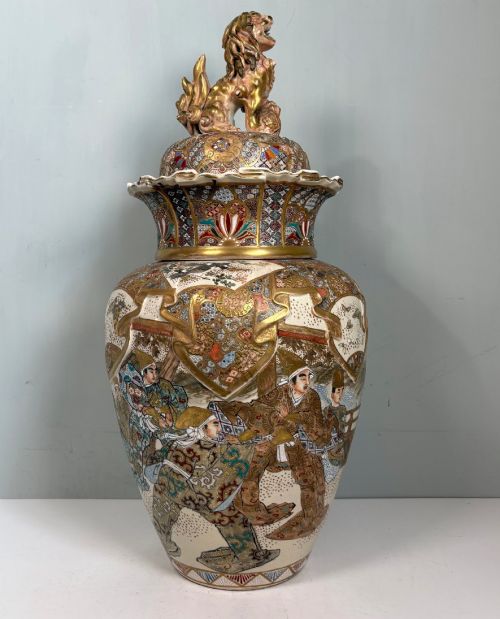
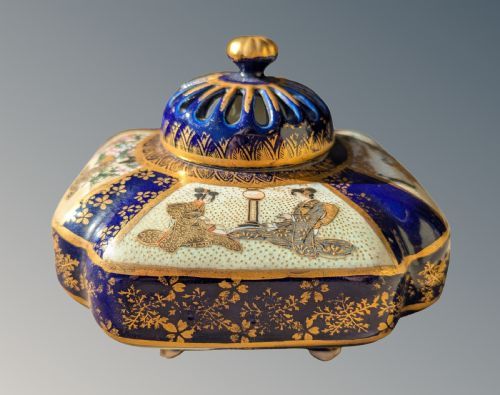
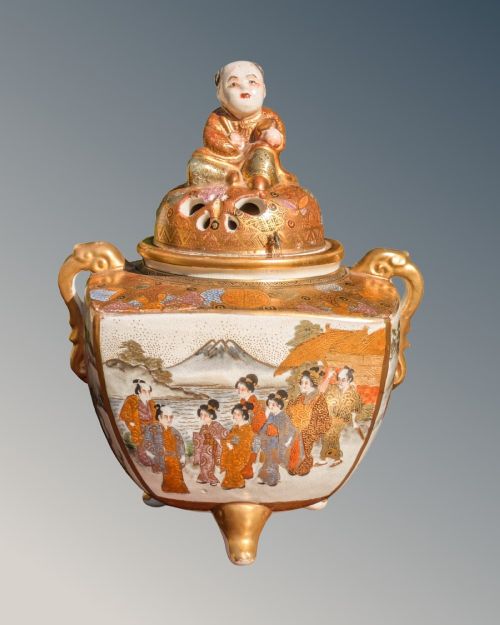
These japanese satsuma pot examples are earthenware vessels decorated with polychrome enamel and gilt, sought after for their intricate painted detail.
Japanese Satsuma Pot
When you search for a japanese satsuma pot, you encounter items originating primarily from the nineteenth century and the Meiji period. The selection spans utilitarian forms and decorative objects such as incense burners, vases, lidded jars, teapots, and footed dishes.
The most common forms on this page include koro incense burners and lidded pots alongside larger vases and miniature teapots. Many originate from Kyoto studios and specific makers operating during the late nineteenth century.
These ceramic pieces frequently feature signed marks or boxed presentations that indicate their studio origin. Buyers encounter both large decorative display items and smaller cabinet pieces decorated with figures, dragons, and processions.
How they were made
The makers utilised earthenware as the primary ceramic body for a japanese satsuma pot, finished with distinctive crackle glaze surfaces. This absorbent base accepts detailed hand painting with polychrome enamel and gold leaf.
Artisans applied elaborate gilding and raised gold accents alongside finely detailed enamel work to depict traditional subjects. Some pieces incorporate metal components, such as English silver mounts added to teapots during the late nineteenth century, or carved wood stands.
Some nineteenth-century teapots arrived in Britain to receive bespoke English silver hinges and spouts.
What varies in quality
Quality in a japanese satsuma pot depends upon the precision of the hand painting and the density of the polychrome enamel and gilding. Superior examples display microscopic detail in figures, robes, and background patterns without crowding the composition.
The reputation of the studio or workshop marks a significant distinction between standard production items and masterworks. Pieces carrying signatures from noted makers or Kyoto studios command greater attention for their artistic execution.
Kinkozan·Shizan·Shozan·Hododa
The Japanese Satsuma Pot Glossary
- Koro
- An incense burner featuring a body, cover, and frequently three or more feet. These vessels often include pierced lids designed to release incense smoke.
- Meiji Period
- The era in Japanese history spanning from eighteen sixty-eight to nineteen twelve. Most pieces seen here date from this period.
- Polychrome Enamel
- Multi-coloured glass-based paints applied to the ceramic surface. Artisans use these colours to depict robes, landscapes, and deities.
- Gilding
- The application of gold leaf or gold paint to highlight specific decorative elements. This technique contrasts with the matt crackle glaze beneath.
- Jardiniere
- A large ceramic pot designed to hold a plant or floral arrangement. These substantial pieces display the same intricate enamel work seen on smaller vessels.
Japanese Satsuma Pot: Frequently Asked Questions
What is a japanese satsuma pot?
A japanese satsuma pot is a piece of earthenware pottery originating from Japan, typically created during the nineteenth century or the Meiji period. These items are identifiable by their cream-coloured crackle glaze and elaborate hand-painted polychrome enamel and gilt decoration.
Craftsmen produced various forms, including incense burners, lidded jars, vases, and teapots. Many examples feature detailed scenes of figures, deities, and natural motifs.
How do I identify Meiji period pieces?
Meiji period items generally date between eighteen sixty-eight and nineteen twelve, aligning with the reign of Emperor Meiji. You can often identify them through studio signatures, character marks, and specific stylistic traits associated with Kyoto workshops.
The inclusion of raised gold work and finely painted narrative scenes involving geisha, gods, or processions is characteristic of this era of production.
Were these pots used daily?
Many items, such as koro incense burners, teapots, and sugar bowls, served functional purposes within households or tea ceremonies. Other pieces like large vases and decorative jars were intended primarily for display.
Over time, many of these vessels transitioned into cabinet pieces collected for their artistic merit rather than everyday utility.
What do signature marks mean?
Signature marks stamped, painted, or incised on the base of a japanese satsuma pot indicate the artist, studio, or pottery responsible for its creation. Names such as Kinkozan or Shozan point to specific Kyoto workshops and master artisans.
These signatures help date the object and provide insight into the quality of craftsmanship and the specific region of manufacture.