

Japanese Satsuma Ceramics
Japanese satsuma ceramics bring intricate painted detail and rich gilding to interiors through traditional earthenware vessels and decorative objects.
Japanese Satsuma Ceramics
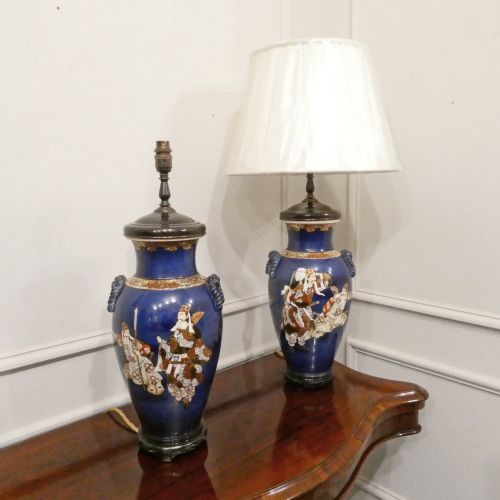
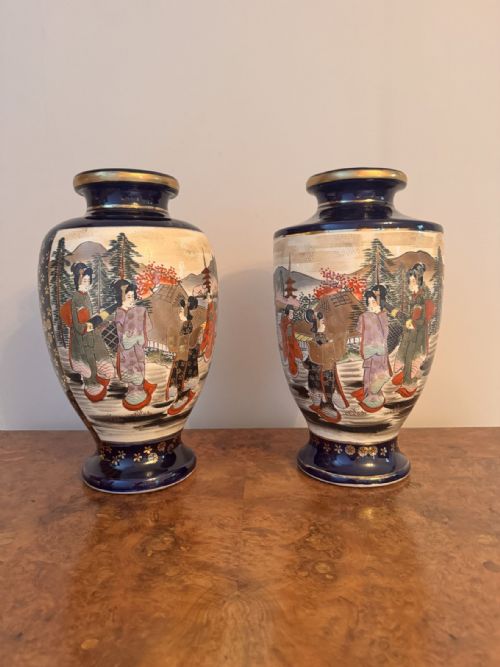
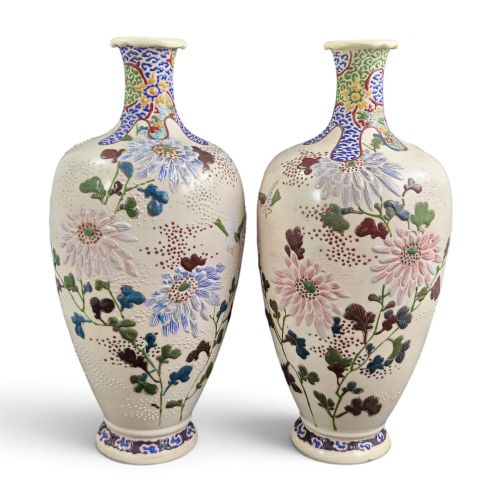
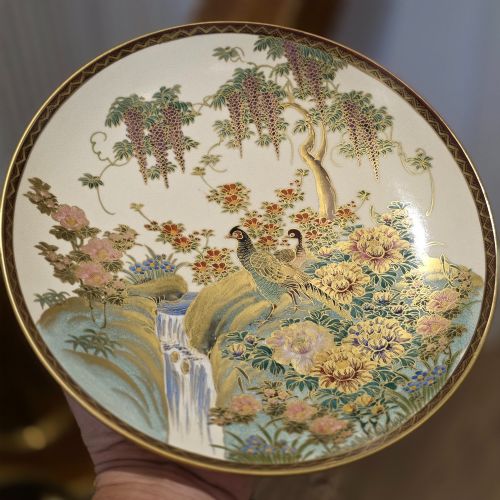
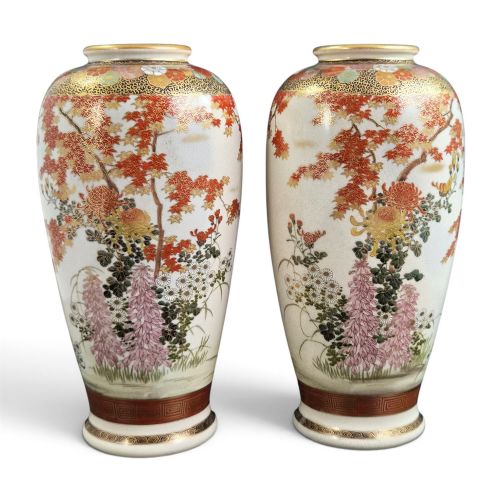
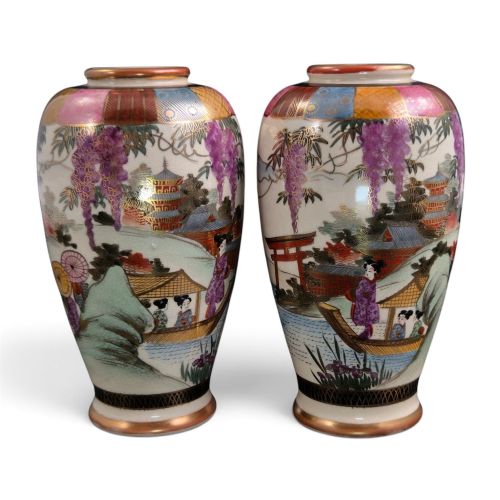
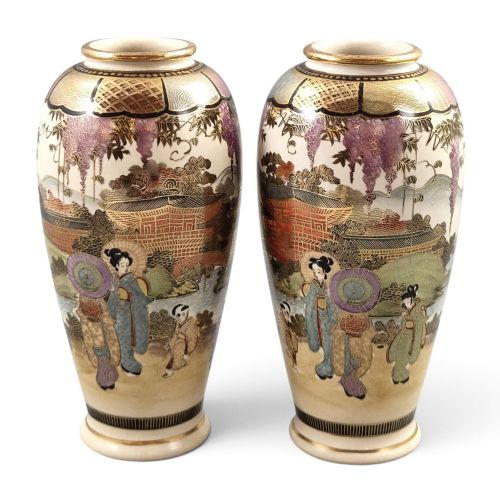
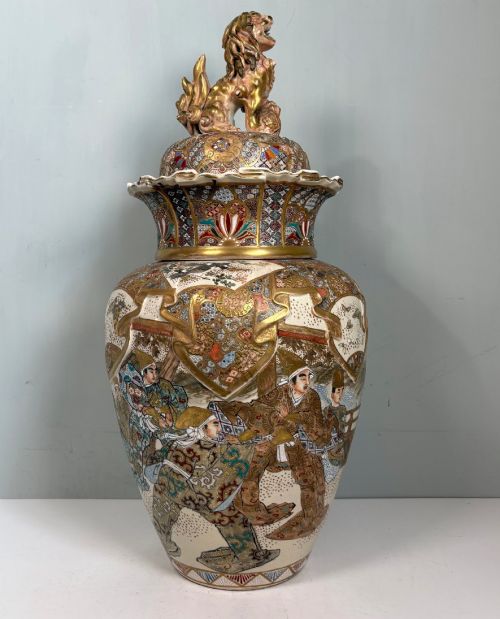
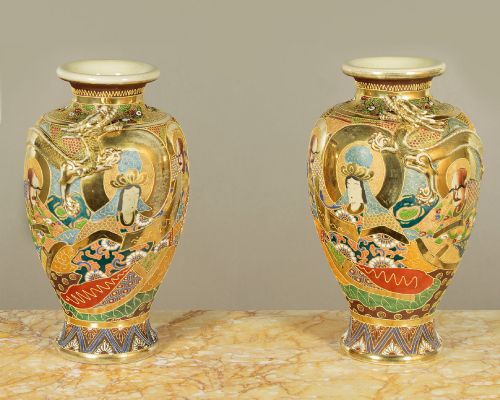
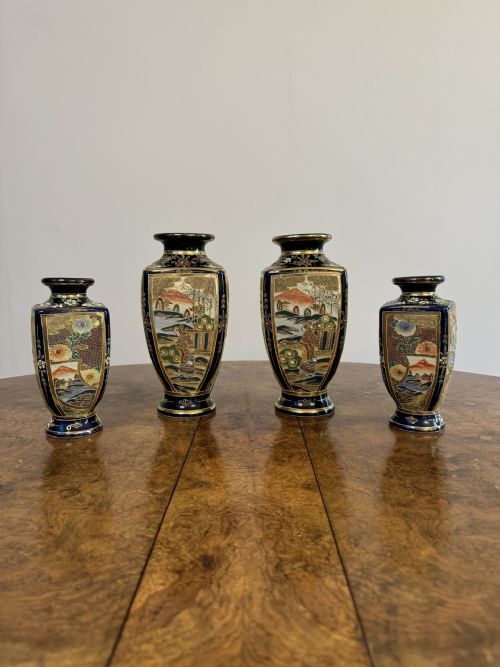
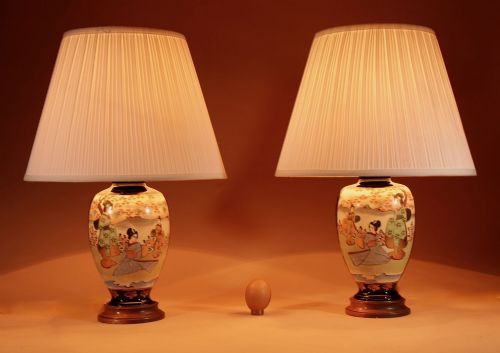
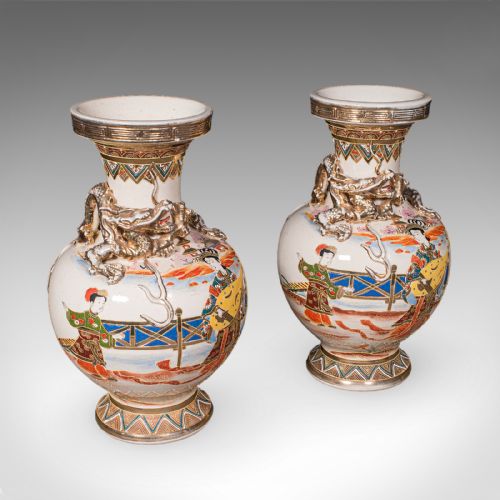
Japanese satsuma ceramics comprise earthenware pottery painted with detailed figural scenes, floral patterns, and landscape motifs. Buyers exploring japanese satsuma ceramics frequently encounter vases, decorative bowls, table lamps, and incense burners dating from the nineteenth century through the early twentieth century.
The objects span multiple historical divisions, including the Meiji, Taisho, and Showa periods. Vases, chargers, and okimono figures appear alongside smaller items such as tea caddies and decorative dishes, reflecting diverse output from regional kilns.
How They Were Made
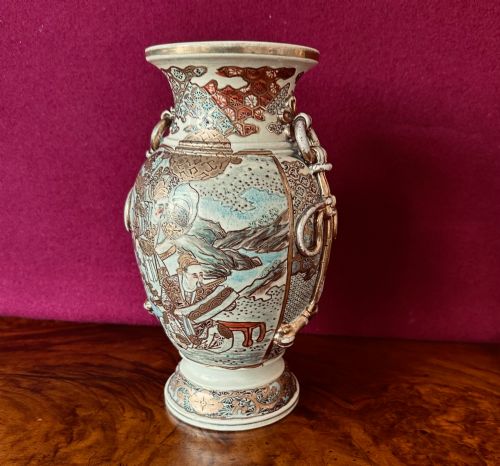
Potters shaped these pieces from earthenware bodies, applying a fine-crackle glaze that provided a textured base for subsequent painting. Artisans built up surface decoration utilising enamel pigments alongside gold leaf and gilt highlights.
Many items feature raised moriage details, creating tactile patterns of flowers, birds, and traditional figures across the ceramic surface.
Mandarin ducks and tiny butterflies frequently inhabit the painted landscapes, keeping watch over centuries of glaze.
What Varies in Quality
Execution of the painted detail divides standard output from superior examples, with master painters achieving exceptional precision in facial expressions and botanical motifs. The density and placement of gold leaf and enamel work also distinguish workshop standards.
Signature panels and maker attribution indicate notable Kyoto and Kobe workshops, where skilled decorators signed their completed vessels.
Koshida·Maruni Kobe·Shozan·Kizan·Kinkozan·Manpei·Kozan·Kinzan·Hotoda·Shizan·Toshozan·Makuzu Kozan II
The Japanese Satsuma Ceramics Glossary
- Earthenware
- Porous pottery fired at lower temperatures, forming the structural body beneath the glaze of these pieces.
- Moriage
- A decorative technique using piped clay to build up raised relief patterns on the ceramic surface before glazing and painting.
- Koro
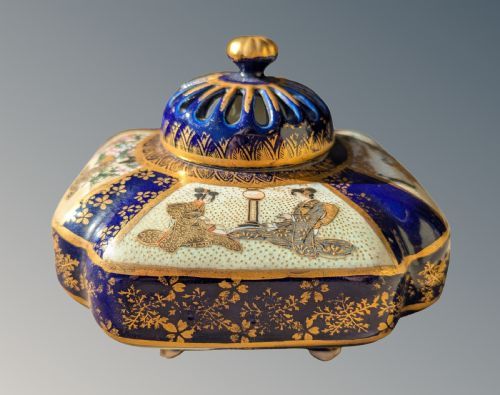
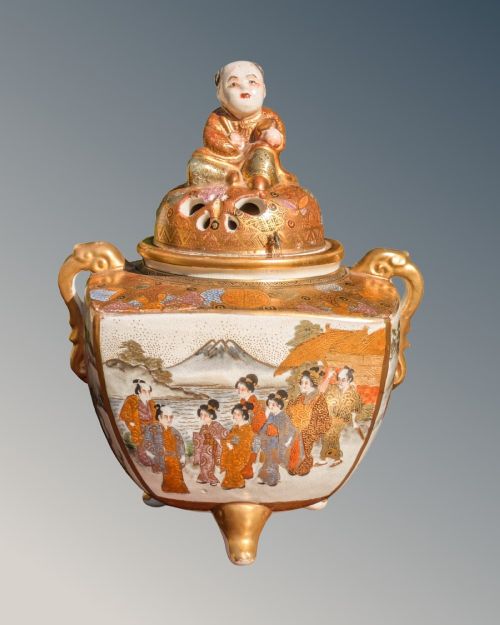
- A traditional incense burner featuring a pierced lid, often supported on small feet.
- Okimono
- A freestanding decorative figurine designed for display on a shelf or tokonoma alcove.
- Natsume
- A small tea caddy traditionally utilised in Japanese tea ceremonies.
Japanese Satsuma Ceramics: Frequently Asked Questions
What are Japanese satsuma ceramics?
These pieces are earthenware ceramics distinguished by cream-coloured, crackle-glazed surfaces painted with detailed enamel designs and gilding. They encompass vessels such as vases, bowls, and koro burners, alongside figural okimono.
Production spans the late nineteenth century into the early twentieth century, incorporating Meiji, Taisho, and Showa period aesthetics.
How do I identify a Meiji period piece?
Meiji period items typically display dense, intricate painting styles depicting figures, landscapes, or thousand butterfly motifs. Many pieces carry artist signatures or workshop marks on the base.
The use of fine gold leaf and elaborate moriage relief work also points toward this nineteenth-century manufacturing era.
How were these ceramics used originally?
Vessels and bowls served primarily as decorative display items within traditional interiors rather than for utilitarian dining purposes. Incense burners functioned during gatherings, while okimono figures decorated residential alcoves.
Later items, including table lamps, adapted traditional ceramic bodies for domestic lighting.
How should I display them at home?
Place vases and chargers on stable surfaces where adequate lighting illuminates the enamel and gold leaf details. Avoid placing earthenware pieces in areas prone to dampness or direct, harsh sunlight.
Table lamps integrate the ceramics into functional living spaces while preserving the painted decoration.