




Japanese Relief Bronze Vase
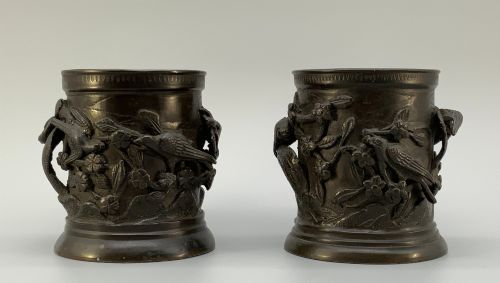
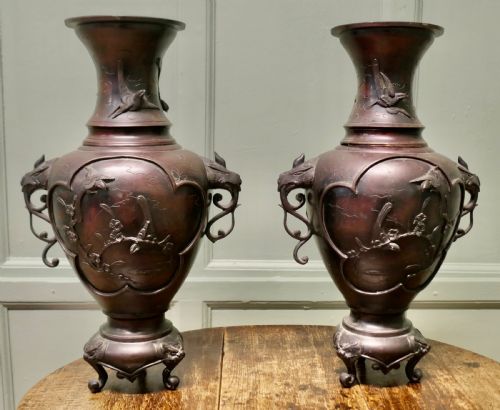
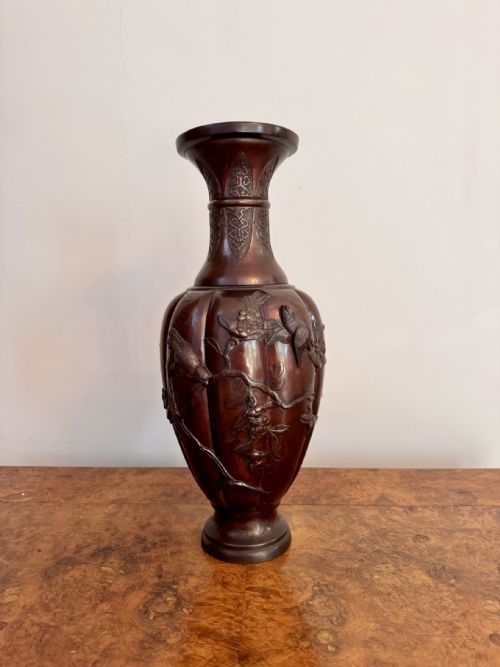
A Japanese relief bronze vase brings sculptural birds, dragons and floral branches into focus through dark patinated metal.
Japanese Relief Bronze Vase
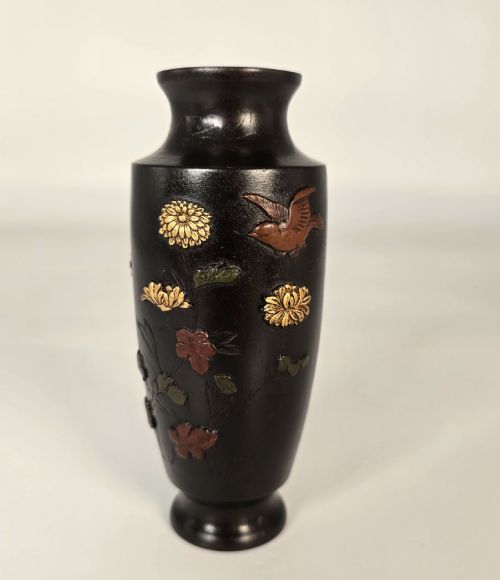
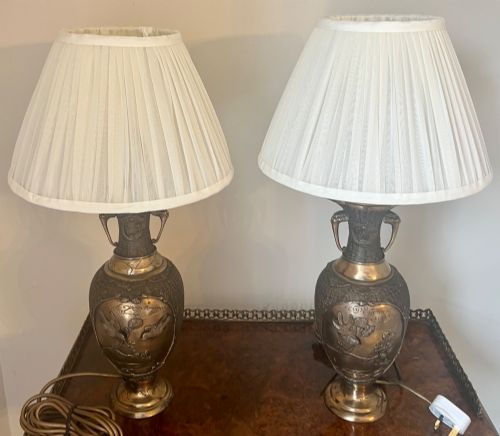
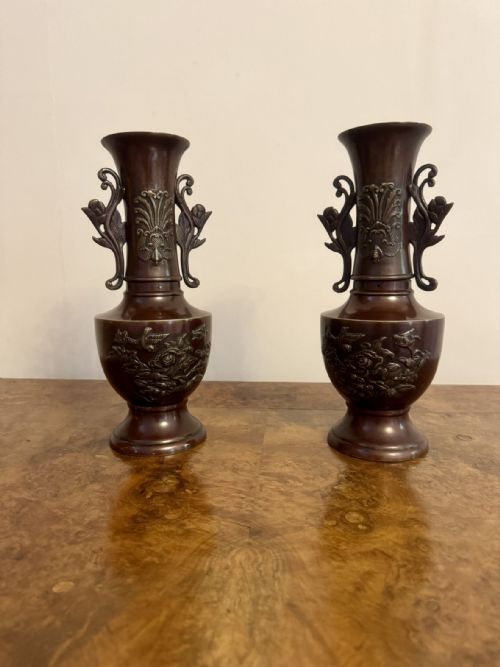
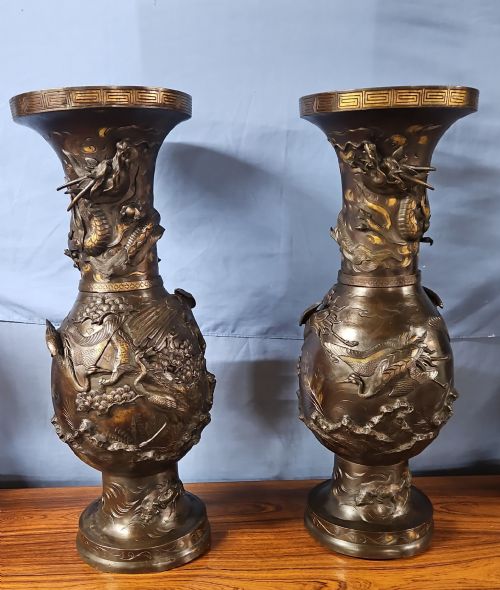
A Japanese relief bronze vase combines cast metal forms with raised surface decoration depicting birds, blossoms, dragons and floral bouquets. These vessels originate primarily from the Meiji period, spanning the late nineteenth and early twentieth centuries, and appear singly or in matched pairs.
Forms on this page range from small stem vases and baluster urns to large decorative table lamps and jardinieres. Buyers meet diverse silhouettes including twin-handled vessels and elephant-themed designs rooted in nineteenth-century Japanese metalwork.
How they were made
Metalworkers utilised bronze, patinated bronze, copper and brass, often combining mixed metals with gold inlay, enamel and gold details. Raised relief elements were cast directly or applied to the body before applying dark chemical patination to accentuate the surface texture.
Makers shaped baluster urns and posy vases through casting and finishing techniques, sometimes incorporating fabric or converting tall vessels into table lamps during subsequent periods.
Listings feature bronze, copper, brass and mixed metal materials across the nineteenth century and the Meiji period.
What varies in quality
The distinction between standard vessels and the finest examples lies in the crispness of the raised relief and the depth of the patination. Master metalworkers achieved intricate detail in bird feathers, dragon scales and botanical motifs that remain sharp across the surface.
Proportion and scale also separate utilitarian items from ambitious cabinet pieces and heavy pairs. Heavier metal gauge and controlled mixed-metal applications indicate higher workshop ambition.
The Japanese Relief Bronze Vase Glossary
- Meiji Period
- The era in Japanese history lasting from 1868 to 1912, associated with skilled metal casting and decorative arts exported to the West. This period produced the vast majority of bronze vases found on this page.
- Patinated Bronze
- Bronze treated with chemical solutions to produce a controlled surface colour, usually dark brown or black. This finish highlights the raised relief details.
- Mixed Metal
- The technique of combining different metallic alloys, such as copper, brass and bronze, within a single design. Artisans utilised this method to create contrasting colours in floral and animal motifs.
- Baluster Urn
- A vase form featuring a rounded body tapering to a narrow neck and standing on a flared foot. Many nineteenth-century Japanese bronze vessels follow this traditional silhouette.
- Jardiniere
- A large decorative pot designed to hold plants or floral arrangements rather than cut stems in water. These heavy bronze pieces often feature matching relief work.
Japanese Relief Bronze Vase: Frequently Asked Questions
How do I identify a Meiji period vase?
Look for characteristic nineteenth-century stylistic markers such as raised bird and blossom motifs, dark patinated bronze surfaces and occasional artist signatures.
Many pieces also align with Victorian import trends in Britain, reflecting the period's enthusiasm for Japanese decorative metalwork.
Were these vases made as pairs?
Metalworkers produced numerous Japanese bronze vessels in matched pairs for mantelpieces and display cabinets, though single vases also appear.
Pairs often share identical relief scenes of dragons, birds or floral bouquets cast from the same workshop models.
Can I use these vases for water?
Most antique bronze and mixed metal vessels serve primarily as decorative objects or dry flower holders rather than watertight vases.
Inserting a small glass or metal liner protects the historical interior from moisture and mineral deposits.
How should I clean a bronze vase?
Dust the surface gently with a soft, dry cloth to preserve the original patinated finish and inlaid metal details.
Avoid commercial metal polishes or water, which can strip away the historical patination built up over the centuries.