



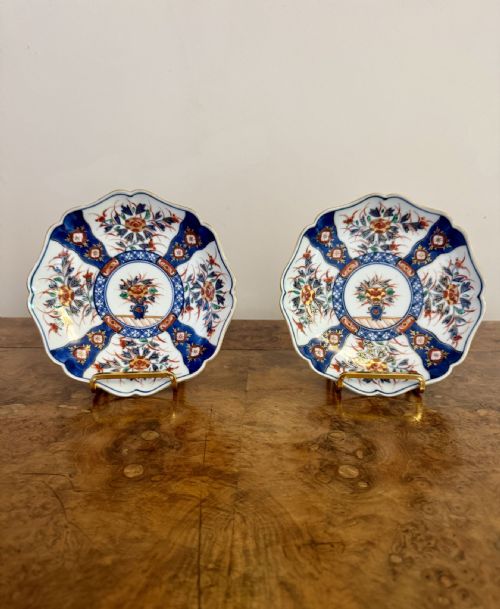
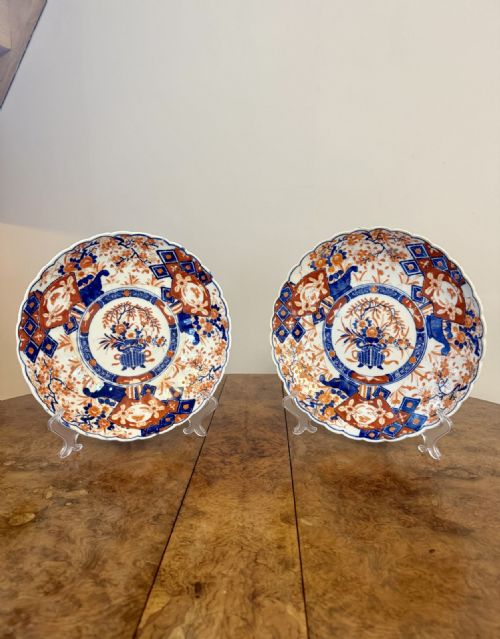
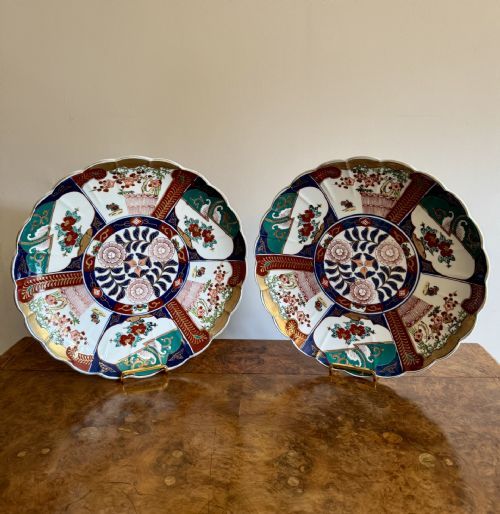
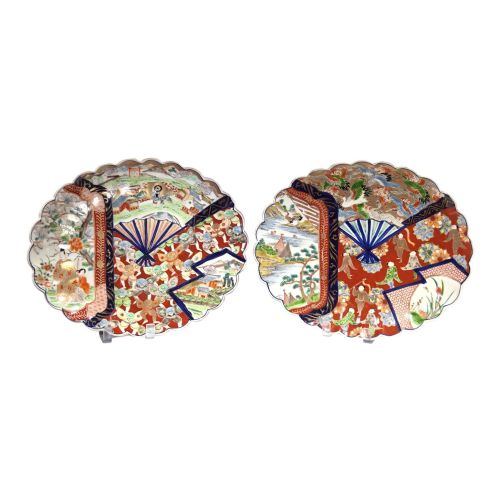
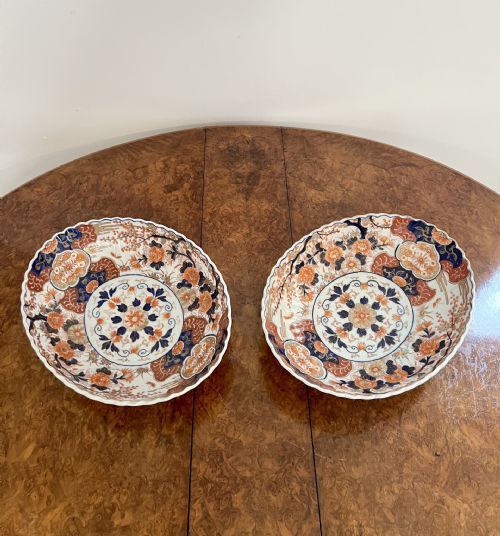


Japanese Porcelain Charger Pair
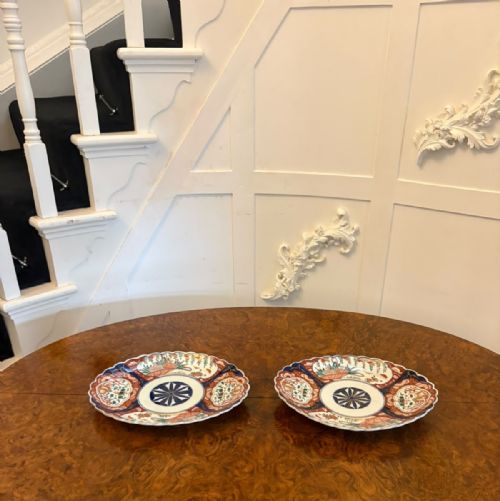
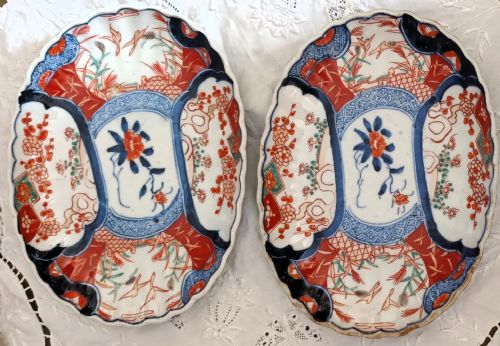
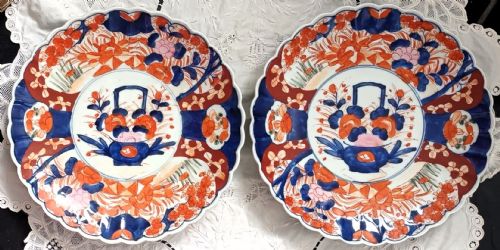
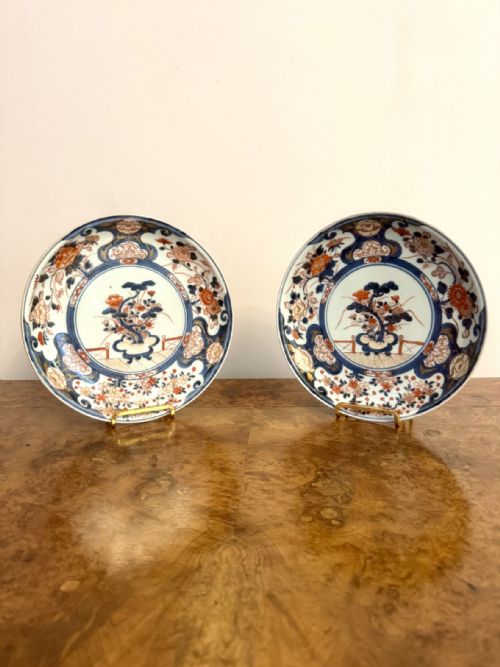
A Japanese porcelain charger pair brings together two matching large-scale ceramic display pieces decorated in traditional styles.
Japanese Porcelain Charger Pair
A japanese porcelain charger pair consists of two matching large display plates created primarily during the nineteenth century and the Meiji period. These substantial ceramic pieces range from deep blue and white Arita designs to richly coloured Imari and Kutani patterns intended for prominent wall display or table placement.
Most examples encountered on this page date from around eighteen eighty to nineteen hundred, reflecting intense export production during the late Victorian era. Buyers frequently find scalloped edges, round or oval formats, and intricate motifs depicting birds, figures, or the Seven Lucky Gods.
Origins trace directly to Japanese kilns, though occasional European interpretations such as Mintons factory pieces appear alongside traditional wares. The forms vary from shallow plates to deep chargers and large decorative bowls supplied as matched sets.
How they were made
Makers utilised high-fired porcelain shaped into large plates and chargers, then applied cobalt pigment beneath the glaze for deep blue designs. Enamel glaze colours and gold leaf accents were frequently added over the glaze during subsequent kiln firings.
Specialised techniques include Totai Shippo, combining porcelain bases with cloisonne enamel work resembling tree bark. Artisans executed hand-painted compositions combining rich gilding with distinct iron-red and cobalt pigments.
Listings feature porcelain pieces spanning from the eighteenth century to the early twentieth century, with a strong concentration of Meiji period Imari plates.
What varies in quality
Quality rests upon the precision and complexity of the hand-painted brushwork applied to the porcelain surface. Finer examples display crisp detail in the cobalt pigment and abundant, well-preserved gold leaf gilding rather than hurried or faded decoration.
The crispness of moulded elements such as scalloped rims and the uniformity of the matched pair separate standard export production from superior artistic output.
Fukagawa·Mintons
The Japanese Porcelain Charger Pair Glossary
- Imari
- A traditional Japanese style of porcelain decoration characterised by a palette of cobalt blue, iron-red, and gold. These pieces were exported in large quantities to Europe during the Edo and Meiji periods.
- Charger
- A large decorative plate traditionally used for ceremonial presentation or wall display rather than everyday dining. Their substantial diameter allows for expansive painted scenes.
- Meiji Period
- The historical Japanese era spanning from eighteen sixty-eight to nineteen twelve, marked by extensive international trade and high volumes of export ceramics. Work from this time often shows great technical confidence.
- Arita
- The Japanese town and surrounding region famous as the cradle of Japanese porcelain production. Kilns here produced the cobalt blue and white wares favoured for export.
- Gilding
- The application of gold leaf or powdered gold to the surface of the porcelain for decorative enrichment. Higher quality pieces retain rich, unrubbed gold highlights.
Japanese Porcelain Charger Pair: Frequently Asked Questions
How were these chargers displayed?
These large ceramic pieces were commonly hung on walls or set upon heavy stands to showcase their detailed painted surfaces.
Their substantial size made them focal points in Victorian reception rooms and drawing spaces.
What is the difference between Imari and Kutani?
Imari wares typically combine underglaze cobalt blue with iron-red and gold enamels in dense geometric and floral layouts.
Kutani pieces often focus on pictorial scenes, such as birds or figures, executed in a distinct palette of greens, reds, and golds.
Are matched pairs rare?
Finding two identical large chargers that survived together in equal condition is less common than finding single plates.
Export records show many were shipped in sets, but household use over a century often separated them.
How do I care for antique porcelain?
Dust the surface gently with a soft dry cloth and avoid harsh chemical cleaners that might damage the overglaze enamels.
Keep them away from direct sunlight to preserve the vibrant iron-red pigments and gold leaf details.