


Japanese Oriental Pottery
These pieces of japanese oriental pottery bring together centuries of ceramic tradition, offering striking decorative presence for any room through detailed hand-painting and form.
Japanese Oriental Pottery
When you examine japanese oriental pottery, you encounter a diverse selection of ceramics spanning the nineteenth and early twentieth centuries, including the late Victorian and Edwardian eras. The objects on this page primarily consist of decorative vases, bowls, plates, figures, and table lamps originating from distinct regional traditions.
Materials and methods
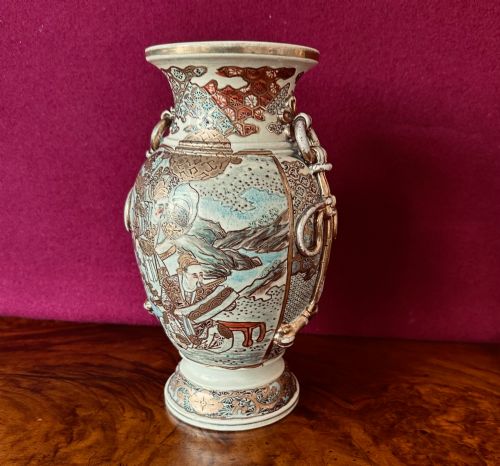
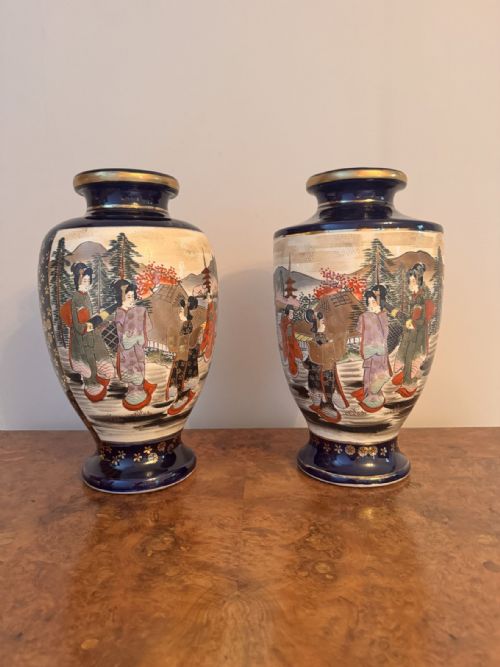
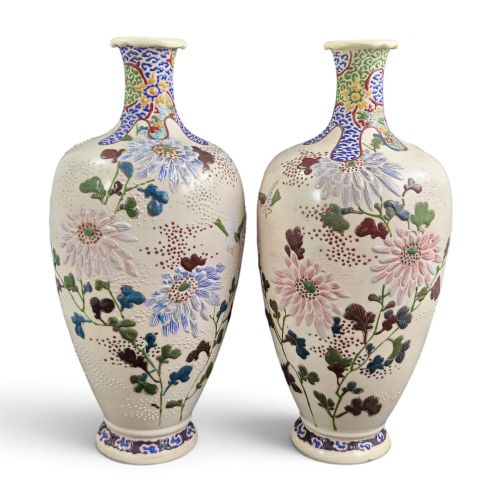
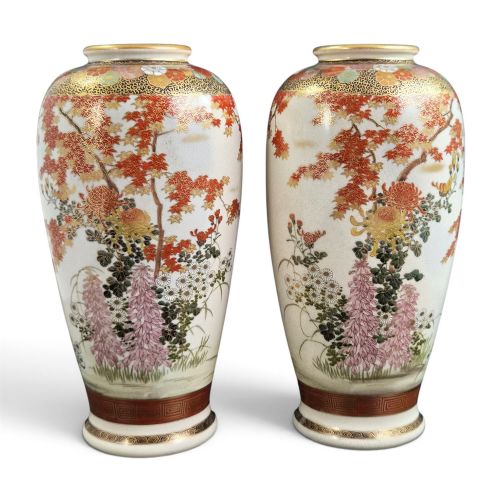
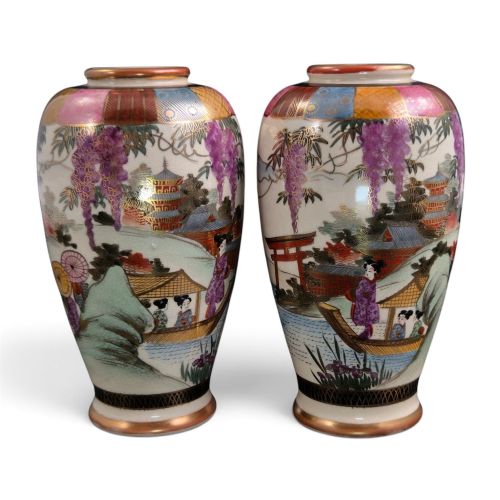
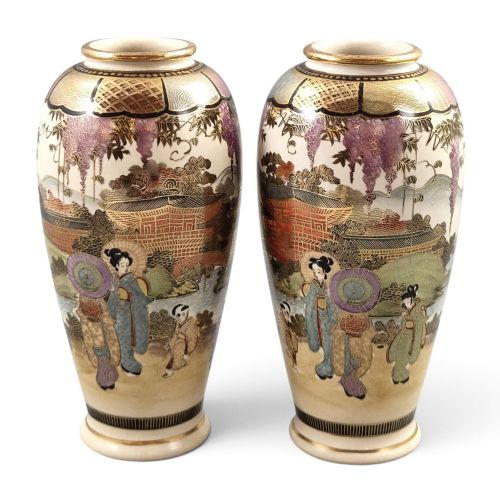
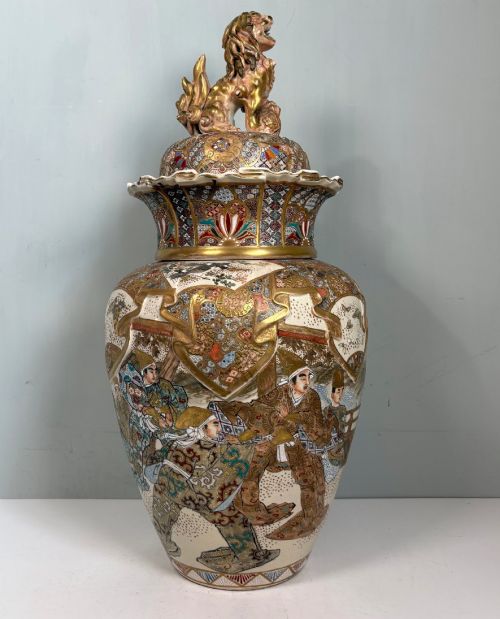
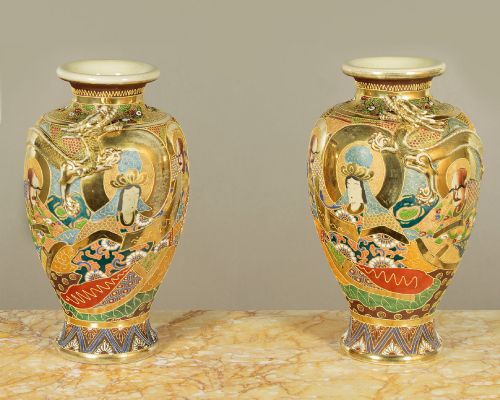
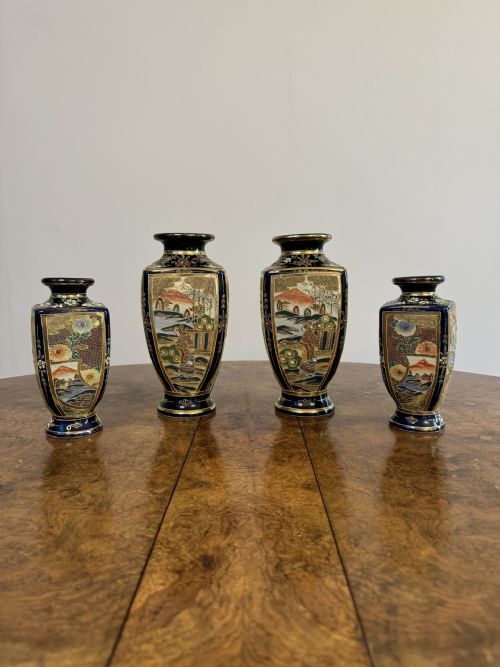
Potters shaped these ceramics from earthenware, terracotta, and porcelain, applying rich glazes and enamel colours across the surface. Many Satsuma works incorporate delicate gold leaf detailing over finely crackled cream-coloured earthenware bodies.
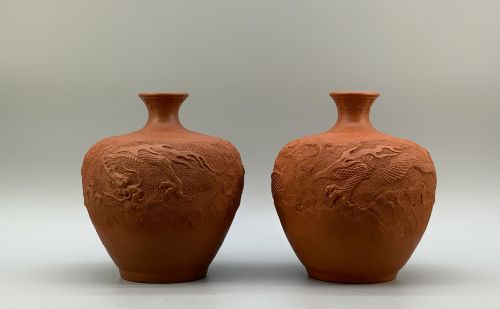
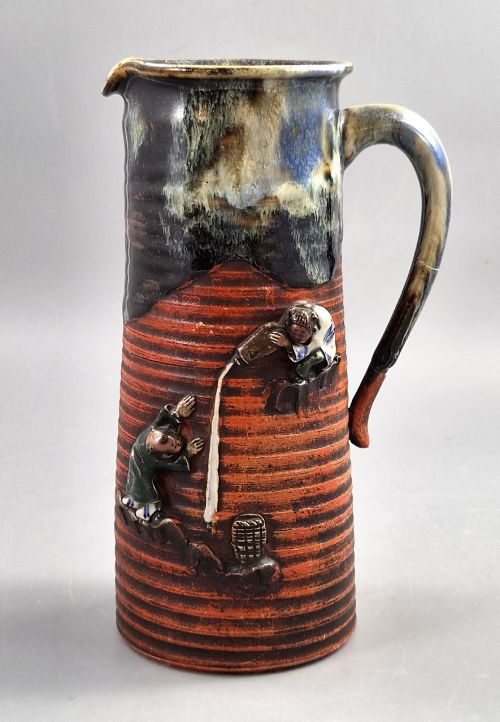
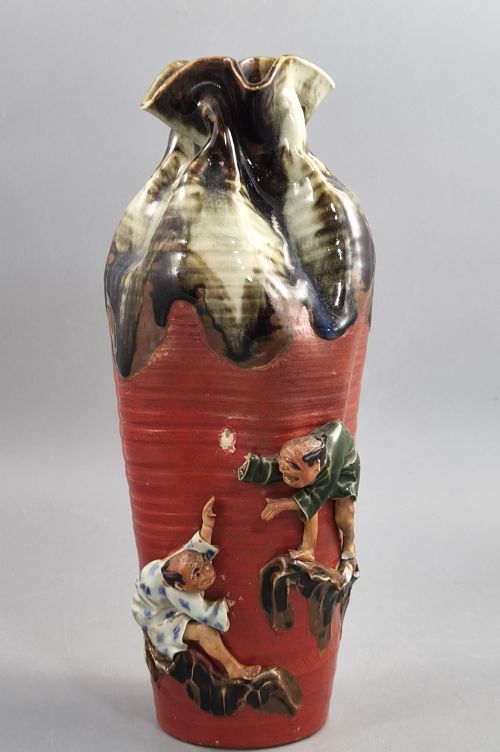
Sumida Gawa pieces utilise distinctive flambe glazes and applied sculptural figures climbing the vessel walls. Tokoname items employ red clay, whereas Imari porcelain relies on cobalt blue underglazes combined with iron red and gilt overglazes.
The listings span earthenware, terracotta, and porcelain, incorporating traditional enamel, gold leaf, and vibrant flambe glazes across multiple forms.
Judgement of quality
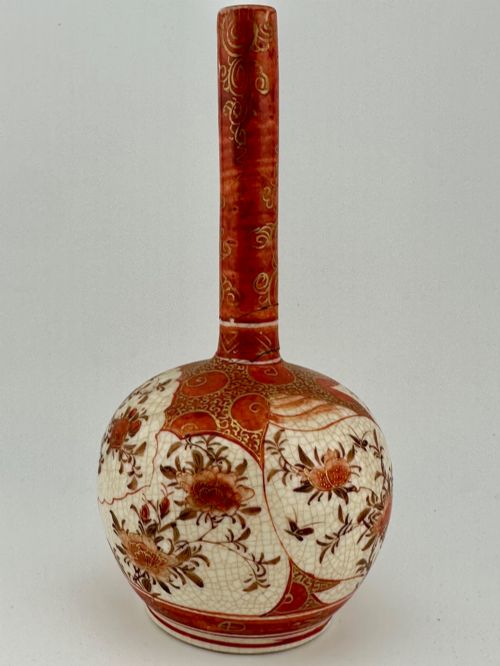
Quality rests upon the precision of the brushwork and the clarity of the modelled figures in relief. The finest Satsuma and Kutani examples display minute facial expressions and controlled gilding rather than rushed or heavy-handed decoration.
Signatures from recognised workshops and makers, such as Kinkozan or Inoue Ryosai, elevate an object's standing. Additionally, the crispness of the moulded clay and the stability of the glaze application distinguish superior pieces from standard production.
Koshida·Maruni Kobe·Shozan·Inoue Ryosai·Ban-ni·Manpei·Kozan
The Japanese Oriental Pottery Glossary
- Satsuma
- Earthenware pottery originating from Satsuma province, typically characterised by a warm ivory crackle glaze and elaborate enamel painting enriched with gold.
- Imari
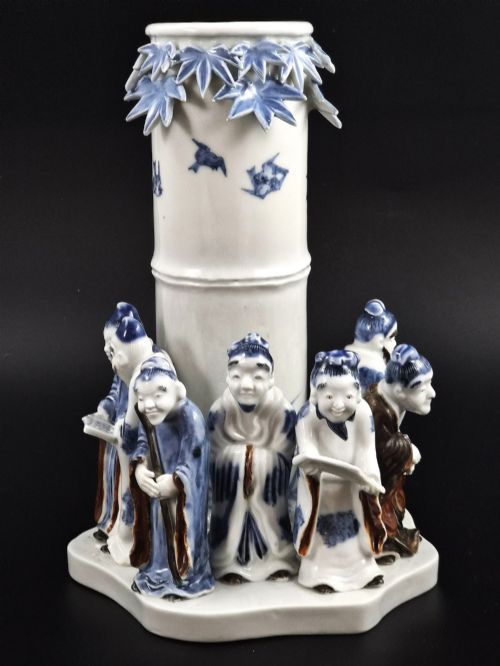
- A style of Japanese porcelain featuring a tripartite palette of cobalt blue, iron red, and gilt, often displaying floral and bird designs.
- Kutani
- Japanese ceramic ware known for its vibrant colour palette, frequently dominated by greens, blues, yellows, and purples depicting figures or natural scenes.
- Sumida Gawa
- A style of Tokyo pottery featuring heavily textured or flambe glazes accompanied by distinct sculptural figures modelled in high relief.
- Okimono
- A small Japanese decorative figurine designed for display on a shelf or tokonoma alcove rather than practical use.
- Koro
- A traditional Japanese incense burner, usually supported on three feet and fitted with a pierced decorative cover.
Japanese Oriental Pottery: Frequently Asked Questions
How do I identify Satsuma pottery?
Satsuma pottery is recognised by its distinctive cream or ivory earthenware body covered in a fine network of transparent crackle glaze. Overglaze enamel colours and raised gold leaf are traditionally applied to depict figures, landscapes, and floral patterns.
Many pieces bear artist signatures or workshop seals on the underside, pointing to specific Kyoto or regional production centres active during the Meiji period.
What is Sumida Gawa pottery?
Sumida Gawa ware originates from the banks of the Sumida River in Tokyo, dating principally to the late Meiji and Taisho eras. These pieces are easily distinguished by their colourful flambe glazes and tactile, unglazed sculptural figures climbing across the vessel.
The dynamic, three-dimensional elements give these pitchers, vases, and bowls a distinct narrative quality that sets them apart from flat-painted ceramics.
How should I display these lamps?
Antique Japanese vases transformed into table lamps work well on sideboards or console tables where their painted decoration can be appreciated close up. Pairing them with understated shades allows the intricate Satsuma or Imari patterns to remain the visual focus of the room.
Ensure placement avoids direct, prolonged sunlight to protect the integrity of the enamel colours and gold leaf over time.