


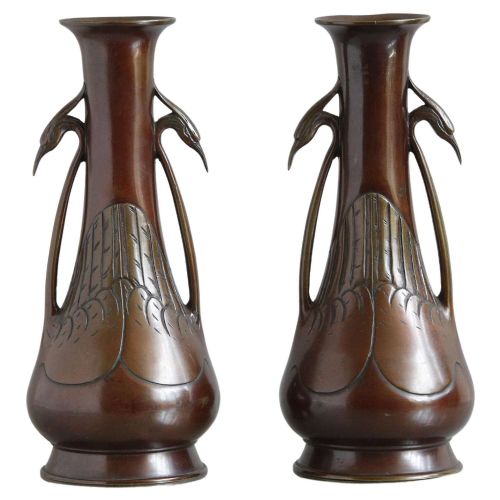


Japanese Metalwork Bird
These japanese metalwork bird pieces bring together bronze casting and enamel work from the Meiji and Edo periods.
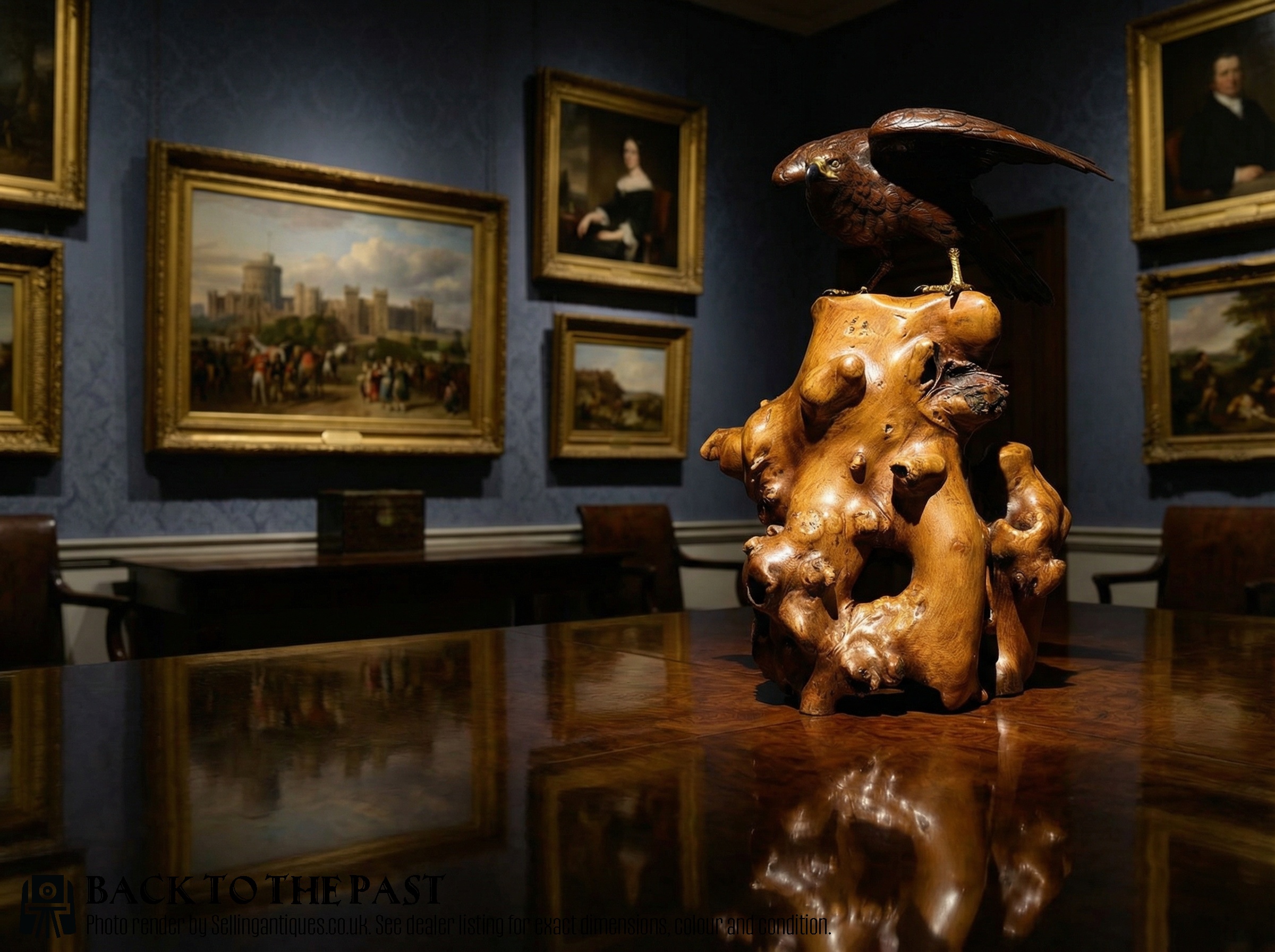
Japanese Metalwork Bird
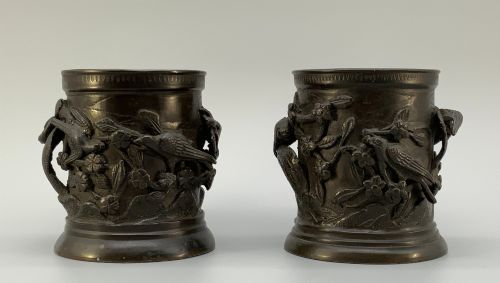
When you search for japanese metalwork bird pieces, you encounter vases, chargers, plates, and sculptural okimono featuring avian subjects. The selection on this page centres on items originating from the Meiji and Edo periods, alongside later nineteenth and early twentieth-century examples.
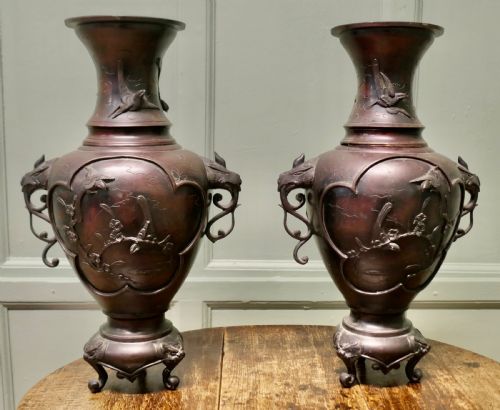
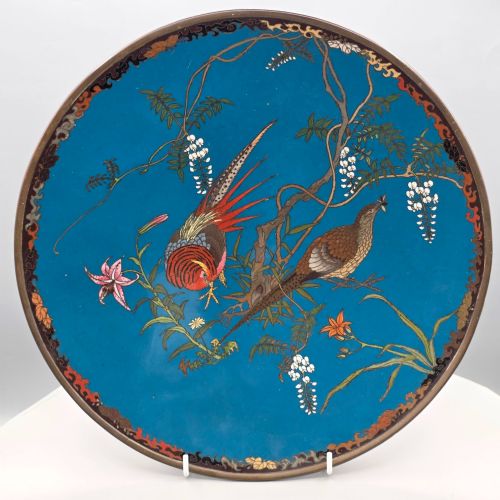
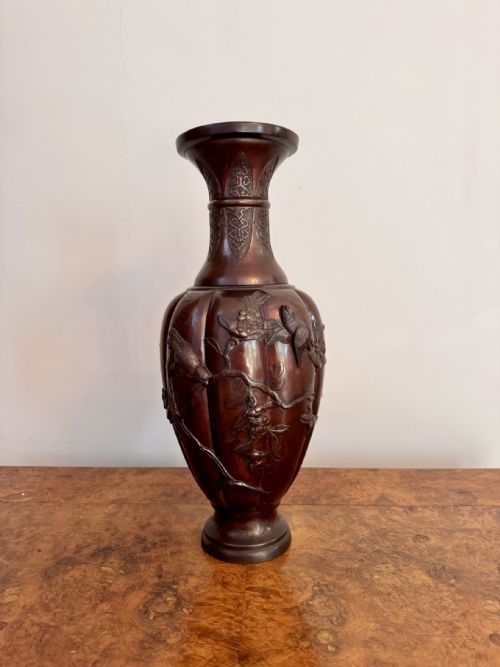
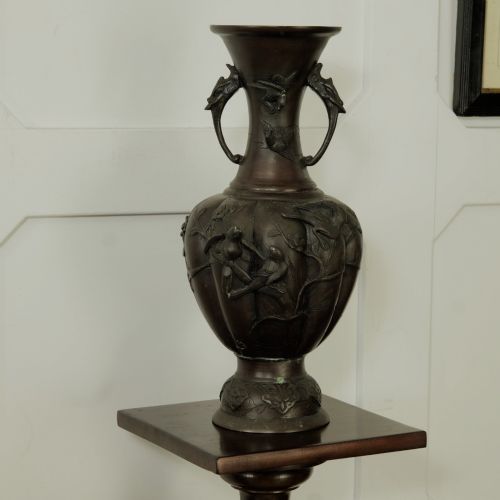
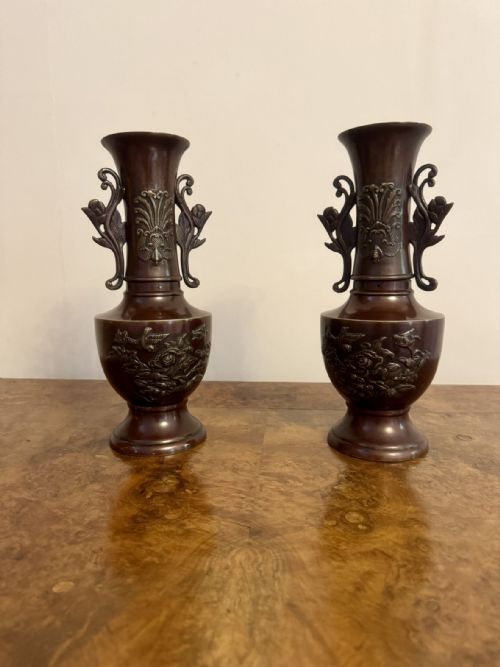
Vases and urns frequently display birds and blossom, eagles, hawks, or egrets integrated into handles and raised relief. Chargers and bowls present detailed cloisonne enamel depictions of phoenixes, owls, ibis, and smaller birds set against landscapes.
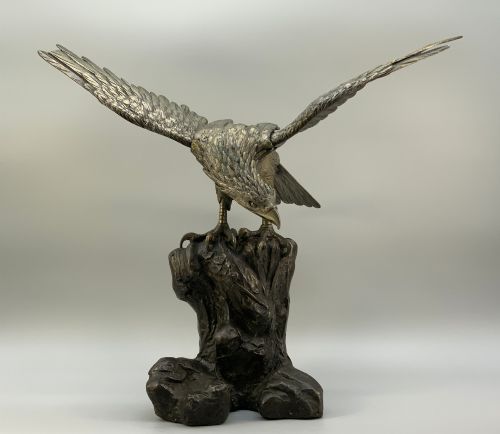
Sculptural works take the form of lifesize geese and eagles mounted on root wood bases. These objects represent the metalworking and enamelling traditions of Japanese artisans working across several decades.
How they were made
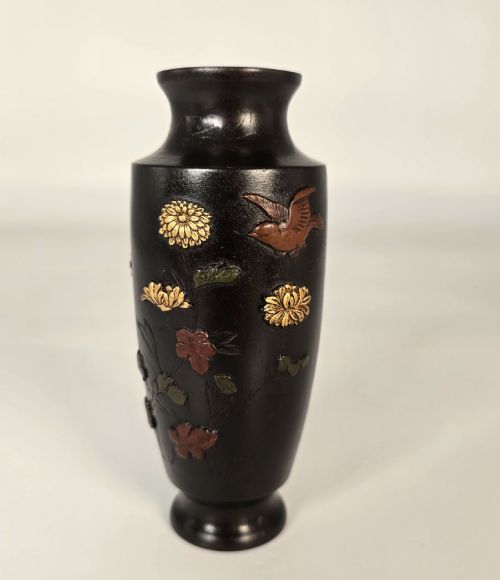
Makers utilised bronze, copper, and brass as the foundation for cast vessels and sculptural okimono. Mixed metal techniques incorporated gold inlay and patinated surfaces to create contrast within the feather details and floral motifs.
Cloisonne enamel pieces relied on silver or base metal wire to outline birds such as the ho-o bird or phoenix on plates and chargers. Coloured enamels filled the cellular compartments before firing, while ginbari techniques introduced translucent red enamel over textured foils.
Materials recorded across the inventory include bronze, brass, copper, silver, and cloisonne enamel.
What varies in quality
The refinement of the casting and the crispness of the raised detail distinguish different pieces within this range. Sculptural forms such as eagles and hawks achieve greater presence when feather textures and talzers are rendered with anatomical precision.
In enamel work, the fineness of the wirework and the control over colour gradients determine the success of the composition. Signed works by established makers demonstrate superior command over the complex firing and polishing stages.
Ando Jubei·Gyoko
The Japanese Metalwork Bird Glossary
- Okimono
- A Japanese ornamental sculpture designed for display on a shelf or in a tokonoma alcove. These freestanding figures often depict birds of prey and waterfowl.
- Cloisonne
- An enamelling technique where flat metal wires are soldered to a metal base to form compartments for coloured paste. The piece is then fired and polished smooth.
- Charger
- A large decorative plate intended for display rather than dining. These items often feature elaborate enamel or mixed metal bird motifs across the surface.
- Meiji Period
- The era of Japanese history spanning from 1868 to 1912, characterised by openness to international trade and exceptional decorative metalwork production.
- Ginbari
- A technique involving textured foil applied beneath translucent enamel to create a patterned background effect. This method is frequently paired with fine silver wirework.
Japanese Metalwork Bird: Frequently Asked Questions
What is a japanese metalwork bird?
These items comprise bronze sculptures, vases, and cloisonne chargers depicting avian subjects like eagles, phoenixes, and herons. Artisans created them using traditional metal casting and enamelling methods.
They reflect the decorative arts of nineteenth and early twentieth-century Japan, particularly the Meiji period. Collectors value them for their intricate surface decoration and sculptural form.
How were these metal vessels used?
Vases and urns served as ornamental containers for floral arrangements or as standalone display objects in domestic interiors. Chargers and plates were exhibited on stands or walls to showcase pictorial designs.
Larger okimono figures of geese and eagles functioned as sculptural room ornaments. They were designed to bring representations of nature into the home through metalwork.
How do I identify the Meiji period?
The Meiji period spans from 1868 to 1912, aligning with increased Western interest in Japanese craftsmanship. Pieces from this era often bear signature plaques or marks associated with prominent workshops.
Stylistically, they combine traditional motifs like ho-o birds and blossom with advanced patination and cloisonne techniques. The presence of mixed metal inlay is also typical of this time.
How should I display cloisonne chargers?
Chargers are best placed on sturdy plate stands that support their weight securely on a flat surface. This allows the detailed enamel work depicting birds and landscapes to be viewed directly.
Keep them away from direct sunlight to protect the coloured enamels from fading over time. Gentle dusting with a soft cloth maintains the polished surface.