
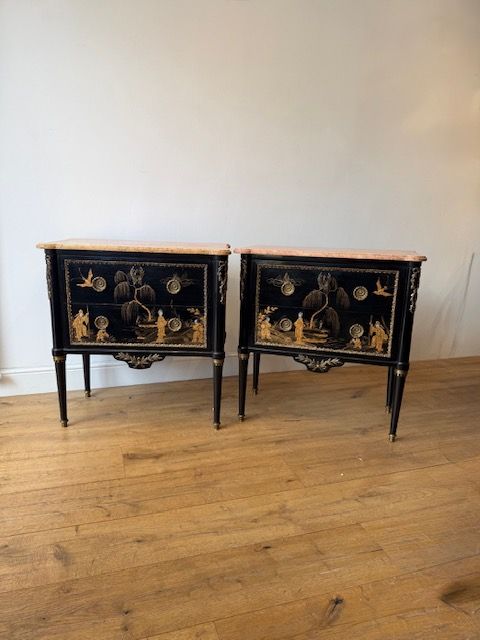


Japanese Lacquered Table
A japanese lacquered table brings deep gloss, gold leaf, and rich historic detail into a room.
Japanese Lacquered Table
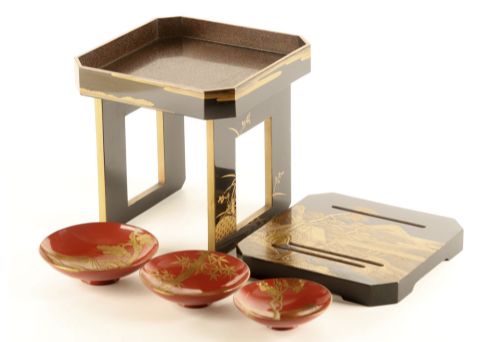
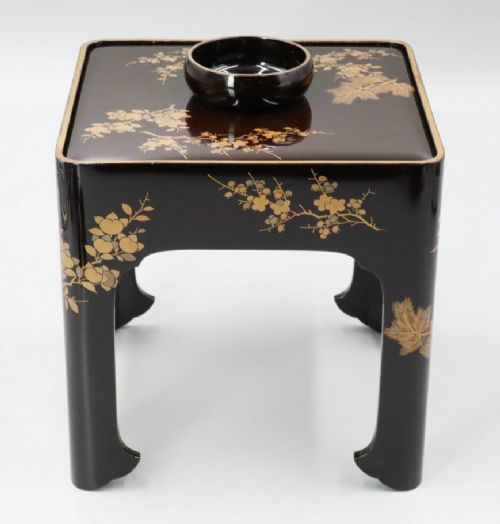
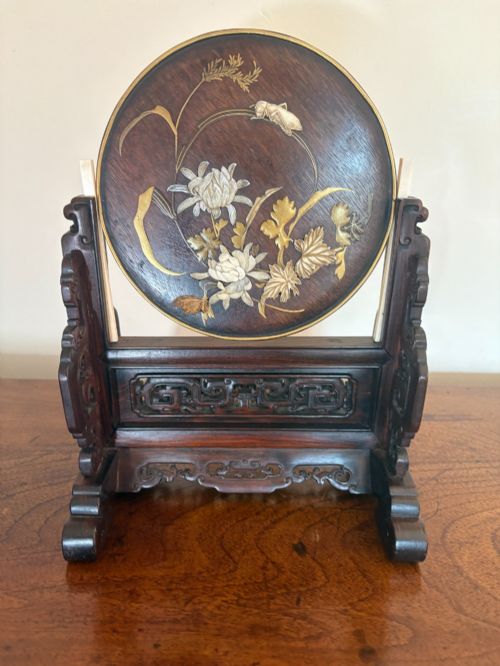
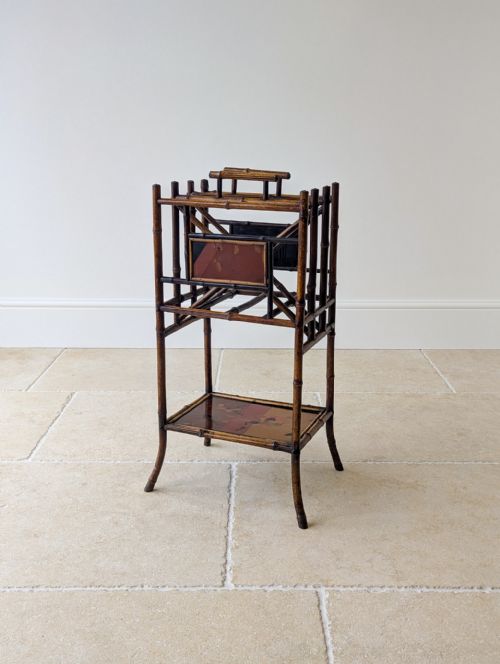
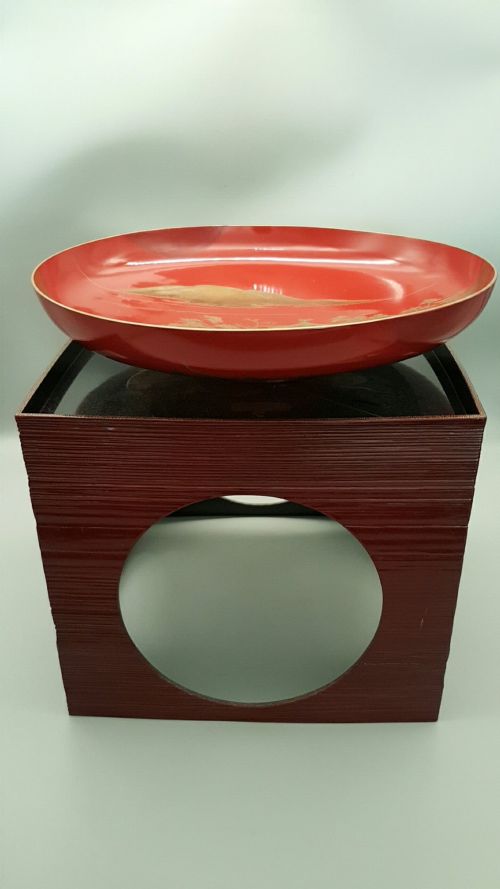
A japanese lacquered table encompasses low tea tables, nests of occasional tables, and side tables originating from the Meiji period up through the early twentieth century. Buyers encounter surfaces finished in black, red, or gilt lacquer, often paired with bamboo, hardwood, or elm frames. These forms include low chabudai tea tables and stacking tables designed for functional daily use.
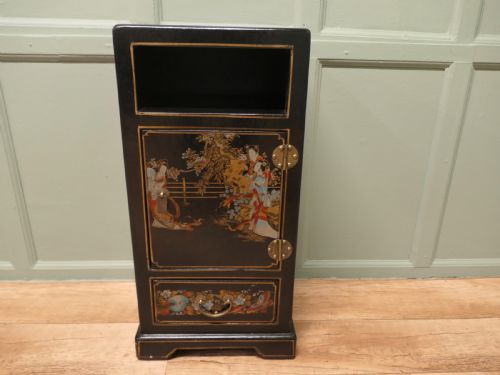
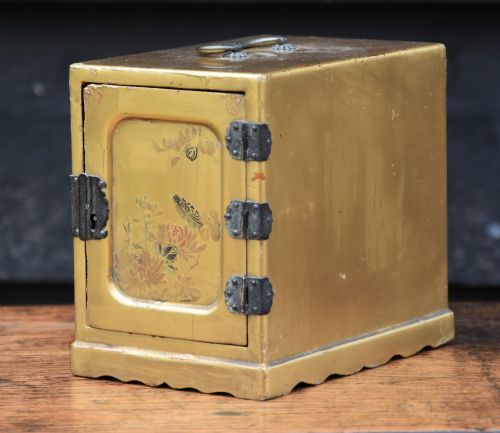
Alongside tables, the selection includes related lacquered furnishings like table cabinets, kodansu jewellery boxes, and display stands from Victorian and Edwardian periods. Pieces range from traditional Japanese craftsmanship to British interpretations in the Chinoiserie and Aesthetic Movement styles. The variety spans compact side stands to multi-tiered occasional tables.
What varies in quality
The degree of detail in the hand-painted gold leaf, raised relief work, and bone inlay marks the difference between standard production and exceptional examples. Crispness in the carving of cinnabar and the depth of the lacquer finish distinguish finer pieces.
Structural integrity of the underlying wood, elm, or bamboo frame influences overall desirability. Well-preserved lacquer surfaces retain their original sheen and depth without extensive modern intervention.
Listings feature items spanning the Meiji period, Victorian era, Edwardian period, and 1930s, utilising lacquer, bamboo, brass, and gold leaf.
The Japanese Lacquered Table Glossary
- Lacquer
- A durable glossy finish derived from tree sap, applied in multiple layers to wood surfaces. It provides a hard, smooth protective coating that accepts gold leaf and painting.
- Chinoiserie
- European artistic style reflecting Chinese and Japanese aesthetic influences, popular during the Victorian and Edwardian periods. It appears on lacquered tables, cabinets, and clocks.
- Meiji Period
- The era of Japanese history lasting from 1868 to 1912, characterised by opening trade with the West. Many decorative export tables and cabinets date from this time.
- Kodansu
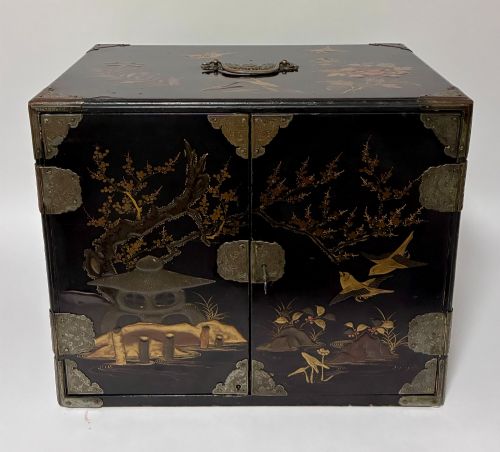
- A small Japanese tabletop cabinet with multiple drawers and compartments. These portable pieces feature fine lacquer work and metal fittings.
- Chabudai
- A traditional short-legged Japanese table used for partaking in tea or meals while kneeling on tatami mats. Examples often employ elm or lacquered wood.
Japanese Lacquered Table: Frequently Asked Questions
How were low tea tables used?
A chabudai table served as a low surface for dining and drinking tea while kneeling on the floor.
These pieces were easily moved or stored when not required for meals.
What is a table cabinet?
Kodansu and table cabinets provided compact storage for documents, letters, or small valuables on top of a desk.
They feature internal drawers enclosed by doors and display intricate lacquer decoration.
How do I spot Meiji period work?
Meiji pieces date between 1868 and 1912, reflecting traditional Japanese motifs intended for both domestic use and export.
They often combine deep black lacquer with gold leaf painting and delicate brass hardware.
What is Aesthetic Movement furniture?
Aesthetic Movement pieces from the late nineteenth century embraced Asian design inspirations and natural materials like bamboo.
These tables focus on artistic presentation and decorative harmony within Victorian interiors.