
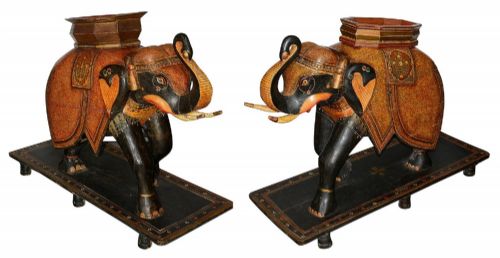
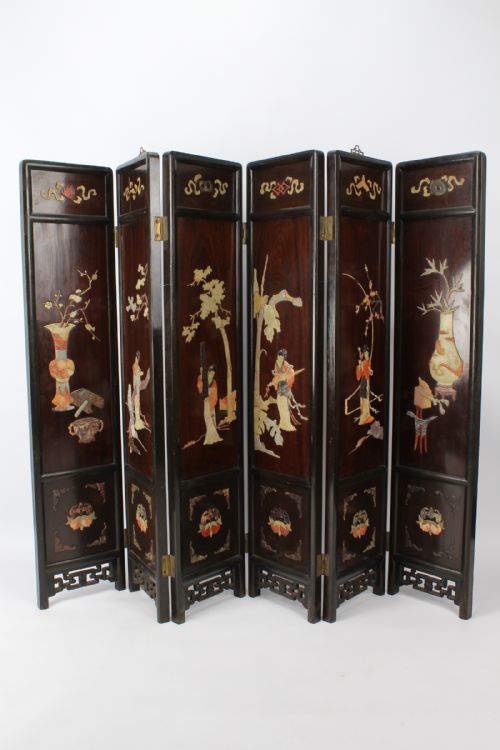


Carved Lacquer Table
When you handle a carved lacquer table, you notice how the layered surface creates depth that flat paint simply cannot match.
Carved Lacquer Table
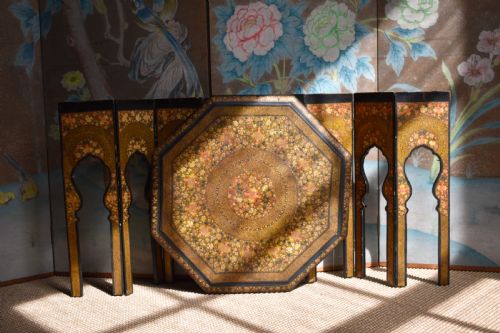
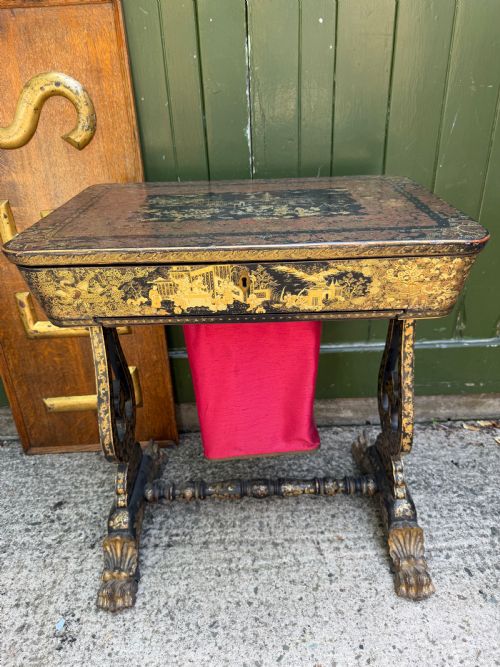
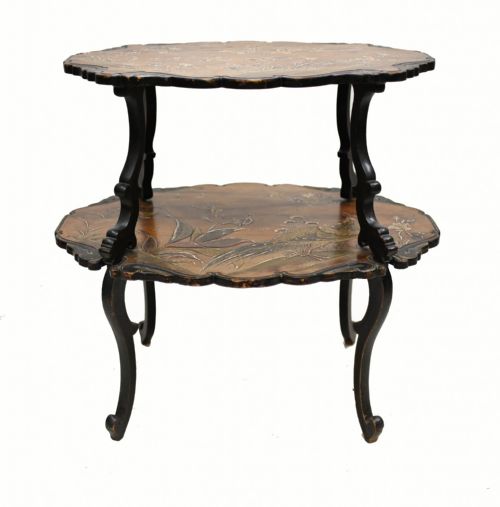
A carved lacquer table combines structural woodwork with built-up resin surfaces, taking forms such as low occasional pieces, side tables, and console tables. These surfaces emerge from diverse traditions, spanning Chinese Qing Dynasty pieces, Japanese Meiji and Taisho examples, and Kashmiri works.
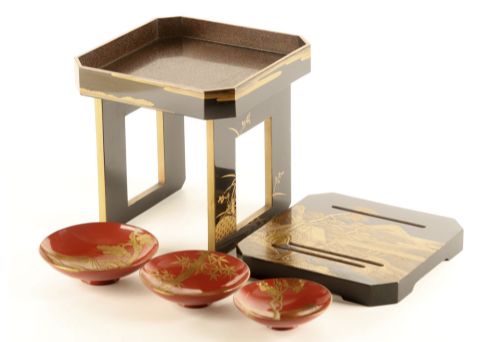
The objects seen here range from altar tables and demi-lune forms to coffee tables and plant stands. You will frequently encounter red and black lacquer finishes, often enriched with gilt, paint, or soapstone relief panels.
How they were made
Craftsmen built these tables using supportive timbers like hardwood, elm, and walnut, providing a stable core for the delicate surface treatments. Upon this wooden structure, multiple layers of sap-based lacquer were applied, dried, and painstakingly carved to reveal intricate motifs.
Detailing often involved supplementary materials such as brass, bone inlay, gold leaf, and quartz. Some pieces incorporate painted pigments or raised relief elements embedded directly into the lacquered ground.
Listings feature woods such as elm, walnut, and hardwood, paired with brass fittings, gold leaf, and painted finishes.
What varies in quality
The depth and crispness of the carved relief separate standard surfaces from superior examples. Master carvers achieved clean, undercut edges that catch the light, whereas lesser work appears shallow and rounded.
The integrity of the underlying timber and the stability of the lacquer layers dictate longevity. Superior pieces display smooth, uncracked resin coats that have adhered securely to the hardwood or elm beneath without extensive modern intervention.
The Carved Lacquer Table Glossary
- Lacquer
- A durable natural resin applied in numerous coats to wood and polished or carved. It forms a hard, lustrous protective layer that resists moisture.
- Cinnabar
- A bright red mineral form of mercuric sulphide traditionally used to pigment high-grade carved lacquer. It creates the characteristic heavy red surface found on altar tables.
- Altar table
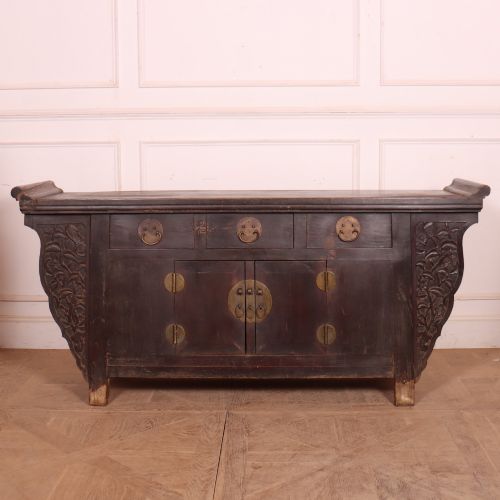
- A traditional Chinese form featuring an elongated rectangular top with upturned ends, originally used for ceremonial purposes. Today, these serve as striking console or side pieces.
- Demi-lune
- A half-moon table designed to stand flat against a wall. Pairs of these tables are often joined to form a circular centre table.
- Shibayama
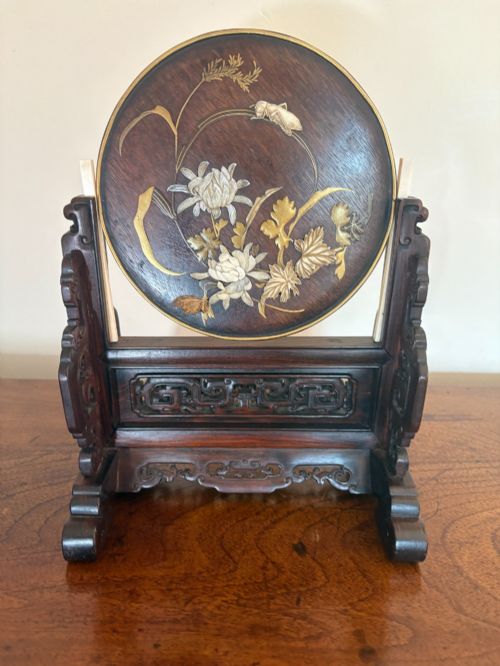
- A Japanese decorative technique utilising inlaid materials such as shell, bone, and ivory to create pictorial motifs. It frequently appears on panels and screens associated with fine tables.
Carved Lacquer Table: Frequently Asked Questions
How do I clean a carved lacquer table?
Dust the carved recesses gently with a soft, dry brush to prevent particulate buildup. Avoid chemical polishes, modern detergents, or excessive moisture, which can degrade the natural resin surface over time.
Keep the piece away from direct sunlight and strong heat sources to prevent the wood underneath from expanding and causing the lacquer layers to craze or crack.
Can I use a lacquer table daily?
These tables function well for everyday use as coffee tables or side tables provided you exercise basic care. Use coasters for drinks and coasters or pads beneath heavy objects to protect the raised relief work.
While natural lacquer is remarkably tough once fully cured, sharp impacts can chip the surface, so place items down with steady caution.
How do I tell Chinese from Japanese lacquer?
Chinese pieces often feature deep, monochrome carved cinnabar or black surfaces depicting dense landscapes, figures, and floral motifs. Japanese examples from periods like the Meiji or Taisho eras frequently incorporate delicate metal powder dusting, known as maki-e, or contrasting bone inlay.
Examining the construction methods of the underlying wood and stylistic motifs usually clarifies the regional origin of the piece.
What rooms suit an altar table?
An altar table works exceptionally well in an entrance hall or living room as a narrow console table. Its elongated silhouette and distinctive end flanges provide strong architectural presence against a plain wall.
Pairing the table with simple modern seating allows the detailed carving and rich red or black finish to remain the focal point of the space.