




Dark Lacquer Side Table
A dark lacquer side table brings depth and rich orientalism to a room, offering a functional surface finished in lustrous dark lacquer.
Dark Lacquer Side Table
When you search for a dark lacquer side table, you encounter a variety of forms including nests of tables, occasional tables, console tables, and plant stands originating from the nineteenth century through to the early twentieth century. These pieces bridge traditional British furniture forms with decorative finishes inspired by Asian craftsmanship.
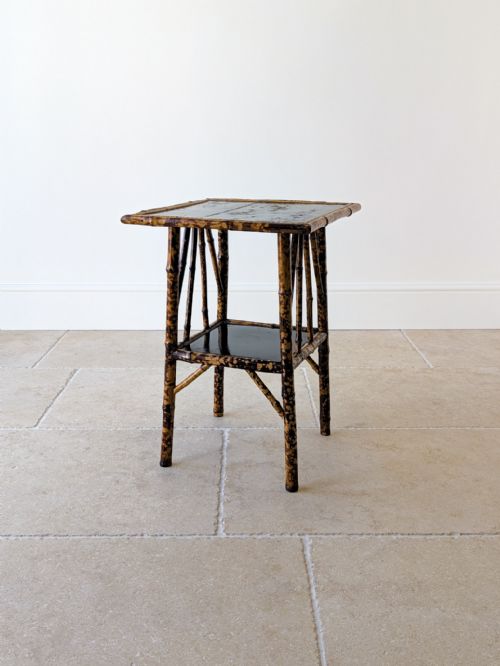
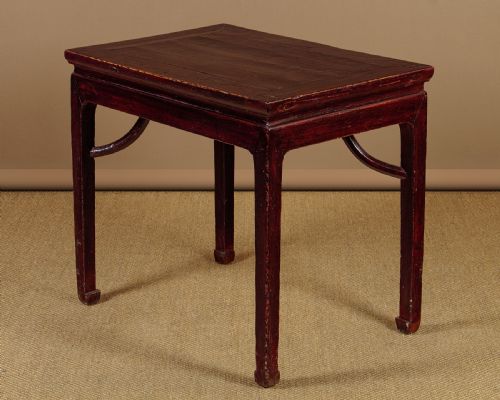
The dark lacquer side table you are most likely to meet on this page combines traditional Chinese or Japanese decorative techniques with Victorian or Edwardian structural shapes. Such pieces range from utilitarian elm timbers finished with simple dark finishes to highly ornate Chinoiserie and Aesthetic Movement designs incorporating gold leaf and gilt paint.
How they were made
The construction of these pieces relies on foundational timbers such as elm, bamboo, and assorted hardwoods that provide stable framing for the decorative surfaces. Artisans shaped these materials into side tables, multi-tiered nests, and work tables using traditional joinery appropriate to the period.
Surfaces received multiple coats of lacquer, sometimes enhanced with gold leaf, gilt paint, and intricate carving. This labor-intensive finishing process created the deep, reflective dark sheen characteristic of Chinoiserie, Qing Dynasty, and Japanese Export traditions.
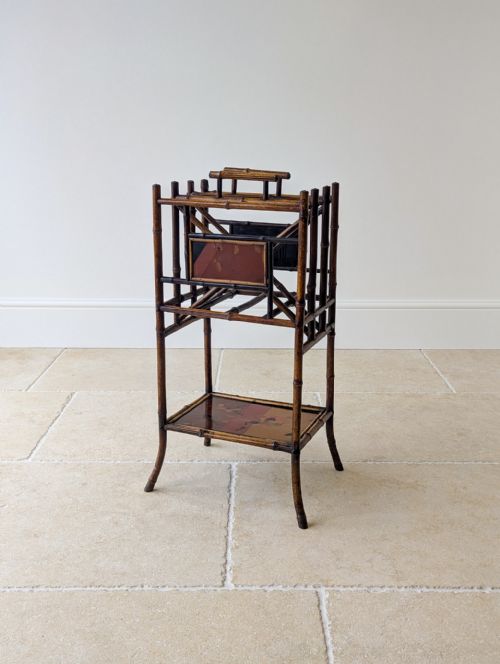
Recorded object types include side tables, nests of tables, occasional tables, console tables, magazine racks, plant stands, card tables, and side cabinets.
What varies in quality
The refinement of the surface decoration defines the upper tier of these pieces, distinguishing finely painted Chinoiserie motifs and meticulous gold leaf application from simpler, plain dark painted finishes. The depth of the lacquer layers and the crispness of any carved wood details directly reflect the skill of the original workshop.
Structural integrity and material selection also divide the range, with solid elm or substantial hardwoods providing greater durability than lighter, more utilitarian constructions. Additionally, the complexity of the form - such as a graduated nest of four tables or a demi-lune console - often indicates a higher standard of manufacture.
The Dark Lacquer Side Table Glossary
- Chinoiserie
- European theatrical interpretations and adaptations of Chinese artistic traditions, popular in decorative arts and furniture design.
- Lacquer
- A durable resin or varnish applied in multiple layers to wood surfaces, producing a hard, smooth, and lustrous finish.
- Aesthetic Movement
- A late nineteenth-century British design movement that emphasised visual and compositional beauty over narrative or moral function.
- Demi-lune
- A half-moon shape commonly applied to console tables and card tables designed to sit flush against a wall.
- Canterbury
- A low, freestanding rack traditionally used for holding sheet music, books, or magazines, often partitioned into vertical sections.
Dark Lacquer Side Table: Frequently Asked Questions
What is a dark lacquer side table?
A dark lacquer side table is a small occasional piece of furniture finished with a glossy dark resin coating, frequently incorporating Asian-inspired decorative motifs.
These tables appear in various historical styles, including Victorian Aesthetic Movement interpretations and traditional Chinese provincial forms.
How were nests of tables used?
Nests of tables served as versatile furniture arrangements that could be stacked together to save space when not in use.
Individual tables were pulled out separately to accommodate tea, writing, or displaying decorative objects during the nineteenth and early twentieth centuries.
How do I care for lacquer surfaces?
Lacquer surfaces require gentle treatment using a soft, dry cloth for routine dusting without harsh chemical polishes.
Keep these tables away from direct sunlight and excessive moisture to prevent the lacquer finish from fading or cracking over time.
How do I identify Victorian bamboo tables?
Victorian bamboo tables combine natural bamboo framing with lacquered or painted panels, reflecting nineteenth-century European fascination with imported goods.
These pieces often date from the late nineteenth century and align with the Aesthetic Movement in British interior decoration.
Where were Japanese export tables made?
Japanese export tables were produced in Japan specifically for Western markets during the late nineteenth and early twentieth centuries.
They typically feature traditional Japanese lacquer techniques and decorative conventions tailored to European and American tastes.