




Japanese Incense Burner Censer
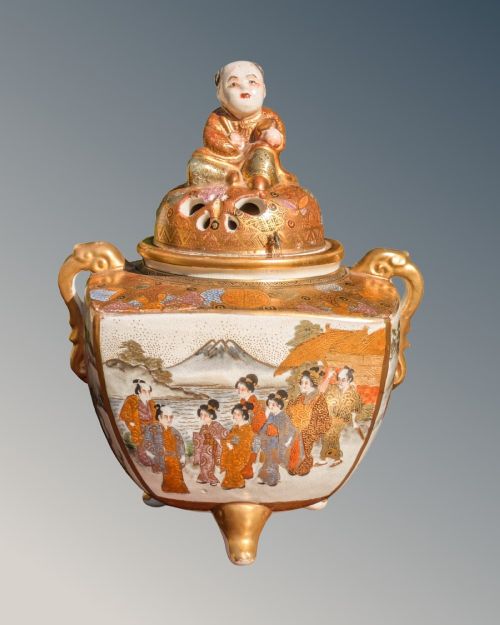
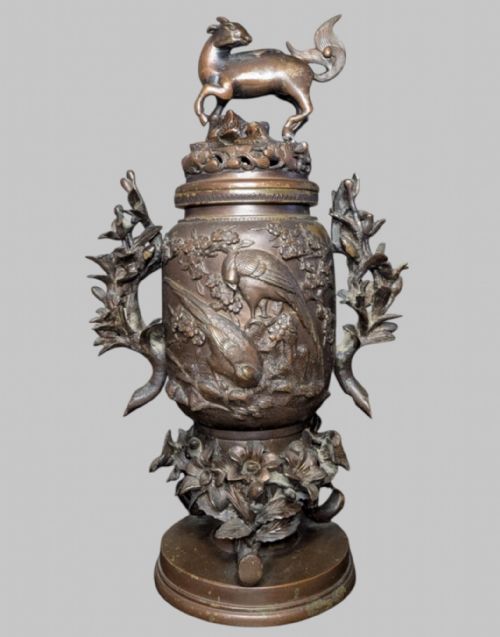
These japanese incense burner censer pieces range from bronze vessels to Satsuma earthenware, brought together for domestic ritual and display.
Japanese Incense Burner Censer
When you search for a japanese incense burner censer, you encounter vessels designed to hold aromatic materials during traditional ceremonies or for interior decoration. The selection spans the Edo, Meiji, and Taisho periods, alongside European Japonisme interpretations.
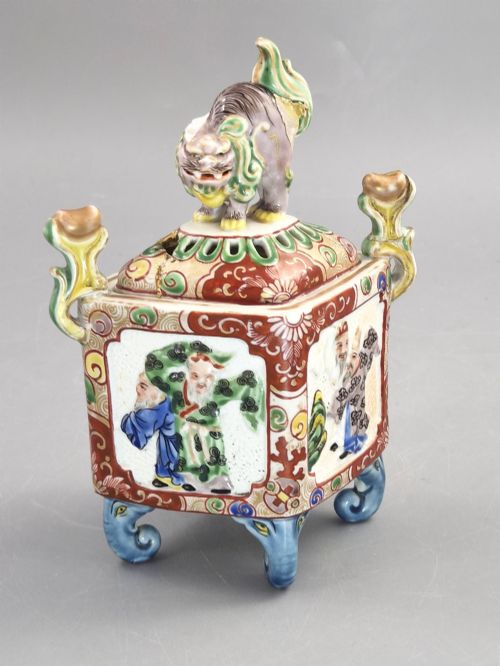
You meet porcelain, earthenware, and bronze forms, including tripod koro, lidded urns, and figural shapes such as treasure ships and hanging boats. Satsuma earthenware and Kutani porcelain appear alongside cast bronze examples from the nineteenth century.
Materials and Construction
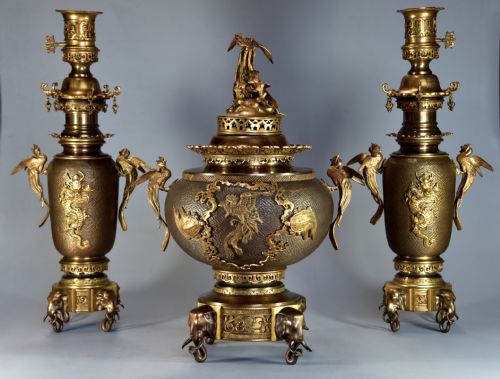
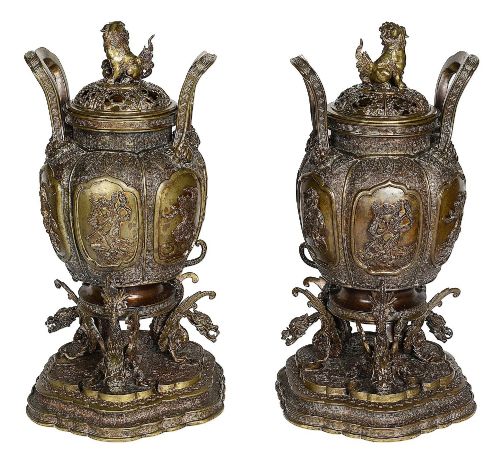
Metals are worked through casting and patination, often combining bronze with silver, gold leaf, and gilt details, sometimes paired with cloisonne enamel sections. Sculpted figures like dragons, lions, and goats serve as finials and feet.
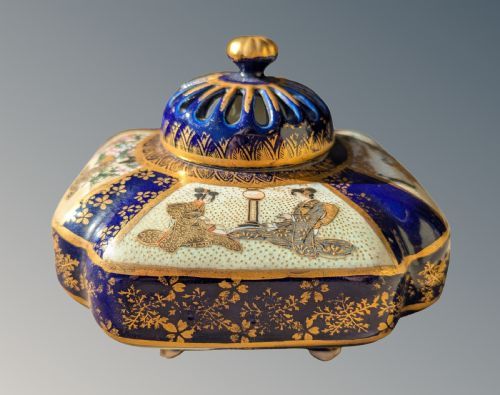
Ceramic pieces utilise earthenware and porcelain bases, decorated with overglaze enamels, gilding, and intricate hand-painted Satsuma or Imari patterns. Reticulated panels and modelled elements such as elephant head feet demonstrate detailed ceramic craftsmanship.
Several incense burners take unusual forms, including a hanging boat and a treasure ship steered by mythical figures.
Distinctions in Execution
The standard of a japanese incense burner censer rests in the crispness of the casting or the precision of the ceramic painting. Finer bronzes exhibit sharp relief work and stable patination, while superior ceramics display controlled enamel application and well-defined gilding.
Artisanal signatures and crests indicate workshop origin, separating standard commercial output from pieces produced by distinguished makers. The complexity of the form, such as reticulated covers and sculptural finials, further defines the grade of the work.
Kinkozan·Kizan·Kotobuki do·Shizan
The Japanese Incense Burner Censer Glossary
- Koro
- A traditional Japanese incense burner, typically featuring a body, a pierced cover for releasing smoke, and small feet. These vessels appear in ceramic and bronze variations.
- Satsuma
- A type of Japanese earthenware originating from Satsuma Province, characterised by an ivory crackle-glaze and detailed overglaze enamel and gilt decoration.
- Imari
- A style of Japanese porcelain featuring distinctive underglaze blue and overglaze iron red, green, and gold designs.
- Cloisonne
- A technique where enamel paste is applied within compartments created by soldered wire on a metal base, then fired and polished.
- Meiji Period
- The era of Japanese history lasting from 1868 to 1912, noted for opening trade with the West and producing intricate decorative arts.
Japanese Incense Burner Censer: Frequently Asked Questions
What is a koro?
A koro is a Japanese incense burner designed with a perforated lid to allow scented smoke to escape during burning.
These vessels are made from bronze, porcelain, or earthenware and often stand on three feet.
How do I date Meiji bronzes?
Meiji period bronzes date between 1868 and 1912, coinciding with the reign of the Emperor Meiji.
Stylistic shifts and workshop signatures help narrow down the production decade within this span.
What is Satsuma ware?
Satsuma ware is earthenware distinguished by a cream-coloured body covered in a fine network of crackled glaze.
Artisans decorate these surfaces with elaborate enamel patterns and gold leaf.
How were incense burners used?
These burners held aromatic wood or incense powders in domestic and ceremonial Japanese settings.
They also served as decorative interior objects displayed on tables or within room displays.