

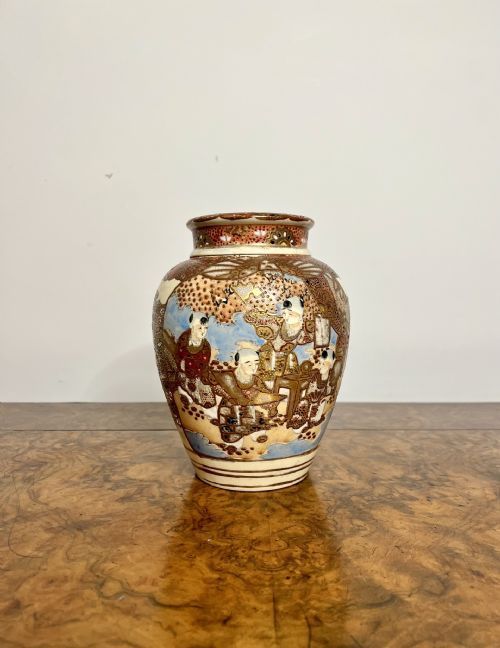
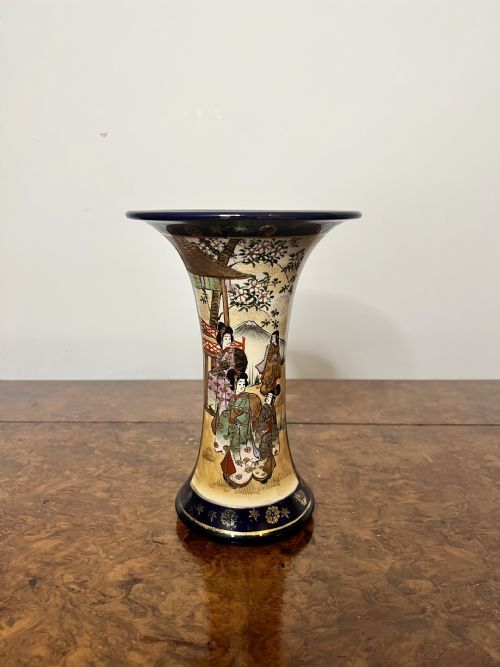


Japanese Satsuma Ceramic Vessel
These pieces of Japanese satsuma ceramic vessel bring together intricate hand-painted decoration and delicate earthenware forms from the nineteenth and early twentieth centuries.
Japanese Satsuma Ceramic Vessel
A japanese satsuma ceramic vessel encompasses everything from diminutive tea caddies and incense burners to monumental vases and footed bowls. The examples found here emerge primarily from the Meiji period through to the Taisho period, with many originating from Kyoto workshops.
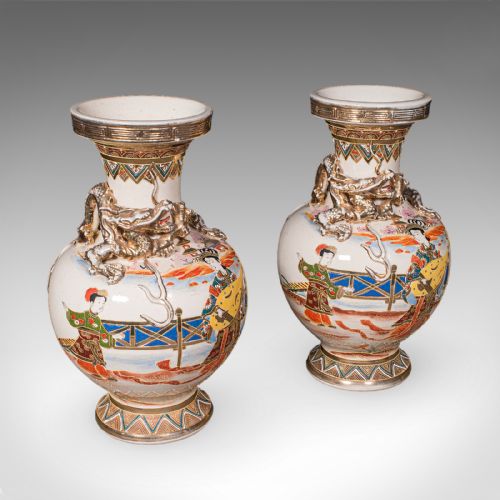
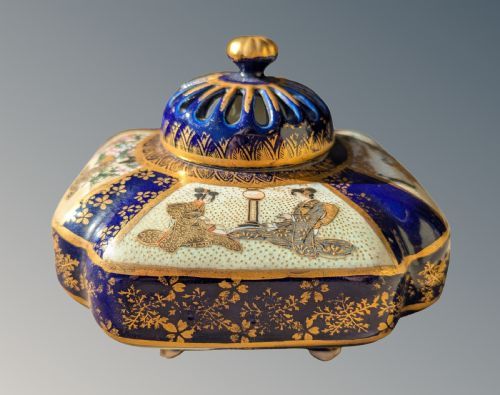
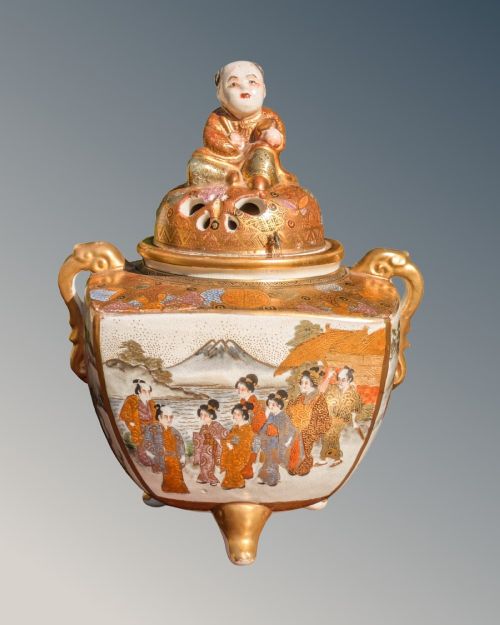
Vases and koro incense burners dominate the selection, often carrying detailed figurative panels depicting arhats, samurai, or family scenes alongside traditional motifs like the Shi-Shi lion. Collectors encounter both baluster shapes and globular forms, frequently accompanied by matching lids or applied handles.
The aesthetic bridges traditional Japanese imagery with the tastes of the late Victorian export market, resulting in substantial decorative vessels designed for display. These objects reflect the output of prominent historical studios that shaped the international perception of ceramic art.
Materials and Technique
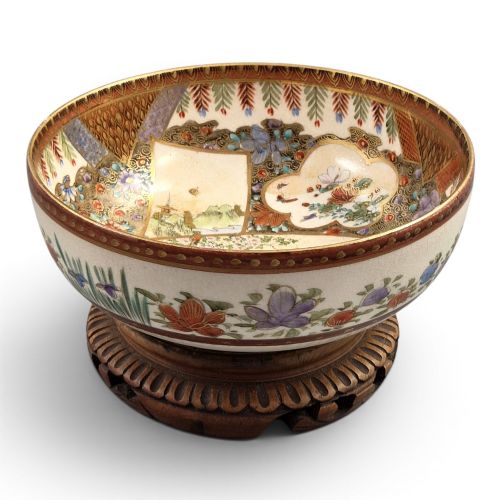
Makers constructed each Japanese satsuma ceramic vessel using an earthenware body covered in a characteristic crackle-glaze that accepts fine detail. Artisans then applied intricate polychrome enamel work across the surfaces to build up elaborate narrative scenes.
Gold leaf and heavy gilding feature prominently across the designs, highlighting borders, figures, and backgrounds with metallic lustre. Certain pieces incorporate moriage technique, building up raised dots of enamel to give texture and depth to the decorative panels.
Listings feature items dated across the nineteenth century, 1900, 1910, and 1920, utilising earthenware, porcelain, enamel, and gold leaf.
Defining Quality
The distinction between standard commercial output and the finest studio work rests on the precision of the brushwork and the density of the gilding. Master painters executed complex figural processions and battle scenes with exceptional clarity in the facial expressions and garments.
Pieces bearing signatures from renowned Kyoto makers or workshop marks demonstrate superior control over the enamel palette and the firing process. The presence of sophisticated secondary elements, such as sculpted dragon handles or intricate pierced lids, elevates the overall execution of the vessel.
Kizan·Kinkozan·Kozan·Hotoda·Chosei·Tokyo Taizan·Shozan·Ippo
The Japanese Satsuma Ceramic Vessel Glossary
- Koro
- An incense burner featuring a perforated lid to allow smoke to escape gracefully. These vessels often rest on small feet and frequently incorporate guardian lion figures.
- Natsume
- A small tea caddy traditionally used in Japanese tea ceremonies for holding powdered green tea. The form is usually compact with a flat-topped lid.
- Moriage
- A ceramic technique where slip or enamel is applied in raised dots or lines to create a tactile, three-dimensional surface decoration. This adds texture to robes and architectural elements.
- Mon
- A traditional Japanese emblem or badge used to signify family lineage or clan affiliation. The Shimazu family crest appears frequently on export ceramics.
- Shi-Shi
- A mythical guardian lion or dog depicted with curly mane and ferocious expression. Sculptural versions often serve as handles or finials on larger vessels.
Japanese Satsuma Ceramic Vessel: Frequently Asked Questions
How do I identify a Meiji period piece?
Meiji period pieces often display dense, meticulous hand-painted enamel work combined with heavy gilding and signature marks from Kyoto studios. The aesthetic reflects the boom in decorative export arts directed toward Western markets during the late nineteenth century.
Examination of the base and glaze characteristics provides further context. Genuine examples from this era exhibit a fine, characteristic crackle across the earthenware body beneath the painted decoration.
What is a koro used for?
A koro functioned primarily as an incense burner within traditional Japanese settings, designed to diffuse fragrance through a pierced or ventilated cover. Many surviving examples from the export era were prized for their sculptural quality and elaborate guardian lion finials.
Collectors today generally display these vessels as decorative art objects rather than utilising them for burning incense. Their intricate lids and footed bowls remain central to their visual appeal.
Where were satsuma ceramics made?
While the style originated in Satsuma province, the vast majority of finely painted export pieces produced during the Meiji period were manufactured in Kyoto workshops. Major studios in the region adapted traditional techniques to satisfy the heavy international demand for elaborate decorative vessels.
Kyoto makers established distinct artistic standards, employing master painters who specialised in intricate figural processions and gilded landscape panels. This urban production centre largely defined the look associated with the ware today.
How should I clean a painted ceramic vessel?
Cleaning requires a soft, dry brush or a gentle microfibre cloth to remove surface dust without disturbing the delicate enamel and gold leaf. Liquid cleaners and abrasive agents must be avoided entirely to protect the historical surface.
Keeping the piece out of direct sunlight helps prevent any fading of the polychrome pigments over time. Proper environmental stability preserves both the earthenware body and the intricate surface details.