



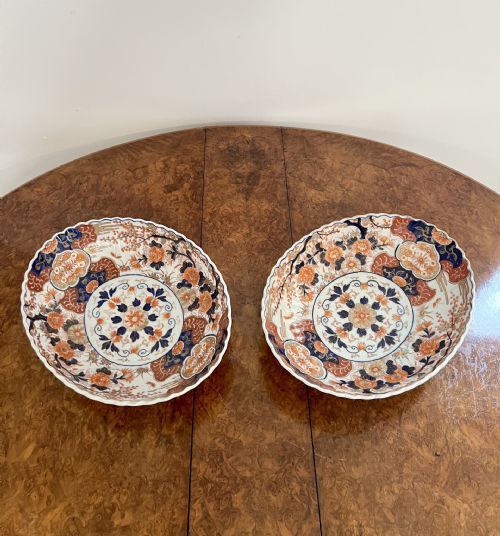


Japanese Imari Charger Pair
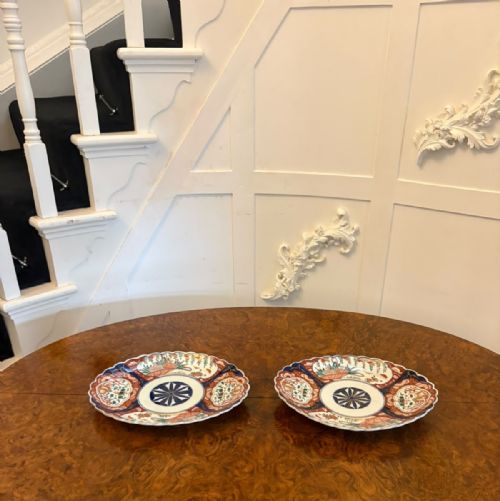
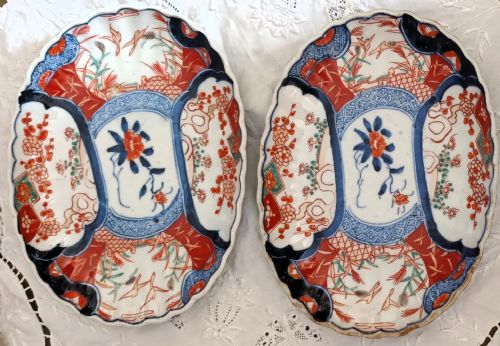
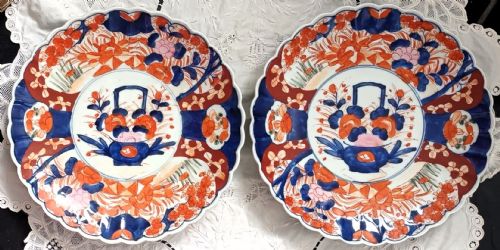
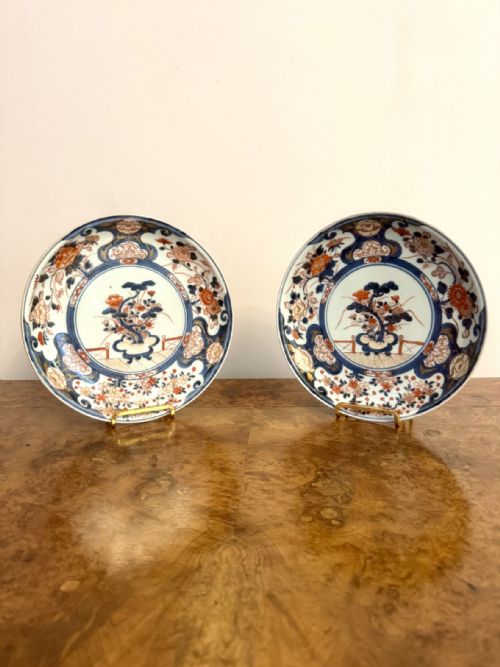
A Japanese imari charger pair brings together deep cobalt pigment, enamel glaze, and gilt on porcelain, offering symmetry and colour for display.
Japanese Imari Charger Pair
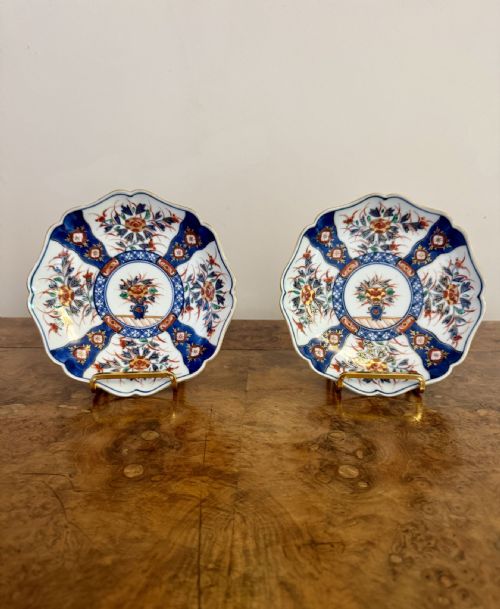
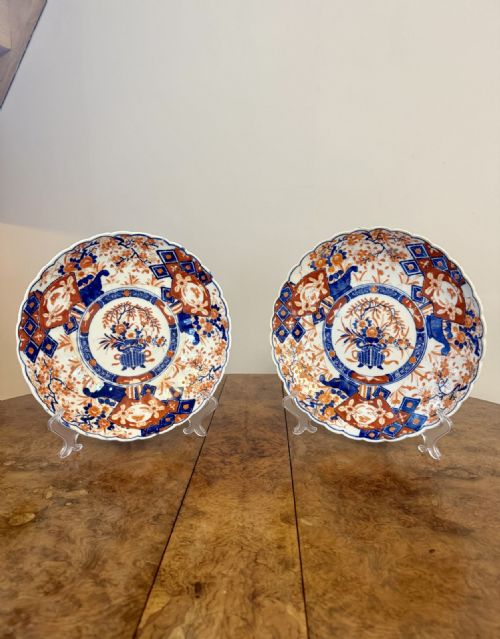
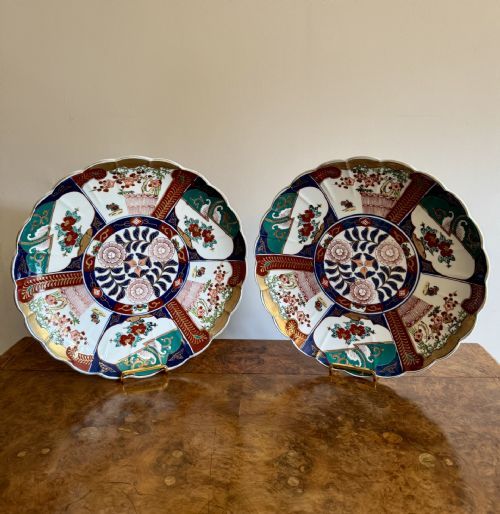
A japanese imari charger pair consists of two matching large plates or dishes created for display rather than dining. These items emerge primarily from the Meiji period and the nineteenth century, alongside examples from the eighteenth century.
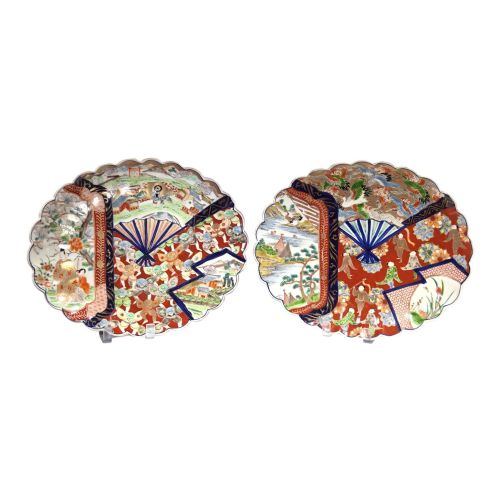
The selections span round chargers, oval dishes, scalloped edge bowls, and large decorative plates. Many items originate from Arita, showcasing traditional Japanese designs such as exotic birds and the seven lucky gods.
Buyers encounter matched pairs and near pairs in various diameters, intended historically for wall hanging or surface placement. European interpretations, such as nineteenth century ceramic pieces with mintons date marks, also appear among the selections.
How they were made
Potters shaped these items from white porcelain and ceramic bodies before applying underglaze cobalt pigment. Artisans then added enamel glaze and gilding or gold leaf details by hand.
Firing transformed the cobalt blue and iron red pigments into durable surface designs, complemented by contrasting enamel colours. Kiln work achieved both standard round profiles and complex scalloped edges on large chargers.
Seven lucky gods occasionally share porcelain chargers with exotic birds, proving that ancient deities appreciate avian company on large ceramic stages.
What varies in quality
The standard of a japanese imari charger pair depends on the crispness of the hand painted motifs and the richness of the enamel and gilding. Precision in the porcelain potting and uniformity within a matched pair separate simpler production from superior examples.
Complexity of subject matter, such as detailed figural scenes depicting deities or intricate exotic birds, elevates the visual weight of the pieces. The depth and brilliance of the cobalt pigment and enamel glaze further distinguish finer works.
Mintons·Fukugawa
The Japanese Imari Charger Pair Glossary
- Imari
- A style of Japanese porcelain featuring a distinct palette of underglaze blue, iron red, and gilt highlights. This aesthetic influenced both eastern and western ceramic production.
- Charger
- A large decorative plate utilised for display on walls or tables rather than for serving food. These pieces typically measure significantly greater in diameter than standard dinner plates.
- Meiji Period
- The era in Japanese history spanning from 1868 to 1912, associated with extensive export of decorative arts to western markets. Items from this time often exhibit elaborate hand painted compositions.
- Cobalt Pigment
- A blue mineral colour applied under the glaze to withstand high kiln temperatures without fading. It forms the dark foundational lines of traditional patterns.
- Arita
- The Japanese town and surrounding region renowned as the birthplace of Japanese porcelain manufacturing. Kilns here produced the majority of wares decorated in the imari manner.
Japanese Imari Charger Pair: Frequently Asked Questions
How were japanese imari charger pair items displayed?
These large dishes were traditionally placed on sideboards or hung on walls to showcase their vibrant colours and patterns in domestic interiors.
Their substantial size and decorative presence made them focal points in nineteenth century reception rooms and parlours.
Are matched pairs difficult to find?
Finding a true matched pair from the nineteenth century requires attention to identical dimensions, motifs, and firing characteristics. Many surviving sets are near pairs gathered together over time.
Identical size and shape indicate that two chargers were produced side by side in the kiln.
What colours define genuine imari ware?
The traditional palette relies on underglaze cobalt blue and iron red, frequently augmented with bright enamel highlights and gold leaf. This combination creates high contrast and rich visual depth.
Additional colours like green and yellow appear in various designs to enhance floral and figural elements.
How do you distinguish Meiji period pieces?
Meiji period items reflect the artistic output of late nineteenth century Japan, often marked by meticulous hand painted details and complex iconography. They frequently incorporate exotic birds or narrative scenes.
Production during this era catered directly to the international demand for ornate decorative arts.